
Phone phreaking meant using the old telephone network’s own control tones against it, which was possible because, as two Bell engineers wrote in 1960, those signals used “the same path as the speech currents”.
This Stickler Files episode follows Joe Engressia, a blind 19-year-old student in Tampa who, the AP reported in 1968, had whistled his way past long-distance circuits and placed free calls.
Key highlights
- The AP reported that Engressia charged other students about $1 a call and made about $25, and that the phone company decided not to prosecute him but passed its evidence to the FBI.
- Esquire’s October 1971 article “Secrets of the Little Blue Box” featured phone phreaks including Joe Engressia and Captain Crunch.
- AT&T’s chairman said in 1975 that the company estimated $1 million or more in long-distance calls were being stolen each year.
- Steve Wozniak has said he built blue boxes and that Steve Jobs proposed selling them. Jobs later said that without the blue boxes there would have been no Apple.
- AT&T announced in May 1976 that it would begin moving call signals onto a separate high-speed channel, saying the new system may reduce fraud.
Video: Stickler Files · 2600 Hz: The Toy Whistle That Took Control of AT&T’s Phone Network · 2026-11-01. More from Stickler Files.
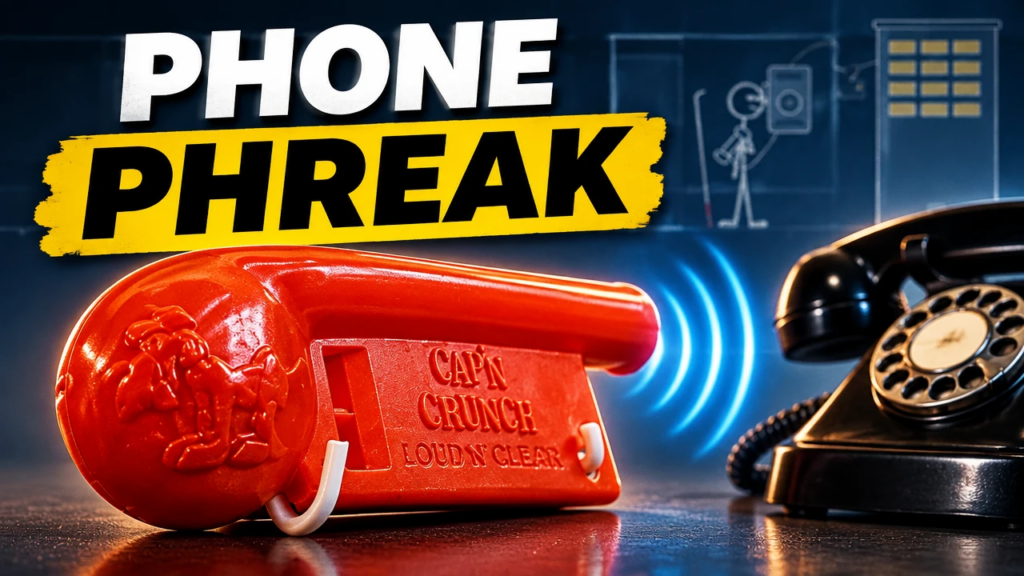
How phone phreaking worked
The long-distance network steered calls with tones sent down the same line as the conversation. Bell’s 1960 article described protecting it against “speech-generated signals”, a caller’s voice accidentally sounding like a control tone. As late as January 1973, an AT&T report said both of its main long-distance signalling systems used “the same path that carries the conversation”. The weakness was the shared channel: the network took its orders on a line every caller could reach, and AT&T’s planned remedy, which it said may reduce fraud, was to move them off it.
Questions answered
Was John Draper actually convicted?
Yes. In 1972 a federal grand jury indicted John Draper, whom the San Francisco Chronicle reported as the suspected phone phreak Captain Crunch, on seven counts of fraud by wire, and on a plea of nolo contendere he was convicted on one count and placed on five years’ probation. He was convicted of fraud by wire again in August 1976, and in 1978 a Pennsylvania court sentenced him to three to six months in county jail, according to a newspaper report.
Did John Draper discover the Captain Crunch whistle?
The record the episode read doesn’t say so. A 1972 San Francisco Chronicle report said one phreak had discovered that the toy whistle given away in boxes of Cap’n Crunch cereal gave out a tone of 2,600 cycles, but it did not name the phreak.
Why is it called a blue box?
Because, AT&T said in 1977, the first one the company found, in 1961, was blue.
Archive and sources
For more of the people who shaped hacking, see our list of famous hackers in computer history. The primary sources here are the 1960 Bell System Technical Journal article, the court’s 1972 judgment against Draper and AT&T’s 1976 announcement of common channel signalling, the first planned step in moving call information off the customer’s voice circuit. The AP’s 1968 report on Engressia is the contemporary news account.
Watch the full story on YouTube: 2600 Hz: The Toy Whistle That Took Control of AT&T’s Phone Network.
Advertisement