
When I quit my job to build apps during the 2019 COVID pandemic, I knew it would be hard.I didn't k 2026-10-8 06:8:3 Author: hackernoon.com(查看原文) 阅读量:2 收藏
When I quit my job to build apps during the 2019 COVID pandemic, I knew it would be hard.
I didn't know it would be incredibly difficult.
And I never expected it to sometimes leave me in tears.
One idea I had early on—when I decided to use my free unemployment time to build—was a social app that connected users based on their internet interests.
Simple enough, the plan was to connect isolated people trapped indoors due to the pandemic. We were going to connect people in the same city who watched the same YouTube channels, listened to similar artists on Spotify, used the same Reddit forums, etc.
As a nerd, finding out other people who had the same niche interests as me felt like a dream come true.
With a conviction that my app was sure to be a hit, I tapped the only developer I knew who'd work for free too (my roommate since we were both trapped by COVID), and we started building.
Weeks later (with no AI God prompt to help lol), he built the app—and it worked!
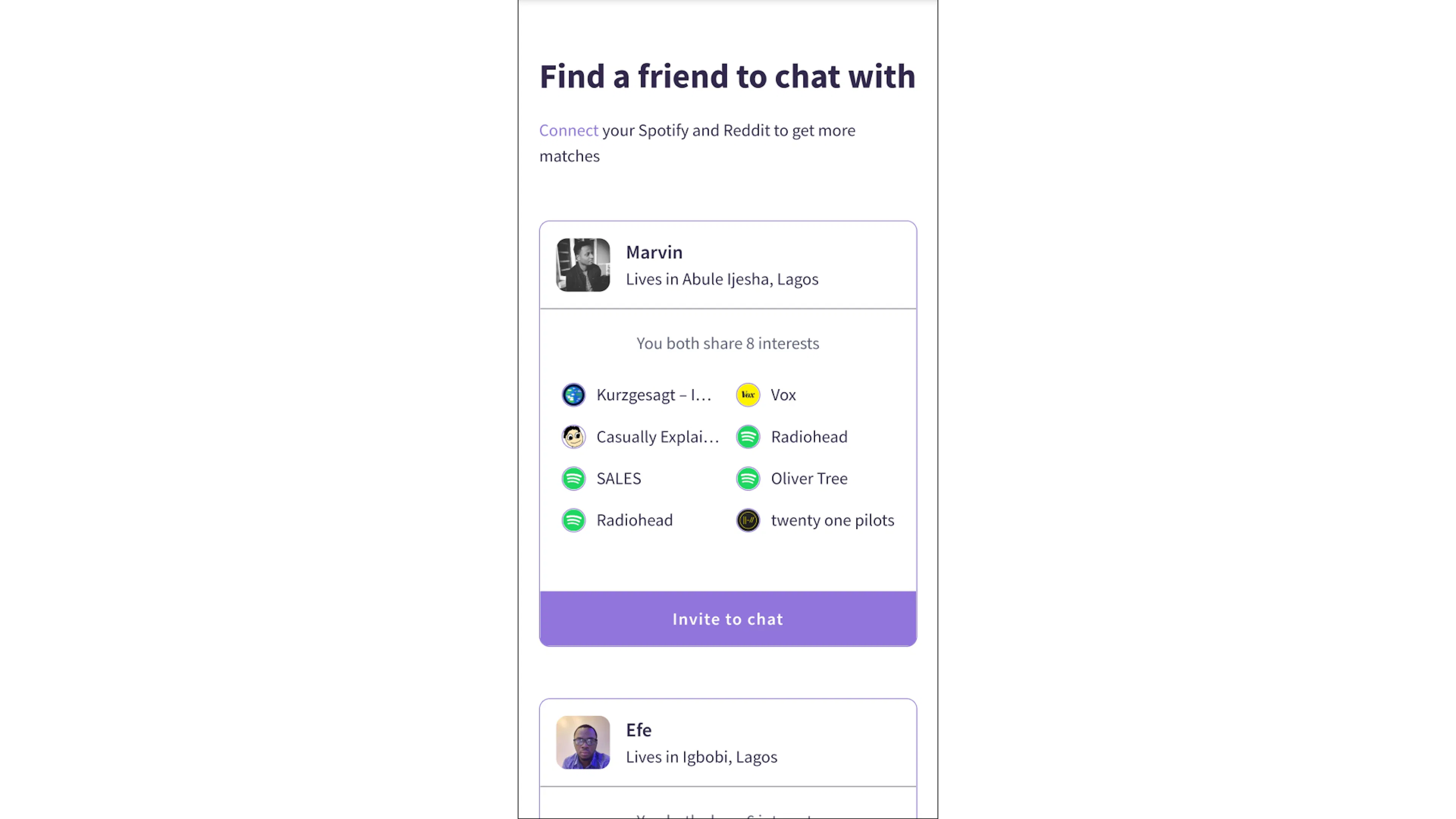 The beginning of a dream.
I was excited and quickly spammed everyone in our small social circle.
But soon this network was exhausted, and we hadn't even crossed 50 users.
And the app depended on new users.
It had no utility without people to run matches in your city.
We had committed the tragic noob mistake of building without knowing how to grow.
Backed against the wall, certain failure staring me in the eyes.
I did what every desperate founder in search of getting users fast would do.
I decided to run Ads.
But being broke during a pandemic, we had exactly $0 in our budget for that.
So I did what every desperate founder without money does.
I decided investors would pay for it.
A few weeks and 100 emails later, we had only added more zeros to our $0.
Even all my growth projections during our YCombinator interview couldn't extract a cent from these VCs.
After many more failed pitches, one investor finally took pity on me and gave me some real advice.
I'll share this here because it'll save you years of effort, suffering, and poverty.
Why Broke Founders Can't Buy Their Way To Growth
One of the investors I reached out to told me straight:
No one funds ads for a product that isn't already growing. Come back with 15% month-over-month growth, and we'll talk.
Clear and simple.
How hard could it be?
Oh boy! Without ad money, we had only one option: user referrals.
That is, getting people to actually use the app and share it.
In startup growth marketing terms, every app has what's known as a viral coefficient or K-factor—how many new users each user brings.
The viral coefficient (K-factor) measures the organic growth an app achieves through user referrals. It is calculated by multiplying the average number of invites sent per user by the conversion rate of those invites. A K-factor above 1.0 means exponential, self-sustaining growth, though most apps score below 1.0 and use it to amplify paid marketing.
For example, Facebook during its early college expansion phase achieved a k-factor of about 7.0. Each new user successfully brought in about seven new users on average.
Here's an example of an app dashboard with a k-factor of 1.17:
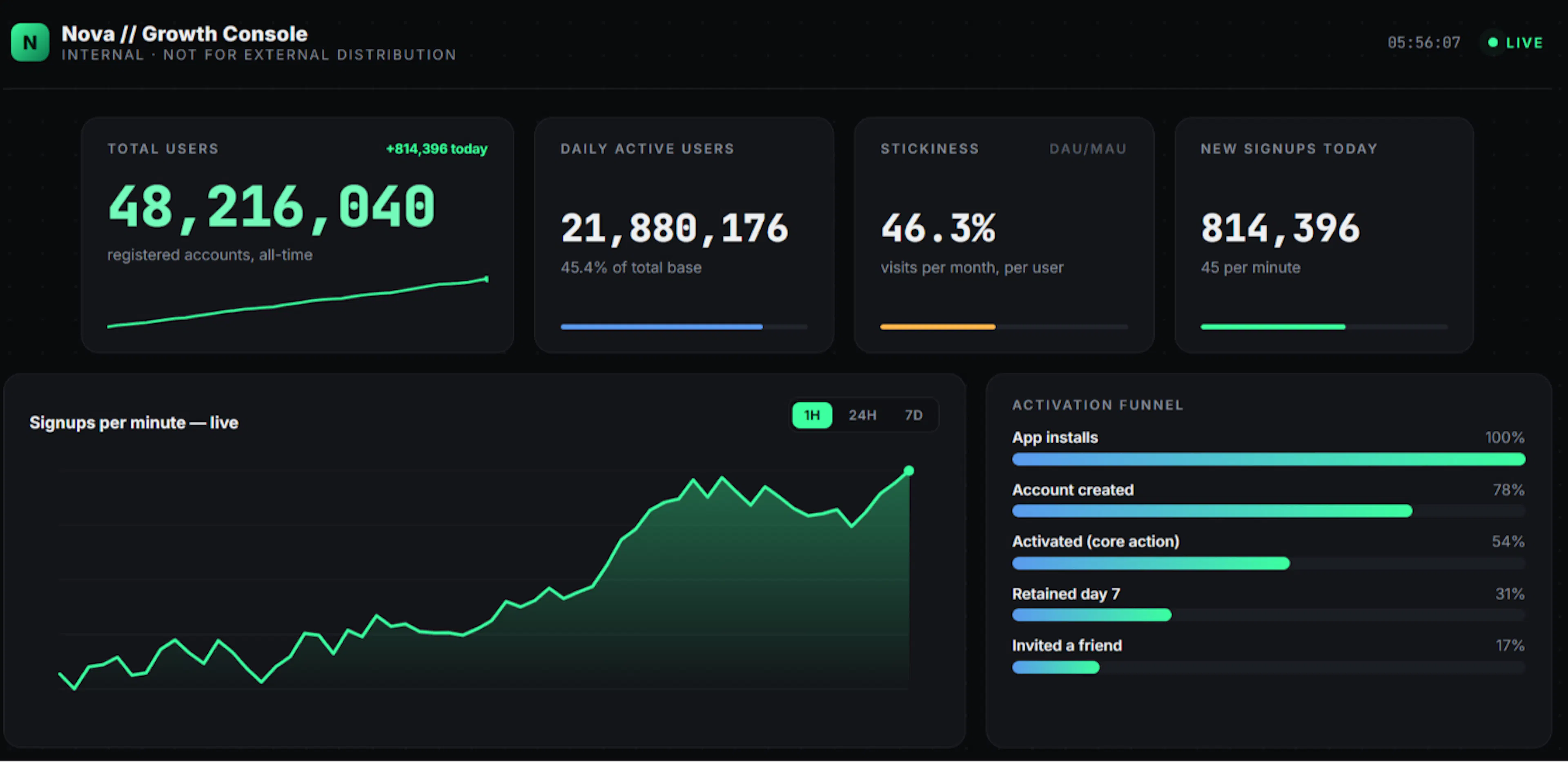 The growth rate of an app with a k-factor of 1.17
You can see this amounts to 56 users a minute!
That was our total user base after a week.
Once you understand the mechanics of virality, you understand how apps can get to a billion-dollar valuation.
Facebook's k-factor of 7 meant that if they had 100k users, that would turn into 700k by the time each of those users sent out their invite.
Your k-factor is the difference between a million-dollar startup and a billion-dollar startup.
While other factors like revenue and daily usage matter, freemium consumer apps live and die by their k-factor.
Trying to get even close to a coefficient of 1 was brutal.
We built and rebuilt the app.
We pivoted our pivot until we were exploring a different niche.
We talked to users—but still we couldn't get viral organic growth.
Over the years I've built other apps, yet nothing has quite gotten that k-factor that makes an app go viral.
Growth is particularly difficult when you don't have a VC war chest to pay your way into relevance.
To grow fast on software alone, you need to build something new that disrupts a large industry (ChatGPT, Bitcoin) or catch a market demand wave right as it erupts.
It's a planet-sized roulette wheel.
Sometimes I smile when I hear people talk about how much a startup has raised or see their ads all over social media.
I know from firsthand experience that paid marketing is temporary.
Sooner or later it comes down to the basics of your business no matter how much money you've raised.
The Grind Nobody Warns You About
Real startup success is very hard.
How hard?
Let me hand the mic to a few people who've pursued it and won:
"Suppose I knew everything then that I now know — how hard it is and all of the pain and suffering and all the embarrassment and humiliation and all the setbacks... The answer, absolutely not."
And this is what the richest man in Africa had to say about building the largest oil refinery in Africa:
"If I had seen the full scale immediately, I might have chickened out. It was like swimming across the ocean."
Let's not forget what the richest man in the world has to say about building startups:
"Running a startup is like chewing glass and staring into the abyss. After a while, you stop staring, but the glass chewing never ends."
Why do people who've tried, succeeded, and made billions talk like this?
Because it's almost too cruel to build.
Imagine working for years (some of you don't have to imagine) with no external validation that any of it is working.
Sure, you've improved and learned a lot.
Your resume is at least thicker, even if not in all the right places.
But learning doesn't pay the bills. Startup experience isn't a currency your landlord accepts.
Meanwhile, by every traditional measure of success, you're losing.
Even if you're a billionaire—a billion dollars spent on a 4-year business not yet profitable or growing rapidly is failing by the standard measure of success.
You've poured your money and time into something, and you're still deep in the red.
Only humans build multi-year projects for a reason.
Lions won't chase anything for longer than a minute, and a gorilla gives up after a few minutes of exertion.
Humans are the only creatures on earth built to chase the long term.
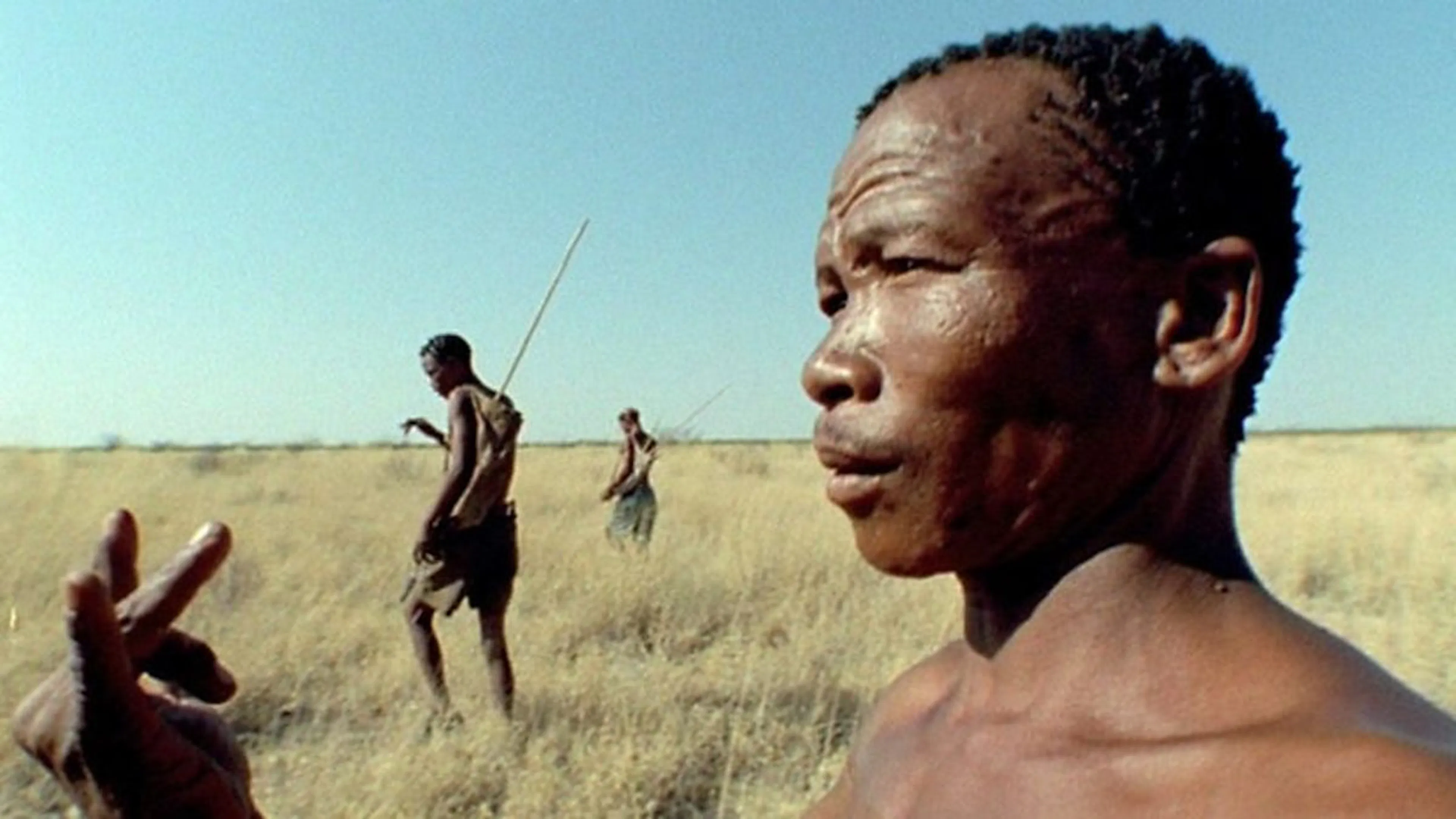
It's why persistence hunting—chasing an animal until it simply can't run anymore—was one of our earliest hunting methods.
A startup is that same long-term chase.
Whether you have $0 or a billion, the chase is the same.
In fact, having more money can even hurt you.
Great Execution Beats Big Budgets
Money doesn't always guarantee good outcomes when it comes to building.
Sometimes when hiring, the more you pay, the worse the people you attract.
What you actually need are those who work because they're obsessed with the mission, not the paycheck.
For example, when Elon Musk was looking for engineers to help him build rockets:
He didn't just drop a link on a job board with heavy compensation packages.
Instead, he went to people who were crazy enough to launch rockets with their own money and free time.
[image of amateur rocket league here]
When you try to convince people with money alone, you attract mercenaries.
On paper, they look like a great hire, but that's because they've optimized their careers to look the part.
With these people, any roadblock, setback, funding dry-up, or even competitors can sweep them away.
So don't look at companies with billion-dollar valuations in your industry and give up because you think you can't compete.
Money isn't what drives creativity—if anything, it's a distraction.
Some of the greatest startups succeeded precisely because they had no money to fall back on.
No One's Coming To Steal Your Idea
One thing that stops early founders from aggressively marketing their startups to potential hires or customers is the fear that someone will steal their idea.
Especially now that anyone can vibecode apps.
Ignoring the fact that if your idea is that easy to steal, it has no defensibility—stealing startup ideas almost never happens.
And your startup is far more likely to die from no one caring.
It's like being in the desert and concerned about drowning.
99% of the time, even when you offer competitors your ideas gift-wrapped, they ignore it.
Google's founders offered to sell their PageRank search algorithm to a competitor for about a million dollars so they could go back to school—nobody wanted it. Steve Wozniak offered the original Apple I computer to his bosses at HP—five times—and they didn't think it was worth their time.
Nobody's coming for your idea, so market aggressively.
Now's The Best Time To SHIP
 Sailing into the startup sunset
The mentality of a $0 startup is not that you won't spend money.
You will.
But the most important thing is EXECUTION.
That is, understanding and implementing the fundamentals of your business.
Which ultimately comes down to these questions:
- Is there great demand for this?
- Can I build this?
- How will I get users?
- How will I get revenue?
- How will I defend growth?
You don't need all the answers at once. In fact, you're likely to be wrong until you test them in the real world.
But the $0 Startup Mentality is that you always have to start with what you have now.
Don't wait for VCs to save you. Don't expect customers to find you.
Don't use not having money as an excuse.
In the age of AI and free software, there's never been a better time to build.
Stop making excuses. Plan, Build, and Sell.
Go!
如有侵权请联系:admin#unsafe.sh