
The month of horror is back, and with it comes a wealth of content and software to enjoy. Even if yo 2026-10-5 14:21:7 Author: hackernoon.com(查看原文) 阅读量:6 收藏
The month of horror is back, and with it comes a wealth of content and software to enjoy. Even if you don't celebrate Halloween as such, if you're a horror fan, you might find the projects listed here quite appealing. And the best part? They're all free and open to collaboration on GitHub.
If you have a blast—or even get a little obsessed—with the games and programs listed below, consider donating to their developers through
Without further ado, let’s explore these horrific pieces.
Budget Backrooms
It just had a movie in 2026, and fans are waiting for more. The backrooms are a seemingly infinite, extradimensional complex, with the aesthetic of a functional but empty office building, filled with fluorescent lights, yellow wallpaper, and weird creatures. Or at least, that's the most well-known "level" of an open lore that expands every minute. It was originally created by an anonymous user on 4chan in 2019, so anyone can contribute to this collective, creepy story.
David JoacaRo decided to contribute his own game to the lore in 2022, and that’s how we got Budget Backrooms —available for free on GitHub and
The game mechanics are quite simple. Walk through the backrooms, collect items that might help you, avoid the terrible creatures, and just try to survive to find the exit. That’s the classic mode. There’s also a ‘hardcore’ mode and a ‘meme’ mode, the latter filled with popular memes instead of the traditional monsters.
This is a passion project, so David accepts donations via Ko-Fi. If you want to send cryptocurrency,
Halloween.js
Sometimes the simplest things can cheer us up—and your audience, if you have one. With this small piece of software, you can “make your site haunted in one script tag.”
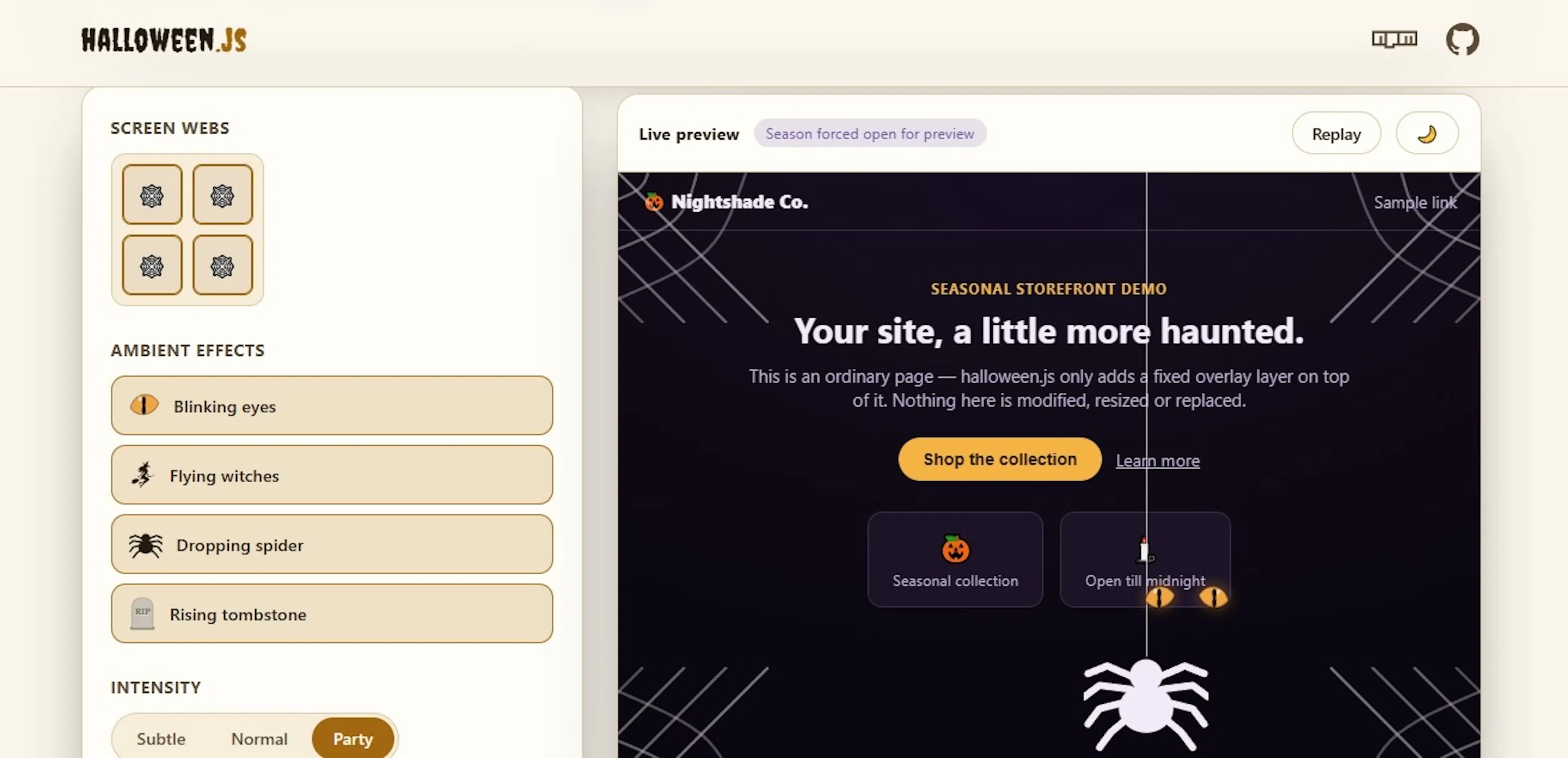
You can choose between cobwebs, blinking eyes, flying witches, dropping spiders, rising tombstones, or all of the above. The movement intensity could be subtle, normal, or “party,” and you can pick your own custom color. Besides, you won't have to remember to put up the decorations every year: you can leave the tag on your website all the time, and set it to only show the "decorations" automatically during a certain season.
It’s also possible to create your own effects if you know how to code a bit. Anyone can contribute to this project to make it better (via GitHub). To send a crypto tip to its creator,
Halloween Props
We must admit that this project goes a step beyond software and delves a bit into DIY robotics, if you're interested in building your own Halloween props. Created by Greg Gemmer around 2020, the Halloween Prop and Controller project documents software and hardware for operating an animated vampire skeleton prop. Its main job is to control the prop through an Arduino Mega 2560.
For beginners, the setup works somewhat like a puppeteer with a surprisingly elaborate control panel.
The project remains available on GitHub, and anyone can contribute to it (or replicate it). The documentation describes future enhancements, including storing more playback data on an SD card. To make less technical and more monetary contributions, you can find
Unmasked
Interestingly, this could very well be another level of backrooms. Created by Vishesh Mistry for the Global Game Jam 2026 (in barely 48 hours),
The maze is an abandoned hospital, with cracked walls, broken glass, and long, dim corridors. At the start, you're given two masks: one will help you find an important item, the other can guide you to the exit. But they can only be used once, for a very short time. Old items and vending machines appear across the confusing path, along with ghosts and shadows.
**
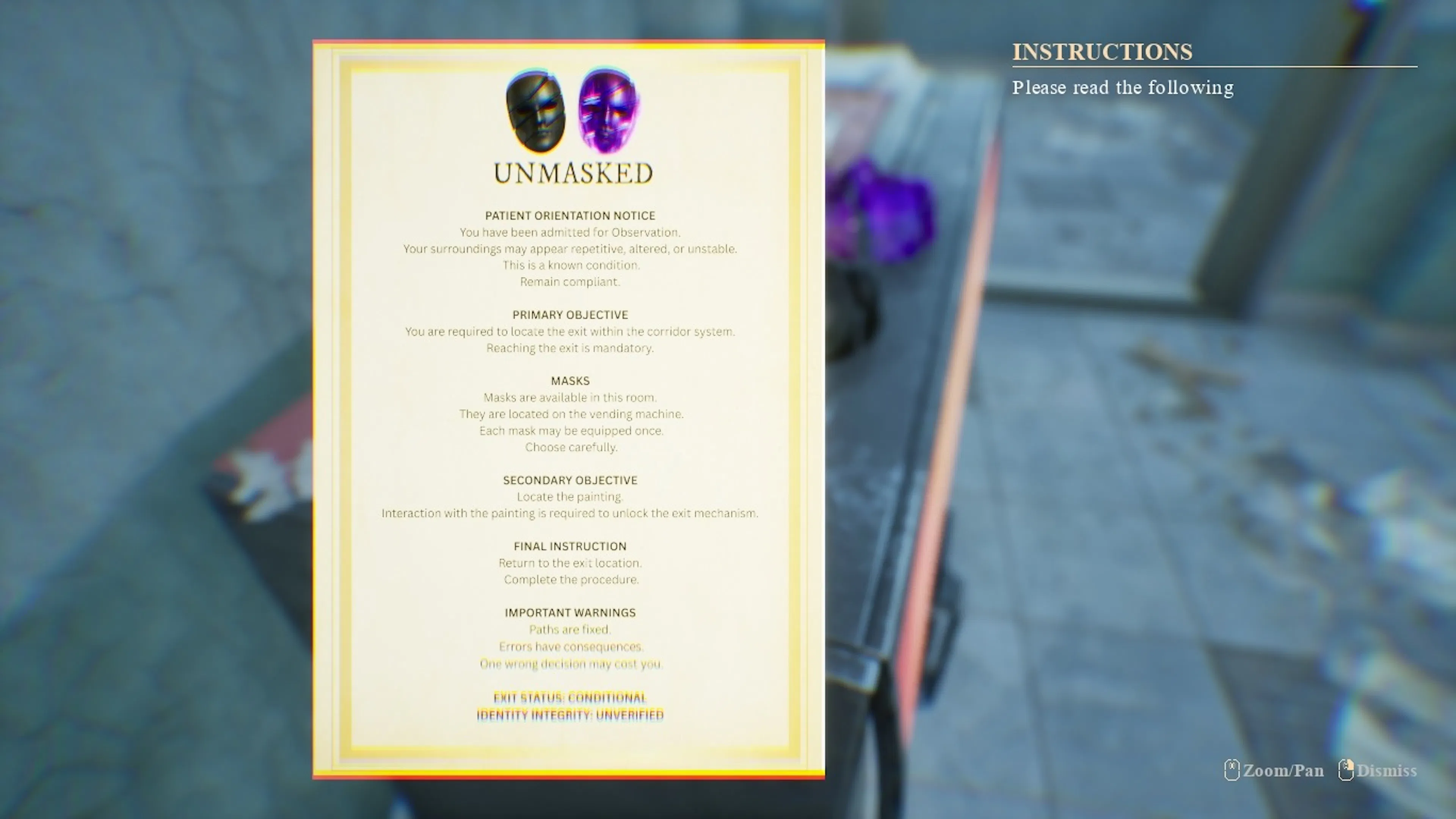
Depending on the player's decisions, the results may vary. Indeed, the author acknowledges the horror genre itself, “for teaching us that the scariest monster is choice itself.” Contributions are welcome on GitHub, and you can
Undead Choices
After the despair of backrooms and Unmasked, this may be a more lighthearted option. This interactive story was built for the Code Institute Halloween Hackathon in 2021 by Abi Harrison, Alexander Grib, Dave Horrocks, and Django Heimgartner.
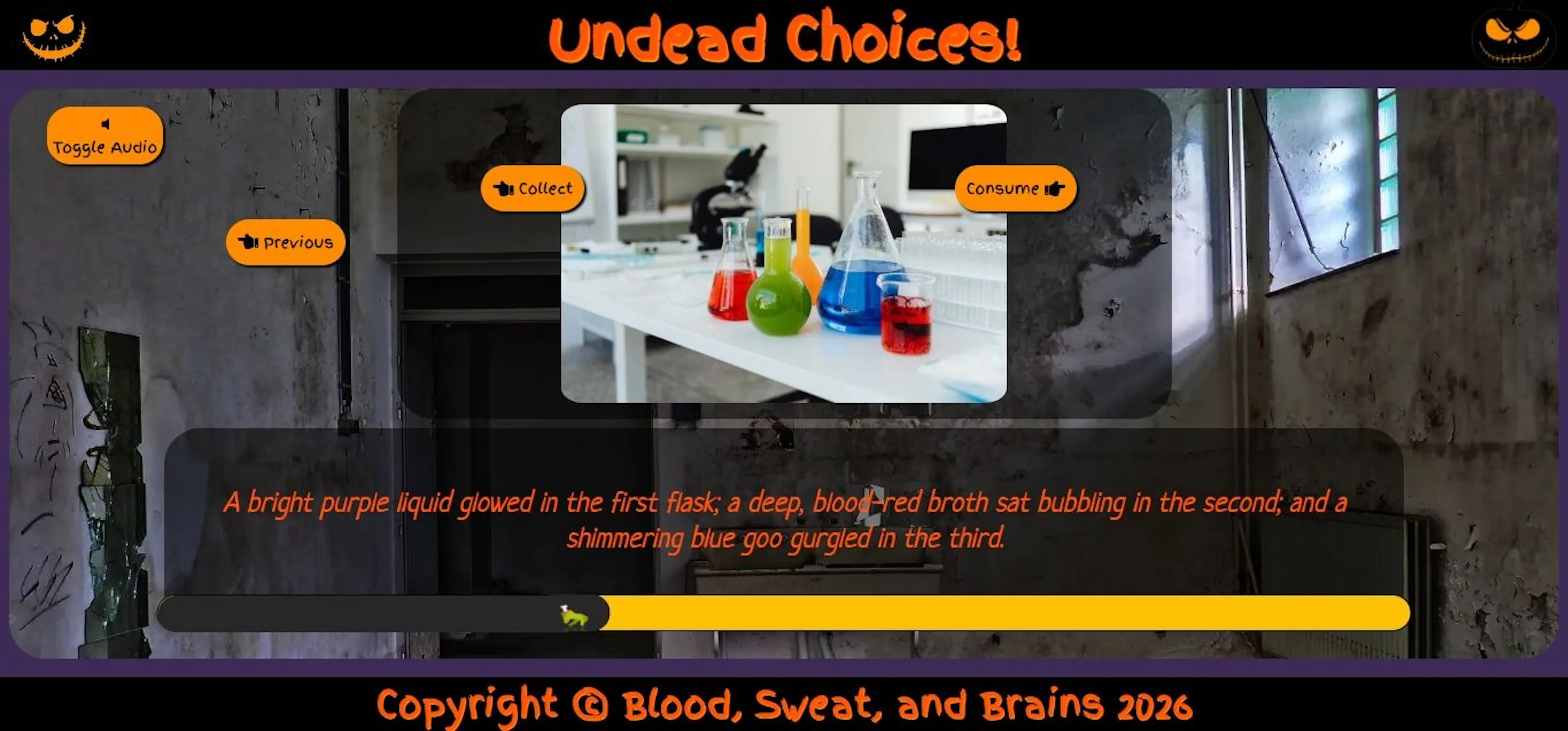
It has a child-friendly version and a more mature one, but both are rather far from horror, without straying from the Halloween theme. The story begins when you wake up in the forest, transformed into a zombie. From there, in your search for brains, you may encounter different places and characters who may (or may not) help you. It all depends on your own decisions. Will you go left or right? Will you try to eat the snowman? Will you help the zombie king, or will you take the right potion? Only your choices will tell.
You can play the whole story in your browser and discover different paths each time. As an open-source project on GitHub, you can contribute your own code and ideas to it. Undead Choices is currently maintained by its authors and community, so consider
Send and Collect Crypto Treats
Dropping some crypto into an open-source project's Halloween bucket through
is pretty easy. You'll need the project's GitHub repository name and a funded crypto wallet, like the Obyte wallet. Enter the repository name on the platform, select the network, token, and amount you want to give, and press "Donate."Then, let their devs know! A donation can't be claimed if its intended recipients have no idea it has appeared.
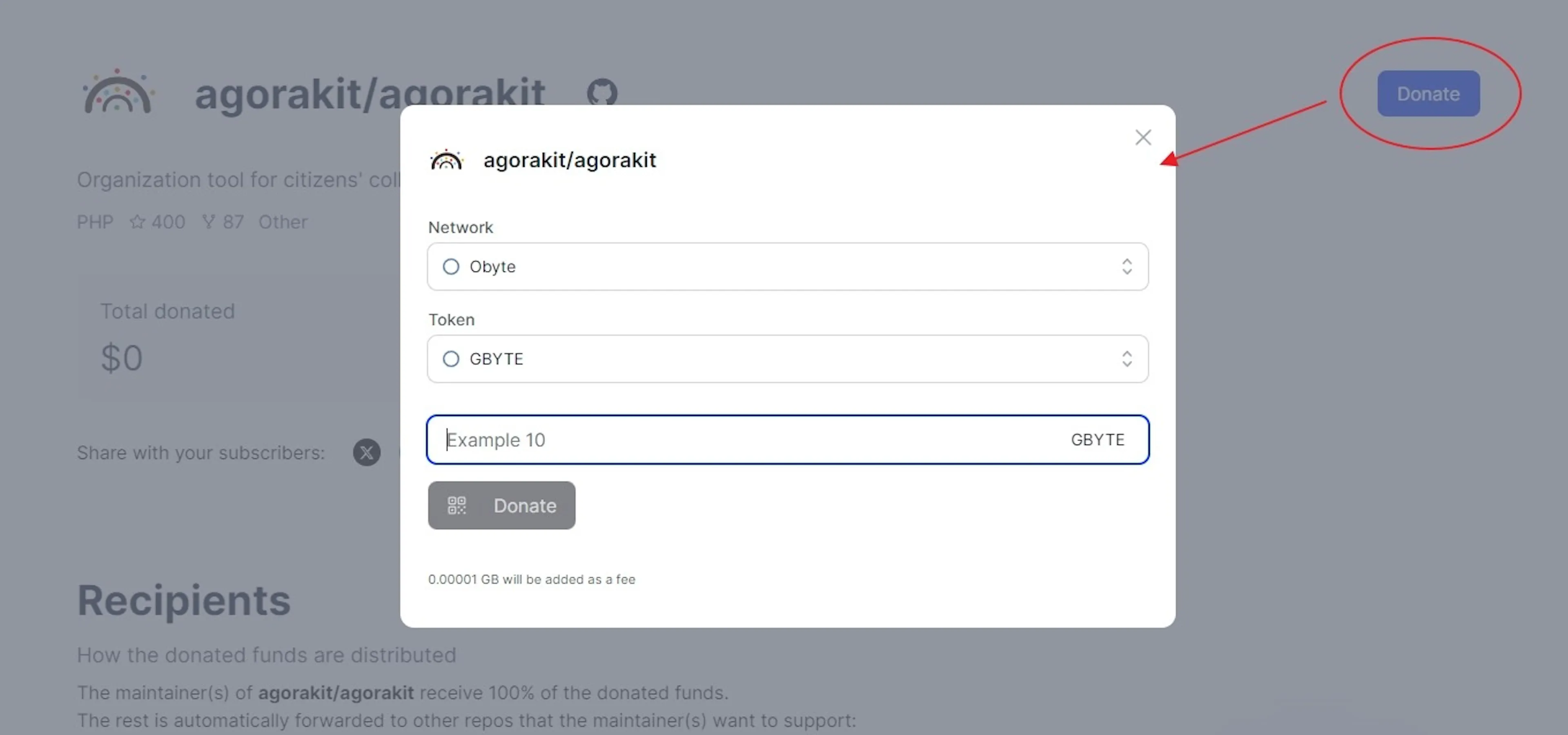
Receiving donations is just as simple. The repository owner completes a free GitHub attestation using a chatbot inside the
. This process usually takes only a few minutes and confirms that the person claiming the funds is connected to the repository.
After the verification is complete, the coins becomes available to collect. Maintainers can take the full donation or send part of it onward to other repositories they want to support. That creates a nice chain of generosity across the open-source world, helping one contribution spread its magic beyond its original destination.
You can check out more episodes of this series below:
-
5 Open-source and Free Operating Systems to Donate via Kivach -
5 Open-source Blogging and Writing Tools to Donate to via Kivach (Ep V) -
5 Open-Source, Free Software You Didn’t Know You Needed to Protect Your Data -
5 Open-Source Crypto Tools You Can Use for Free —and Support with Kivach -
5 Open-Source Projects to Donate via Kivach, Episode VII: Games to Play for Free!
如有侵权请联系:admin#unsafe.sh