When you read the term “smart contract,” there’s a high chance you also think about Ethereum. You co 2026-10-1 20:27:5 Author: hackernoon.com(查看原文) 阅读量:5 收藏
When you read the term “smart contract,” there’s a high chance you also think about Ethereum. You could say that's their flagship product, but they’re not the only platform that offers this software. It may not be the easiest one for beginners, either.
Several networks have explored simpler ways to automate agreements while keeping the same basic goal: letting software carry out rules that people agreed on in advance. Let's explore a bit the world of smart contracts without Ethereum.
Smart contracts aren't exclusive to Ethereum.
To revisit this concept, a smart contract is a digital program that follows pre-set instructions or agreements when certain conditions are met. It usually involves cryptocurrency, and a transaction can trigger the contract when someone interacts with it or provides the required input. The contract then applies its pre-set rules to determine the outcome.
Everyone involved knows beforehand what the contract will do, so there are no surprises. Smart contracts can automate payments, exchanges, loans, bets, games, and many other applications.
Ethereum became the best-known network for smart contracts because it introduced a general-purpose environment where developers could build almost any decentralized application. Over time, it attracted a huge community, thousands of projects, and programming languages such as Solidity that let developers create complex applications. There’s a steep learning curve, though, for users and developers alike.

Past mistakes in coding have led to
or funds
. Besides, transaction approval depends entirely on Ethereum’s network of “validators,” which opens the door for censorship. That’s why other crypto networks have created their own version of smart contracts, with the same use cases or even more. Programming may also be easier for developers, and their interface can be so user-friendly that average users could create their own
—depending on the platform.
Among these networks that provide smart contracts without Ethereum, we have BNB Chain, Solana, Avalanche, Cardano, Polkadot, and of course, Obyte. Each one has its own approach to scalability, fees, tools, and decentralization.
Smart Contracts in Obyte
To start, smart contracts in
are based on a Directed Acyclic Graph (
) structure instead of a blockchain. That means there’s no transaction approval: every user is its own “miner,” and every transaction added is immutable, linked with all the previous ones. Obyte has no middlemen, so it doesn’t have censorship. As for
specifically, they’re designed to be human-readable, so participants can write and review the conditions in plain language before approving them.
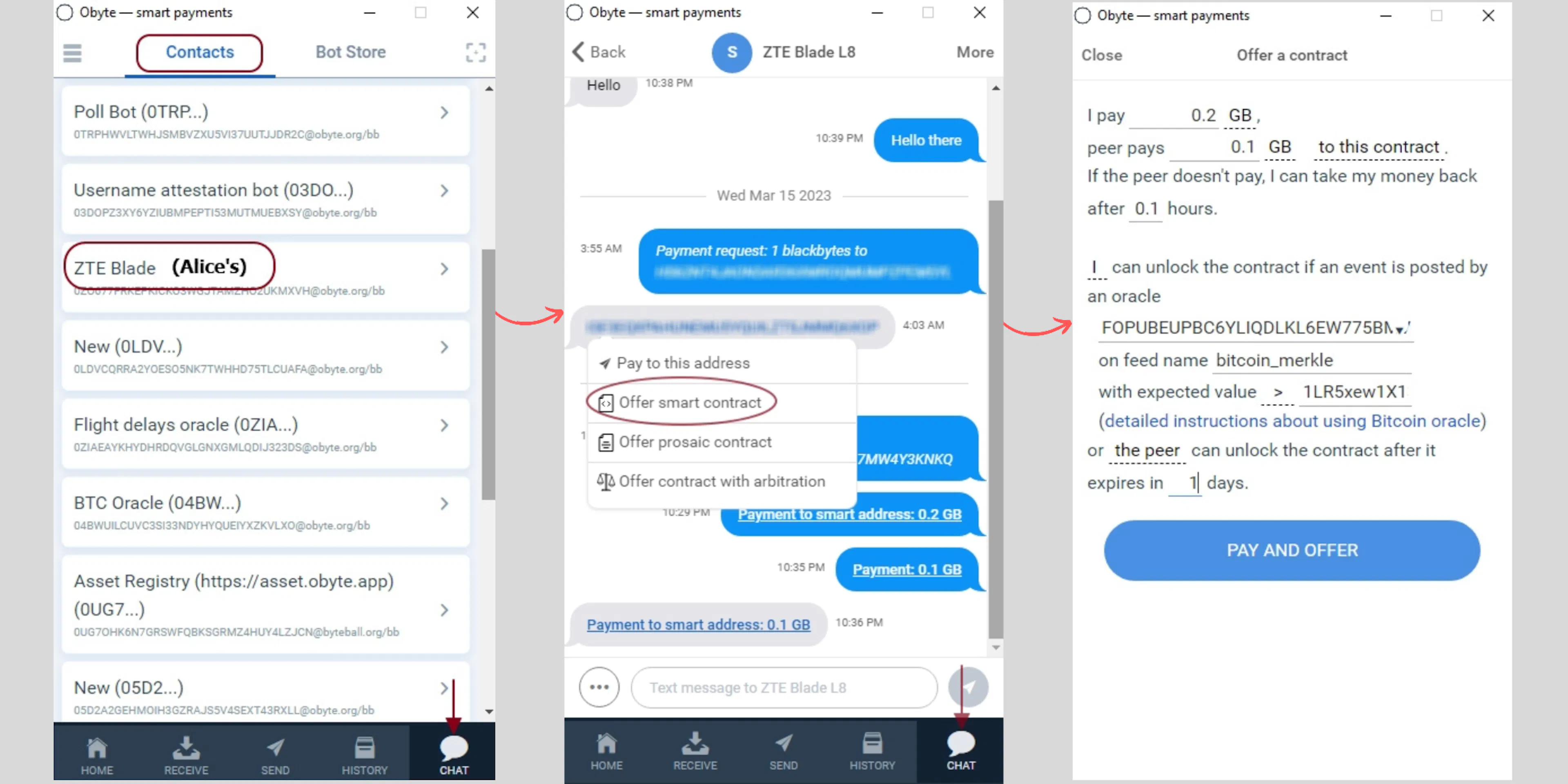
This way, a payment, for example, can stay locked until a package arrives, a document is signed, or several people approve the same transaction. Once the agreed condition is satisfied, the payment can be released without relying on an escrow company or another middleman. However, if you need a human professional involved to resolve potential disputes, we also have a list of available arbiters on the
to include in your smart contracts.
The ArbStore is a decentralized escrow service built on Obyte that helps two parties trade with greater protection. Funds are locked in a smart contract until the agreed conditions are met, and the buyer releases funds in favor of the seller. If a dispute occurs, an independent arbiter reviews the evidence and decides who should receive the funds.
Beyond this, Obyte also supports
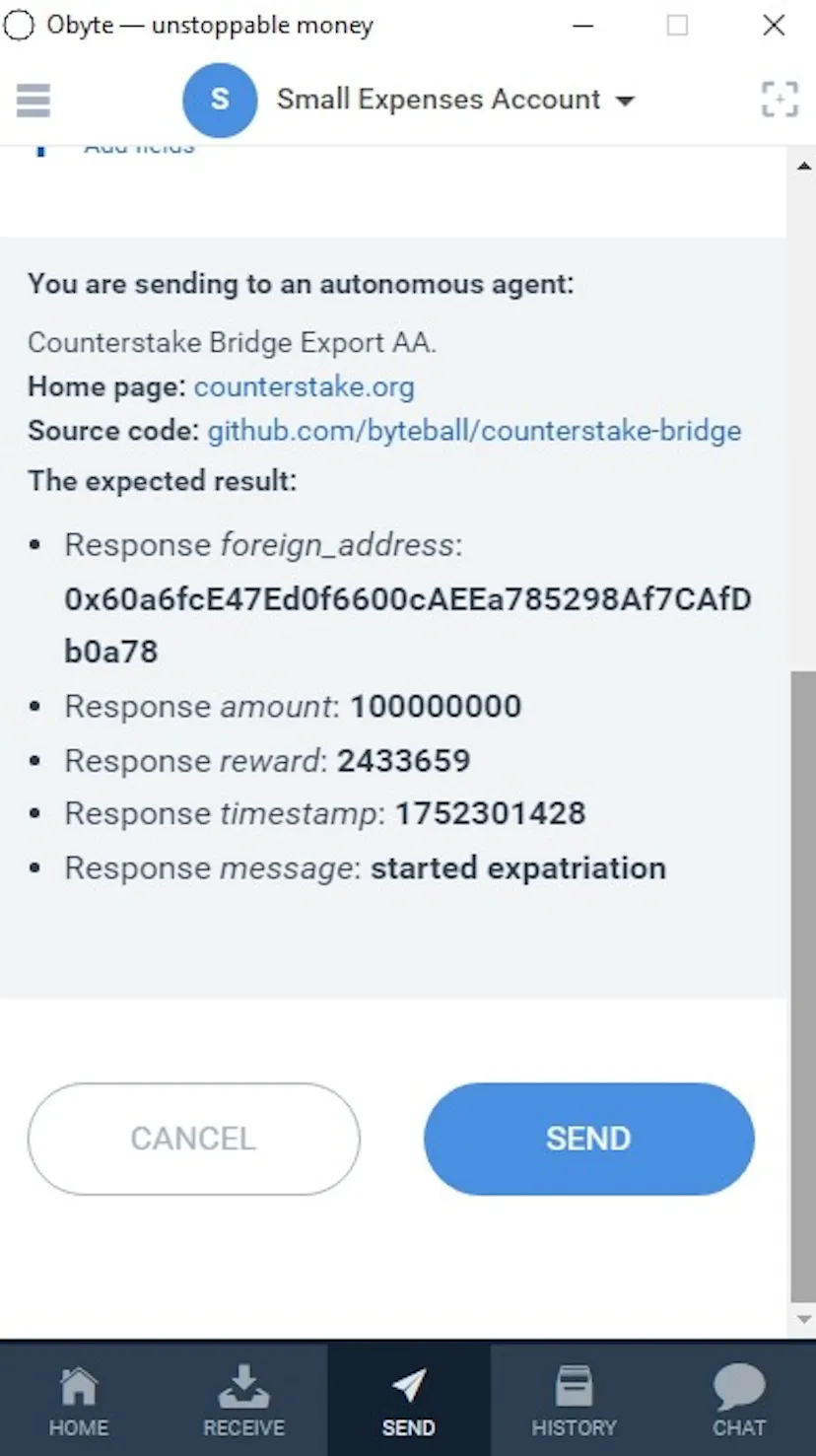
, decentralized exchanges, prediction markets, self-sovereign identity, and other DeFi applications. A freelance payment, a community crowdfunding campaign, a trading strategy, or a digital asset swap can all use the same idea: define the conditions first, then let the network carry them out. Without complex steps and including previews of the transaction results.
As you can see, smart contracts without Ethereum do exist, and they may come in handy. Now it’s your turn to choose your network.
如有侵权请联系:admin#unsafe.sh