This list covers seven platforms that help companies secure media placements for building brand awar 2026-9-28 12:30:1 Author: hackernoon.com(查看原文) 阅读量:2 收藏
This list covers seven platforms that help companies secure media placements for building brand awareness, from broad global marketplaces to regional specialists and outreach-led services, based on how well their formats, markets, and buying models serve that goal. The table matches each one to the kind of buyer it suits, because the right fit depends more on who is buying than on whose catalog is biggest.
The brand awareness platforms that fit each type of buyer
Platform | Best for |
1. Medialister | Agencies and enterprise teams running continuous brand and product awareness campaigns across many markets |
2. PRNEWS.IO | PR and marketing agencies that need multi-format placements worldwide, with planning support |
3. Publisuites | Brands building awareness in Spain and Spanish-speaking markets |
4. Backlinked | B2B companies focused on the DACH region that want self-serve and managed campaigns in one account |
5. PRposting | Teams testing new markets on small budgets |
6. Respona | Brands that want editorial mentions earned through done-for-you outreach |
7. Linksman | SaaS and tech companies seeking visibility in IT and business media |
Brand discovery increasingly happens beyond company websites
Trust now weighs as heavily in buying decisions as price. In Edelman's 2026 report on trust and brands, 88% of respondents called trusting a brand an important or critical purchase criterion, essentially on par with quality at 89% and value at 88%. That trust can only form around a name people have already come across.
More and more, that first encounter happens without a visit to the brand's site. A SparkToro study based on Similarweb data found that 68.01% of US Google searches in the first four months of 2026 ended without a click, up from 60.45% in 2024, with AI-generated answers among the drivers. When a summary replaces the click, people see a brand through what third-party media, and the answers built on those sources say about it.
Getting into those sources consistently is where the challenge lies. In Muck Rack's State of PR survey, 72% of PR professionals named low journalist response rates as their biggest earned-media challenge. That is why many teams pair outreach with paid media placements, which turn presence in the right outlets into something they can plan and scale.
1. Medialister
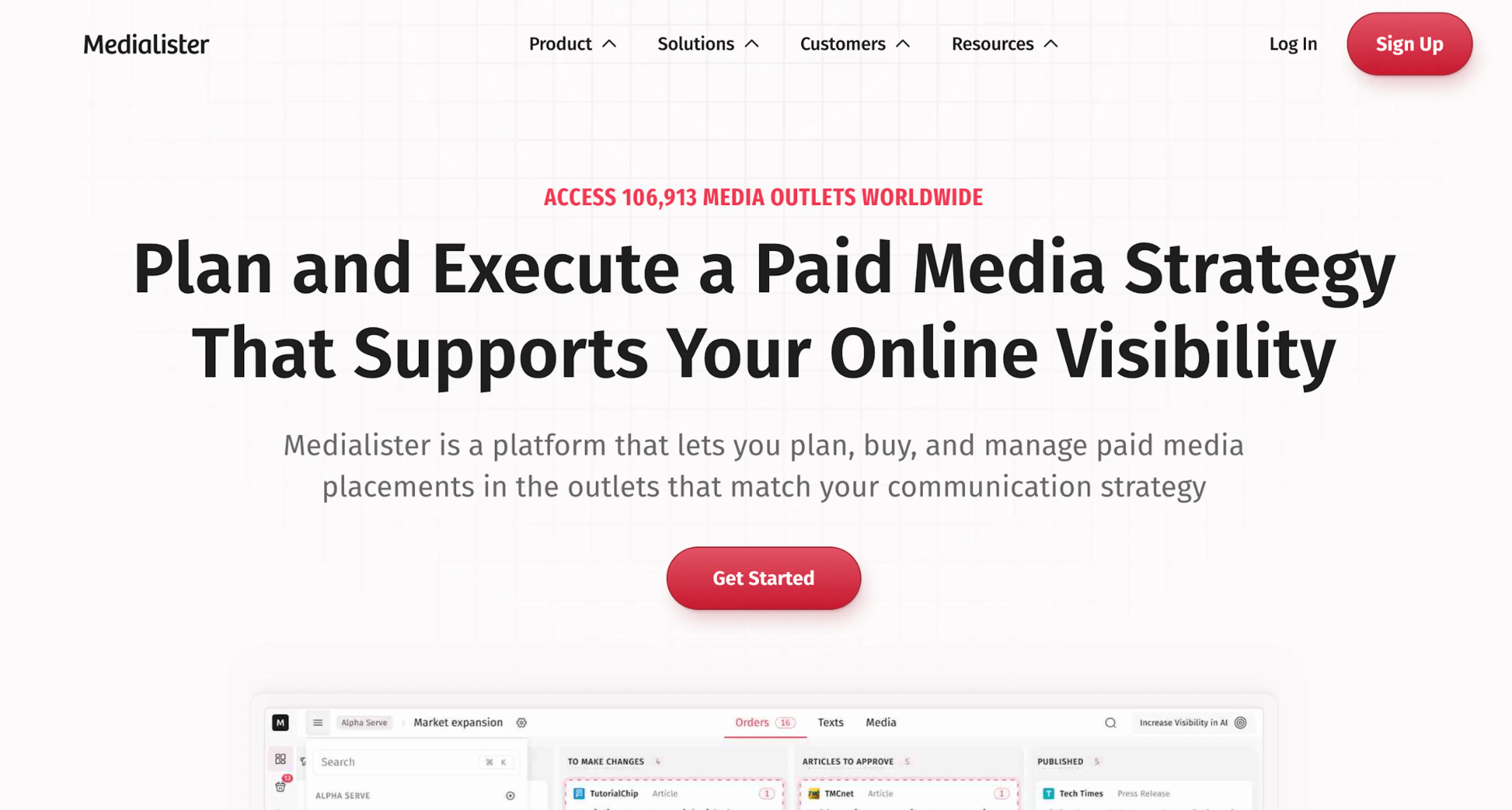
Medialister is an AdTech platform for planning and buying media placements in outlets across 176 countries. Brand and product awareness is one of the goals a user picks before launching a campaign, and the platform provides tailored filters and ready-made media selections for that goal. Audience and traffic data from SimilarWeb, Ahrefs, and Semrush are visible for every outlet after registration. A planned Attention Index will show how long a publication in a given outlet holds its audience's attention.
The most distinctive feature is an MCP server that connects a Medialister account directly to Claude, ChatGPT, or Gemini. In a chat, a marketer can ask the assistant to assemble outlets for an awareness goal, score them against chosen criteria, and add them to the cart, but no transaction goes through until a person confirms the purchase. Agencies can run several projects, manage a team, set up guest access for clients, and opt for post-payment. An optional guarantee keeps a placement live for 12 months or refunds the cost.
- Catalog: 106,000+ media outlets
- Model: self-serve marketplace
- Formats: press releases, articles, contributor posts, listicles, interviews, thought leadership, paid news, mentions
- Payment: pay-as-you-go per placement plus a fixed commission
2. PRNEWS
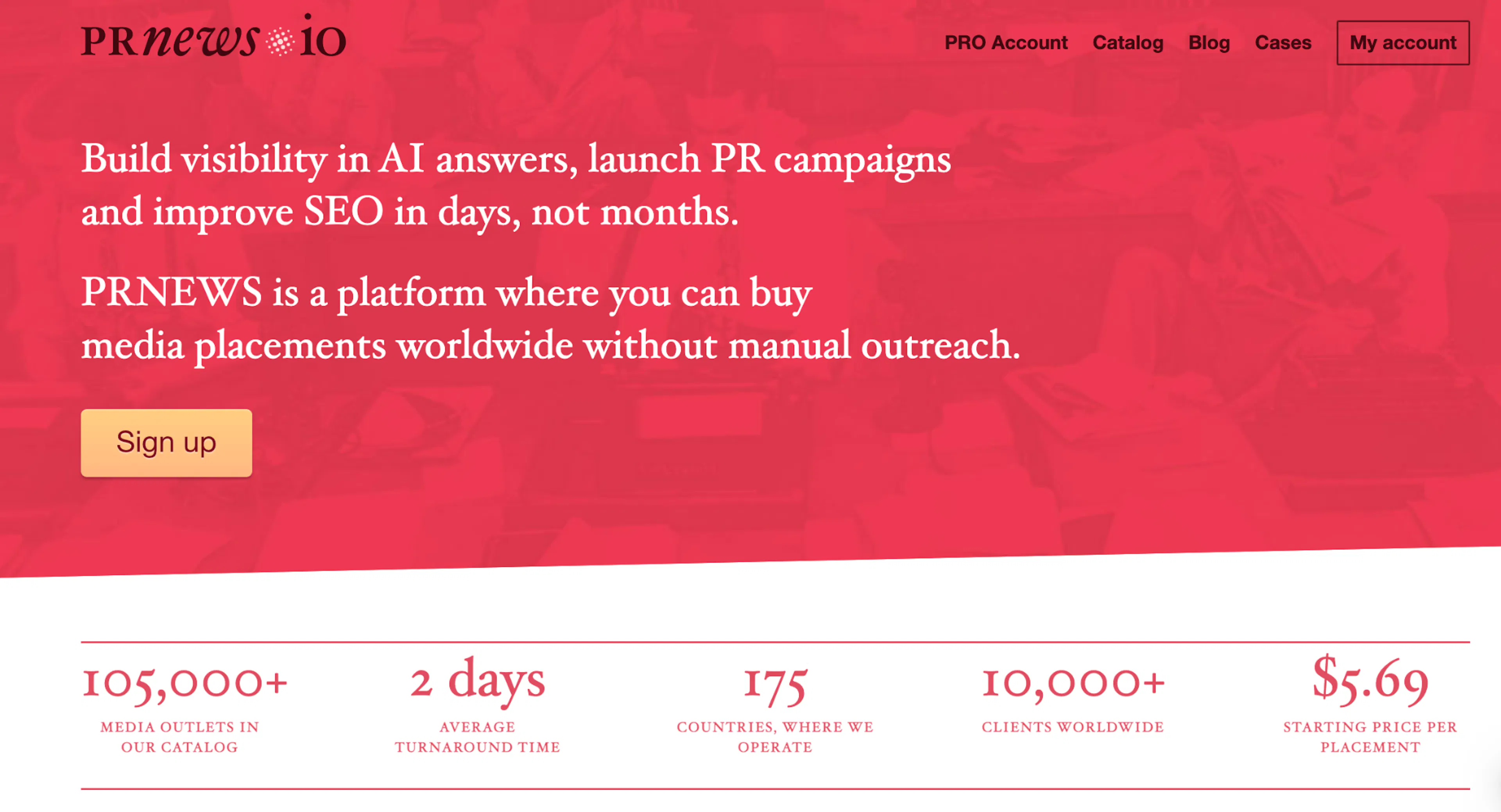
PRNEWS is a platform for buying and managing paid media placements across nearly 175 countries, used largely by PR and marketing agencies that need international reach. A single outlet often offers several formats, so a brand can introduce itself with a press release and return to the same readers later with an interview or a thought-leadership piece. Content writing, translation into the local language, and a guarantee that the placement stays live for at least a year can all be added at checkout.
Ready-made media selections grouped by marketing goal give campaigns a starting point, and missing outlets are added on request. A PRO subscription adds agency tools: a free monthly media plan with a strategy consultation, a one-click CSV export of the whole catalog with prices, custom selections per project, and bulk blacklisting of hundreds of domains. A filter for outlets that allow tracking pixels lets a team measure audience reach with its own analytics.
- Catalog: 107,000+ media outlets
- Model: self-serve marketplace
- Formats: press releases, articles, contributor posts, listicles, interviews, thought leadership, paid news, mentions
- Payment: pay-as-you-go per placement, optional PRO subscription
3. Publisuites
Publisuites is a Spanish marketplace that connects brands and agencies with digital news outlets, trade media, and specialist blogs, and is part of the Spanish media group Prensa Ibérica. That ownership ties it closely to the local media ecosystem, which makes it a natural pick for awareness campaigns in Spain, Latin America, and other Spanish-speaking markets. Before buying, users can filter outlets by language, traffic, and presence in Google News and Discover, two surfaces where new readers often first come across a brand.
Press release distribution is sold in fixed packages covering 25 to 65 media outlets per release, with at least 80% of the promised placements guaranteed. Brands that would rather not run the process can hand it off to a managed service starting at €200 a month, where the team picks outlets, coordinates writing through a network of 6,000+ authors, and runs the campaign.
- Catalog: 20,000+ media outlets and blogs
- Model: marketplace + managed service
- Formats: sponsored articles, press releases
- Payment: prepaid balance, per placement
4. Backlinked
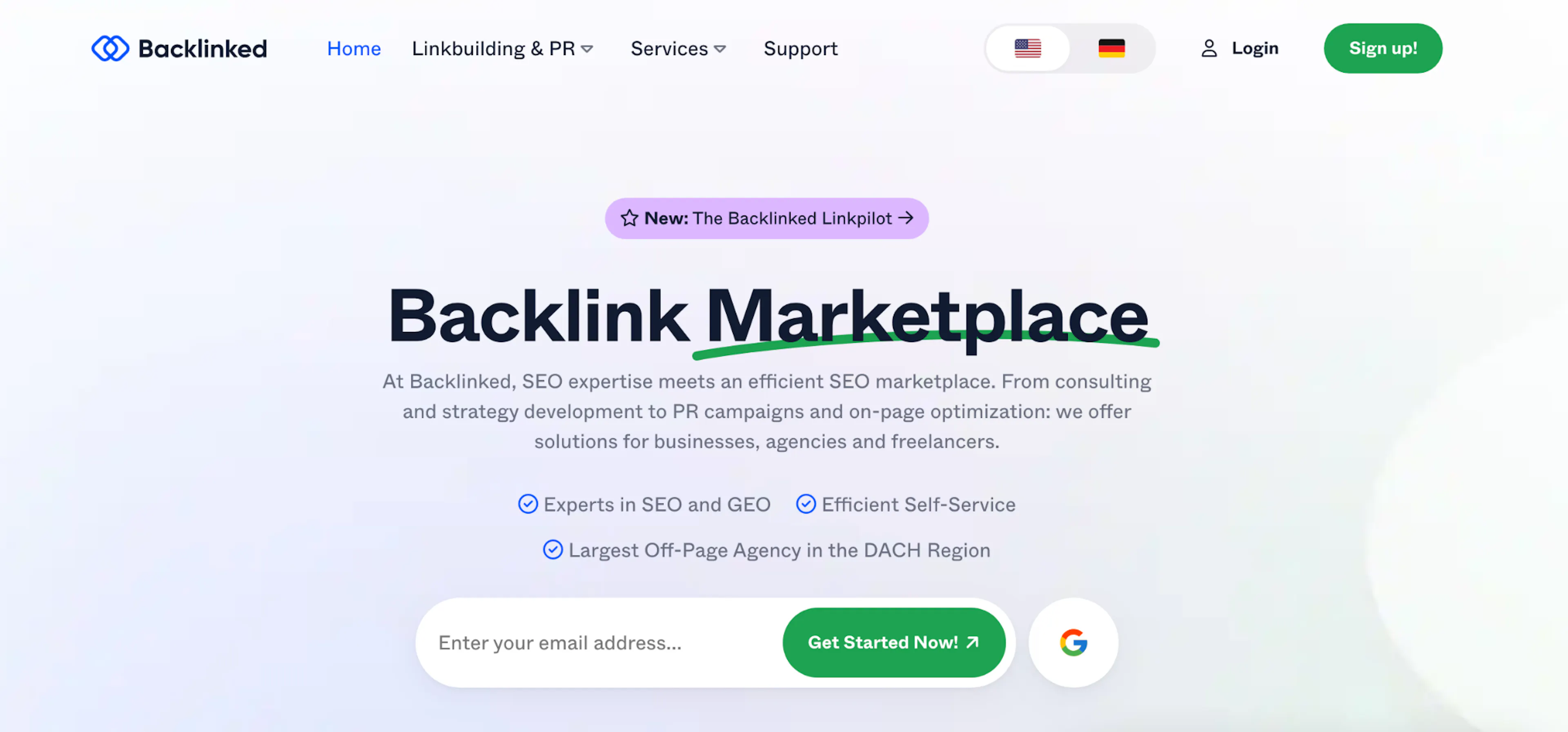
Backlinked is a German marketplace and agency whose home market is the DACH region, although its catalog also covers international sites, and it works with business clients only. A company can choose outlets and order placements itself or hand the whole campaign to the in-house team within the same account. Its recurring brand mention campaigns, run monthly with no long-term contract, are aimed squarely at awareness: they aim to get a brand mentioned in relevant media, with or without a link.
An AI tool called Linkpilot scores sites for relevance to a project and suggests where a brand should appear, and a free AI Visibility Check shows whether that brand already appears in AI answers. Each order gets its own chat with a platform manager, and buyers can set future publication dates, which makes it easier to time coverage around a launch.
- Catalog: 100,000+ sites
- Model: marketplace + managed service
- Formats: sponsored articles, brand mentions, press releases
- Payment: prepaid balance, pay-as-you-go
5. PRposting
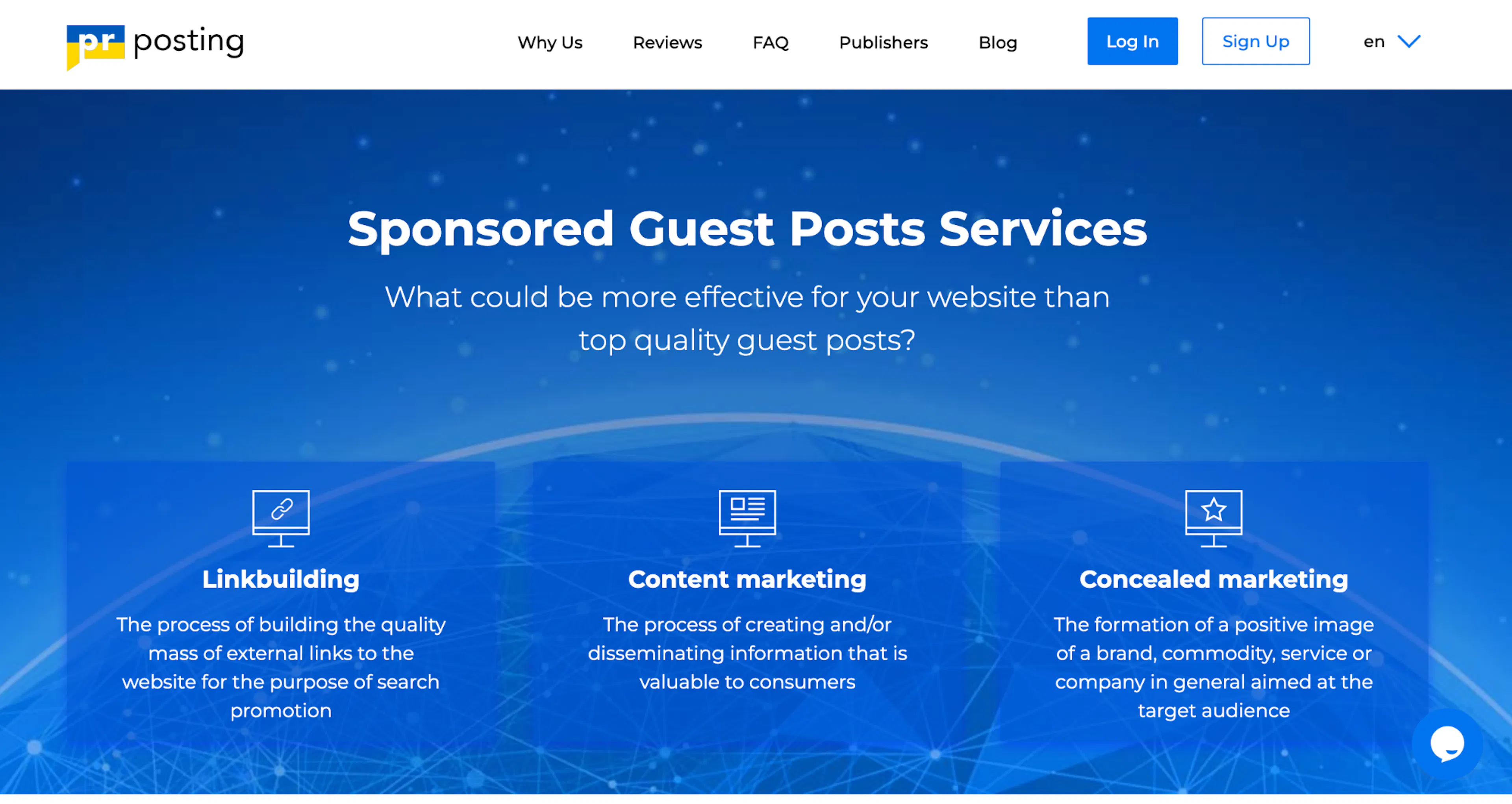
PRposting is a marketplace of independent sites and media outlets spanning 177 countries and 50 topic categories. Every site is added after direct negotiation with its owner and passes manual moderation, and the catalog shows each outlet's publication requirements, cost, turnaround, and audience metrics before purchase. Brands entering several markets can save filter sets and get email alerts when matching outlets are added, or ask the team to assemble a custom catalog for a specific topic, region, and budget.
The payment flow helps keep testing low-risk. When an order is confirmed, the amount is held and charged only after publication, with the amount returning to the balance if the publisher declines, and the minimum payment is $10. Placements carry a free three-month guarantee that can be extended to 12 months for 15% of the outlet's price. For hands-off campaigns, a manager selects outlets and prepares publications within a set budget, then sends a report.
- Catalog: 23,000+ sites
- Model: marketplace + managed service
- Formats: sponsored posts, articles, news, press releases, interviews, reviews
- Payment: prepaid balance, per placement
6. Respona
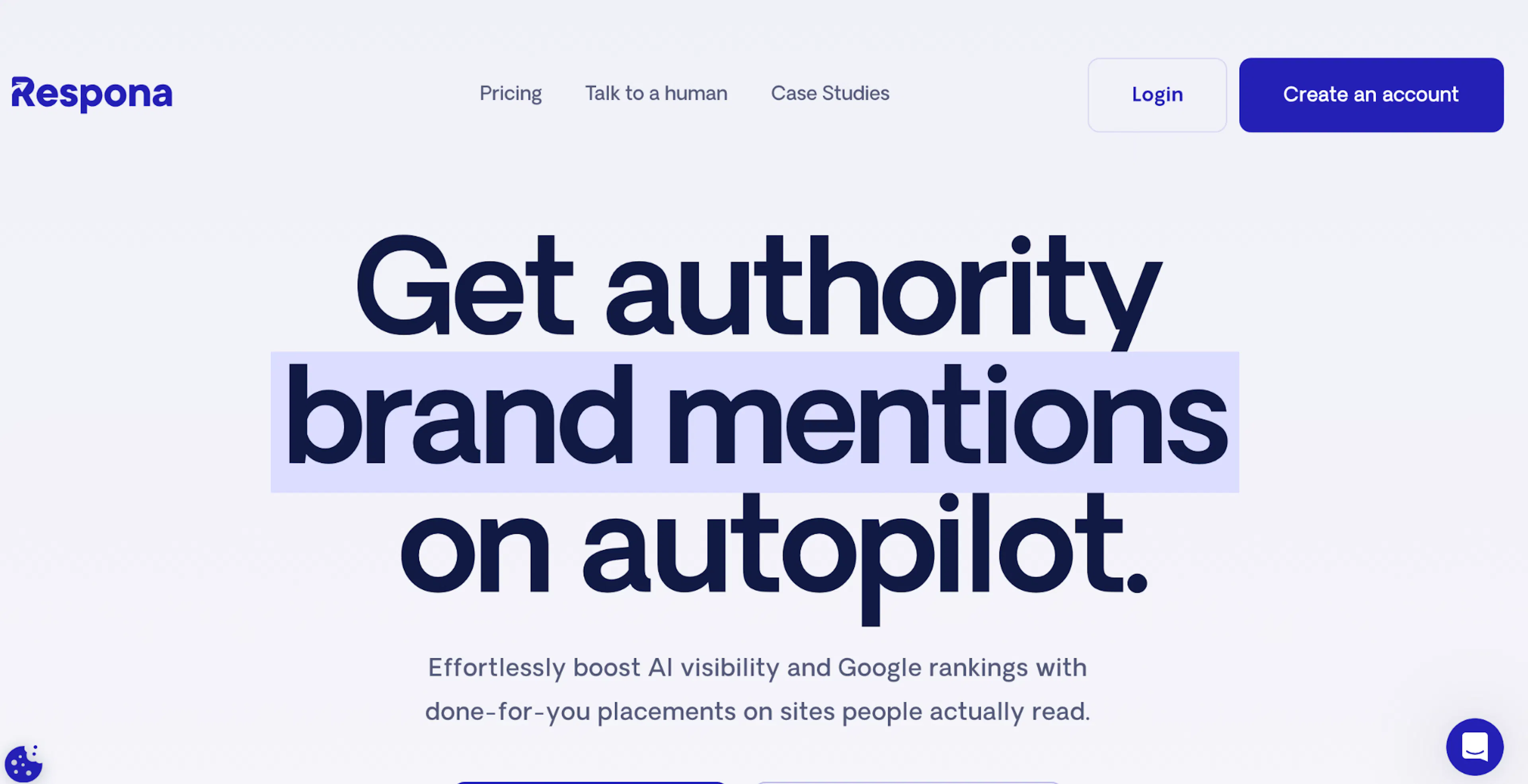
Respona runs two products: a done-for-you service that secures brand placements and a DIY platform for teams that prefer to pitch editors themselves. On the managed side, a client sets target pages and a quality bar, and the team handles prospecting, outreach, follow-ups, negotiation, content, and publication. Clients can also add AI prompts, after which a tracker shows whether the brand or its competitors are mentioned in the answers.
This approach serves a distinct niche: outlets, including some tier-1 media, that offer editorial coverage only and can be reached through outreach and relationships. On the DIY platform, the software finds relevant publications, locates individual editors' email addresses, personalizes each pitch with AI based on the editor's past articles, and sends follow-up sequences automatically. A placement removed within 12 months is replaced free of charge.
- Catalog: not available
- Model: managed outreach service + outreach tool
- Formats: listicles, product reviews, comparisons, editorial mentions
- Payment: pay-per-result for the managed service, subscription for the DIY tool
7. Linksman
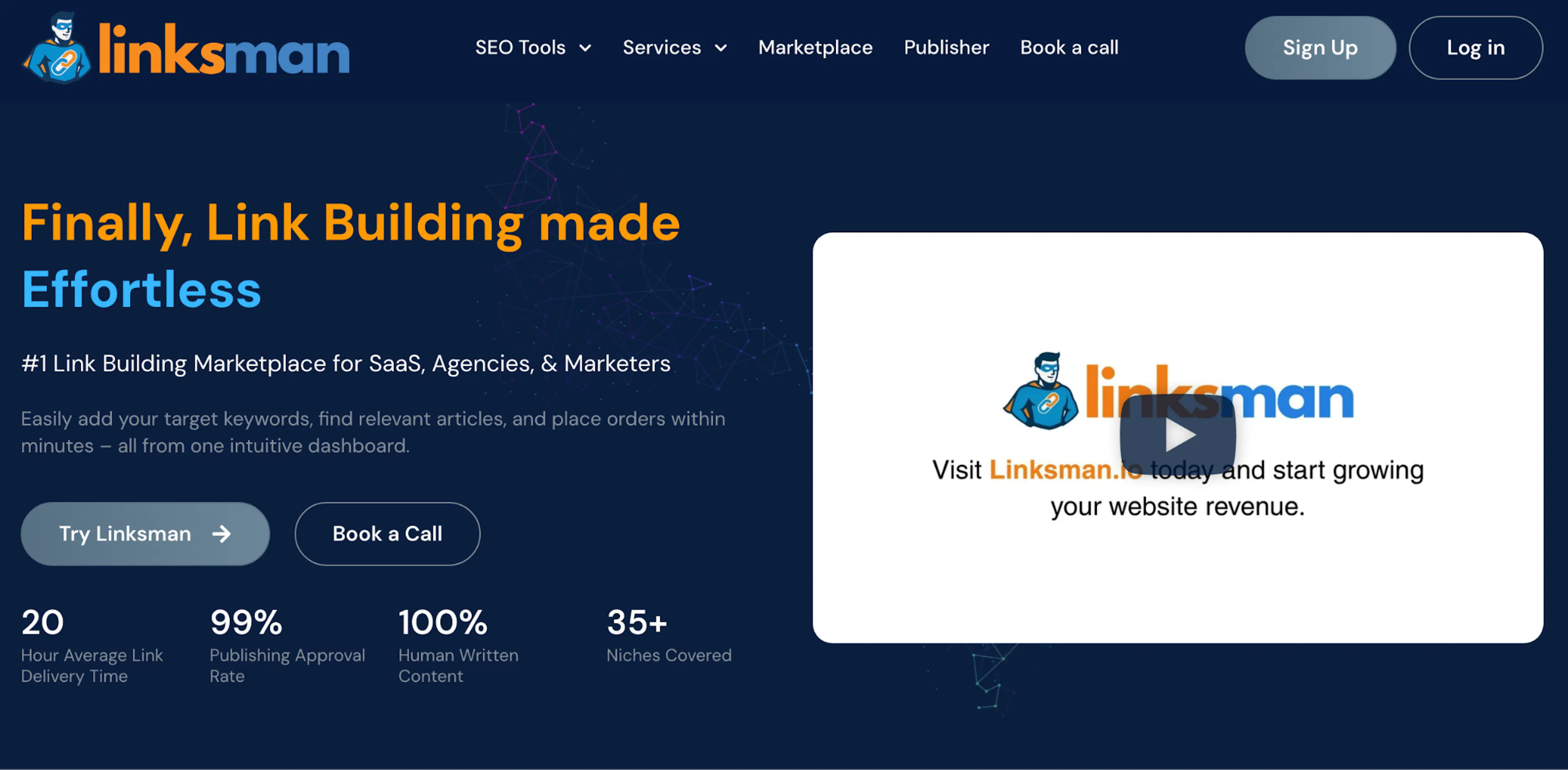
Linksman is a marketplace and service built for SaaS companies, agencies, and marketers. It offers manually verified sites across niches such as SaaS, technology, business, finance, and e-commerce, with support for 35+ languages.
Its SaaS outreach campaigns are the most relevant offering for brand awareness. The team manually finds relevant IT and business publications and works a software or B2B product into expert reviews, software comparisons, and analytical pieces.
Buyers can filter the catalog by traffic, geography, and niche, and a Link Suggestion Tool surfaces existing articles on a chosen topic where a brand mention would fit. For larger campaigns, the team helps with outlet selection and planning, and agencies can offer the work under a white-label arrangement.
- Catalog: 9,000+ sites
- Model: marketplace + managed service
- Formats: guest posts, listicle placements, brand mentions, in-content mentions
- Payment: one-off payments or packages
Awareness grows when a brand consistently shows up where its buyers already read
None of these platforms writes a brand's story; what they change is how quickly that story reaches the right readers and in how many markets at once. Broad global catalogs suit teams planning continuous, multi-market campaigns, regional specialists go deep where their home media is strongest, and outreach-led services fit brands chasing a particular kind of editorial mention.
A single article rarely makes a name stick; steady presence across relevant outlets, formats, and now AI answers does. The platform worth choosing is the one that makes that rhythm easiest to sustain for your markets and budget, with success judged by whether buyers start to recognize the brand rather than by placement count.
如有侵权请联系:admin#unsafe.sh