I didn't join Shipaton because I had a big startup plan.I saw an ad saying there was prize money for 2026-9-28 14:16:53 Author: hackernoon.com(查看原文) 阅读量:0 收藏
I didn't join Shipaton because I had a big startup plan.
I saw an ad saying there was prize money for winning apps, and I thought: why not give it a try?
At that time, I was working on an idea called Book of Me, a journal app built to feel like a book. [link to my first article] I liked the idea. I thought the design could be different from other journal apps. But honestly, my thinking was simple:
"This is a cool idea. It should work."
After Shipaton, I don't think like that anymore. Now when I see an app, I ask different questions. What makes people want to use it? What makes someone pay for it? What does it have that other apps don't?
And probably the biggest one: what can I do differently with the resources I actually have?
That change in thinking is the biggest thing I got from Shipaton.
I Thought AI Designs Were the Answer
When I started Book of Me, I used AI a lot for design ideas. I could ask for a beautiful screen, get an image, and think: "Wow. This is exactly what I want."
It felt like I had already solved the design problem. Then I had to actually build it.
An AI image doesn't have to work. It doesn't care whether the user taps something, what the screen size is, whether Flutter can do it, or what happens after a button press. It just has to look good. Some of those designs looked amazing as images and were terrible ideas for a real app.
So I changed my process. Before, I asked: "AI, make something like this." Now I ask: "This is what I want to create. Help me make it."
I still use AI a lot. I just don't want AI deciding what my product should be.
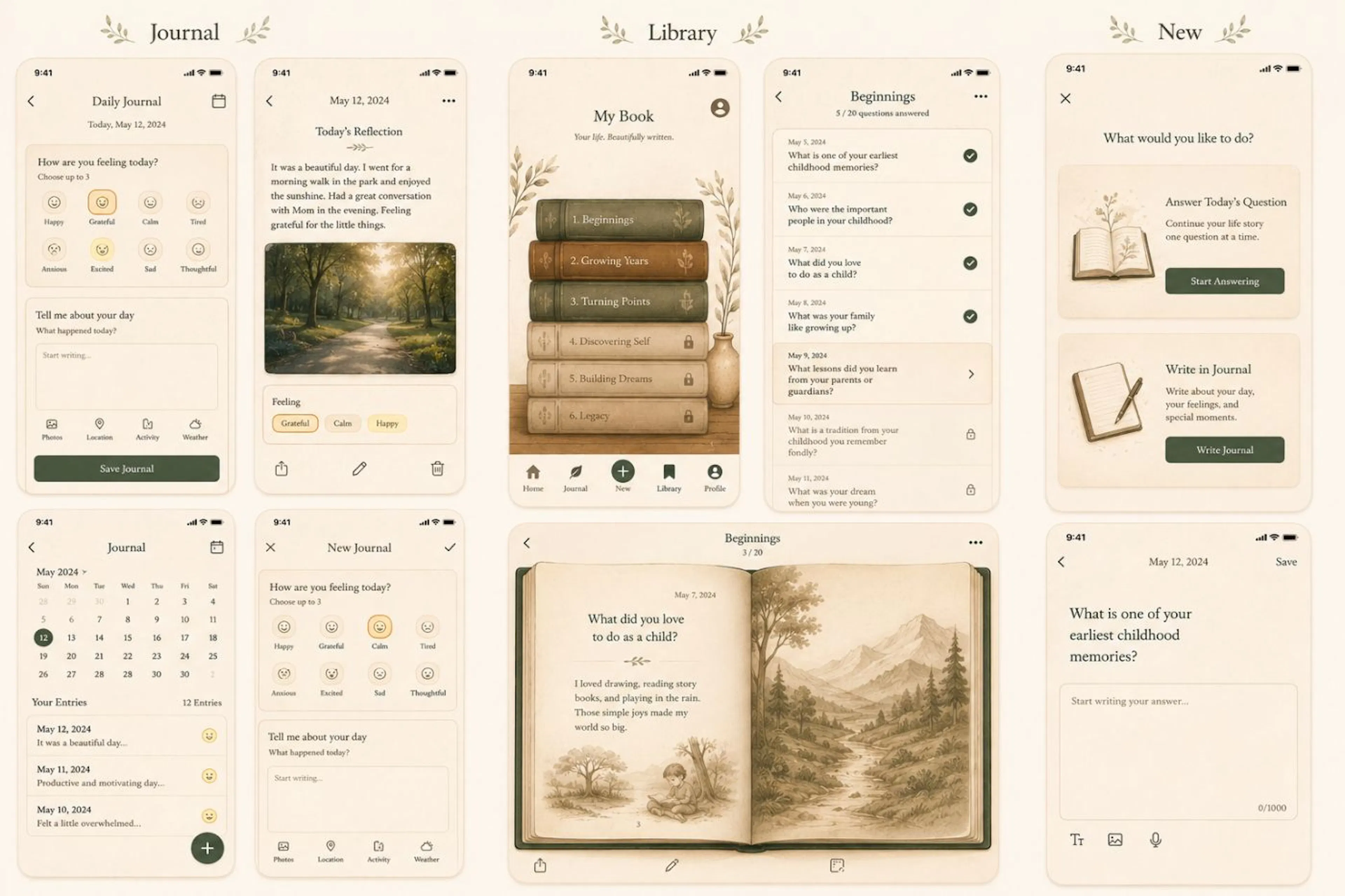 Initially what i thought my app would look like based on AI design
Then I Saw What I Was Actually Competing With
Shipaton changed my social media feed. I followed Shipaton judges and other developers, and I started seeing apps that were doing well. People were talking about monetization, design, onboarding, paywalls, and user experience, things I wasn't thinking about before. It was like I'd been building inside a small bubble, and someone opened a window.
Sometimes that wasn't comfortable.
I saw an iOS app that everyone seemed to love, including the Shipaton judges. Its design and interactions were on another level compared with mine. I tried to create a similar 3D paper-curl effect in my own app, and I couldn't do it. I tried again. Still couldn't.
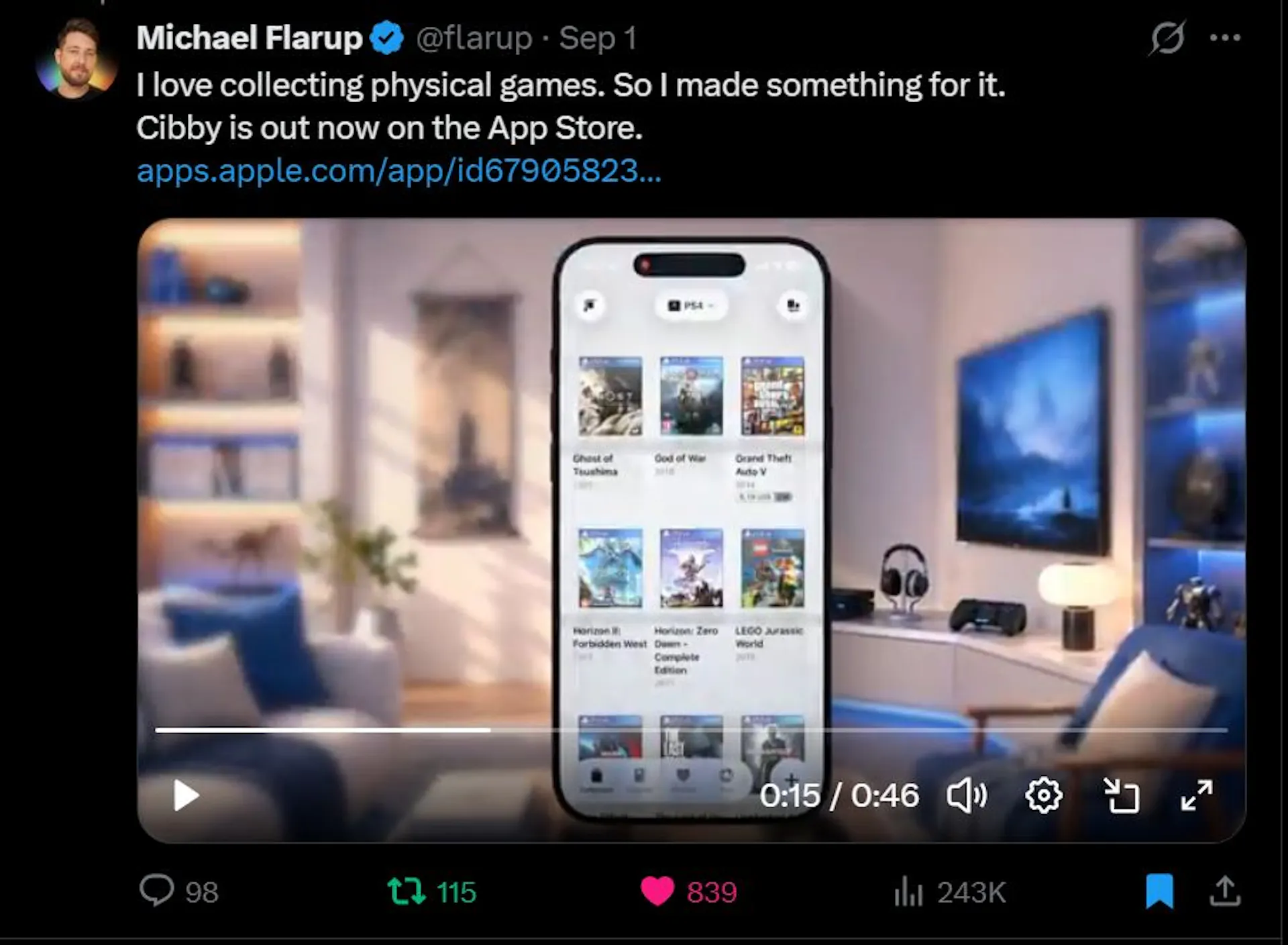
iOS has this kind of effect built in. In Flutter, as far as I could tell, I'd have to build it myself with custom painting, and I couldn't get it smooth enough.
I'm an Android developer working in Flutter with limited resources. Other developers had different tools, more experience, and sometimes paid AI tools I couldn't justify. For about ten days, I was stuck thinking maybe I just couldn't compete. That was one of the worst periods of the whole experience.
I Was Trying to Win Someone Else's Game
Eventually I realized something obvious. Why was I trying so hard to build exactly what another developer had already built?
Maybe the answer wasn't to keep trying forever. Maybe the better question was: "What can I make instead?"
That's when things started changing. Instead of the paper curl 3D, I built a page that moves over the other screens. Different animation, but something I could actually build and rather than delievering noting.
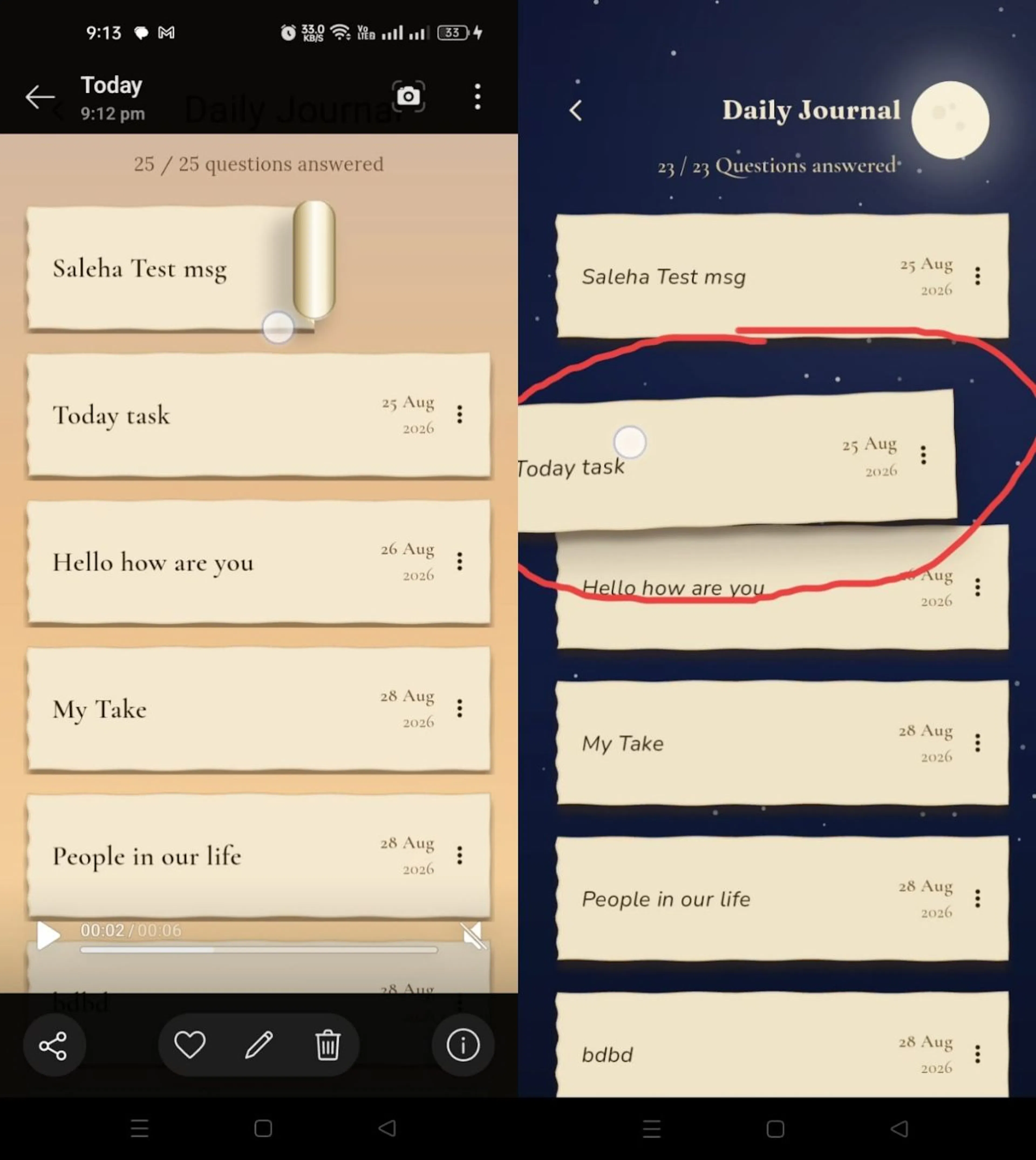 Try to Copy vs What I can do
It happened again with sharing. I saw an envelope animation and wanted something like it, but I couldn't make it. So I made something different: the text appears on a card, and then a seal appears on it. Is it the same? No. But I stopped caring about making it the same. I started asking: "If I can't create that, what can I create in that direction that I can actually do?"
I'd already dropped a laggy 3D book animation earlier (I wrote about that in my first article). Now I could see the pattern: build for the resources you have, not the vision you imagined. And doing something different is better than doing nothing.
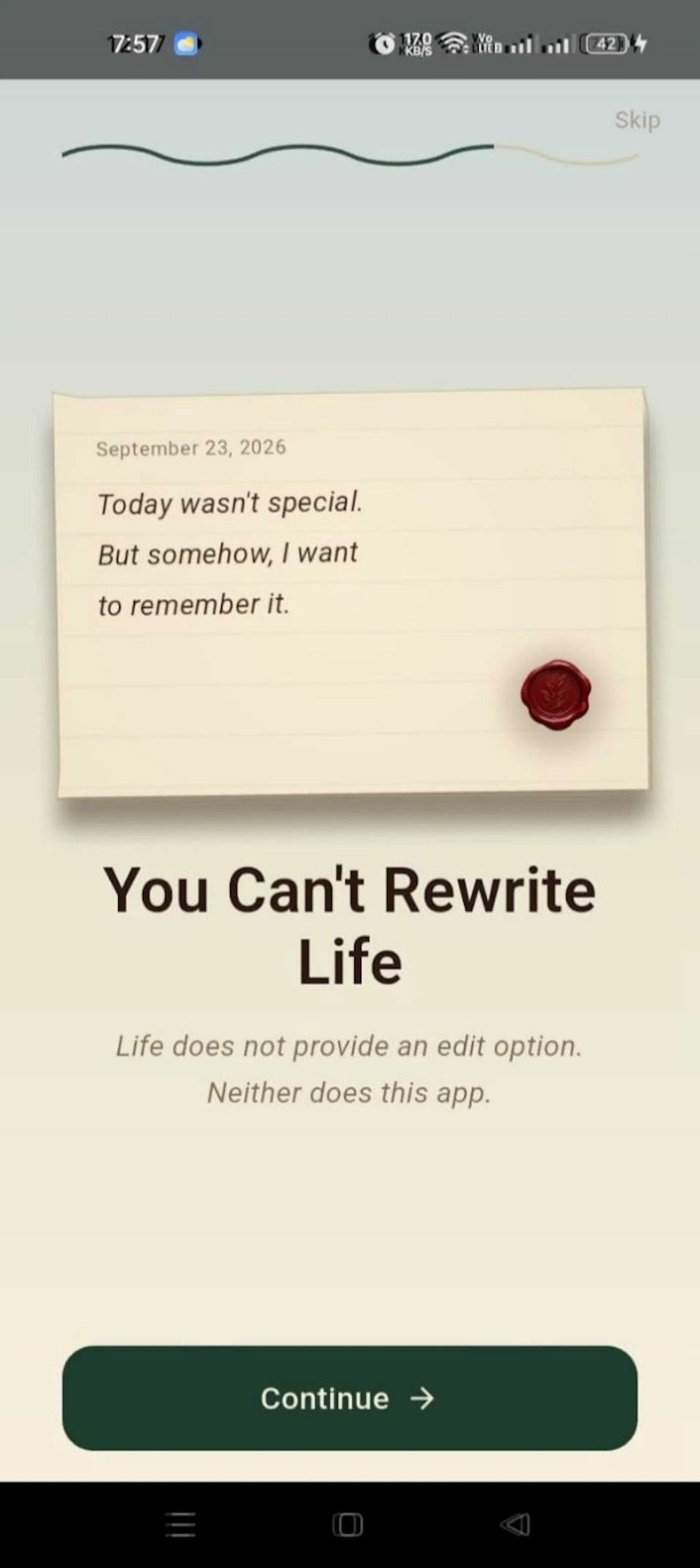 My Simpler Version
That's When I Started Coming Up With My Own Interactions
After I stopped comparing everything to other apps, I got more productive. Before Shipaton, I had no idea what an interaction was. Now I feel I have a real grip on how to make one that makes users feel good. My rule is simple: every interaction should match the app's theme and leave the user feeling calm.
- Memory tree: when someone saves a memory, a leaf appears on the tree. Tapping a leaf opens that memory, from the tree or the library. When a memory is deleted, its leaf turns dead.
- Day and night themes: in the day theme, the sun changes position and the whole atmosphere of the app changes with it. Clouds drift across the screen, and tapping one triggers rain and thunder, with the theme flickering slightly like a storm.
- Night theme: tapping the moon makes it brighter, and tapping the sky brings out aurora-like lines.
None of this was in a master plan on day one. It came from experimenting, after I stopped asking "how do I make my app as good as theirs?" and started asking "what would be cool in my app?"
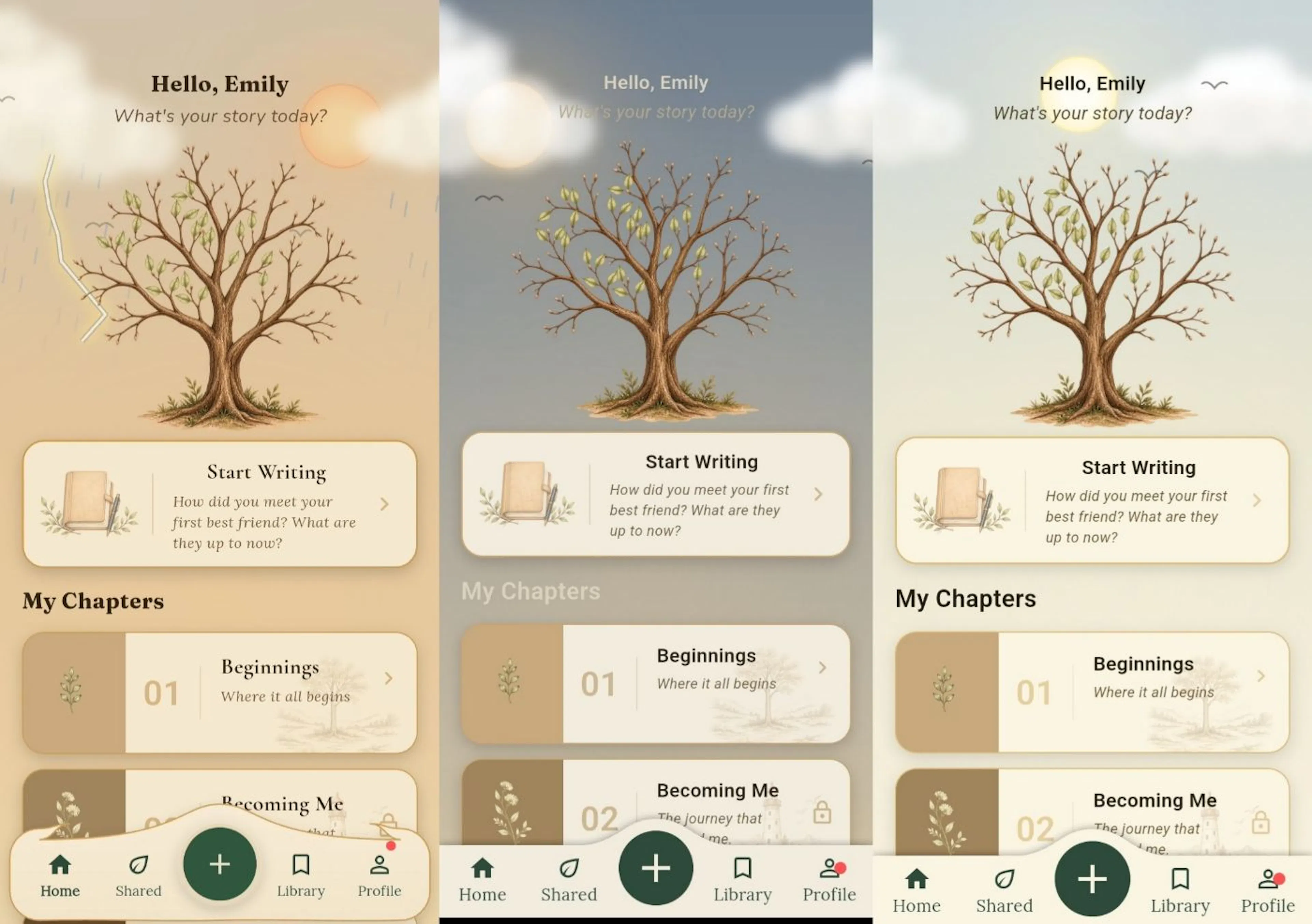 App theme that acts according to user phone time and thunder interaction when clicking clouds
I Also Stopped Caring So Much About Winning
Shipaton is a competition, and at first I cared about winning. There was prize money, there were judges, and there were people building impressive things.
But after comparing myself with other developers for so long, I started thinking about giving up. I actually told people in the Discord that I didn't know what the point was anymore. They helped me a lot. They said they knew they might not win either, but they were still doing it, because everyone is bad at their first attempt.
That stayed with me. I stopped asking "can I win?" and started asking "can I deliver my best?"
I didn't expect to learn so much just from seeing other people build. On Discord, people gave feedback: a different font, something missing on a screen, an idea I'd never considered. On X, I found developers sharing what worked, what failed, and what they were building.
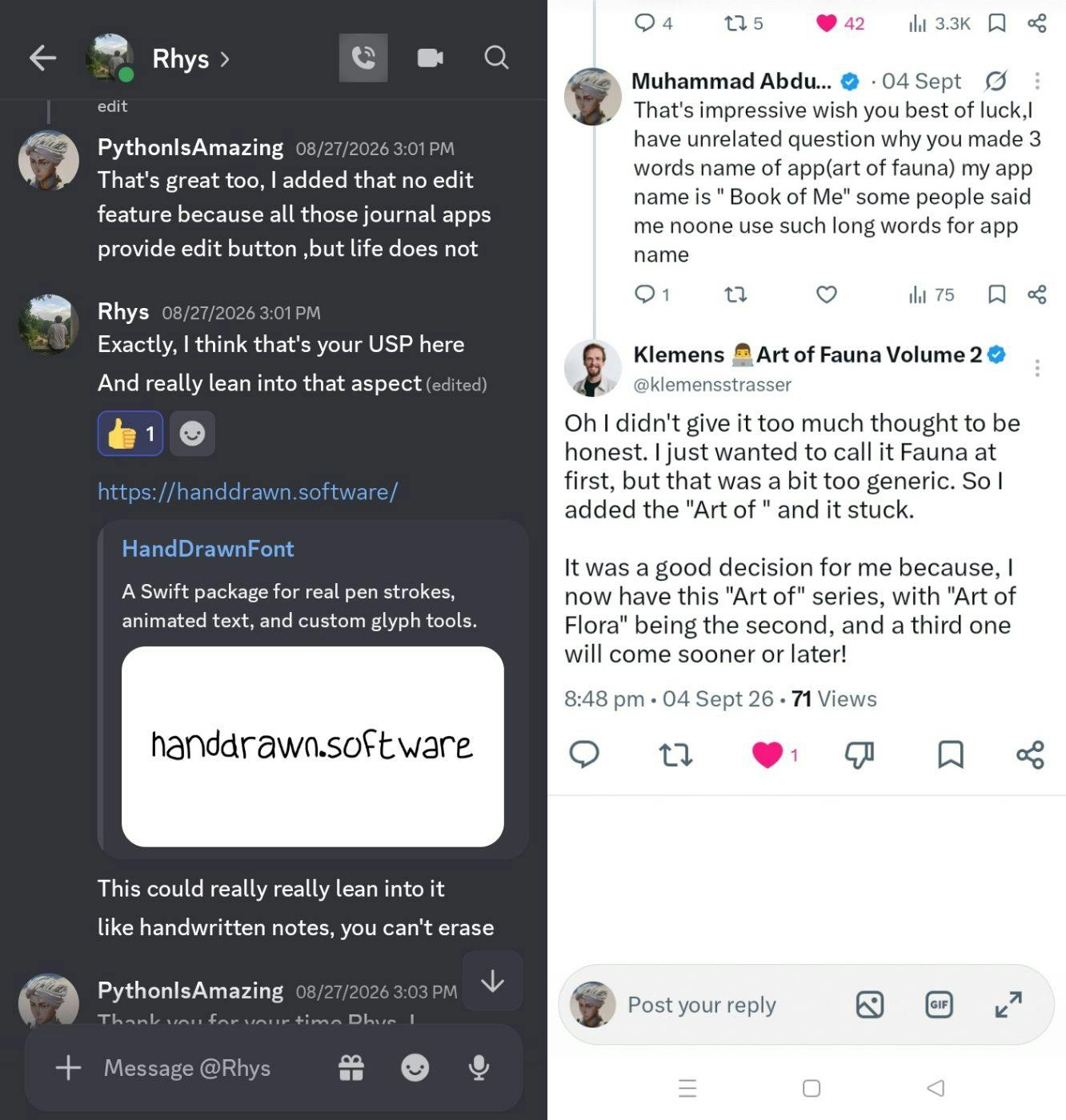
It even shaped my app's name. I originally wanted to call it Lifebook, but that name was already taken. Book of Me has three words, and apps usually avoid that. So I asked Klemmens, a Shipaton design judge, on X. He told me the three-word name had worked well for him with his app Art of Fauna, and he's now launching more apps in the same naming style. That helped me settle on Book of Me.
Rhys helped me in every question which i asked my revnenueCat and he even suggested me font package but i could not implement because that was Ios Package and my app was android.
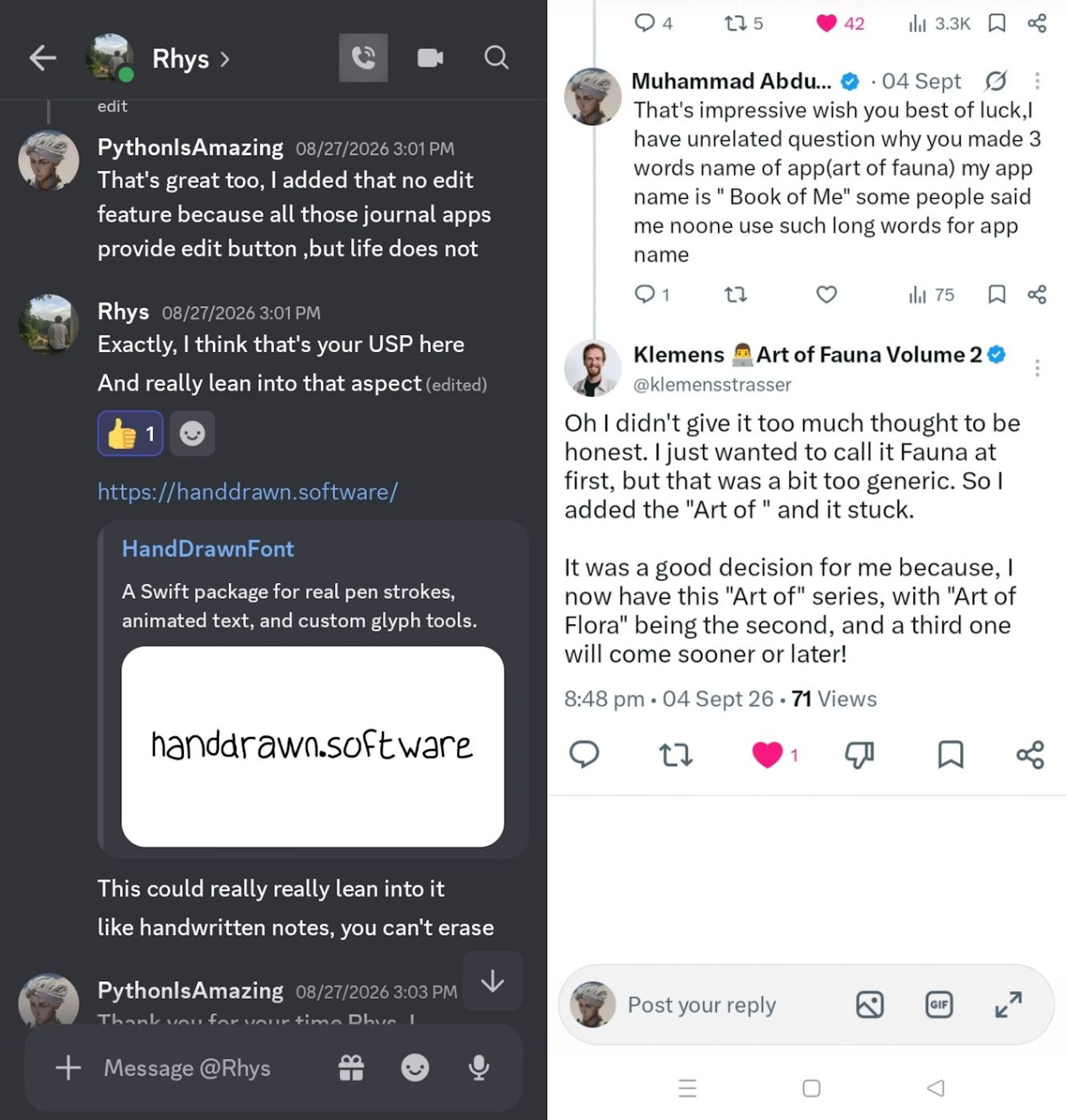
Seeing the real market also matters. You can spend months building and think you're doing great because you've never looked at what everyone else is doing. Then you look and realize there's much more going on. For me, that wasn't discouraging forever. It became motivating.
I Started Thinking About the Business, Not Just the App
Before, I mainly thought about features and design. Now I look at an app and wonder: what makes someone pay for this?
I got interested in paywalls and how successful apps present premium features, and I started paying attention to RevenueCat. I like the idea of a business that grows when the developers using it grow.
I don't want to pretend I became an expert in monetization. I didn't. But Shipaton made me realize that building an app isn't only about making something cool. At some point you have to ask why a real person would care about it, and, if you want income from it, why they'd pay for it.
Where Book of Me Stands Right Now
At the time of writing, Book of Me is submitted for production review on Google Play. I submitted it on 22 September for production level. [If it's live: the link goes here.] Waiting on review near a deadline is stressful, and it taught me to plan store review time much earlier than I did.
The Biggest Mistake I Made
Looking back, my biggest mistake was trying to follow every impressive design I saw. I'd see something cool, decide I needed it in my app, try to build it, get stuck, and feel my app wasn't good enough. That cycle wasted a lot of time.
If I started again, I'd first ask: why does this feel good? Maybe it's the movement, the surprise, or the way it fits the product. Then I'd take that idea and make my own version, not a copy.
What I'd Tell Another Developer
If you're looking at another developer and thinking "there's no way I can reach their level," I understand. But you're comparing your current work with their best work, and that's not a fair comparison.
- Use other developers as a source of ideas and feedback, not as a reason to stop.
- Decide what you want first, then use AI to help build it. Don't let AI decide the product.
- Ask why an interaction feels good, then make your own version.
- Build what you can build well with the resources you have.
- Create at least one thing that makes a user stop and think, "Oh, that's cool."
Shipaton Didn't Make Me a Winner
I'm not writing this because Shipaton turned me into a successful entrepreneur. It didn't. What it did was more useful to me. It showed me the real market. It showed me developers much better than me at things I wanted to learn. It made me uncomfortable, and it made me want to quit for ten days.
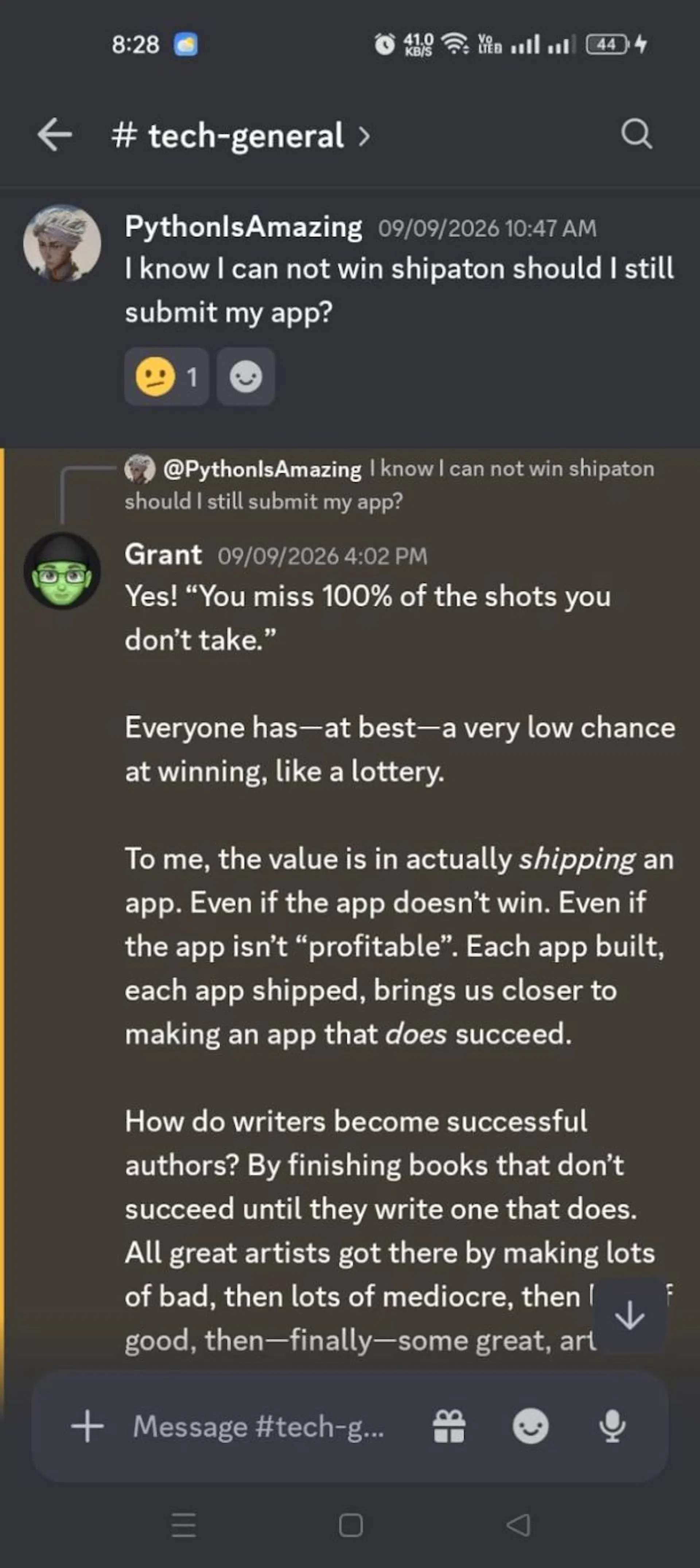
But it also changed me. I became more serious about design and more aware of monetization. I learned to work within my real resources, stopped copying everything I saw, and started using AI differently.
When I started, I thought: "This is a cool idea. It should work." Now I think: "What can my app do that other apps are missing?" That's a much harder question, and a much better one.
Shipaton didn't just change Book of Me. It changed how I look at building. If there's one thing I'd take from it: do what you can do best, follow your own vision, and nail it.
如有侵权请联系:admin#unsafe.sh