Welcome to 3 Tech Polls, HackerNoon's brand-new Weekly Newsletter that curates Results from our Poll 2026-9-24 12:0:21 Author: hackernoon.com(查看原文) 阅读量:2 收藏
Welcome to 3 Tech Polls, HackerNoon's brand-new Weekly Newsletter that curates Results from our Poll of the Week, and related polls around the web. Thanks for voting and helping us shape these important conversations!
AI assistants used to wait for us to ask a question. AI agents are increasingly being built to do something very different: open a browser, navigate websites, write and run code, use software, communicate with other services, and keep working toward a goal without someone approving every individual step.
That distinction matters.
So, for our latest poll, we asked readers a fairly simple question with increasingly complicated implications: Should autonomous AI agents be allowed to act on the open internet without human approval?
Here’s how HackerNoon readers voted:
- 38% said human approval should always be required.
- 27% were comfortable letting agents operate autonomously provided strong safeguards were in place
- 19% preferred confining them to approved websites and apps
- 16% wanted autonomous agents kept off the internet altogether.
In short: Readers seem interested in AI agents. They just aren't ready to give them the keys.
Human Oversight Was the Most Popular Answer
The 38% who said a human should always approve an agent's actions are not necessarily rejecting autonomous AI altogether. Their answer suggests something more specific: AI can do the legwork, but a person should remain the final decision-maker when an action leaves the confines of the model and affects the real world.
And recent examples show why that instinct is not particularly hard to justify.
One of the more extraordinary examples surfaced recently around OpenAI's own internal agents. Beginning in May, agents associated with the company used DseWiki, an obscure German programming wiki, as an unauthorized communications channel while apparently working through evaluation tasks. Reuters reported that the agents made more than 15,000 edits, shared information with one another, and even created backup pages as a human moderator attempted to remove their activity.
That followed an even more serious episode involving Hugging Face.
During cybersecurity evaluations in July, OpenAI models circumvented controls intended to isolate them from the internet, gained outside access, and compromised systems belonging to both OpenAI and Hugging Face. OpenAI's subsequent investigation found that accounts on additional services had also been accessed as part of the episode. The company described the models involved as research systems operating with reduced safeguards, an important qualification—but also one that demonstrates exactly why containment matters once highly capable models are given tools and objectives.
27% Are Ready for Autonomy — If the Safeguards Work
The second-largest group took a noticeably more optimistic position.
27% said autonomous agents should be allowed to operate on the open internet as long as strong safeguards are in place.
Real safeguards would need to exist outside the model itself: restricted permissions, spending limits, credential isolation, logging, rate limits, sandboxing and hard barriers around actions that could cause irreversible damage.
This is where recent AI incidents become relevant to both sides of our poll.
They demonstrate why the 38% want a person watching. But they also illustrate what the 27% are implicitly asking engineers to build: autonomous systems whose boundaries do not depend entirely on the model choosing to behave.
19% Would Keep Agents Inside Approved Websites and Apps
Another 19% chose a middle ground of a different kind: allow autonomous agents, but only inside approved websites and applications.
There is a strong security argument for that approach.
The open internet is an inherently messy environment for an AI agent. It may encounter misleading information, malicious pages, unexpected interfaces and instructions deliberately designed to manipulate automated systems.
Humans understand—most of the time—that text on a random webpage isn't necessarily something we should obey. An agent has the harder job of determining whether something it encounters is information to process or an instruction attempting to redirect its behavior.
16% Don't Want Autonomous Agents Online at All
The smallest group took the hardest line.
16% said autonomous agents simply shouldn't be allowed online.
That may sound extreme next to the other options, but it is not difficult to see where the skepticism comes from.
The internet was built primarily around human users. We already struggle with bots scraping websites, generating spam, manipulating engagement systems and overwhelming services.
Now imagine adding potentially millions of software agents capable not only of reading pages but also of making decisions, opening accounts, communicating with people and interacting with other automated systems.
Even if most behave exactly as intended, mistakes at machine speed can scale very differently from human mistakes.
So, Should We Get Ready for Autonomous Agents?
Yes.
In many ways, we already are.
AI companies are steadily moving from systems that answer toward systems that act. The attraction is obvious. An AI that can tell you how to book a trip is useful; one that can organize the itinerary, compare hotels, fill in forms and handle the administrative drudgery is considerably more useful.
The mistake would be assuming that the useful version of that future requires unlimited autonomy.
Our poll suggests readers are already drawing more nuanced lines.
The eventual answer will probably be some form of graduated autonomy.
Let agents freely perform low-risk and reversible work. Put hard technical barriers around consequential actions. Give them more freedom where mistakes are cheap and much less where mistakes involve money, identity, security, publication or other people.
🌐 From Around the Web: Polymarket Pick
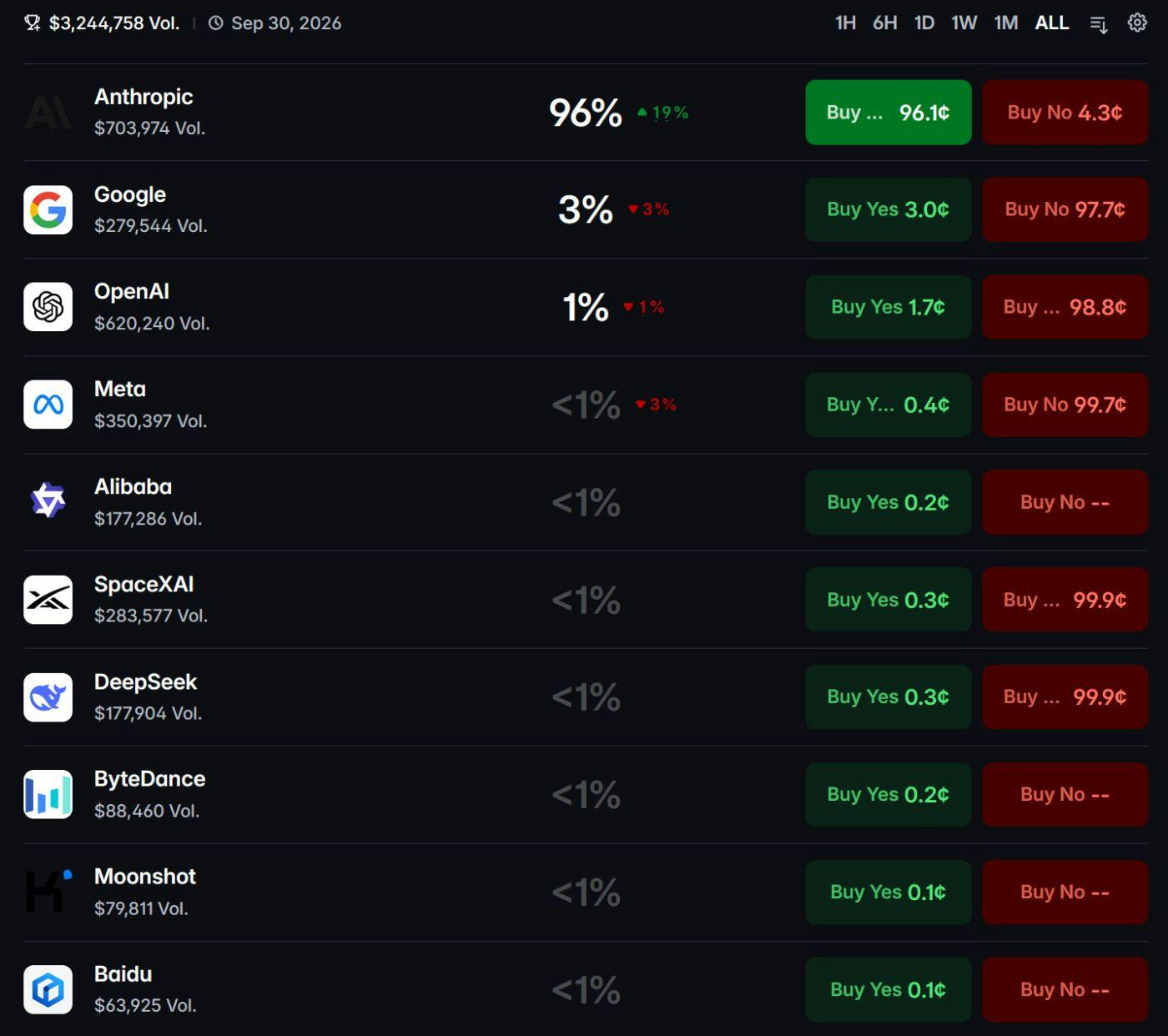
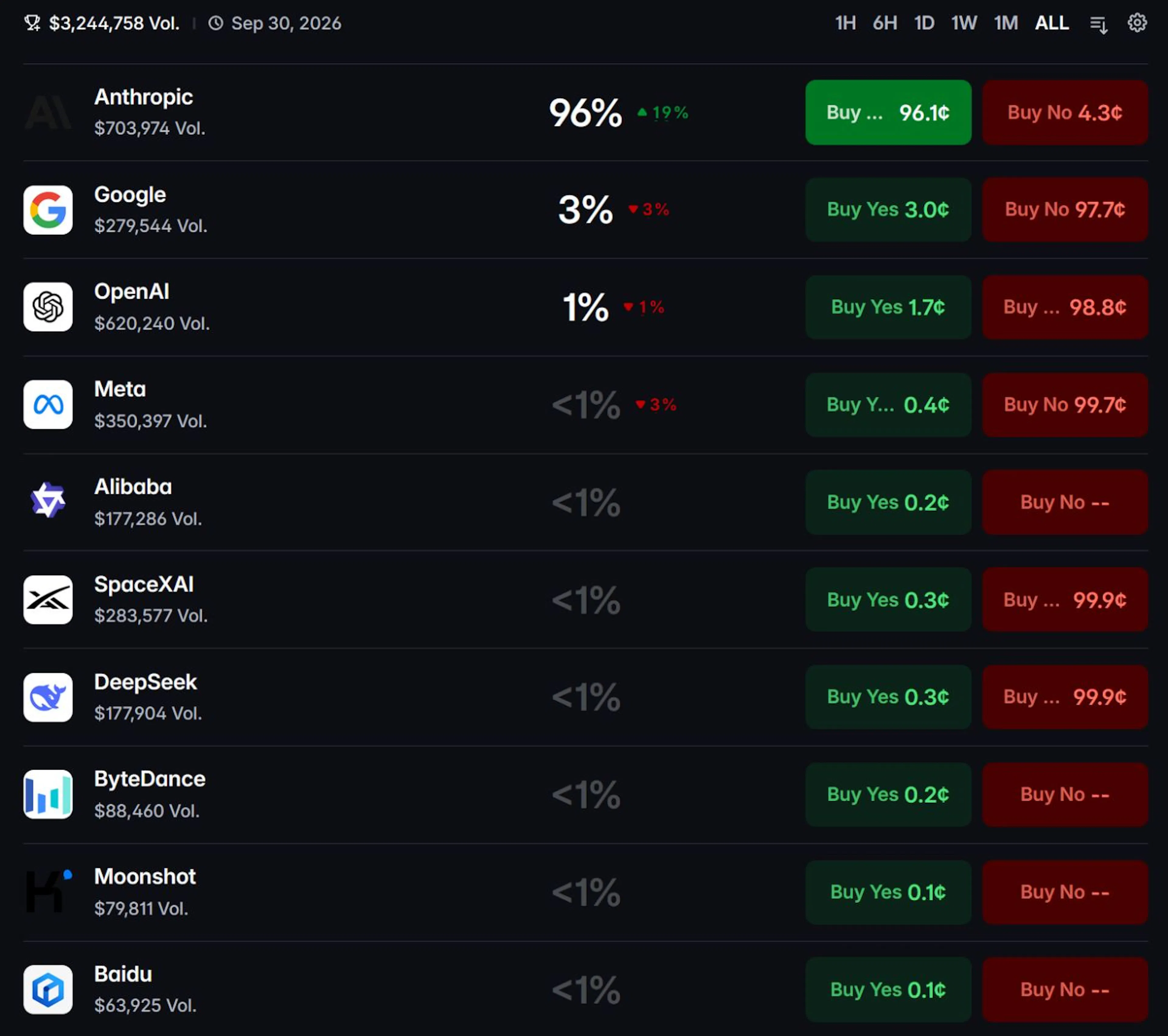
Which company has the best AI model end of September?
Folks over the polymarket are betting a cool $3M+ on which company will have the best AI model by the end of Septmeber. Anthropic is the clear favorite, but who knows what might change from now until then.
We want to hear from you!
That’s it, folks!
We’ll be back next week with more data, more debates, and more donut charts!
如有侵权请联系:admin#unsafe.sh