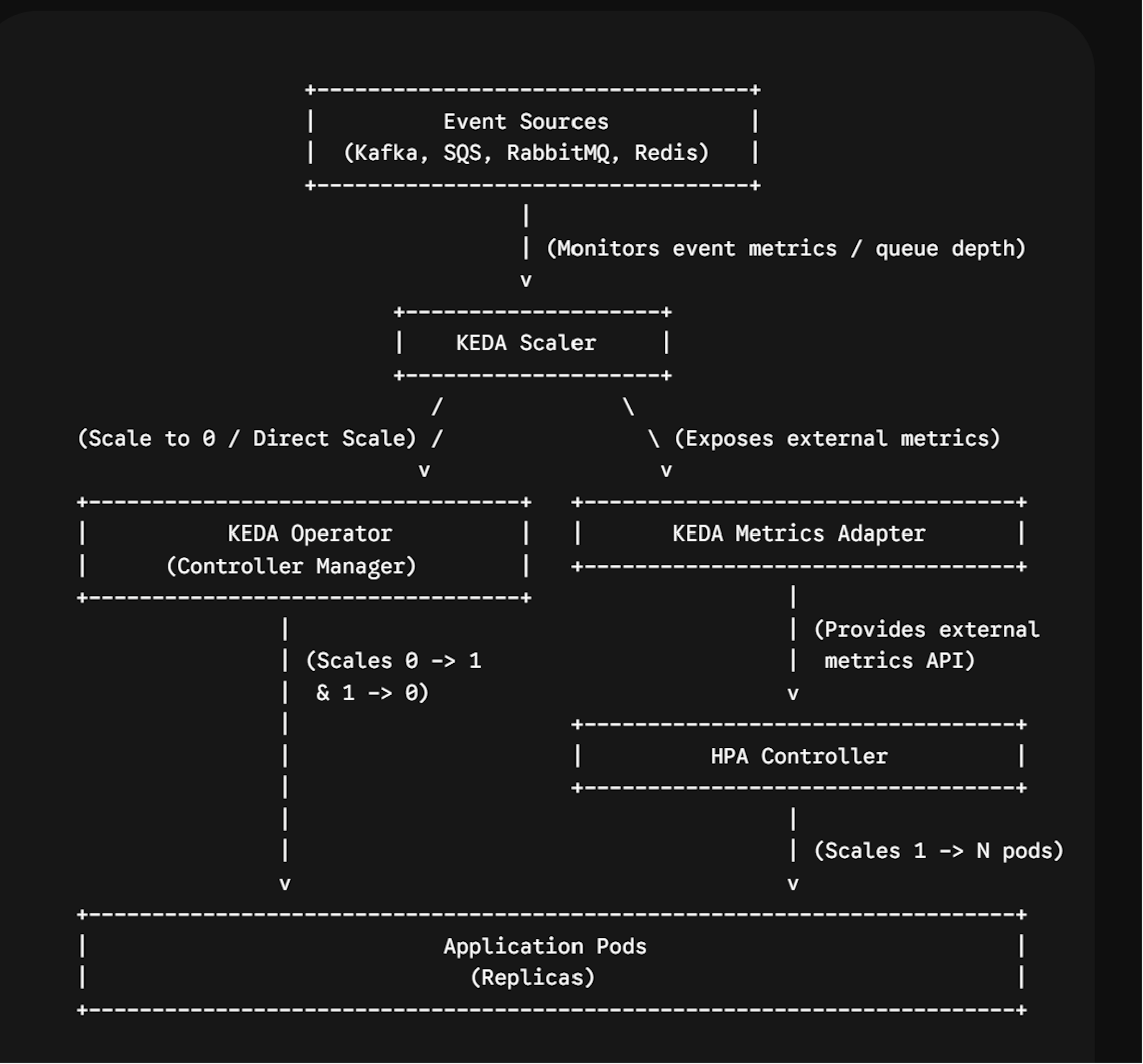
While Kubernetes' built-in HPA works well for basic CPU and memory metrics, it falls short in modern 2026-9-12 01:23:11 Author: hackernoon.com(查看原文) 阅读量:22 收藏
While Kubernetes' built-in HPA works well for basic CPU and memory metrics, it falls short in modern, event-driven architectures. Traditional HPA relies on reactive resource utilization thresholds, often scaling up too late after a system is already under load, and cannot scale down to zero when idle.
By transitioning to Kubernetes Event-driven Autoscaling (KEDA), we move from reactive resource monitoring to proactive, event-driven scaling based on actual application demand, such as message queue depth, HTTP requests, Response rate, or custom database metrics, while enabling scale-to-zero efficiency to cut infrastructure costs.
The Problem: Default HPA Limitations
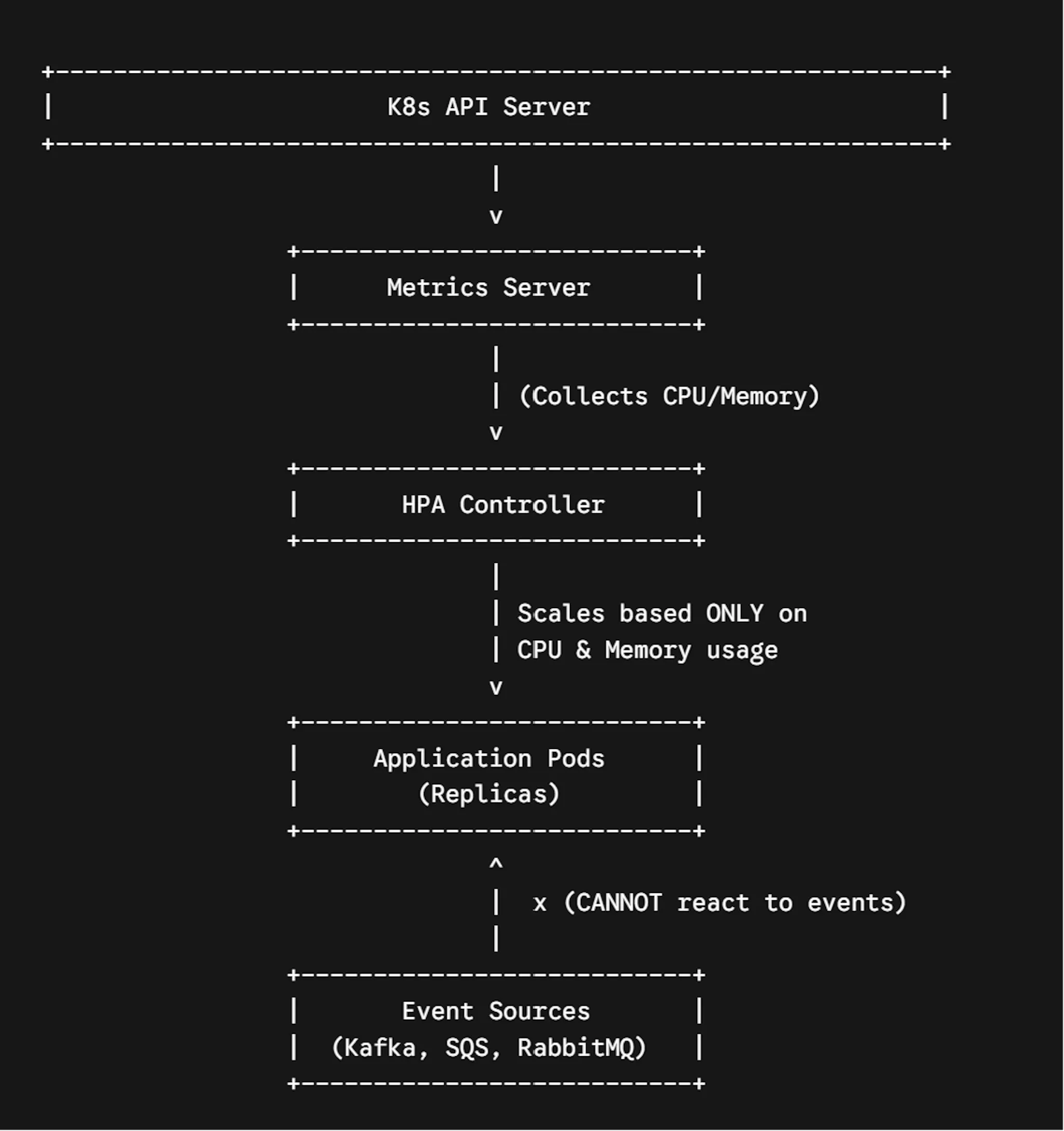
Key Failure Modes:
1. Slow HPA Reaction (Reactive Scaling):
[Traffic Spike] --> [High Latency] --> [Overwhelmed Pods]
2. Inability to Scale to Zero (Cost Inefficiency):
[No Traffic] --> [Pods Stay Active] --> [Idle Compute Costs]
When building event-driven architectures, system design ultimately hinges on two critical priorities: cost efficiency and operational stability. Relying solely on default Kubernetes autoscaling often creates a direct conflict between these two goals.
The Stability Dilemma: Reactive vs. Proactive
Traditional HPA monitors CPU and memory consumption, making it fundamentally reactive. In an event-driven system, such as a worker processing an AWS SQS queue or a Kafka topic, a sudden flood of thousands of messages doesn't instantly spike CPU metrics. By the time the HPA detects elevated CPU usage and triggers new pods, the message backlog has already ballooned, request latency has spiked, and existing pods are at risk of crash-looping under load. KEDA restores stability by scaling proactively based on queue depth rather than pod exhaustion, spinning up workers before latency degrades.
The Cost Dilemma: The MinReplicas Bottleneck
From a cost perspective, standard HPA requires at least one replica running at all times (minReplicas: 1), regardless of whether there is actual work to process. For background processing, batch jobs, or night-time low-traffic periods, keeping worker pods permanently idle wastes significant compute budget across large clusters. KEDA solves this by enabling scale-to-zero. When an event source is empty, KEDA scales the target deployment down to 0 replicas, consuming zero CPU/memory, and instantly reactivates the pods the second a new event arrives.
By placing KEDA at the center of our event-driven strategy, it will stop overprovisioning for stability and stop sacrificing performance to save on infrastructure.
Solution:
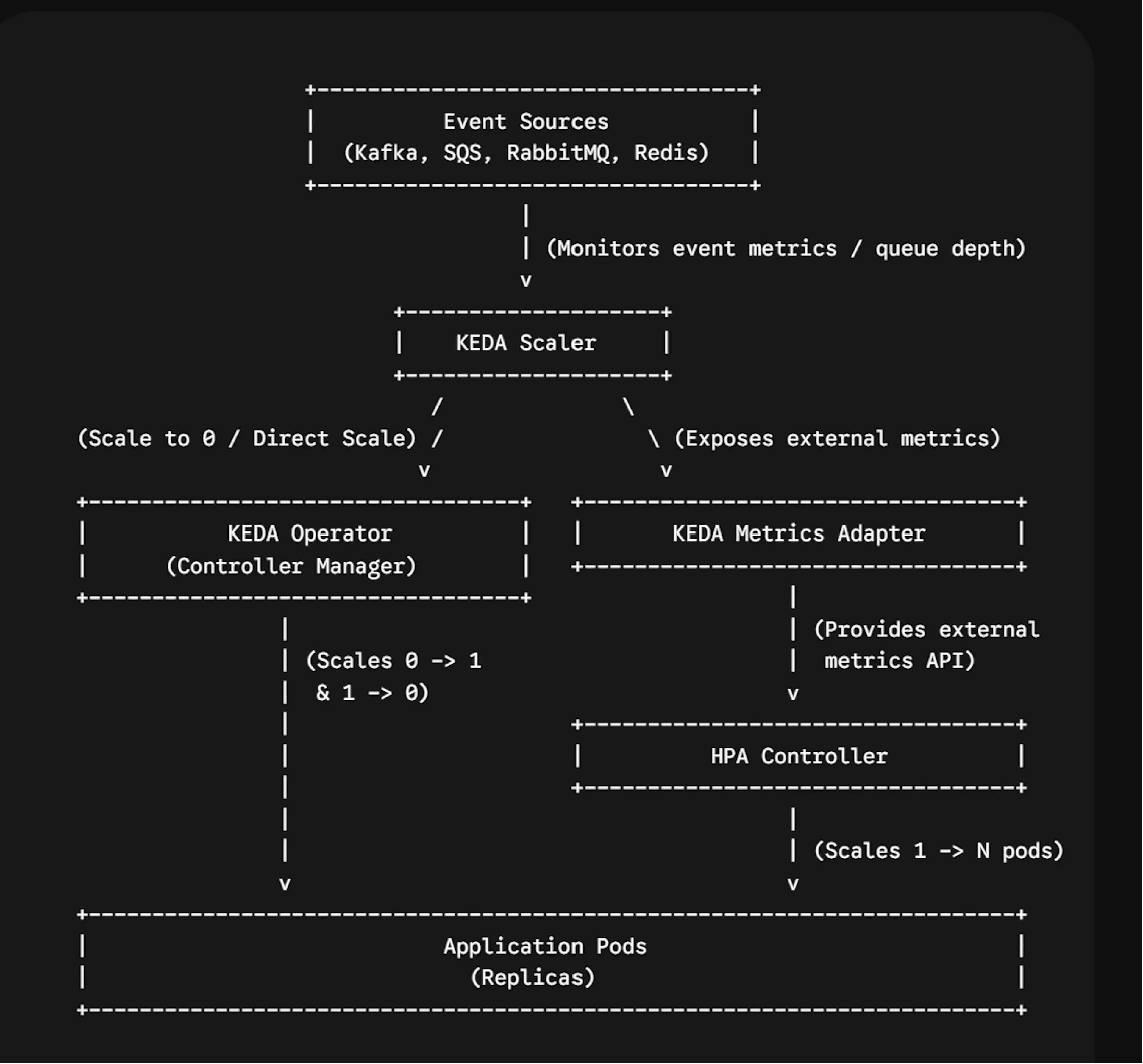
How it solves cost and stability
1. Proactive Stability (Event-Driven Scaling): [Queue Depth Increase] ---> [KEDA Metrics Adapter] ---> [HPA Controller] | [Pods
---> Scale Up BEFORE Latency/CPU Spikes]
2. Cost Optimization (Scale-to-Zero): [Queue Depth = 0] ---> [KEDA Deactivates Deployment] ---> [Replicas = 0] (Zero idle CPU/Memory consumption = $0 Infrastructure Cost)
By shifting from default Kubernetes HPA to KEDA, we will align the infrastructure with the actual demands of event-driven architectures. It will no longer have to compromise on system stability during sudden traffic spikes, nor have to pay for idle compute when queues are empty. KEDA gives the best of both worlds: proactive autoscaling to protect performance, and scale-to-zero efficiency to cut cloud costs.
Photo by Solen Feyissa on Unsplash
如有侵权请联系:admin#unsafe.sh