Qatar is racing toward a knowledge-based, fully digital economy. Smart infrastructure, cloud-first government services, a financial sector that’s increasingly API-driven, and critical energy assets like QatarEnergy’s LNG operations layering more connected OT/ICS systems every year. That pace of transformation makes Qatar an attractive target in the cyber realm, right now. Attackers don’t need to compromise everything; they just need one high-value foothold, and Qatar’s expanding digital footprint keeps handing them more doors to try.
This risk is showing up in the data as well.
The Problem: A Small, Concentrated, High-Precision Threat
Unlike sprawling, high-volume threat landscapes elsewhere, Qatar’s risk profile in 2025-26 has been described as quietly high-stakes rather than loud. Attackers aren’t spraying and praying — they’re going after specific footholds, specific sectors, and specific vulnerabilities. That precision is arguably more dangerous than volume, because it means defenders are up against adversaries who’ve already done their homework on Qatari targets.
A few things stand out in the current picture:
Ransomware has consolidated around a group of dominant actors. According to Cyble’s Qatar Threat Landscape Report 2025, the Qilin ransomware group was responsible for essentially all observed ransomware activity in the country during the period, including a concentrated campaign in October. But in 2026, to date, The Gentleman, Everest, Crypto24 and Payload groups shared the space. When a few groups own the entire observed ransomware footprint in a country, it signals a level of operational focus that generic, one-size-fits-all defenses aren’t built to catch.
Financial services and retail are the prime targets for access brokers. The same research found confirmed instances of compromised access being sold on underground markets tied to Qatar, with BFSI and retail organizations accounting for more than half of those listings. That’s initial access brokers doing reconnaissance and sale work specifically for buyers who want a way into Qatar’s financial ecosystem — a pipeline that often precedes ransomware or fraud operations.

Education has become a quiet leak point. Data breaches and leak incidents were recorded, most frequently hitting the education sector, largely opportunistic actors going after personally identifiable information. Universities and training institutions tend to sit outside the security investment priorities of banks or energy firms, which makes them a softer entry point into a country’s wider digital ecosystem.
Zero-days and known exploited vulnerabilities in enterprise remote-access tools spiked. Products from Microsoft, Fortinet, Ivanti, and Citrix — the tools that underpin remote access and enterprise connectivity almost everywhere in Qatar’s public and private sector — saw a surge in exploitation activity. These are exactly the platforms that link head offices, branch networks, and increasingly remote or hybrid teams together, so a single unpatched edge device can become a bridge straight into the core network.
Hacktivism is low-volume but not absent. Much of it is narrative-driven information operations tied to regional geopolitical tensions rather than destructive attacks — but it’s a reminder that Qatar’s high international visibility (as a diplomatic hub and an LNG exporter) keeps it on ideologically motivated actors’ radar too.
Beyond the Numbers, What Matters
Qatar isn’t short on regulatory intent. Law No. 13 of 2016 on Personal Data Privacy Protection already requires organizations to run active breach management and compliance programs, and Qatar’s National Cyber Security Agency has been steadily raising the bar — joining the global ISASecure certification program to strengthen industrial control system standards, and the country ratifying the UN Convention against Cybercrime to reinforce cross-border cooperation. The cybersecurity market itself is projected to keep growing at a solid clip through the end of the decade as organizations respond to this pressure.
But policy and market growth don’t close the defense gap on their own. The data above describes a landscape where:
- A handful of ransomware operators can inflict outsized damage because they’re facing fragmented, generic defenses rather than region-specific threat intelligence.
- Financially motivated actors are actively building and selling access into Qatar’s banking and retail sectors before an attack ever becomes visible.
- Edge infrastructure — the very tools organizations rely on for secure remote connectivity — is itself the weak link.
The organizations best positioned to respond aren’t the ones with the biggest security budgets; they’re the ones with visibility into what’s actually being sold, exploited, and targeted in their own region, before it turns into an incident report.
Meet Us at CYSEC, Qatar
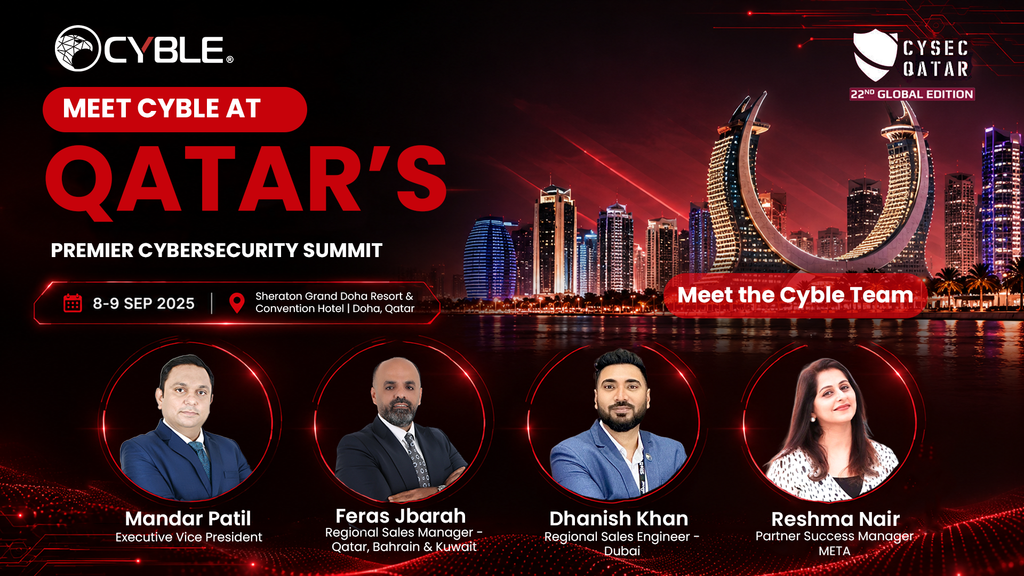
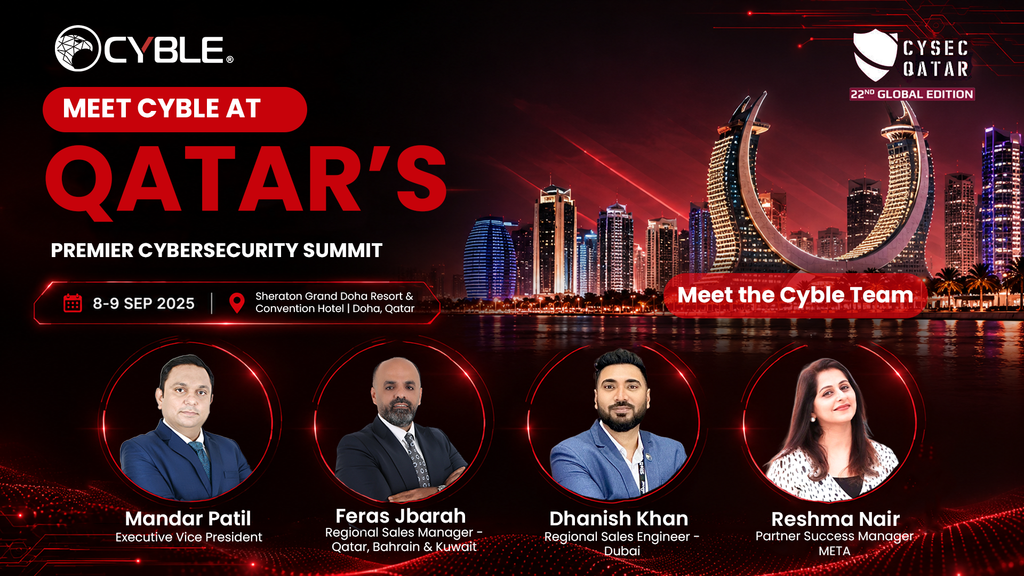
This is exactly the conversation happening at CYSEC Qatar, the region’s leading closed-door cybersecurity summit, bringing together CISOs, government cyber leaders, and IT/OT security heads to work through the threats defined above — cloud security, incident response, threat intelligence sharing, and AI-driven defense.Cyble’s Mandar Patil, Feras Jbrah, Dhanish Khan, and Reshma Nair, will be on the ground at CYSEC Qatar’s – 22nd Global Edition on 8-9th September, ready to walk through the region-specific threat intelligence behind this piece and talk about what proactive, Qatar-focused defense looks like in practice.
If you’re attending, stop by and meet the team — bring your hardest questions about your own exposure, and let’s talk about closing the gap before the next Qilin-style campaign finds it first.
Book your slot with our expert now!
Media Disclaimer: This blog was compiled from publicly available government advisories and open-source security reporting. It is provided for reference purposes only; readers bear full responsibility for their reliance on it.