
Hackers Cross From IT to OT Through a Private APN in PolandAtta 2026-8-10 16:17:48 Author: securityaffairs.com(查看原文) 阅读量:60 收藏
Hackers Cross From IT to OT Through a Private APN in Poland

Attackers breached a Polish CHP plant through a Fortinet device and private APN, reaching PLCs and disrupting turbine and water treatment systems.
Poland’s CERT has described a second attack on the country’s energy sector, and this one matters for a simple reason: it shows how an ordinary-looking network design can turn into a route into OT. The target was a smaller combined heat and power plant feeding heat to around 50,000 residents, and the attackers used a private APN as the path in, something CERT says it saw for the first time in this incident.
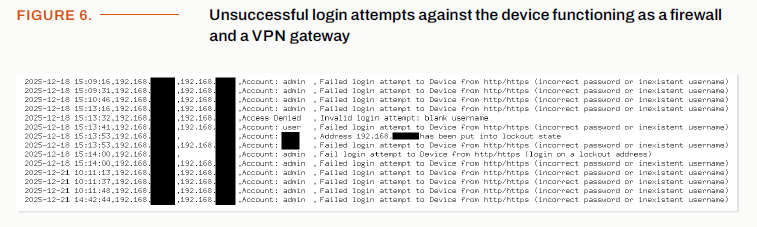
The report says the intrusion began at a wind farm, where the attackers hit a Fortinet VPN and firewall device exposed to the internet.
From there they found a Teltonika cellular router, used SSH to build a tunnel, reached the private APN managed by the distribution system operator, and then moved toward the plant’s OT network.
“On 29 December 2025, coordinated attacks targeted the energy sector in Poland, including 30 renewable energy facilities and a large combined heat and power (CHP) plant. These attacks were described in detail in the report published on 30 January 2026*. At the same time, another incident occurred at a smaller CHP plant supplying heat to 50,000 residents.” reads the report published by Poland’s CERT. “The analysis of this incident took more than three months to complete, which is why it was not included in the initial report. To the best of our knowledge, the attack vector used in this case has not previously been observed in any known incidents.”
Once inside, the attackers found a Wago PLC at the CHP plant and used SSH access on that controller to reach the operational network. After roughly a week of reconnaissance, they connected to Siemens PLCs, switched them to stop mode, and set a password that blocked operators from changing the controllers’ state and control logic.
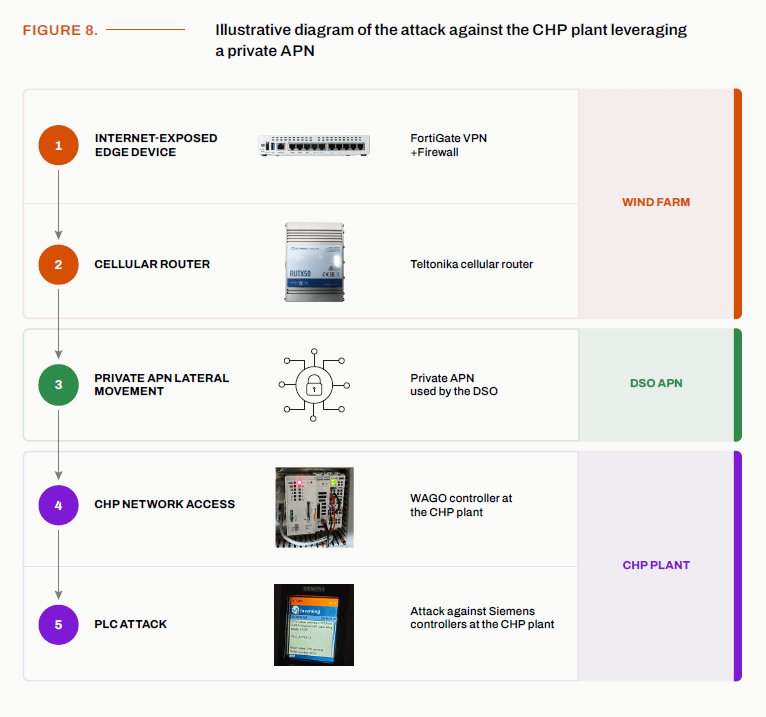
That is where the physical impact started. The steam turbine and water treatment system shut down, the cogeneration process broke, and the plant lost service continuity for a while, though staff restored the affected systems quickly enough to avoid a heat or electricity outage.
“The attacker then damaged the WAGO controller that had been used as a gateway into the network by corrupting its partition table, preventing it from being read by the device. In an attempt to restore the controller, the affected entity performed a factory reset; however, this did not repair the partition table and the device remained unable to boot.” continues the report. “No valuable logs could be recovered from the device during the investigation.”
The report also shows how messy real intrusions get once the attacker is inside the control environment. Moxa serial device servers and Moxa network switches were reconfigured to block legitimate access, ABB and Schneider Electric variable frequency drives were touched as well, and some connection attempts failed or were only partially successful.
“An important aspect of this architecture is that DSOs require all communication between the DSO’s ICT network and the RTU to take place over a serial protocol, in this case DNP3.0. At the compromised facility, a Teltonika RUTX50 router was used, and the DSO’s requirements were met. However, no requirements had been defined regarding the handling of the cellular router’s administrative interface.” continues the report. “As a result, the router was configured with two physical interfaces: a serial link connected to the RTU and a second interface, Ethernet, connected to a VLAN managed by the central firewall that had been compromised by the attacker.”
That is the uncomfortable part. The attackers did not need some exotic zero-day chain to do damage. They used a reachable edge device, a private APN that was already in the path, weak or exposed access points, and enough patience to move from reconnaissance to disruption.
CERT notes that the attackers damaged some devices while trying to cover their tracks, and in the WAGO case the controller could not be brought back by a simple reset. The agency also says this kind of private APN setup is not rare, which is exactly why the finding matters beyond Poland.
“As maintenance work was being carried out at the facility, the entity initially assumed that the process interruption had been caused by an error made by the contractor’s engineers and reported the event for informational purposes only.” continues the report. “However, due to its awareness of other similar events, CERT Polska initiated incident handling under the assumption that the event may have resulted from a cyberattack. Further analysis confirmed this hypothesis.”
The practical lesson is not subtle. Private APNs, edge routers and OT gateways need the same discipline as any other exposed infrastructure, because once an attacker can pivot from a field device into control systems, the difference between “maintenance” and “incident” gets very thin.
The original report is here: CERT Polska Energy Sector Incident Follow-up Report 2025.
In early 2026, ESET linked a late-2025 cyberattack on Poland’s energy system to the Russia-linked Sandworm APT.
“Based on our analysis of the malware and associated TTPs, we attribute the attack to the Russia-aligned Sandworm APT with medium confidence due to a strong overlap with numerous previous Sandworm wiper activity we analyzed,” said ESET researchers. “We’re not aware of any successful disruption occurring as a result of this attack,” ESET researchers said.
ESET researchers uncovered DynoWiper, a destructive wiper malware used in an attempted cyberattack against Poland’s energy sector on December 29, 2025. While no successful disruption has been confirmed, the malware’s architecture shows clear destructive intent. ESET attributes the operation with medium confidence to the Russia-aligned Sandworm APT group, citing strong overlaps in tactics, techniques, and behavior with previous Sandworm-linked wiper attacks analyzed by the team.
The attempted attack occurred during peak winter demand and coincided with the 10-year anniversary of Sandworm’s 2015 cyberattack on Ukraine’s power grid, the first malware-induced blackout that left around 230,000 people without electricity. ESET tracks the DynoWiper malware as Win32/KillFiles.NMO. Subscribers to ESET’s private Threat Intelligence APT reports have already received further technical details and indicators of compromise to aid rapid detection and incident response. The cybersecurity firm also shared an associated IoC hash for defensive use.
Follow me on Twitter: @securityaffairs and Facebook and Mastodon
(SecurityAffairs – hacking, Poland)
如有侵权请联系:admin#unsafe.sh