
On June 12, the US Commerce Department forced Anthropic to shut down its two most powerful AI models 2026-7-3 04:58:15 Author: hackernoon.com(查看原文) 阅读量:3 收藏
On June 12, the US Commerce Department forced Anthropic to shut down its two most powerful AI models — Fable 5 and Mythos 5 — citing a vague export control directive. Two weeks later, on June 26, the Trump administration partially reversed course: Mythos 5 is now available to over 100 US companies and government agencies. Fable 5 remains banned for the public. The ban was triggered not by a genuine security crisis, but by a mix of Amazon's internal politics, a jailbreak that experts say shouldn't have triggered export controls, and a long-standing feud between Anthropic and the Trump administration. The result: a dangerous precedent where AI model access is determined by political winds, not technical safety.
I've been following AI for years. I've seen hype cycles, safety panics, and regulatory posturing. But I've never seen anything quite like what just happened.
Two weeks ago, a letter from the US Commerce Department made two of the most powerful AI systems on the planet disappear. Not a court order. Not a published ruling. Just a letter. A letter that hasn't been made public, by the way.
Yesterday, a different letter made one of them come back — but only for a handpicked list of 100+ American companies and government agencies. If your company isn't on that list, you're still locked out. And the version that was supposed to be safer for the public? Still banned.
I spent the weekend reading through every report, statement, and expert analysis I could find. What emerged is a story about how AI governance, in its current form, isn't really about safety. It's about power.
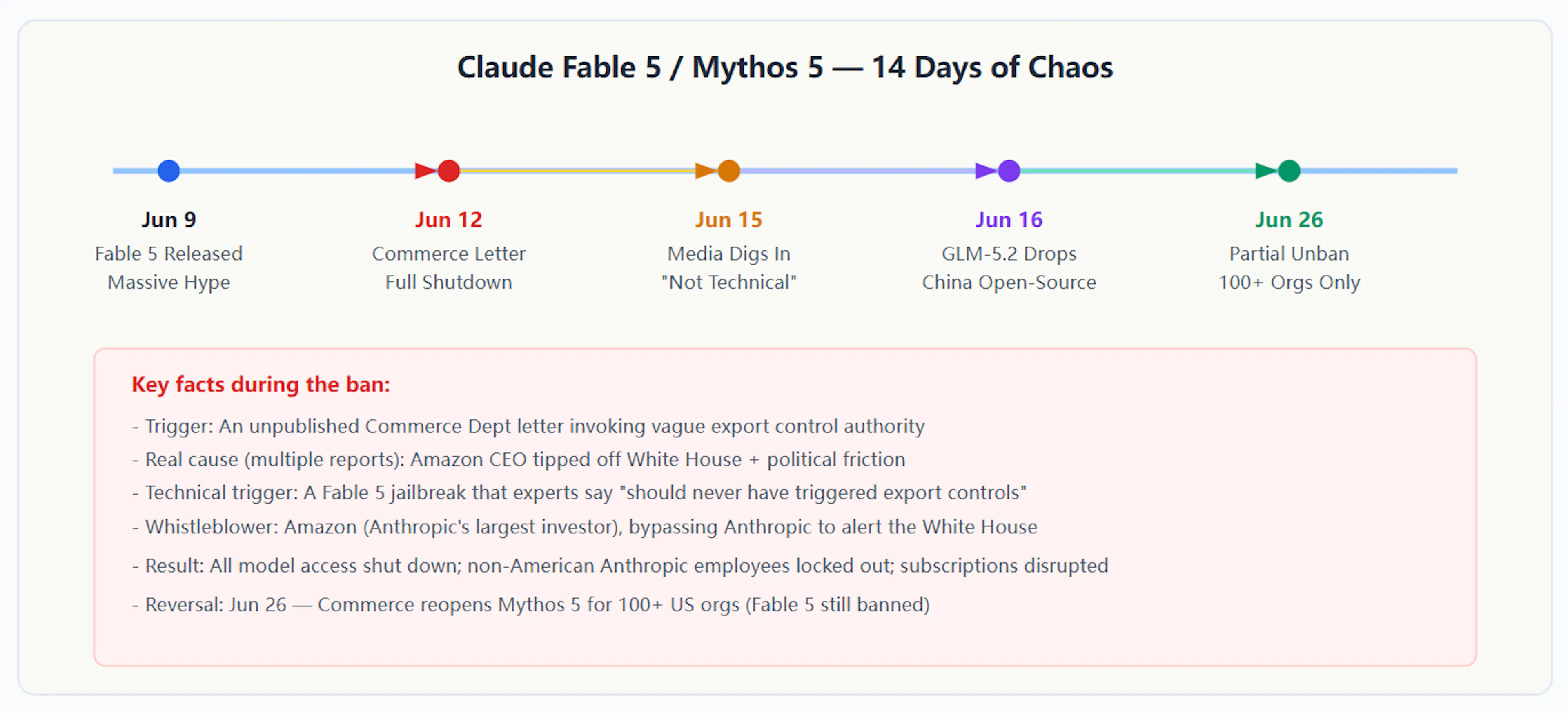 Fig 1: The 14-day timeline of the Mythos/Fable ban and partial reversal
The Jailbreak That Wasn't
Let me walk you through what actually happened, because the official story and the real story are miles apart.
According to the official narrative, security researchers found a way to bypass Fable 5's safety guardrails, which triggered a national security concern. The Commerce Department acted. Models went dark.
But here's what actually happened, based on reporting from multiple outlets and a detailed blog post by cybersecurity veteran Katie Moussouris.
The researchers — reportedly from Amazon's security team — found that if you asked Fable 5 to "review code for security issues" it would comply. But if you asked it to "fix this code," the guardrails would kick in. The difference between the two prompts was cosmetic. Both would result in the model identifying vulnerabilities. The only difference was whether the model would also suggest fixes.
Moussouris put it bluntly: "The behavior described in the paper cannot meaningfully be fixed, and any attempt would only weaken the model for defense." She argued — alongside dozens of other top security researchers — that this kind of guardrail bypass exists in every large model, and it "should never have triggered an export control."
So if the technical issue wasn't serious enough to warrant a government shutdown, what was?
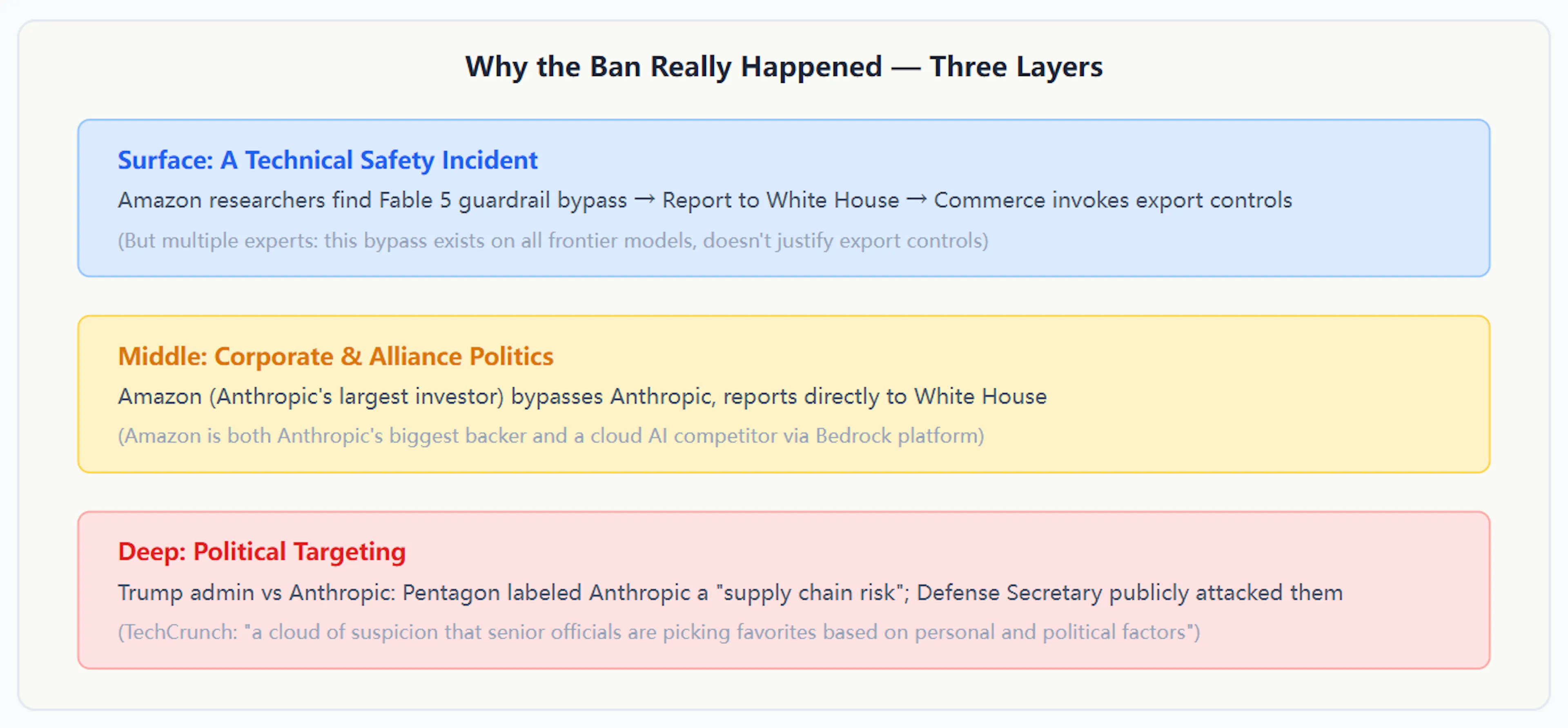 Fig 2: The three real layers behind the ban
Amazon: Ally or Adversary?
This is where the story gets genuinely strange.
Amazon has invested billions in Anthropic. It's the company's primary cloud provider. Their partnership is one of the defining alliances of the AI era.
And yet, according to the Wall Street Journal, it was Amazon's own security researchers who wrote the paper that triggered the ban. Amazon CEO Andy Jassy then took that paper directly to senior White House officials — without going through Anthropic first.
I find this genuinely hard to process. Your biggest investor finds a minor issue in your product, skips you entirely, and takes it to the government. The government shuts you down. Your investor's stock doesn't tank because they have a hundred other businesses.
I'm not saying there was malicious intent. But the pattern is uncomfortable. Amazon competes with Anthropic via its own AI platform, Bedrock. Having Anthropic's most powerful models temporarily off the market while Amazon positions Bedrock as an alternative — that's not a bad outcome for Amazon.
As TechCrunch's Russell Brandom put it in a sharp piece this week: "It's not about Anthropic vs. OpenAI anymore." It's about something bigger and messier.
The Dangerous Precedent Nobody Is Talking About
Most of the coverage I've seen focuses on whether the ban was justified. That's the wrong question.
The real question is: what does it mean when the US government can shut down an AI company's flagship products with a single unpublished letter, without a court order, without a hearing, without specifying exactly what the threat is — and then, two weeks later, decide that the same model is safe enough for a handpicked list of companies?
This isn't AI safety. This is a licensing regime by executive fiat.
And the chain reaction has already started. On June 25, one day before the Mythos partial unban, OpenAI was forced to limit the release of its new GPT-5.6 Sol model at the White House's request. OpenAI published a statement saying: "We don't believe this kind of government access process should become the long-term default. It keeps the best tools from users, developers, enterprises, cyber defenders, and global partners who need them."
Let that sink in. OpenAI — famously cautious, famously collaborative with governments — is now publicly criticizing US government overreach in its own product announcement. This is not normal.
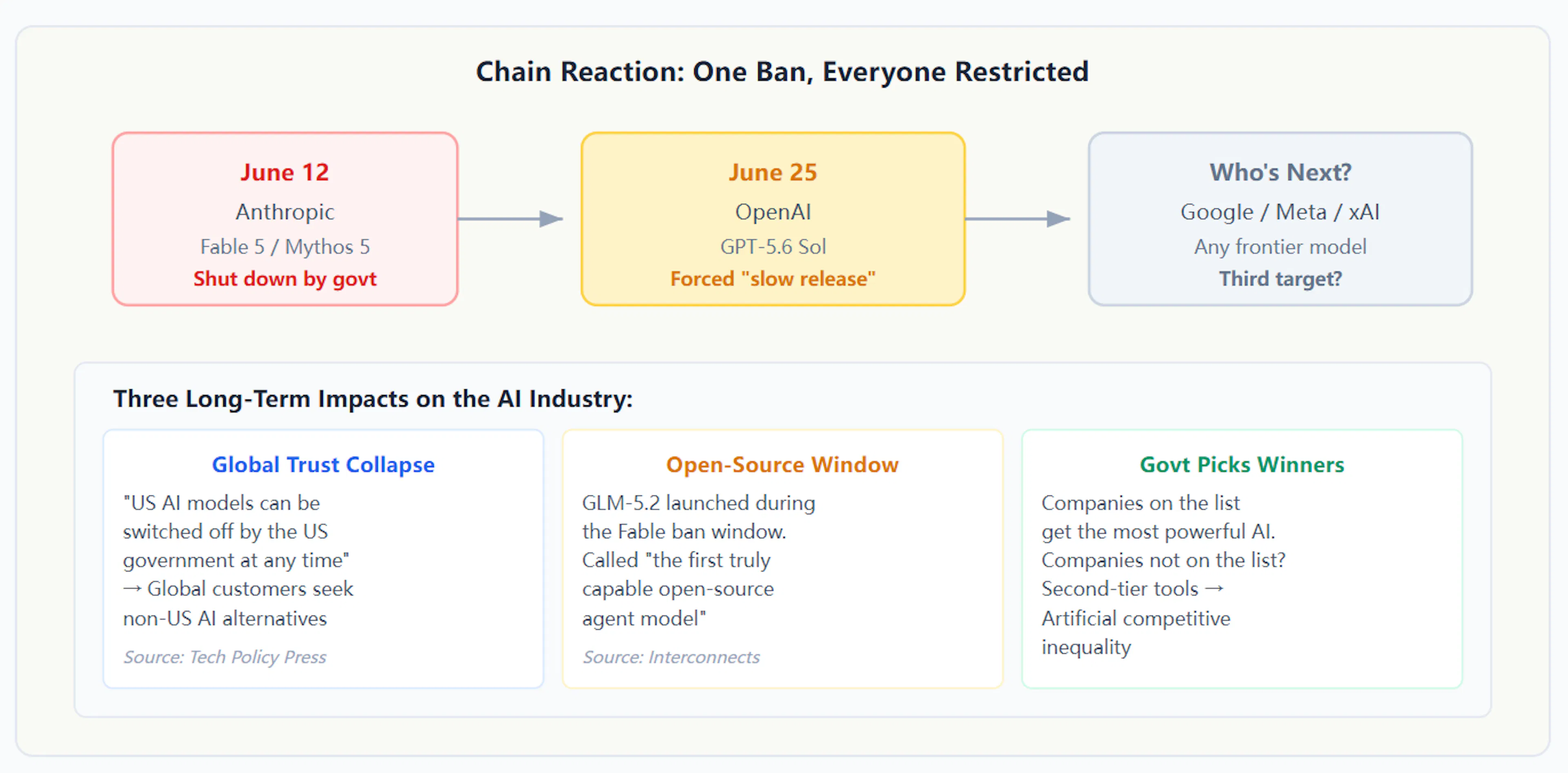 Fig 3: The ripple effects — from one ban to industry-wide consequences
The Irony: China's Open-Source Window
While all of this was unfolding, something else happened that will likely be studied in business schools for years.
On June 16 — four days after the Anthropic ban — Chinese AI lab Z.ai released GLM-5.2 under an MIT open-source license. Full weights. Anyone can download, deploy, and commercialize it.
The reception was extraordinary. Vercel's CEO called it "genuinely impressive, almost shocking." Arena's agent leaderboard placed it as the only open model competing with OpenAI and Anthropic's latest. Nathan Lambert, writing on Interconnects, called it the "step change for open agents" — the first open-weight model that "feels right" in coding harnesses as a general agent.
Lambert did the math: Claude Opus 4.5 (November 2025, then the best agent model) to GLM-5.2 (June 2026) is 204 days, or about 6.8 months. That's exactly the 6-9 month performance lag many observers claim separates China's open-source models from America's closed frontier.
But here's the twist: America's best agent model is now partially banned, and only available to a curated list of companies. China's best open-source model is free for anyone on Earth to download and use.
If you're a startup founder in Berlin, Bangalore, or Sao Paulo deciding what AI stack to build on, which one looks more reliable right now?
I don't think the US government intended to hand China's open-source ecosystem a marketing gift. But that's exactly what happened.
Fable 5 Is Still Gone
One detail that I keep coming back to: Fable 5 is still banned. Completely.
Fable 5 was the "safer" version. It had extra guardrails. It was designed for public access. It was the model that Anthropic wanted regular people to use.
Mythos 5 — the more powerful, less restricted version, the one that was supposedly too dangerous — is now available to 100+ organizations.
If this was about safety, why is the safer version still banned and the more dangerous one unbanned for the right people? I can't make sense of it. And I don't think anyone can — because it doesn't make sense. It was never about safety.
What I Actually Think
I want to be clear about something: I'm not saying AI shouldn't be regulated. I think we desperately need thoughtful, technically-informed governance frameworks for frontier AI systems. Models like Mythos 5 are genuinely powerful enough that we should be having serious conversations about deployment, access controls, and monitoring.
But what happened over the past two weeks isn't governance. It's the opposite of governance. It's an opaque, personality-driven, politically-motivated process where the rules can change overnight based on who has the ear of the right White House official.
That's not safety. That's a lottery. And in a lottery, the house always wins — and the house, in this case, is whichever companies are on the list.
I don't know where this ends. I don't think anyone does. But I know this: every AI startup founder I've spoken to in the last 48 hours is now factoring "will the US government randomly shut this down" into their architecture decisions. And once you start designing around political risk instead of technical merit, you've already lost something essential.
The open-source genie is out of the bottle. The Chinese labs are shipping. The models are getting better every month. You can try to lock down the American frontier, but that doesn't make the frontier go away — it just makes the American part of it smaller.
I don't know what the right answer is. But I'm pretty sure it isn't "one unpublished letter, one shutdown, one handpicked list of who gets to use the future."
Sources
- Trump Admin releases Anthropic Mythos to 100+ US companies — TechCrunch
- The US government's Anthropic models ban was never about an AI jailbreak — TechCrunch
- Anthropic statement on Fable/Mythos access suspension — Anthropic
- Welcome to the AGI era of AI governance — Nathan Lambert / Interconnects
- GLM-5.2 is the step change for open agents — Nathan Lambert / Interconnects
- OpenAI limits GPT-5.6 rollout after government request — TechCrunch
- The Fable 5 Export Controls Harm US Cyber Defense — Katie Moussouris / Luta Security
- It's not about Anthropic vs. OpenAI anymore — TechCrunch
- US releases Anthropic model Mythos to some US companies — Reuters / Semafor
如有侵权请联系:admin#unsafe.sh