It's not that companies aren't using AI — it's that they can'tMay 2, 2026Most of the frustration peo 2026-5-2 19:0:0 Author: danielmiessler.com(查看原文) 阅读量:49 收藏
It's not that companies aren't using AI — it's that they can't
May 2, 2026
Most of the frustration people have with AI not being able to do what they want is actually them not being able to describe what they want.
I have consulted for the world's largest companies and hundreds of startups and the Global 1000. The number one issue I see is unclear and constantly-changing vision and goals.
AI is about execution. Companies that know exactly what they want, and exactly the work they're doing to get it, are thriving with AI. And the better the AI gets, the more they will crush it.
But this is a small percentage of companies, because only a small percentage of companies are self-aware and together enough to give AI proper instructions.
You can't optimize what you don't understand. And it's foolish to scale something that you shouldn't be doing in the first place.
This isn't a technical maturity problem
People talk about companies not being ready for AI and I don't think they realize how bad the problem is. This is not a technical maturity issue. It's a whole lot more fundamental than that.
A massive percentage of companies are haphazardly successful despite themselves. It's not super clear what they're trying to accomplish or how exactly they're doing it, but they have a few tricks that work, that they're decent enough at executing, that they're still around.
But if you were to walk into the company and say, OK, describe to me what you're trying to do, and what your strategies are, and what your challenges are, and what your work streams are — they would either stare blankly at you or laugh in your face. It would take them weeks to put together a project to find that out. And then months to actually do the project.
I honestly believe the vast majority of companies are in grave danger because they are essentially chaotic black boxes that barely work.
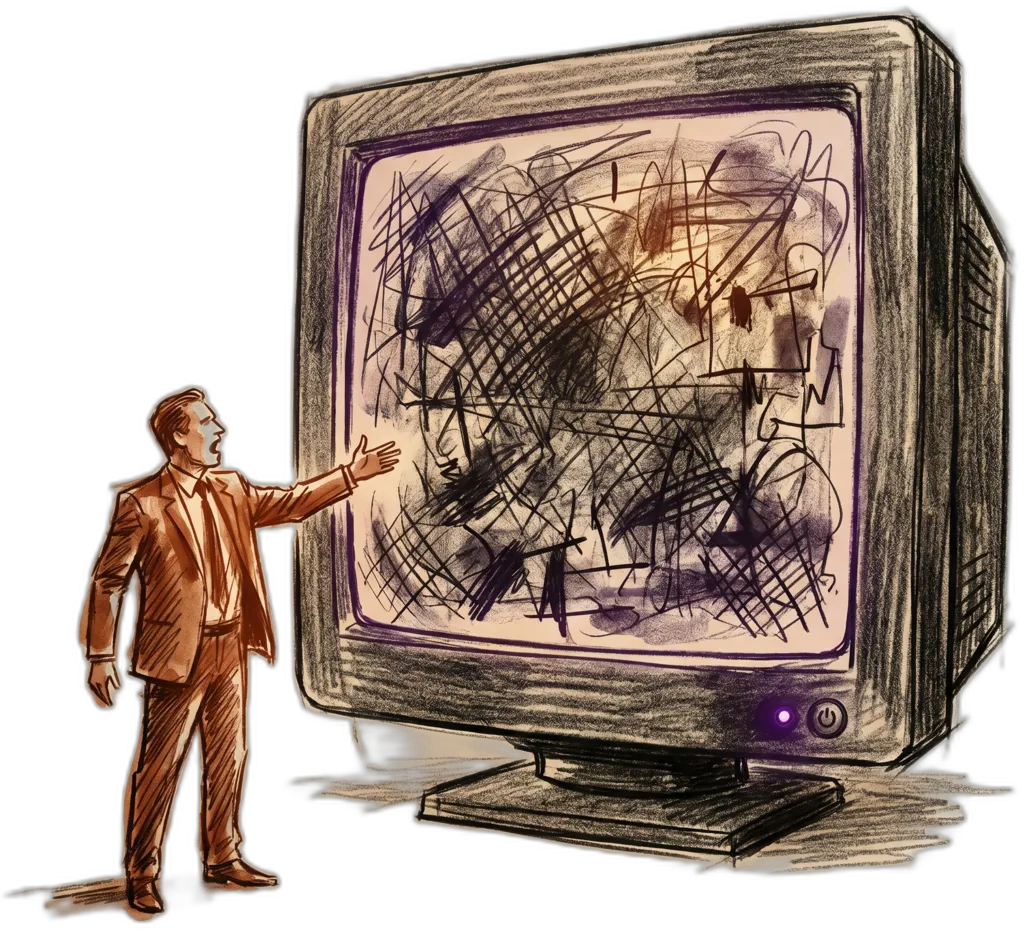
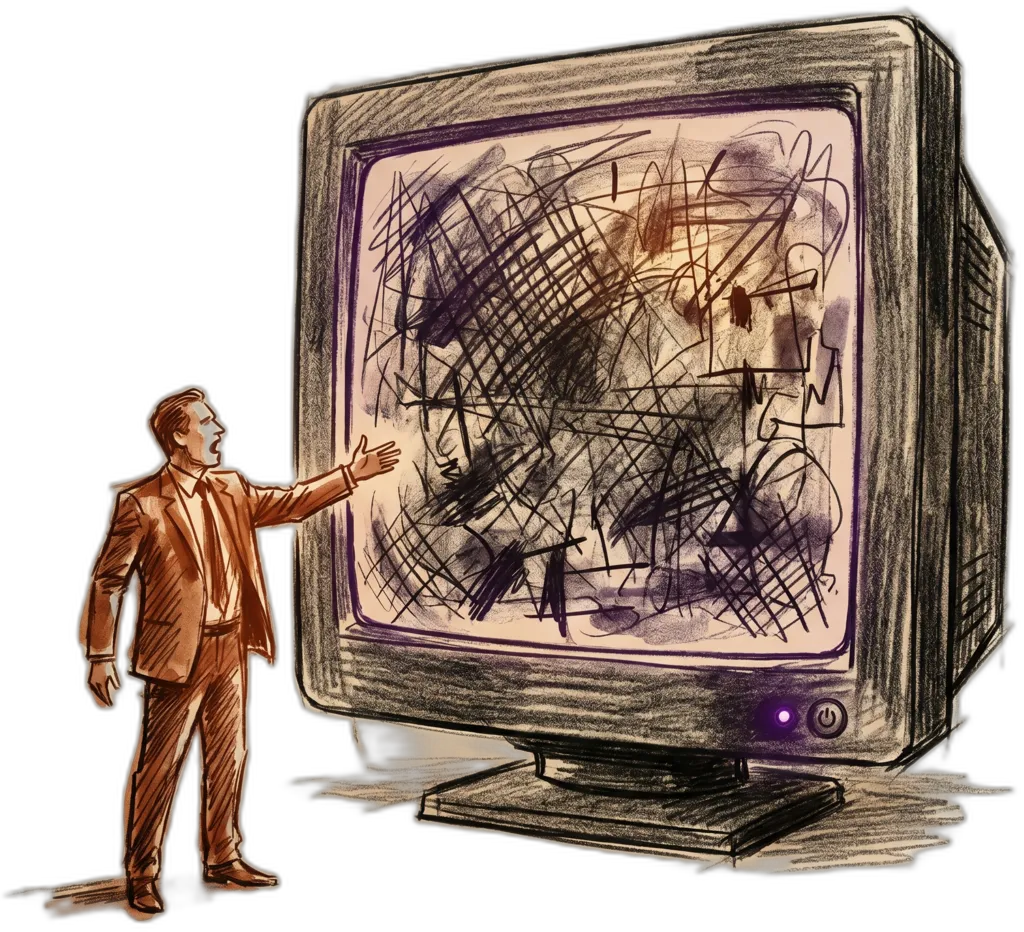
Having the board or leadership tell everyone in such a company to "use AI" is like looking at a screen of nothing but static and saying, "we gotta scale this thing."
"Cool, boss. Do me a favor and point at the thing you want me to improve."
"Great question, Sarah. Let's get some meetings together to figure that out."
AI is mostly useless in these companies. And unfortunately, that means many — if not most — companies.
The companies AI is helping aren't a coincidence
The narrative right now is that AI isn't helping enough companies yet, so what's the problem? When will AI get good enough? Maybe AI isn't as good as people thought.
What's hilarious, and easy to see, is that the companies AI is helping are somehow magically the same companies that already know what they're doing.
They can tell you very quickly:
- the problem or problems that they are solving for customers
- the problem with existing solutions that their solution solves
- the goals they have for the company
- the metrics associated with those goals
- the challenges that are stopping them from reaching their goals
- the strategies they are pursuing to overcome those challenges
- the projects they are doing to implement those strategies
- the work that is being done within those projects
- by what people
- and how much it is costing them
And crucially, companies that know what they're doing give largely the same answers to these questions across different quarters and years.
A sure sign of a flailing company is when their departments spend massive amounts of time claiming to have those answers — but the answers significantly change every quarter because everything is constantly in flux. So people are just writing down whatever they think makes them look good. It takes them weeks to prepare, only to be discarded a few weeks later when the process starts over.
AI can do basically nothing for these companies. In fact, it could even make it worse — because now it helps people flail more impressively. Like with more backflips and charts and stuff.
And you may ask, "well, if they're so bad, then how are they still around?" The answer is simple: most of their competition is just as bad.
So what's the point of all this?
A few things.
AI has barely even started in the enterprise, because only a tiny fraction of companies have the self-knowledge and ability to articulate themselves well enough to be ready for AI.
We should stop looking at AI as the problem, or even technology as the problem. The issue is not being able to describe one's company clearly — including its goals, workflows, operations, decisions, teams, and spending — in a clear and consumable fashion.
Companies who are unable to do this are in grave danger from companies who can.
The primary danger to large unwieldy companies is that it's now possible for a smaller company to function with the strength of a much larger one. And it's far easier for a small company to be able to answer the questions above.
Because of this, all existing companies are about to face extraordinary downward force. And only companies who have their shit together will stay afloat and rise.
AI is a fascinatingly small part of who will win or lose in this initial phase. AI is what the winners will use to fight each other in the New World. Right now, the game is figuring out who's going to make it there.
The number one question you should be asking as a company is not what AI can do for you — but whether or not your company is in the state where AI can help at all. And if not, then you need to get into that state as quickly as possible.
如有侵权请联系:admin#unsafe.sh