嗯,用户让我总结一下这篇文章的内容,控制在100字以内,而且不需要用“文章内容总结”或者“这篇文章”这样的开头。直接写描述就行。 首先,我需要通读整篇文章,抓住主要信息。文章讲的是来自湖南大学、博伊西州立大学和阿灵顿德州大学的研究人员开发了一个叫做GPSBuster的系统。他们使用HackRF One设备,通过检测隐藏GPS追踪器的电磁辐射来发现这些追踪器。 隐藏的追踪器很难被发现,因为它们通常只接收卫星信号,并且可能将坐标存储在本地而不是传输出去。传统的检测方法是寻找传输信号,但GPSBuster采用的是侧信道泄漏的方法,特别是针对混合信号片上系统的电磁耦合。 研究团队发现,活跃的追踪器会泄露两个频段:低频段在26到104MHz之间,高频段在1545到1625MHz之间。这些频段有明显的峰值和均匀分布的谐波。低频段反映了石英振荡器和中频之间的耦合,而高频段包含了本地振荡器和中频的间距总和为1575.42MHz,这提供了一个无需数据库的检测规则。 他们的设备包括HackRF、近场探头和一个35dB的低噪声放大器。由于使用了近场探头,需要在区域内移动探头来寻找追踪器,最大检测范围是0.61米。 测试结果显示,在市场上流行的前10款追踪器中,GPSBuster的检测率达到了98.4%。它能够穿透塑料、棉、帆布和皮革等材料,并且在手机、笔记本电脑和扬声器旁边也能有效工作。此外,它还适用于L1+L5模块如Quectel LC29H系列,并且即使金属屏蔽芯片也会通过PCB轨迹泄露足够的信号被检测到。 总结一下,文章介绍了一种新的方法来检测隐藏的GPS追踪器,利用电磁辐射而非传统的信号传输方式,并且取得了很高的检测率。 </think> 研究人员开发了一种名为"GPSBuster"的技术,利用HackRF One设备通过检测隐藏GPS追踪器的电磁辐射来定位其位置。该技术无需依赖信号传输,而是通过分析追踪器混合信号片上系统的侧信道泄漏,特别是石英振荡器、本地振荡器和混频器之间的耦合关系,实现高效检测。测试显示其对多种常见追踪器具有高检测率,并能穿透多种材料,适用于复杂环境。 2026-4-28 04:42:24 Author: www.rtl-sdr.com(查看原文) 阅读量:66 收藏
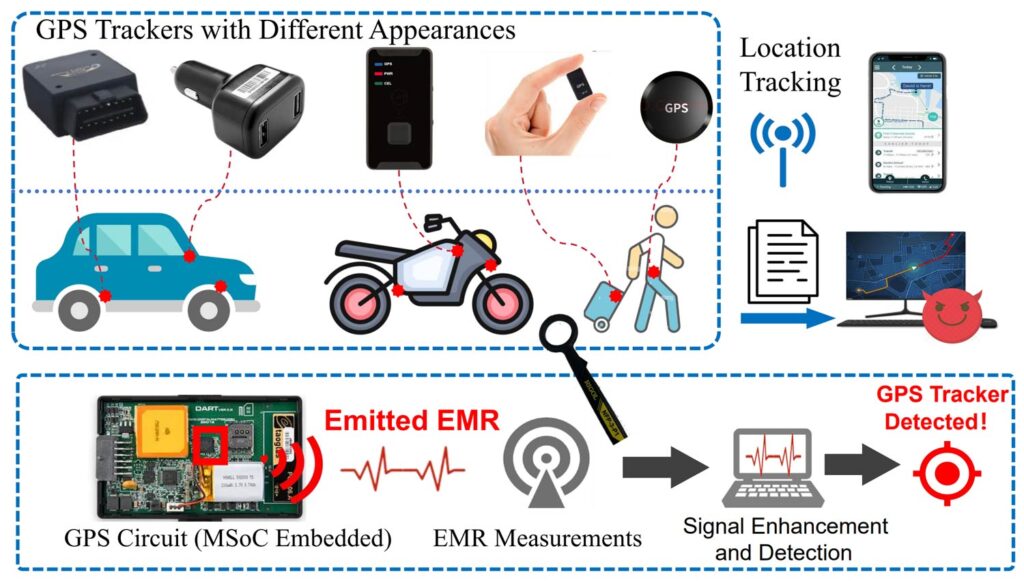
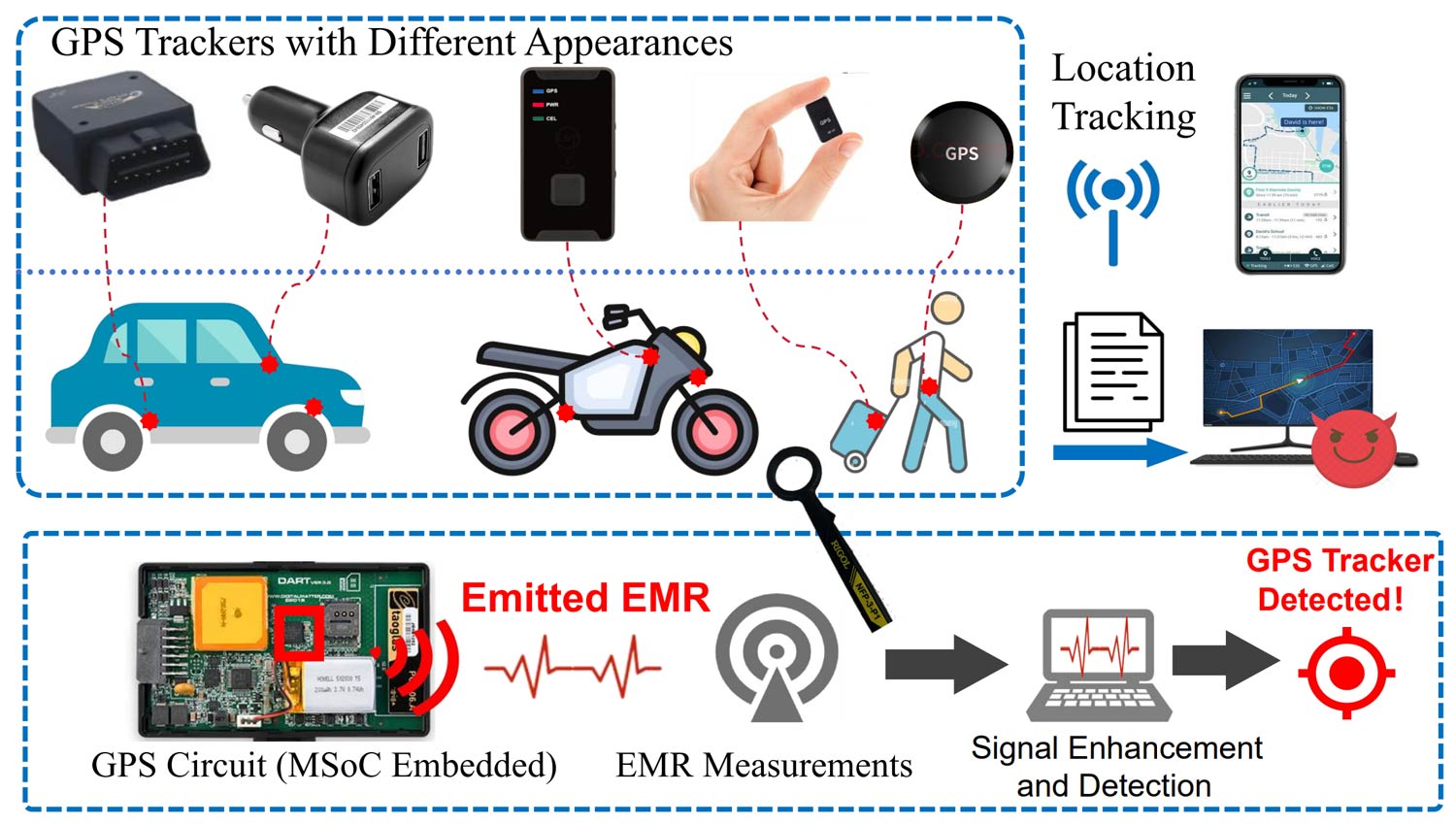
Researchers from Hunan University, Boise State, and UT Arlington have published a paper called "GPSBuster" (PDF link), demonstrating how a HackRF One can sniff out covert GPS trackers by their unintended electromagnetic radiation. Hidden trackers are hard to find since they only receive satellite signals and may store coordinates locally rather than transmit. Instead of looking for transmissions, GPSBuster targets side-channel leakage from the tracker's mixed-signal SoC, specifically the coupling between the quartz oscillator, local oscillator, and mixer used to downconvert the 1575.42 MHz L1 signal.
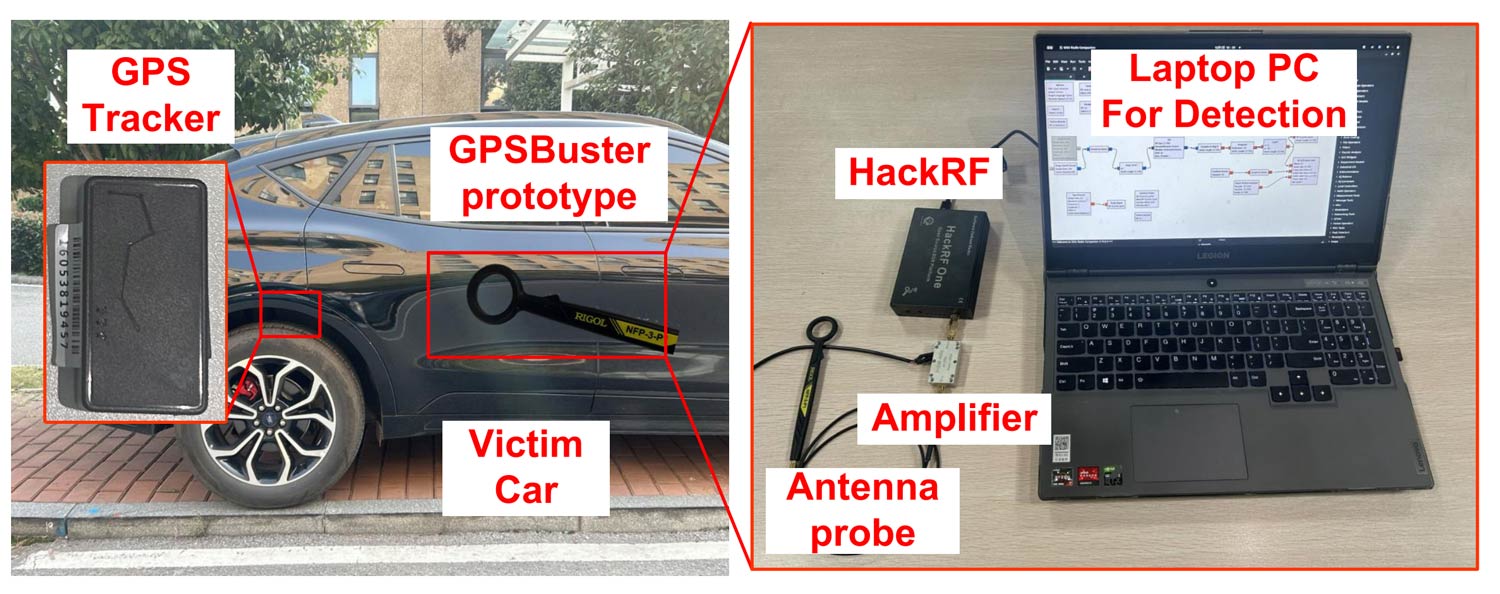
The team found that an active tracker leaks two characteristic spectra: a low band around 26 to 104 MHz and a high band around 1545 to 1625 MHz, each with a strong peak and evenly spaced harmonics. The low band reflects coupling between the quartz oscillator (typically 26 MHz) and the IF, while the high band contains LO plus IF spacing that always sums to 1575.42 MHz, giving a database-free detection rule. The setup consists of a HackRF, an NFP-3 near-field probe, and a 35 dB LNA. The use of the near-field probe means that sweeping the probe over an area to find the tracker is necessary, and the maximum detection range was 0.61 m.
Tested against the top 10 trackers available on a popular online marketplace, GPSBuster hit a 98.4% detection rate, working through plastic, cotton, canvas, and leather, and alongside phones, laptops, and speakers. It also extended to L1+L5 modules like the Quectel LC29H series, and even metal-shielded chips still leaked enough via PCB traces to be picked up.
如有侵权请联系:admin#unsafe.sh