
好的,我现在需要帮用户总结这篇文章的内容,控制在100字以内。首先,我得仔细阅读文章,抓住主要信息。 文章主要讲的是Google的Gemini广告安全系统如何检测和阻止有害广告。过去一年,恶意广告活动激增,Google移除了超过83亿条广告,并暂停了2500万个广告商账户。 接下来,文章提到Gemini系统现在更注重早期检测,通过分析账户行为、活动模式等信号来评估意图,而不是仅仅依赖关键词过滤。这种方法使系统能够捕获超过99%的违规广告。 另外,骗子越来越多地使用生成式AI制作更具说服力的假广告,这给平台带来了更大的压力。Google通过即时审核和用户举报来应对这一挑战。 政策执行和验证措施也在扩展,比如要求广告商进行身份验证以防止滥用。然而,误判问题依然存在,尽管模型有所改进。 最后,文章指出恶意广告问题依然严重,尤其是金融领域。Google正在努力提升检测速度和准确性,但随着攻击者使用AI技术,检测方法也需要不断进化。 总结一下:Google的Gemini系统通过早期检测、AI审核和严格政策执行来应对日益复杂的恶意广告问题。尽管取得了一些进展,但仍面临挑战。 </think> Google介绍了其Gemini广告安全系统如何检测和阻止有害广告。过去一年中移除了83亿多条恶意广告,并暂停了2500万个广告账户。新系统注重早期识别潜在威胁,并利用AI技术提升审核效率。面对生成式AI带来的新挑战,平台需不断优化检测机制以应对日益复杂的网络诈骗问题。 2026-4-17 07:12:41 Author: thecyberexpress.com(查看原文) 阅读量:47 收藏
Google has shared new details on how its Gemini ad safety systems are being used to detect and block harmful ads, as online scams continue to grow in scale and complexity. The update points to a sharp rise in malicious advertising activity, with billions of ads removed and millions of advertiser accounts suspended over the past year.
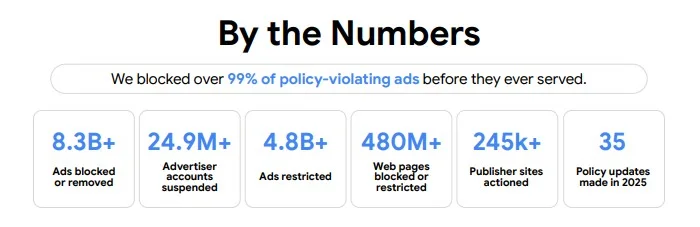
The company said its systems blocked more than 8.3 billion ads in 2025, with a large portion linked to scam activity. Nearly 25 million advertiser accounts were also suspended, including millions tied to fraudulent campaigns. The figures highlight the volume of abuse facing large ad platforms and the ongoing challenge of keeping such content in check.
Gemini Ad Safety Focuses on Early Detection
A key shift in Gemini ad safety is the focus on stopping harmful ads before they are published. Instead of relying only on keyword-based filters, newer systems are designed to assess intent by analyzing a wide range of signals such as account behavior, campaign patterns, and account history.
This approach reflects a broader move across the industry toward earlier detection. By identifying suspicious activity at the submission stage, platforms aim to reduce the number of harmful ads that reach users in the first place.
Google said its systems now catch more than 99 percent of policy-violating ads before they are served, although such figures are difficult to independently verify.
Rise of AI-Generated Scam Ads Adds Pressure
The update comes as scammers increasingly use generative AI to create more convincing fake ads. These ads can mimic legitimate businesses, use polished language, and adapt quickly, making them harder to detect using older systems.

This shift has put pressure on ad platforms to respond faster. Under the Gemini ad safety framework, many ads are now reviewed instantly at the time they are submitted. This includes Responsive Search Ads, where harmful content can be blocked before going live.
At the same time, user reports continue to play a role. Google said it processed significantly more user complaints in 2025 compared to the previous year, allowing faster action when suspicious ads slip through.
Policy Enforcement and Verification Measures Expand
Alongside automated detection, enforcement still relies on Google Ads policies, which define what content and practices are allowed. These rules prohibit areas such as counterfeit goods, dangerous products, and services that enable dishonest behavior, including hacking tools or fake documents.
Advertiser verification is another part of the system. By requiring identity checks, platforms attempt to prevent repeat offenders from re-entering under new accounts. While verification can limit abuse, it also depends on how strictly it is enforced and how easily it can be bypassed.
The combination of policy enforcement and AI-based detection forms the backbone of the current Gemini ad safety approach.
Accuracy Improves, but Challenges Remain
One issue in ad moderation is the risk of false positives, where legitimate advertisers are flagged or suspended. Google said improvements in its models have reduced incorrect suspensions, suggesting better differentiation between genuine campaigns and misleading ones.
Even so, the scale of enforcement raises ongoing questions. Blocking billions of ads indicates both improved detection and the sheer volume of problematic content being submitted.
The use of AI on both sides is also shaping the landscape. While platforms use tools like Gemini ad safety to detect abuse, attackers are using similar technologies to create it. This creates a continuous cycle where detection methods need to keep evolving.
Ongoing Effort to Contain Malicious Advertising
The latest figures underline how widespread malicious advertising has become. Scam ads remain a persistent issue, particularly in sectors where users are more likely to engage with offers or financial services.
Google’s update suggests progress in identifying and removing harmful content earlier in the process. However, the data also shows that ad platforms are dealing with a high and steady flow of abuse attempts.
As Gemini ad safety systems continue to develop, the focus is likely to remain on faster detection, stronger verification, and tighter enforcement. For users, the impact depends on how effectively these measures reduce exposure to scam ads over time.
如有侵权请联系:admin#unsafe.sh