好的,我现在需要帮用户总结一篇文章,控制在100字以内。用户已经提供了文章内容和一个示例总结,我得先仔细阅读文章,找出主要信息。 文章主要讲WhatsApp推出了多个新功能,包括AI回复、照片编辑、双账号登录、聊天记录转移等。还有提到针对青少年的家长管理账户和反诈骗功能。这些都是关键点。 接下来,我需要将这些信息浓缩到100字以内,确保涵盖所有重要功能。同时,避免使用“文章内容总结”这样的开头,直接描述即可。 可能的结构是:先点出新功能,然后列举几个主要功能,最后提到新增的安全措施。这样既全面又简洁。 现在开始组织语言:WhatsApp推出多项新功能,包括AI回复、照片编辑、双账号登录和聊天记录转移。还新增了家长管理账户和反诈骗保护措施。 检查字数是否在限制内,并确保信息准确无误。最后调整语句使其流畅自然。 </think> WhatsApp推出多项新功能,包括AI回复、照片编辑、双账号登录及聊天记录转移,并新增家长管理账户和反诈骗保护措施。 2026-3-26 14:16:14 Author: www.bleepingcomputer.com(查看原文) 阅读量:20 收藏
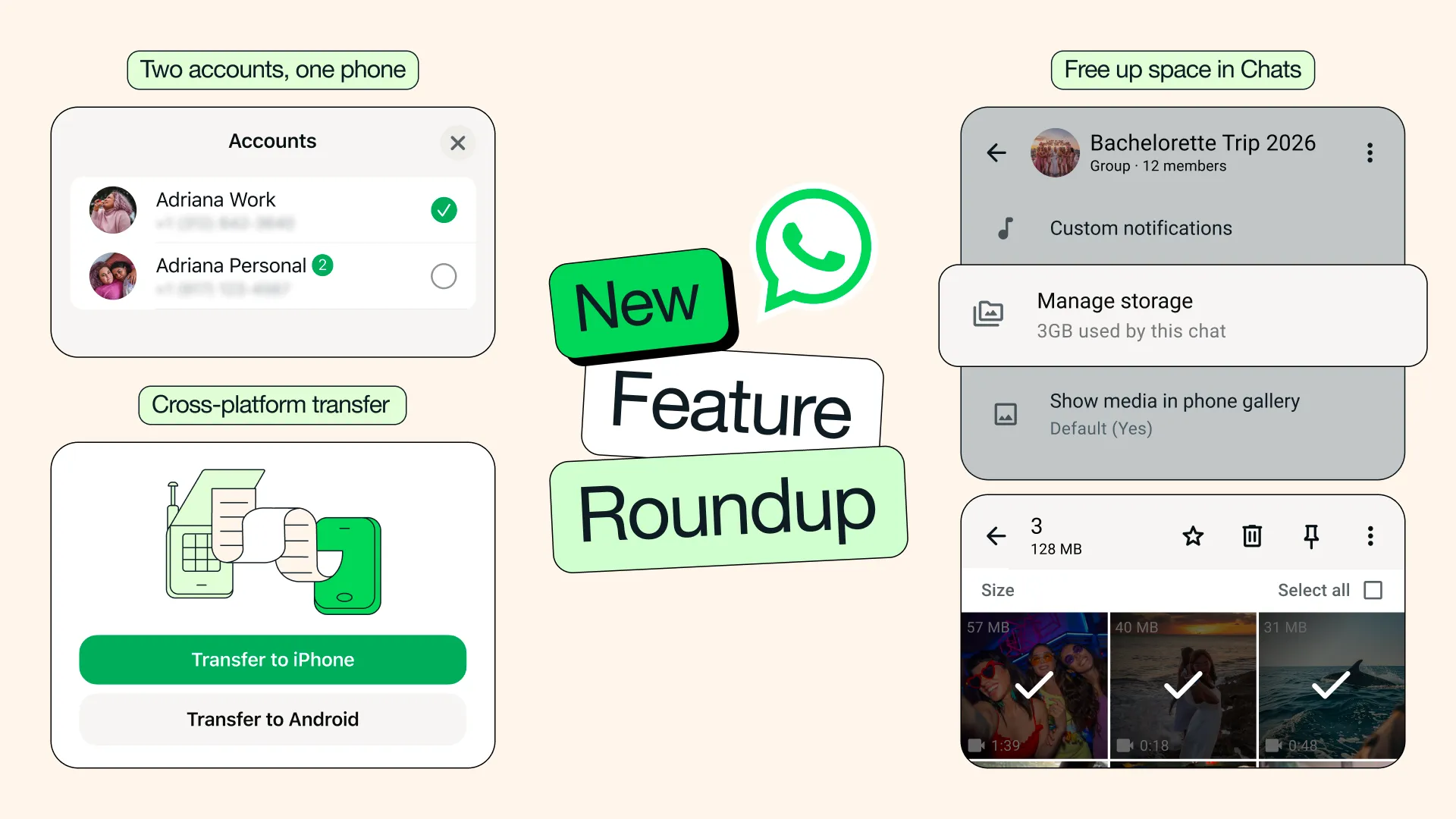
WhatsApp is rolling out multiple features designed to make the app easier to use, including AI-powered message replies and photo retouching, support for two accounts on iOS, and chat history transfer between iOS and Android devices.
Meta said that after the new updates, users will be able to touch up images in the chat before sharing them with contacts or in groups using Meta AI.
The Writing Help feature enables users to quickly draft a response based on the active conversation, with Meta saying it uses Private Processing to ensure messages are completely private.
"Writing Help is built on top of Private Processing technology, which allows you to leverage Meta AI to generate a response without Meta or WhatsApp ever reading your message or the suggested re-writes," Meta states.
The company says WhatsApp now also helps find large media files in any chat, quickly freeing up space without deleting entire conversations.
Additionally, WhatsApp allows two WhatsApp accounts to be logged in at the same time on iOS (an option that was already available on Android devices), and its chat transfer feature now supports moving message history from iOS to Android (including individual and group chats, call history, channel and community history, and more).
"Now, with just a few taps, your conversations, photos, and videos easily come with you no matter what device you're using," Meta said.
Earlier this month, WhatsApp also introduced parent-managed accounts for pre-teens, a feature that allows parents to decide who can contact them and which groups they can join.
Meta also introduced new WhatsApp anti-scam protections that warn users when behavioral signals suggest an incoming device-linking request may be fraudulent.
These scam defenses were added soon after the Dutch intelligence agencies warned that Russian state-backed hackers had been targeting Dutch government employees in phishing attacks aimed at their Signal and WhatsApp accounts.
In January, Meta also began rolling out a new WhatsApp lockdown security feature designed to protect journalists, public figures, and other high-risk individuals from sophisticated threats, including, but not limited to, spyware attacks.

Red Report 2026: Why Ransomware Encryption Dropped 38%
Malware is getting smarter. The Red Report 2026 reveals how new threats use math to detect sandboxes and hide in plain sight.
Download our analysis of 1.1 million malicious samples to uncover the top 10 techniques and see if your security stack is blinded.
如有侵权请联系:admin#unsafe.sh