For years, cloud security platforms have relied on dashboards as the primary way analysts interact with data. Security teams log into a CNAPP, click through multiple panels, apply filters, pivot across views, and manually piece together the information they need to answer even basic questions. Every investigation becomes a process of navigating dashboards. Every answer requires stitching together telemetry from multiple locations. This workflow may have worked when environments were smaller, but modern cloud infrastructure is far too dynamic for dashboard-driven security operations. Workloads appear and disappear in minutes. Permissions change continuously. Containers redeploy constantly. Security teams don’t just need visibility. They need answers. That is where Juno AI Analyst AI changes the model. Juno AI Analyst represents a fundamental shift in how teams interact with security data. Instead of navigating dashboards, analysts can simply ask questions in natural language. Juno AI Analyst investigates the environment and returns a complete, verifiable response that includes: Rather than forcing analysts to search across dashboards, Juno AI Analyst brings the investigation directly to the prompt. This transforms the CNAPP from a visual interface into an intelligence interface. The analyst no longer hunts through panels. The platform answers the question directly. This is the beginning of the prompt-first era of cloud security. With the introduction of the Juno AI Analyst MCP Server, teams can now access Juno AI Analyst from external tools such as: MCP (Model Context Protocol) allows external systems to interact with Juno AI Analyst as a trusted intelligence layer. Instead of security teams being the only ones asking questions, developers, automation systems, and AI agents can securely query security posture and risk context directly. This turns Juno AI Analyst into a programmable security interface where security intelligence is no longer locked behind a dashboard but accessible wherever work happens. Modern cloud environments are built and operated by developers. Security tools that exist only inside security dashboards create friction between teams. By enabling MCP access, Juno AI Analyst moves security intelligence into developer-native environments. A developer inside VS Code can ask: “Do any of the containers in this cluster have critical vulnerabilities?” Or: “Which IAM permissions in this Terraform configuration violate least privilege policies?” Juno AI Analyst analyzes unified telemetry collected across cloud infrastructure, workloads, containers, and endpoints and returns contextual answers immediately. This reduces the gap between development and security operations and allows security decisions to happen earlier in the workflow. Juno AI Analyst does not stop at answering questions. It also assists with operational workflows that traditionally require multiple tools and manual handoffs. This includes: Future releases will expand this further, enabling teams to initiate actions such as exception requests directly through Juno AI Analyst, grounded in evidence and context. Instead of exporting data, opening tickets, and manually explaining risk, teams will be able to manage the full workflow from investigation to resolution directly from the prompt. Juno AI Analyst delivers immediate operational benefits for security teams: Dashboards will always have a role for visualization, but they are no longer the center of the security workflow. Security teams log into a CNAPP to get answers and take action. Juno AI Analyst removes everything between the question, the decision, and the outcome. By combining prompt-driven investigation with programmable access through MCP, Juno AI Analyst transforms the CNAPP from a static interface into an intelligent security platform. The industry is entering a prompt-first era. With Juno AI Analyst, security teams stop searching for data and start acting on intelligence.Introduction
.png?width=1335&height=649&name=download%20(1).png)
From Dashboards to Prompts
The Next Step: Making Security Programmable with MCP

Bringing Security into Developer Workflows
From Investigation to Action
Why This Changes Cloud Security Operations
The End of the Dashboard Era

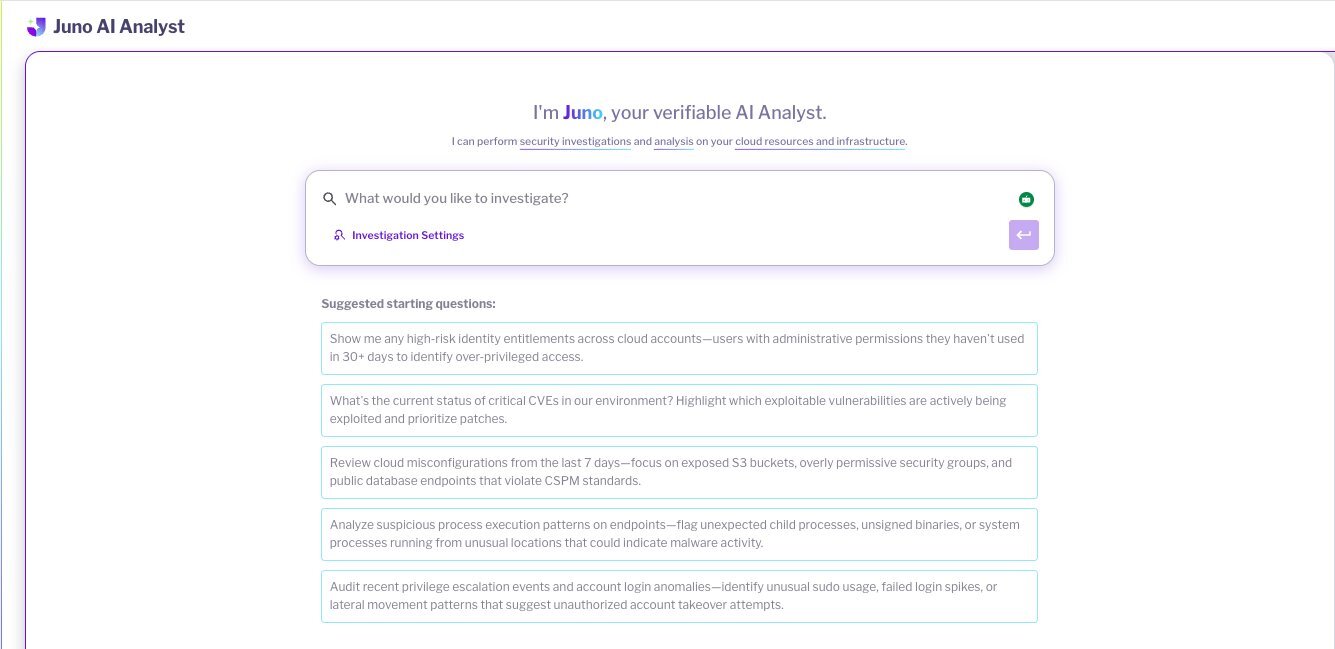
Juno AI Analyst: Prompt-Driven CNAPP Security
好的,我现在需要帮用户总结这篇文章的内容,控制在100个字以内。首先,我得通读整篇文章,抓住主要观点。 文章主要讲的是Juno AI Analyst如何改变云安全操作。过去依赖仪表盘,现在转向自然语言提问。Juno能直接回答问题,提供全面的信息,并且通过MCP协议集成到开发工具中,让开发者也能访问安全情报。这不仅加快了调查速度,还减少了团队之间的摩擦。 接下来,我要把这些关键点浓缩成一句话,确保不超过100字。同时,不需要使用“文章总结”这样的开头,直接描述内容即可。 最后检查一下是否涵盖了所有重要信息:自然语言提问、全面响应、MCP协议、集成开发工具、提升效率和协作。确保语言简洁明了。 </think> Juno AI Analyst通过自然语言提问改变云安全操作模式,取代传统仪表盘交互方式,提供全面响应并支持通过MCP协议集成到开发工具中,提升效率与团队协作。 2026-3-23 02:45:20 Author: www.uptycs.com(查看原文) 阅读量:29 收藏
好的,我现在需要帮用户总结这篇文章的内容,控制在100个字以内。首先,我得通读整篇文章,抓住主要观点。 文章主要讲的是Juno AI Analyst如何改变云安全操作。过去依赖仪表盘,现在转向自然语言提问。Juno能直接回答问题,提供全面的信息,并且通过MCP协议集成到开发工具中,让开发者也能访问安全情报。这不仅加快了调查速度,还减少了团队之间的摩擦。 接下来,我要把这些关键点浓缩成一句话,确保不超过100字。同时,不需要使用“文章总结”这样的开头,直接描述内容即可。 最后检查一下是否涵盖了所有重要信息:自然语言提问、全面响应、MCP协议、集成开发工具、提升效率和协作。确保语言简洁明了。 </think> Juno AI Analyst通过自然语言提问改变云安全操作模式,取代传统仪表盘交互方式,提供全面响应并支持通过MCP协议集成到开发工具中,提升效率与团队协作。 2026-3-23 02:45:20 Author: www.uptycs.com(查看原文) 阅读量:29 收藏
文章来源: https://www.uptycs.com/blog/how-juno-ai-analyst-turns-cnapp-into-a-prompt
如有侵权请联系:admin#unsafe.sh
如有侵权请联系:admin#unsafe.sh