嗯,用户让我帮忙总结一篇文章,控制在一百个字以内,而且不需要用“文章内容总结”之类的开头。直接写描述就行。好的,首先我需要仔细阅读用户提供的文章内容,理解其主要观点和重点。 这篇文章主要讲的是零信任身份管理(Zero Trust Identity Management)在未来几年的发展趋势和重要性。文章提到了零信任的核心理念是“永不信任,始终验证”,这对于保护企业环境和应对不断变化的威胁至关重要。此外,文章还讨论了当前的趋势、预测以及实施零信任身份管理的挑战和解决方案。 接下来,我需要将这些要点浓缩到一百个字以内。要确保涵盖零信任的基本概念、其重要性、未来的发展趋势以及面临的挑战。同时,语言要简洁明了,避免使用复杂的术语。 可能的结构是先介绍零信任的核心理念,然后提到其在保护企业环境中的作用,接着说明未来的技术趋势如AI、机器学习的应用,最后简要提及实施中的挑战如文化阻力和技术整合问题。 现在开始组织语言:零信任身份管理要求在每一步都进行严格的验证,改变了传统的网络安全性假设。这种方法对于保护企业环境和应对复杂威胁至关重要。到2026年,随着AI和机器学习等技术的整合,这种方法将变得更加普遍,并且会面临一些挑战如文化阻力和技术整合问题。 这样大概控制在一百字左右。 </think> 零信任身份管理要求在每一步都进行严格的验证,改变了传统的网络安全性假设.这种方法对于保护企业环境和应对复杂威胁至关重要.到2026年,随着AI和机器学习等技术的整合,这种方法将变得更加普遍,并且会面临一些挑战如文化阻力和技术整合问题. 2026-3-16 14:11:38 Author: securityboulevard.com(查看原文) 阅读量:5 收藏
The evolution of cybersecurity challenges and the rapid pace of digital transformation have led security leaders to focus increasingly on robust and adaptive security frameworks. Among them, zero trust identity management has emerged as a cornerstone of modern security strategies. As we look toward 2026, this article provides a detailed roadmap for security leaders to implement zero trust identity management, offering insights into current trends, predictions, and actionable steps that address the dynamic threat landscape.
Introduction to zero trust identity management
Zero trust identity management is more than a trend; it’s a philosophy that challenges the traditional assumptions of network security. Rather than trusting users or devices based solely on their location or prior authentication, zero-trust identity management requires strict verification at every step. This approach has become critical for organizations seeking to protect intellectual property, customer data, and critical infrastructure from sophisticated cyber threats.
Security leaders must understand that the underlying principle of zero trust identity management is “never trust, always verify.” In 2026, this approach will not only secure enterprise environments but also reshape how organizations think about authentication, access control, and risk management. With an increasing variety of endpoints accessing company resources and a shift toward remote work, the zero trust model is a proactive solution to counter threats that exploit traditional perimeter-based security.
The evolution of identity management in a zero-trust world
Over the past decade, identity management methodologies have evolved considerably. Traditional models based on perimeter defense have given way to approaches that consider every access attempt as a potential threat. Zero trust identity management builds on this evolution by considering that every request for access is a risk, regardless of its origin. This signifies a radical departure from older models that assumed everything inside the corporate network was trustworthy.
For security leaders, this evolution means rethinking security strategies, investing in advanced technologies, and promoting a culture of vigilance. In 2026, organizations will increasingly adopt solutions powered by machine learning, artificial intelligence, and real-time analytics to enforce zero trust identity management, significantly reducing the risk of unauthorized access.

Tired of manual risk assessments that leave your board exposed?
Automate IT risk quantification with TrustCloud and confidently minimize CISO and Board liability.
Why zero-trust identity management matters for security leaders
Sophisticated attackers, who regularly bypass conventional security methods, characterize the modern threat landscape. For security leaders, zero trust identity management offers a paradigm that can outpace and outsmart these adversaries. The key benefits of this model include the following:
- Enhanced security
By verifying every access request, organizations can drastically reduce the probability of a successful breach. - Reduced lateral movement
Minimizing trust across network segments prevents attackers from moving freely once they have breached one part of the network. - Real-time risk assessment
Continuous monitoring and verification ensure that access rights are managed dynamically, adapting to potential threats as they emerge. - Regulatory compliance
Strict identity verification aids in meeting government and industry-specific regulatory requirements.
As security leaders prepare for the future, adopting a zero trust identity management framework is not only about technology; it’s about reshaping organizational attitudes toward security. Leaders must promote the necessary cultural shift to embrace continuous validation and vigilance in all access interactions.
Current trends in zero-trust identity management
Even as organizations worldwide have begun integrating zero trust identity management into their operations, a few notable trends have emerged that are shaping its evolution:
- Integration with artificial intelligence
AI and machine learning are being deployed to enhance real-time identity assessments. These technologies can analyze vast amounts of data to identify anomalies, detect suspicious behavior, and automatically adjust access rights to minimize risk. - Biometric and behavioral authentication
The move beyond passwords to include biometrics and behavioral analytics supports a more granular verification process. This trend not only improves user experience but also raises the bar for the verification process in zero trust identity management. - Cloud identity management
With the migration of critical services to the cloud, zero trust identity management seamlessly integrates with cloud-native solutions to ensure that identity authentication remains robust, regardless of location. - Micro-segmentation
By dividing the network into smaller, manageable segments, organizations can tighten security controls around sensitive data and applications, making it significantly harder for malicious actors to gain unauthorized access. - Regulatory influences
Emerging regulations and compliance mandates are pushing organizations to adopt stronger identity management processes, further fueling the momentum behind the zero trust approach.
Security leaders are in a unique position to leverage these trends. In this era of rapid innovation, zero-trust identity management is not a static strategy but an evolving framework that adapts to new challenges as they emerge.
Predictions for zero-trust identity management in 2026
Looking ahead to 2026, several predictions offer insights into the future direction of zero trust identity management. Security leaders need to be aware of these developments to ensure that their organizations remain secure and competitive:
Increased adoption and standardization: Zero trust identity management is expected to become the standard approach for access management. The convergence of best practices, industry standards, and regulatory requirements will drive broader adoption, making it an essential part of corporate security strategies.
- Advanced analytics and threat intelligence
By 2026, zero trust identity management solutions will rely more heavily on advanced analytics. The integration of threat intelligence and predictive analytics will help security leaders anticipate and neutralize risks before they become significant problems. - Seamless integration with legacy systems
Many organizations still operate with legacy systems that were not designed for the zero trust model. Expect significant progress in technologies that bridge the gap between new and old systems, enabling a smoother, gradual transition toward a fully zero-trust environment. - User experience improvements
One of the challenges of zero trust identity management has been the impact on user experience. In 2026, innovations, such as frictionless authentication methods and adaptive security measures, will be refined, ensuring that robust security measures do not come at the cost of usability. - Edge computing and IoT security
With the rapid expansion of the Internet of Things (IoT) and edge computing, zero trust identity management will incorporate strategies to secure a myriad of connected devices. This will be crucial as more devices become entry points for potential cyber-attacks. - Enhanced automation and orchestration
Automation will play a larger role in managing identity lifecycle events. For security leaders, automation combined with zero-trust identity management means faster responses to potential threats and more efficient processes for managing user access.
These predictions highlight the evolutionary path of zero trust identity management, reinforcing its relevance and indispensability for security leaders in mitigating risks and ensuring long-term organizational resilience.
Challenges and obstacles for security leaders
While the benefits of zero trust identity management are compelling, the journey toward full adoption is not without challenges. Security leaders must navigate several hurdles, including
- Cultural resistance
Transitioning to a zero trust model requires significant cultural shifts. Employees and even some IT staff may resist new protocols due to concerns over increased scrutiny and potential interruptions in workflow. - Integration complexities
Organizations often operate with a mix of modern and legacy systems. Integrating zero trust identity management into existing infrastructures can be complex and resource-intensive. - Cost and resource requirements
Implementing a comprehensive zero trust identity management system can require substantial investment in new tools, training programs, and support systems. Security leaders must balance these costs against the potential risks of non-compliance or breaches. - Data privacy and regulatory considerations
Enhanced monitoring and data collection are integral to zero trust identity management. However, organizations must ensure that these practices comply with data privacy regulations and avoid infringing on user rights. - Skill gaps
As cyber threats evolve, the demand for skilled professionals proficient in zero trust principles continues to grow. Security leaders must invest in ongoing training and development to address the talent gap in cybersecurity.
Addressing these challenges requires a proactive and multifaceted approach. Security leaders should begin with low-risk pilot programs, gather feedback, and incrementally extend the scope of zero-trust identity management across the organization. By anticipating obstacles and planning accordingly, organizations can smooth the transition and maximize the potential of this security framework.
Implementing a roadmap for zero-trust identity management
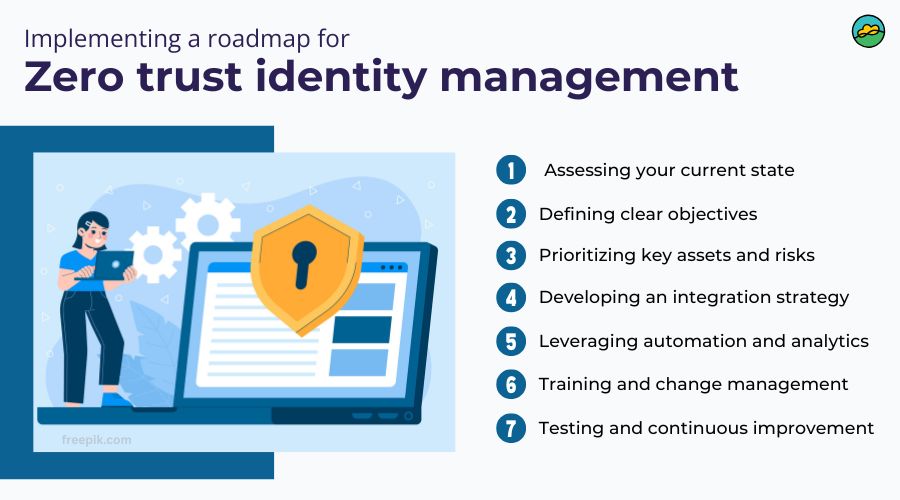
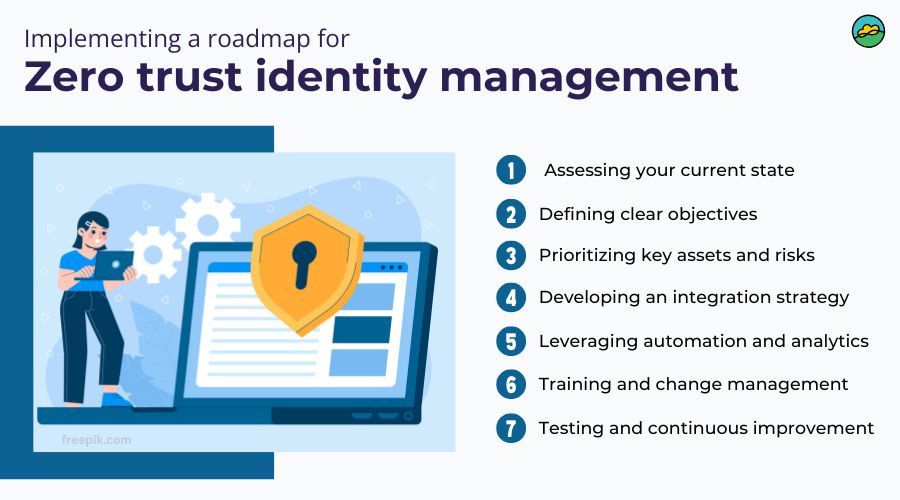
The key objective for security leaders is to develop a clear and actionable roadmap for implementing zero trust identity management by 2026. This roadmap should be comprehensive, addressing technical requirements, organizational changes, and long-term strategic goals. The following steps provide a detailed guide to help security leaders navigate this journey:
- Assessing your current state
The first step in any zero trust identity management initiative is a thorough assessment of your current security posture. Security leaders should evaluate existing identity verification practices, network architectures, and access control policies. This baseline assessment helps identify gaps and areas for improvement, laying the groundwork for policy and technology updates. - Defining clear objectives
Once the current state is understood, security leaders must define clear objectives for the transition. Goals should be measurable, aligned with business objectives, and tailored to the unique needs of your organization. Whether you aim to reduce breach incidents, streamline access processes, or enhance regulatory compliance, establishing clear milestones will be integral to ensuring success. - Prioritizing key assets and risks
Zero trust identity management is most effective when applied to critical assets and high-risk segments of the network. Security leaders should identify areas where unauthorized access could have severe implications, such as sensitive data repositories, intellectual property, and critical infrastructure. Following this, create tiers of sensitivity and risk to prioritize the implementation. - Developing an integration strategy
Integrating zero trust identity management into existing frameworks typically requires a blend of modern tools and strategies for legacy systems. Security leaders should consider phased rollouts that begin with non-critical systems. This approach allows teams to learn and iterate as they progress, ensuring that integration challenges are resolved before a full-scale rollout. - Leveraging automation and analytics
In the context of zero trust identity management, automation plays a crucial role in continuously monitoring identity access and behavior. Implementing AI-driven analytics can help security leaders detect suspicious activity in real time and enforce adaptive controls. Automation not only reduces the workload on security teams but also enhances the overall responsiveness of the security framework. - Training and change management
As the organization transitions to a zero trust model, training and change management become essential components of the roadmap. Security leaders must ensure that all employees, from IT staff to end-users, understand the new security measures and their importance. Regular training sessions, awareness programs, and clear communication of benefits can help alleviate resistance and foster a security-first culture. - Testing and continuous improvement
No security roadmap is complete without a robust testing and feedback mechanism. Regular audits, penetration testing, and simulated breach scenarios should be part of the ongoing process. Security leaders need to use these insights for continuous improvement, refining policies, adjusting configurations, and updating training materials to adapt to an evolving threat landscape.
Best practices for adopting zero-trust identity management
In addition to a clear roadmap, security leaders should follow industry best practices that enhance the effectiveness of zero-trust identity management implementations.
Key best practices include:
- Adopt a layered approach
Security should be implemented in layers. Combining identity verification with network segmentation, endpoint security, and data encryption creates a multi-faceted defense mechanism. - Ensure interoperability
Invest in solutions that are compatible with existing and future systems. This flexibility allows for smooth integrations and reduces the risk of operational disruptions. - Implement continuous monitoring
Zero trust is not a set-and-forget solution. Continuous monitoring, logging, and analysis are crucial to ensuring that the security framework adapts to new threats as they emerge. - Collaborate with industry partners
Sharing threat intelligence and collaborating with other organizations can provide valuable insights. Security leaders benefit from collective experiences and industry-wide research. - Prioritize transparency
Clear documentation of policies, procedures, and incident responses builds trust within the organization, ensuring that all stakeholders are aligned with the zero trust philosophy.
Implementing these best practices will allow security leaders to create a resilient, adaptable security strategy that not only meets current needs but is also future-proof as threats evolve leading up to 2026 and beyond.
The future outlook for zero-trust identity management
As we approach 2026, the momentum behind zero trust identity management is set to grow exponentially. Innovations in authentication, access control, and analytics promise to further refine the framework. Security leaders should be prepared for the following future trends:
- Evolution of identity verification methods
Emerging technologies such as continuous biometrics and contextual authentication will drive more precise and frictionless security experiences. - Integration of zero trust with digital transformation
As organizations increasingly leverage cloud solutions, IoT devices, and edge computing, zero trust identity management will be integrated deeply across diverse platforms. - Greater regulatory involvement
In response to growing cybersecurity threats, governments and regulatory bodies may mandate stricter security protocols, pushing zero-trust identity management to the forefront of compliance strategies. - Enhanced ecosystem collaboration
The cybersecurity industry will likely see more alliances and collaborative platforms. This collective approach will foster the sharing of best practices and offer security leaders an expanded toolkit for managing identity risks. - Adaptive and autonomous security systems
With advances in machine learning, zero-trust identity management systems will evolve into highly adaptive frameworks that automatically respond to threats without human intervention.
The future is bright for organizations that embrace a zero-trust identity management paradigm. For security leaders, staying informed about these developments and investing in scalable, forward-thinking technologies will ensure that their organizations remain resilient against rapidly evolving cyber threats.
Summing it up
Zero trust identity management represents a transformative approach to cybersecurity, one that challenges traditional security assumptions and offers a proactive, dynamic defense against modern threats. For security leaders, the road to 2026 calls for a deliberate, strategic adoption of zero-trust identity management, a move that is not only timely but necessary in a landscape marked by constant change and escalating risks.
By embracing continuous monitoring, leveraging advancements in technology, and prioritizing change management, security leaders can ensure that their organizations are not only protected in the present but also well-prepared for the future. As 2026 approaches, the integration of zero trust identity management into everyday operations is set to become a critical pillar of cybersecurity strategy, driving a culture of constant vigilance and innovation.
Frequently asked questions
如有侵权请联系:admin#unsafe.sh