
好的,我现在需要帮用户总结一篇文章的内容,控制在100个字以内,并且不需要特定的开头。首先,我得仔细阅读这篇文章,理解其主要观点。 文章主要讲的是WS-Trust协议在混合身份环境中的重要性。尽管现代开发者更倾向于使用OAuth2和OIDC,但WS-Trust仍然是连接旧系统和云服务的关键桥梁。它负责安全令牌的颁发、续期和验证,允许不同的安全域相互信任。 文章还提到WS-Trust基于SOAP协议,使用XML结构进行通信,虽然复杂但逻辑清晰。此外,它讨论了WS-Trust在安全方面的不足,特别是在零信任环境下的弱点,并建议采取一些策略来缓解这些风险,比如使用身份网关、有条件访问和隧道加密。 最后,作者建议企业制定现代化战略,逐步淘汰WS-Trust,同时确保当前系统的安全。 总结起来,文章强调了WS-Trust在当前混合架构中的关键作用及其安全性挑战,并提供了应对策略。 </think> 文章探讨了WS-Trust协议在混合身份架构中的关键作用及其安全性挑战。尽管现代开发者更倾向于OAuth2和OIDC,但WS-Trust仍是连接旧系统与云服务的重要桥梁。文章指出其基于SOAP协议的复杂性、安全漏洞及应对策略,并建议企业制定现代化计划以逐步淘汰该协议。 2026-2-28 12:58:3 Author: securityboulevard.com(查看原文) 阅读量:17 收藏
Let’s be honest. Nobody wakes up in the morning excited to debug XML.
In the rush to slap OAuth2 and OIDC onto everything, the industry has developed a collective amnesia about the silent engine still powering millions of hybrid identity connections: WS-Trust. While modern developers look at SOAP-based protocols with the same enthusiasm they reserve for a root canal, WS-Trust remains the critical "Legacy Bridge" of 2026.
It’s the protocol defined by the OASIS WS-Trust Standard. It handles the issuance, renewal, and validation of security tokens. It allows disparate security domains to trust one another. And, whether you like it or not, it is likely the only thing keeping your on-premise infrastructure from crumbling.
For architects managing complex hybrid environments, the narrative isn't about implementing new WS-Trust endpoints. Please don't do that. It's about maintaining, securing, and eventually migrating the ones you’re stuck with. You can't simply "turn off" legacy authentication when your entire ecosystem—from Microsoft Entra Hybrid Join to that ancient SOAP-based CRM in the basement—relies on it to breathe.
What Is WS-Trust? (The "Universal Translator")
To understand WS-Trust, you have to understand the problem of the "Tower of Babel" in identity.
In a simple world, a user has a key, and the door fits that key. In the enterprise, the user has a key (say, a Kerberos ticket or a raw password), but the door (the application) speaks a completely different language. It doesn't know what to do with your key. It wants a SAML assertion. Or it wants a specific claim format.
Enter the Security Token Service (STS).
Think of the STS as a high-stakes currency exchange booth. It validates the user's raw credentials—checking if the "money" is real—and issues a security token that the application actually values. At the heart of this process sits the Security Token Service, acting as the traffic cop for identity. It ensures trust is established before access is even considered.
The Cast of Characters
- The STS (The Boss): This is the authority. It trusts the user (usually via Active Directory) and implies trust to the application. It mints the tokens. If the STS is down, nobody works.
- The Relying Party (The Bouncer): The application (e.g., SharePoint, a custom .NET app, or a partner's web service). It needs a token to grant access. It "relies" on the STS to do the heavy lifting of authentication because it doesn't want to handle passwords directly.
- Claims (The Cargo): The data packed inside the token. This isn't just "Access Granted." It’s the fine print: Email, Role, Employee ID, Group Membership.
WS-Trust is simply the protocol that governs how you ask the STS for a token. It’s the grammar of the request. It allows for protocol translation, taking a Kerberos ticket from an internal network and swapping it for a SAML assertion that a cloud application can consume.

Under the Hood: How the Protocol Actually Works
The mechanics of WS-Trust are verbose. They are ugly. But they are incredibly logical.
It operates on a request-response model using SOAP (Simple Object Access Protocol). Unlike REST, which is lightweight and chatty, SOAP is heavy and formal. The entire conversation happens between the Client (the app acting on behalf of the user) and the STS.
The conversation is defined by two primary XML structures that you will inevitably see in a trace log: the RequestSecurityToken (RST) and the RequestSecurityTokenResponse (RSTR).
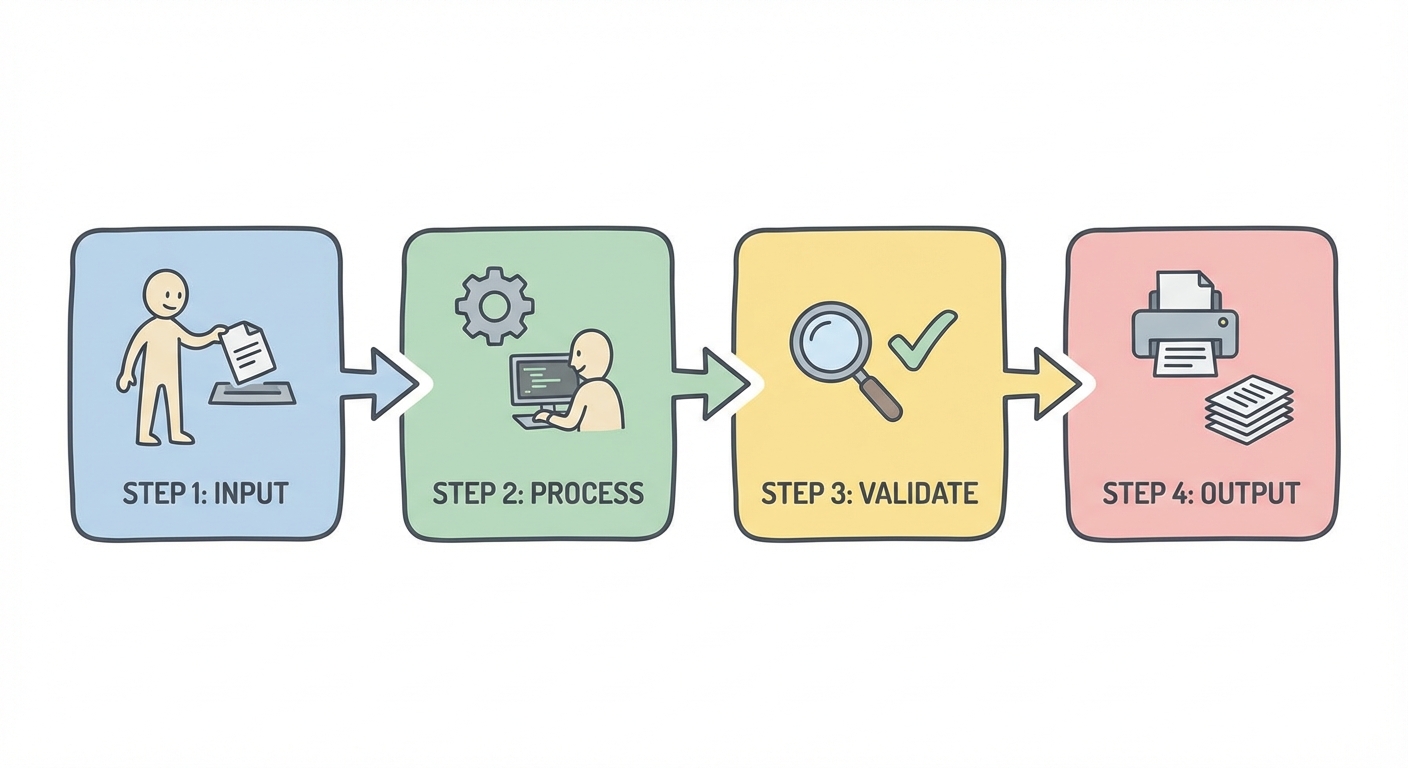
The Token Exchange Flow (The Dance)
- The Ask (RST): The client application collects the user's credentials (or an existing token) and wraps them in a massive SOAP envelope. It fires this at the STS endpoint. It's essentially saying, "Here is who I am (Authentication), and here is who I want to talk to (Relying Party). Give me a ticket."
- The Vetting: The STS receives the envelope. It unwraps the SOAP message. It verifies the credentials against the identity store (like AD). Then, it checks its policy engine. Is this user actually allowed to access that app? Is their password expired? Are they disabled?
- The Minting (RSTR): If everything checks out, the STS mints a new token (typically SAML 1.1 or 2.0). Here is the crucial part: It signs this token with its private key. This signature is the wax seal of authenticity. The signed token is wrapped in the RSTR and sent back to the client.
- The Handoff: The client takes the token—without modifying it (breaking the seal would invalidate it)—and presents it to the Relying Party. The RP verifies the signature against its public key store and grants access.
For organizations looking to modernize, understanding the mechanics of secure token exchange is the first step toward migration. You cannot replace what you do not understand.
Active vs. Passive: Clearing the Confusion
This is where I see junior engineers trip up constantly. You will hear WS-Trust and WS-Federation used interchangeably. They aren't the same thing. They serve different masters.
Passive Federation (The Browser)
This is what happens when you drink your morning coffee and log into Office 365. You type a URL, and your browser gets bounced around like a pinball. You hit the site, you get redirected to a login page, you sign in, and you get redirected back.
- The User Agent: A Web Browser.
- The Protocol: WS-Federation (or SAML-P).
- WS-Trust's Role: It's invisible here. The browser doesn't "speak" WS-Trust.
Active Federation (The Smart Client)
This is where WS-Trust lives. This is for "smart" clients—desktop applications like Outlook, custom .NET executables, or background services.
In an Active flow, the client application handles the credentials directly. There is no redirection. There is no web page. The app takes the username and password, contacts the STS via WS-Trust, gets the token, and proceeds.
If you are dealing with a "headless" process, a scheduled task, or a rich desktop client that doesn't pop a browser window, you are almost certainly dealing with WS-Trust.
Why Are We Still Talking About This in 2026?
If the tech is old, dead, and buried, why does it keep showing up in your vulnerability scans? Because the enterprise moves slower than the speed of innovation.
1. Microsoft Entra Hybrid Join
Even in a cloud-first world, connecting on-premise Active Directory computers to Entra ID (formerly Azure AD) relies heavily on WS-Trust. When a computer boots up and needs to authenticate itself to the cloud to receive its Primary Refresh Token (PRT), it often uses a WS-Trust exchange to validate the computer account against the on-premise AD FS. You can see this necessity outlined in the Microsoft Entra Hybrid Identity Documentation. It's a complex dance between the on-prem past and the cloud future.
2. The "If It Ain't Broke" Service Accounts
You have them. Every company has them. Thousands of background services running on servers worldwide, hardcoded to send SOAP requests. These non-interactive flows haven't been refactored for OAuth2 Client Credentials because refactoring costs money and time. These scripts run critical payroll data or inventory checks. Nobody wants to touch them.
3. B2B Federation (The Partner Problem)
Sometimes, you don't own the identity. If you have a partner organization that still runs a legacy AD environment, and they need access to your modern application, you often have to build a "trust" where your app accepts their WS-Trust tokens. It becomes the common language—the Esperanto—between your modern house and their historic one.
The Security Gap: Operating in a Zero Trust World
Here is the bad news. The utility of WS-Trust comes at a steep security cost. The protocol was designed in an era before "Zero Trust" was a buzzword and before Multi-Factor Authentication (MFA) was mandatory.
The "MFA Problem" is the single biggest liability.
In a standard WS-Trust Active flow (specifically the Resource Owner Password Credentials flow), the client sends the username and password in one shot. The protocol has no native way to "pause" the conversation and ask the user for an OTP code or a biometric scan. It expects an immediate Yes/No.
This means if an attacker dumps your credentials, they can often bypass your fancy MFA solution by hitting the WS-Trust endpoint directly. It's a back door that is often left wide open.
The "Wrapper" Strategy
If you cannot kill the protocol, you must cage it.
- Identity Gateways: Place a modern Identity Gateway in front of the STS. This gateway can enforce MFA before the request ever reaches the legacy WS-Trust endpoint.
- Conditional Access: If you can't use MFA, use context. Restrict the WS-Trust endpoint so it only accepts requests from specific, trusted IP addresses (like your corporate VPN or branch office).
- Tunneling: Force legacy auth traffic through a secure tunnel.
The NIST Digital Identity Guidelines are clear: the industry must move away from password-based flows toward token-based flows. If you are still using WS-Trust, your goal should be to isolate these endpoints as if they were hazardous material—contained, monitored, and restricted.
Debugging the XML: A Survival Guide
For the developers tasked with maintaining these systems, debugging WS-Trust is a rite of passage. It usually involves staring at raw XML traces until your eyes bleed.
When reading a RequestSecurityToken (RST), look immediately for the <wst:RequestType> element. This tells you what the client is actually asking for. Is it trying to Issue a new token? Renew an old one? Or Validate a token it already has?
Common Points of Failure:
- Clock Skew (The Time Traveler): XML security is incredibly time-sensitive. If the clock on your STS and the clock on your Relying Party differ by more than 5 minutes, the token will be rejected. It will either be "expired" or "not yet valid." Always check NTP.
- Certificate Trust: The token is signed by the STS. If the Relying Party does not have the STS's public signing certificate in its "Trusted Root" store, it will reject the signature. This happens frequently when certificates rotate.
- Proof Key Mismatches: In complex "Holder-of-Key" scenarios, the client must prove it possesses a private key corresponding to the token. If this cryptographic proof fails, the STS will return a generic error that explains absolutely nothing.
WS-Trust vs. OIDC vs. SAML: The Evolution
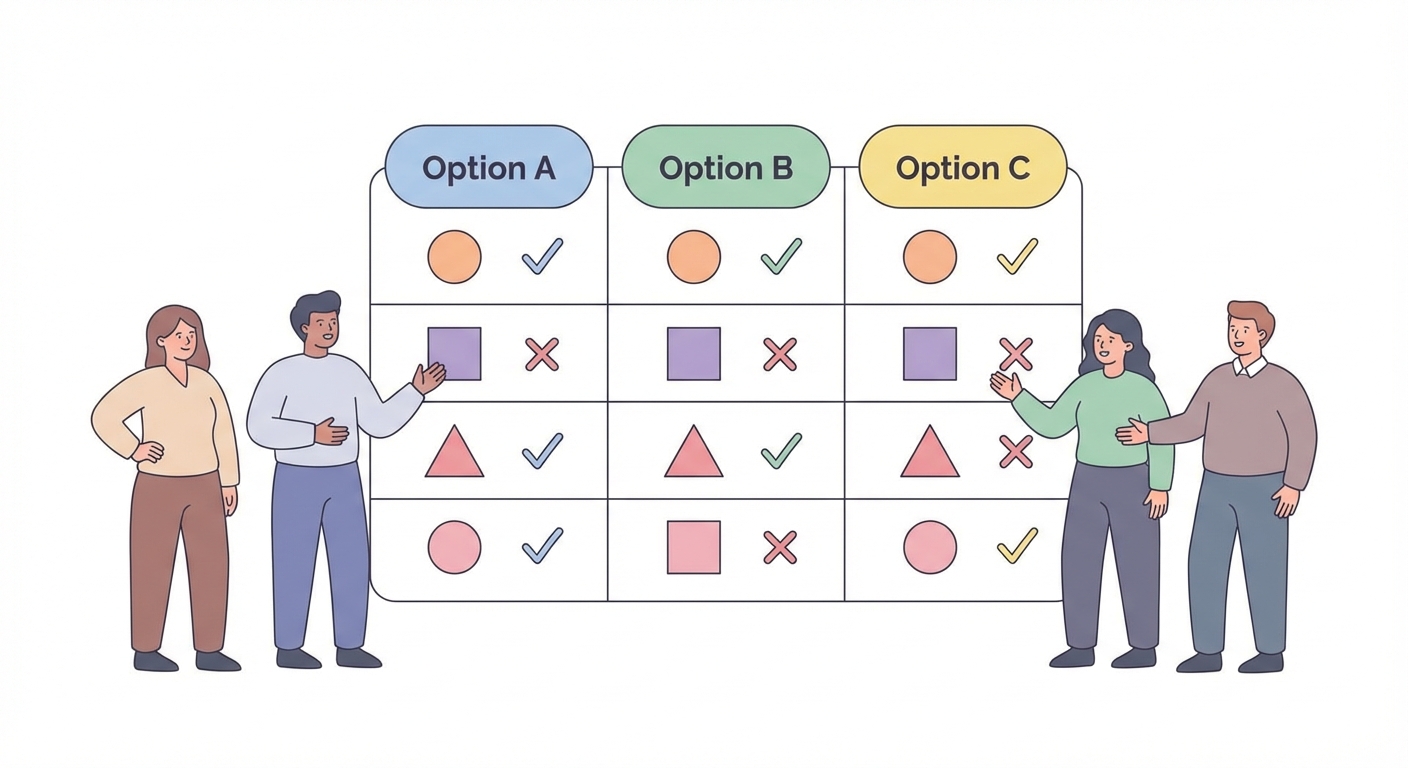
It is helpful to view these protocols not as competitors, but as generations of evolution. Like geology layers.
- WS-Trust: The Heavy Lifter. XML-based, designed for SOAP, and king of Active (non-browser) scenarios. It is complex, verbose, and powerful. It handles the difficult, machine-to-machine scenarios.
- SAML (Security Assertion Markup Language): The Web Standard. Also XML-based, but designed primarily for Passive (browser) flows. It became the standard for legacy SSO in the browser.
- OIDC (OpenID Connect): The Modern Standard. JSON-based, mobile-friendly, and built on top of OAuth2. It supports native MFA, consent screens, and API security. It is lightweight and developer-friendly.
The End Game: Strategy for Modernization
WS-Trust is a necessary tool for the present, but a liability for the future. It is the bridge that allows you to walk from the on-premise island to the cloud mainland, but you shouldn't build your house on the bridge.
Your roadmap for 2026 should be aggressive but realistic:
- Inventory Everything: Scan your logs. Identify every application hitting your WS-Trust endpoints. You will likely find apps you thought were decommissioned years ago. Shadow IT loves legacy protocols.
- Wrap and Trap: Apply conditional access and IP locking to these endpoints immediately. Stop exposing them to the open internet. If an endpoint doesn't need to be public, lock it down.
- Refactor the Easy Stuff: Pick the low-hanging fruit. Move custom internal apps to OIDC libraries like MSAL.
- Pressure Vendors: Leave the heavy vendor apps for last, but put pressure on them. If your CRM still requires WS-Trust in 2026, it's time to look for a new CRM.
WS-Trust isn't dead, but it is definitely retiring. Treat it with respect, secure it with vigor, and plan for the day you can finally turn it off.
Frequently Asked Questions
Is WS-Trust deprecated in 2026?
While the standard itself is not "dead," major providers like Microsoft have deprecated WS-Trust for many use cases (like Basic Auth in Exchange) and strongly discourage it for new development. It is primarily supported now for specific "Hybrid Identity" scenarios that require backward compatibility.
Can I enforce MFA on WS-Trust connections?
It is difficult and often impossible natively. Standard WS-Trust "Active" flows (where the app sends the password) cannot easily pause for an MFA prompt. Security teams often restrict WS-Trust traffic to trusted IP addresses or use an Identity Gateway "wrapper" to handle authentication before the WS-Trust exchange occurs.
What is the difference between WS-Trust and WS-Federation?
Think of WS-Trust as the engine (the protocol for exchanging credentials for a token) and WS-Federation as the highway (a standard profile that allows browsers to use WS-Trust logic). WS-Trust is often used for back-end/desktop apps, while WS-Federation is used for web browsers.
Why is WS-Trust considered less secure than OAuth2?
WS-Trust often relies on the "Resource Owner Password Credentials" (ROPC) pattern, where the application handles the user's raw password. OAuth2 allows the user to log in directly with the provider (never sharing the password with the app) and supports modern consent and MFA flows natively.
*** This is a Security Bloggers Network syndicated blog from SSOJet - Enterprise SSO & Identity Solutions authored by SSOJet - Enterprise SSO & Identity Solutions. Read the original post at: https://ssojet.com/blog/external-authentication-ws-trust-hybrid-identity
如有侵权请联系:admin#unsafe.sh