
嗯,用户让我用中文总结这篇文章,控制在100字以内,而且不需要特定的开头。首先,我需要通读文章,抓住主要观点。 文章主要讲的是供应商关系管理框架的五个关键部分:运营基础、治理与选择、合同控制、战略实践和持续监控。这些都是为了确保供应商可靠、合规,并建立长期合作关系。 接下来,我要把这些要点浓缩成简短的句子,确保不超过100字。同时,要避免使用“文章内容总结”这样的开头词,直接描述内容。 可能的结构是先点明主题,然后列出关键点。例如:“文章探讨了供应商关系管理框架的五个关键组件:运营基础、治理与选择、合同控制、战略实践和持续监控。这些组件旨在确保供应商的可靠性和合规性,并促进长期合作。” 检查一下字数,刚好在限制内。这样既准确又简洁地传达了文章的核心内容。 </think> 文章探讨了供应商关系管理框架的五个关键组件:运营基础、治理与选择、合同控制、战略实践和持续监控。这些组件旨在确保供应商的可靠性和合规性,并促进长期合作。 2026-2-27 00:9:5 Author: securityboulevard.com(查看原文) 阅读量:20 收藏
Key Takeaways
- Vendor relationship management provides structure for managing external dependencies.
- Operational discipline is the foundation for reliable vendor performance.
- Governance ensures consistent vendor selection and oversight.
- Contracts define accountability and manage operational and compliance risk.
- Trust and transparency strengthen long-term vendor partnerships.
- Continuous visibility supports performance improvement and early risk detection.
Supply chains are becoming more distributed, and as a result, vendor relationships have become ongoing operational dependencies that require structure and oversight.
A vendor relationship management framework is the structured practice of managing those dependencies. It combines governance, communication, performance monitoring, and risk oversight to ensure expectations are met and relationships remain productive over time.
Managing vendors is not limited to contracts or cost control. When structured effectively, vendor relationships create stability, support compliance, and enable organizations to evolve from transactional interactions into strategic partnerships.
This article examines the key components that form a complete vendor management framework for third-party relationships.
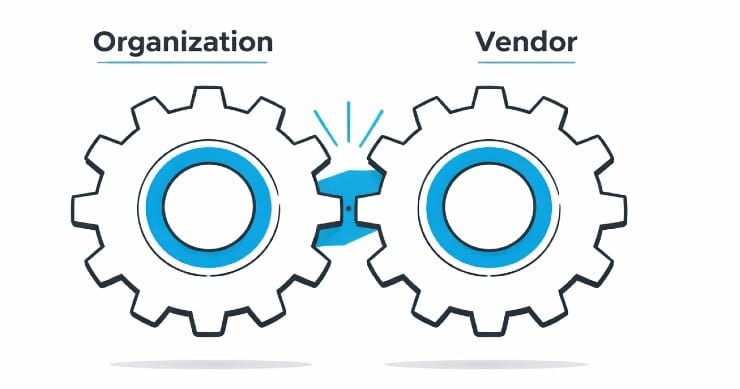
Vendor Management vs. Supplier Relationship Management
Component 1: Establishing the operational foundation
Organizations often use vendor management and supplier relationship management interchangeably. In practice, they are not the same.
Running the Business: Vendor Management
Vendor management focuses on operational reliability.
It includes:
- negotiating pricing and service terms
- ensuring timely delivery
- maintaining product and service quality
- monitoring contractual obligations
- resolving service issues
The objective is consistency and cost control. These activities ensure the business runs without disruption.
Growing the Business: Supplier Relationship Management
Supplier Relationship Management (SRM) operates at a strategic level.
It focuses on:
- long-term collaboration
- innovation and process improvement
- shared planning and forecasting
- strengthening competitive advantage
SRM transforms key suppliers into partners who contribute to growth and resilience.
Structuring a Vendor Governance Model
Component 2: Governance and vendor selection discipline
Define Requirements Before Sourcing
Effective sourcing begins with a clear understanding of business needs, compliance obligations, operational dependencies, and risk tolerance.
Without clear requirements, vendor selection becomes subjective, and misalignment is likely.
Build a Standardized Evaluation Framework
A structured evaluation matrix enables objective comparison of vendors.
Due Diligence: Looking Beyond the Proposal
Vendor onboarding should include thorough due diligence. This includes reviewing:
- financial health and stability
- legal and regulatory history
- cybersecurity posture
- data protection practice
- operational resilience capabilities
Organizations increasingly evaluate security certifications, breach history, and incident response maturity before approving vendors.
Procurement teams also benefit from reviewing verified peer insights, industry research, and independent performance reviews to validate vendor credibility beyond marketing claims. Procurement teams are often asked where to find the best vendor credibility reviews. Verified peer review platforms, independent industry research, customer case studies, and analyst reports can provide valuable insight into real-world performance and reliability.
Establishing Governance Beyond Onboarding
Vendor governance does not end at contract signature. A governance model defines how suppliers are:
- qualified and approved
- segmented based on risk and criticality
- monitored over time
- reviewed for performance and compliance
- supported through improvement plans
Critical vendors may require continuous monitoring and executive oversight. Lower-risk vendors may be reviewed periodically.
What Improves When Vendor Management Is Structured
Organizations that implement disciplined vendor management practices often experience measurable improvements in operational reliability and internal coordination. These gains result from clearer expectations, defined oversight processes, and consistent communication across procurement, risk, legal, and business teams.
Stronger Trust and More Effective Collaboration
When performance expectations, escalation paths, and communication channels are clearly defined, interactions between organizations and vendors become more predictable. Vendors understand how success is measured and how issues should be escalated. Internal teams operate with confidence because responsibilities and decision authority are clear.
Over time, this clarity reduces conflict and supports more productive collaboration, particularly during service disruptions or time-sensitive operational demands.
More Predictable Service Delivery
Structured onboarding, performance monitoring, and service-level oversight improve delivery consistency. Issues are identified earlier, response expectations are understood, and corrective actions follow defined procedures rather than ad hoc escalation.
This predictability supports operational planning and reduces downstream disruptions across dependent teams and systems.
Reduced Operational Friction Across Internal Teams
Without defined processes, vendor-related issues often create confusion between procurement, security, legal, finance, and operational teams. A structured governance model clarifies ownership, workflows, and decision paths.
Clear Accountability and Decision Transparency
Vendor governance frameworks define who owns risk decisions, performance reviews, remediation timelines, and contract exceptions. This clarity prevents informal approvals and undocumented risk acceptance.
Administrative Efficiency Through Standardization
Standard templates, centralized documentation, and defined workflows reduce repetitive administrative work. Teams spend less time recreating contracts, tracking approvals through email threads, or reconciling vendor information across systems.
Who Owns Vendor Relationships Inside the Organization?
Vendor relationship management is rarely the responsibility of a single team. In most organizations, oversight is shared across procurement, risk, legal, IT, and operational leaders. As reliance on third parties grows, many organizations formalize this responsibility to ensure accountability and continuity.
In mature programs, vendor relationships are actively managed after onboarding rather than left to informal communication between teams. Common roles that support vendor relationship management include:
Supplier or Vendor Relationship Managers
These roles focus on ongoing performance, communication, and alignment with business needs.
Third-Party Risk or Vendor Risk Managers
They evaluate and monitor risk exposure, including cybersecurity, compliance, and operational resilience.
IT Vendor Managers or Service Delivery Managers
In technology-driven environments, these roles oversee service reliability, system performance, and incident coordination.
Category or Strategic Sourcing Managers
In procurement-led structures, category managers often maintain long-term supplier relationships and monitor performance outcomes.
In larger organizations, these responsibilities may be coordinated through a Vendor Management Office (VMO) that provides governance standards, performance oversight, and consistent reporting across the enterprise.
Connecting Contracts and Risk Management
Component 3: Contractual controls and risk integration
This component establishes clear expectations and embeds risk controls directly into the vendor relationship. When contracts are aligned with operational and compliance requirements, they function as enforceable safeguards rather than administrative formalities.
Every vendor relationship introduces operational, regulatory, and cybersecurity exposure. Contracts define how those risks are managed and who is accountable when issues arise.
Contracts as Operational Risk Controls
Vendor agreements should clearly define:
- data handling and protection requirements
- security and access control expectations
- confidentiality obligations
- regulatory and compliance responsibilities
- service level commitments and performance standards
- incident notification and response timelines
Viewing Vendor Oversight as a Lifecycle
Vendor risk does not remain static. Oversight must extend across the entire lifecycle of the relationship. This lifecycle includes:
- onboarding and contract execution
- performance and compliance monitoring
- contract updates and scope changes
- renewal evaluation
- termination and transition planning
When contract management connects with Third-Party Risk Management processes, organizations gain continuous visibility into vendor performance, compliance posture, and evolving risk exposure.
Standardization Strengthens Consistency and Audit Readiness
Standardized templates, clause libraries, and intake workflows help ensure that essential protections are consistently applied.
- reduces onboarding time
- ensures required controls are included
- simplifies cross-functional review
- supports audit and regulatory inquiries
It also enables legal, procurement, security, and compliance teams to operate from a shared baseline rather than negotiating protections from scratch.
Strengthening Relationships Through Strategic Practices
Component 4: Relationship practices that improve resilience and collaboration
In constrained markets or during disruptions, vendors prioritize customers who are predictable, collaborative, and transparent.
Becoming a Customer of Choice
Organizations that demonstrate reliability and fairness often receive:
- priority support during shortage
- faster issue resolution
- greater flexibility during disruption
- early access to innovations
Partnership credibility influences vendor responsiveness.
Transparency Builds Trust
Strong relationships rely on clarity.
- Clear pricing structures reduce disputes.
- Realistic service expectations prevent misunderstandings
- Open communication supports long-term collaboration.
Effective partnerships recognize the operational realities, risks, and incentives affecting both parties.
Payment Practices as a Relationship Lever
Payment practices influence trust and operational efficiency.
- Reliable payment cycles demonstrate professionalismץ
- Digital payment methods accelerate vendor cash flow while improving working capital management.
- Policies such as “No PO, No Pay” streamline invoice processing and reduce fraud exposure.
Monitoring Performance and Leveraging Technology
Component 5: Continuous performance visibility and oversight
Vendor value extends beyond price.The lowest cost option does not always produce the strongest operational outcome.
Evaluating Vendors Based on Value
- reliability and service consistency
- risk reduction
- responsiveness and support quality
- operational resilience
- contribution to strategic initiatives
The Role of Technology
Managing vendor relationships at scale requires structured visibility. Many organizations rely on supplier management software to centralize vendor information, automate performance tracking, and maintain visibility into compliance and risk posture.
Vendor management platforms help organizations:
- centralize vendor data and documentation
- automate performance scorecards
- monitor service level compliance
- maintain auditable compliance histories
- support cross-functional collaboration
Automation reduces manual tracking and enables teams to focus on analysis and decision-making.
Frequently Asked Questions
What do we do when a critical vendor refuses security requirements or contract language?
This situation arises more often than most policies anticipate. Large or specialized vendors may resist contractual clauses, security questionnaires, or audit rights, particularly when they operate from standardized global agreements.
When this occurs, the decision shifts from enforcement to governance. The organization must evaluate the risk introduced by the exception, determine whether compensating controls exist, and document risk acceptance at the appropriate leadership level.
The objective is not to force compliance at any cost, but to make risk decisions explicit, understood, and owned. Transparency ensures the organization moves forward with clarity rather than informal workarounds.
How can we prevent business units from bypassing vendor onboarding processes?
When procurement or risk reviews are perceived as slow or obstructive, business teams often seek shortcuts. This creates shadow vendors, unmanaged data exposure, and compliance gaps.
Prevention begins with process design. Vendor intake workflows must be efficient, clearly explained, and aligned with business timelines. Service-level expectations for review turnaround help build trust with internal stakeholders.
Equally important is visibility. Providing business teams with clear guidance on vendor approval status, expected timelines, and risk implications encourages cooperation. When governance processes are predictable and responsive, bypass behavior declines significantly.
How do we handle vendors that perform well operationally but present elevated risk?
Some vendors deliver excellent service while maintaining weak security practices, limited financial transparency, or regulatory exposure. This creates tension between operational convenience and risk tolerance.
Organizations must evaluate whether compensating controls can reduce exposure or whether dependency risk has grown too high. In some cases, contingency planning or vendor diversification may be necessary to reduce concentration risk.
Rather than forcing an immediate replacement, mature programs treat these situations as risk management decisions supported by monitoring, remediation planning, and leadership awareness.
When is it appropriate to offboard a vendor, even if switching costs are high?
Vendor transitions carry operational disruption, contractual penalties, and resource burdens. As a result, organizations often tolerate underperformance longer than they should.
Offboarding becomes appropriate when risk exposure increases, service reliability declines, regulatory obligations cannot be met, or the vendor fails to address remediation commitments. The decision should consider long-term operational resilience rather than short-term switching costs.
Maintaining an exit strategy and transition plan for critical vendors reduces pressure to retain underperforming providers.
The post The Key Components of a Vendor Relationship Management Framework appeared first on Centraleyes.
*** This is a Security Bloggers Network syndicated blog from Centraleyes authored by Rebecca Kappel. Read the original post at: https://www.centraleyes.com/the-key-components-of-vendor-relationship-management-framework/
如有侵权请联系:admin#unsafe.sh