
好的,我现在需要帮用户总结这篇文章的内容,控制在100字以内。首先,我得仔细阅读文章,理解主要观点。 文章主要讲北约副秘书长在慕尼黑网络安全会议上提到的内容。她指出俄罗斯和中国对北约的网络和混合攻击构成威胁,北约需要加强防御、创新和生产,并投资关键网络社区。同时,她强调国际合作的重要性。 接下来,我需要将这些要点浓缩到100字以内。要确保涵盖主要威胁来源、北约的应对措施以及国际合作的部分。 可能的结构是:首先说明威胁来自俄罗斯和中国;然后北约的应对措施包括加强防御、创新和投资;最后提到国际合作的重要性。 现在开始组织语言:“北约副秘书长大谈俄中对网络和混合攻击的威胁,呼吁加强防御、创新和生产,并投资关键网络社区。同时强调国际合作的重要性。” 检查字数:这句话大约有30个字左右,远低于100字限制。可以再添加一些细节,比如“北约需提升威慑力”。 最终总结:“北约副秘书长大谈俄中对网络和混合攻击的威胁,呼吁加强防御、创新和生产,并投资关键网络社区。同时强调国际合作的重要性以提升威慑力。” 这样既涵盖了主要内容,又符合字数要求。 </think> 北约副秘书长大谈俄中对网络和混合攻击的威胁,呼吁加强防御、创新和生产,并投资关键网络社区。同时强调国际合作的重要性以提升威慑力。 2026-2-13 16:30:57 Author: therecord.media(查看原文) 阅读量:5 收藏
MUNICH, Germany — NATO must be ready to hit back and make cyber and hybrid attacks more costly for Russia and China, the alliance’s deputy secretary general said Friday, as Western governments face growing threats to power grids, government services and private networks. Speaking at the Munich Cyber Security Conference, Radmila Shekerinska said the security environment has become “more complex” and “more contested,” with rivals operating at the same time in the physical and digital worlds. “What we see across the globe, and very much in our region, is that both Russia and China are challenging us,” she said. “They are challenging us in the physical and the digital world, both at the same time.” Shekerinska said Moscow and Beijing are drawing their defense industries closer together, exchanging dual-use technologies and investing more in emerging and disruptive capabilities, including offensive cyber tools. She said these operations are often designed to blur responsibility and allow plausible deniability. “That makes the whole picture even more challenging,” she said. Shekerinska warned that NATO’s adversaries are not only targeting military systems but also trying to degrade critical infrastructure, interfere with government and private services, and spy on Western societies. She pointed to a series of incidents in December in Poland, where coordinated cyberattacks sought to disrupt parts of the country’s critical energy infrastructure. The attack was stopped, she said, but the impact would have been significant, especially for energy supplies to key parts of Polish society. “This is dangerous, and this is the world we live in,” she said. Shekerinska said NATO is responding by strengthening defense, boosting innovation and production, and focusing on resilience. A key outcome of the alliance’s recent summit in The Hague, she said, was the decision to “prioritize defense,” with cyber defense at the center. “We need to invest more in key cyber communities. We must impose costs on those seeking harm,” she said, adding that NATO also needs to better integrate governments, militaries and industry. She referenced new spending commitments set out at the summit, when allies agreed to increase total spending to 5% of GDP within a decade, with 3.5% allocated to core defense and the additional 1.5% earmarked for indirect defense and resilience spending, including on cybersecurity capabilities. However there are concerns that the indirect component of this could allow allies to repackage existing activity rather than delivering new capability, as British parliamentarians have warned. While NATO has formal accounting rules for core defense spending, there is no standardized definition for civilian investments counted under resilience spending, which may include protection of energy systems, logistics hubs, supply chains and critical national infrastructure. Critics have warned that the lack of clarity could encourage creative accounting among allies. Justifying the indirect defence expenditure commitment, Shekerinska said military capabilities can no longer be designed or exercised without accounting for cyber threats, noting that cyber elements are increasingly being built into NATO exercises. Some allies, she said, have become more willing to publicly call out hostile cyber activity. She cited the United Kingdom’s decision last year to blame Russia for malicious cyber operations and to expose China-based companies for what she called “reckless and irresponsible” attacks. She also referenced Germany strengthening its national countermeasures, although there are ongoing debates in the country about what the appropriate legal framework will be to allow the country’s intelligence and security services to counter adversaries. “All these elements are important, but our collective objective has to be to take action and to be able to strike back,” she said. She said faster and more coordinated responses are needed to change the “risk calculus” of NATO’s adversaries, stating: “This is the only way in which we can affect the calculus of our adversaries — to make it more expensive, to make it riskier for them to act.” As a 32-nation alliance, Shekerinska said NATO is well positioned to share information, spread innovation and coordinate collective defense in cyberspace. But she stressed that securing cyberspace is not NATO’s job alone. “It is a team effort,” she said, calling for closer cooperation among the military, civilian authorities and industry. She highlighted NATO’s integrated cyber defense center — first reported by Recorded Future News — which aims to bring together military and civilian staff and industry experts to assess vulnerabilities, analyze threats and advise commanders on risks to both military and civilian networks. “Our militaries rely on your networks, and you also need this military component to support and protect your networks,” she said, calling it a “two-way street.” Echoing the call for partnerships expressed by U.S. National Cyber Director Sean Cairncross, Shekerinska said NATO’s message is that “no one stands alone,” especially in cyberspace, where borders matter less and attacks can spread quickly. By investing more in capabilities, being ready to impose costs and working closely with partners, she said, the alliance aims to strengthen deterrence and better protect its members in the digital age.
Get more insights with the
Recorded Future
Intelligence Cloud.

No previous article
No new articles
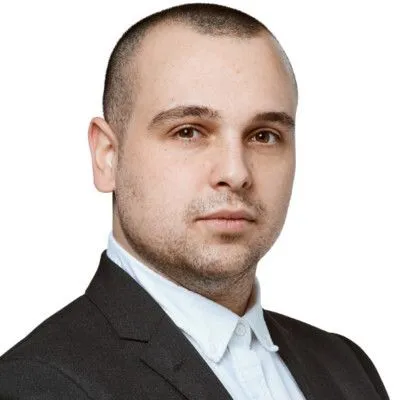
Alexander Martin
is the UK Editor for Recorded Future News. He was previously a technology reporter for Sky News and a fellow at the European Cyber Conflict Research Initiative, now Virtual Routes. He can be reached securely using Signal on: AlexanderMartin.79
如有侵权请联系:admin#unsafe.sh