好的,我现在需要帮用户总结这篇文章的内容,控制在100字以内。首先,我得通读文章,抓住主要信息。文章讲的是瑞典的一位高级国防官员在慕尼黑网络安全会议上发表的讲话,她提到网络和混合威胁现在是欧洲安全环境的永久特征。她引用了俄罗斯入侵乌克兰作为转折点,说明军事力量、经济压力、信息行动和网络活动的结合使用变得常态化。 接下来,Gustafsson强调了长期对抗中这些威胁的持续性,并警告社会必须能够承受持续的压力,而不是假设干扰会很少。她还提到冲突现在更多是在公开战争门槛之下进行的,网络行动和信息战旨在破坏公众信任和制造不安感。 瑞典方面,他们正在实施自冷战以来最大的重整军备,并重建民防和加强网络防御,采用“总体防御”概念,将安全视为全社会的责任。关键服务如医疗、能源、交通等越来越依赖数字化,因此更容易受到网络攻击的影响。Gustafsson还提到瑞典正在重组其网络安全机构,将国家网络安全中心纳入国防无线电 Establishment 的控制下,并与私营部门合作来提高网络安全。 用户的要求是用中文总结内容,控制在100字以内,并且不需要特定的开头。所以我要把重点放在欧洲面临的新安全威胁、瑞典的应对措施以及关键服务的数字化带来的风险上。 现在组织语言:欧洲面临网络与混合威胁常态化;瑞典官员指出需构建抗压社会;关键基础设施数字化增加风险;瑞典加强民防与军力,并与私营部门合作提升防御能力。 检查字数是否在100字以内,并确保涵盖主要点:威胁常态化、社会抗压、数字化风险、瑞典措施(包括民防、军力、私营部门合作)。 </think> 欧洲面临网络与混合威胁常态化;瑞典官员指出需构建抗压社会;关键基础设施数字化增加风险;瑞典加强民防与军力,并与私营部门合作提升防御能力。 2026-2-13 13:45:51 Author: therecord.media(查看原文) 阅读量:2 收藏
MUNICH, Germany — Cyber and hybrid threats are now a permanent feature of Europe’s security environment, a senior Swedish defense official said Thursday, warning that societies must be built to function under sustained pressure rather than assuming disruptions will be rare. Lisa Gustafsson, director of foreign intelligence and cyber at the Swedish Ministry of Defence, made the remarks at the Munich Cyber Security Conference, citing Russia’s full-scale invasion of Ukraine as a turning point that has normalized the combined use of military force, economic pressure, information operations and cyber activity. “We are now living through a long-term confrontation in which military power, economic pressure, information operations, and cyber activities are used in combination, persistently, and deliberately,” Gustafsson said. “The most dangerous assumption is that disruptions will be rare or limited,” she added. “Our task is to build societies that can withstand severe pressure and still function.” She said conflict is increasingly being waged below the threshold of open war, with cyber operations and information campaigns often aimed at undermining public trust and creating a sense of insecurity rather than causing immediate physical damage. Gustafsson explained how, in response, Sweden is carrying out its largest rearmament since the Cold War while rebuilding its civil defense and strengthening national cybersecurity under its “total defense” concept, which treats security as a whole-of-society responsibility. Critical services such as health care, energy, transport, communications and food and water supply are increasingly digital and therefore more vulnerable to cyber disruption, she said, adding that the armed forces depend on those civilian systems to operate. “Deterrence must once again be made credible,” Gustafsson said, not only through military strength but through resilience and a society able to function under pressure. Under Sweden’s model, civilian authorities are responsible for protecting essential public services, the military handles cyber defense of defense-related systems, and the National Cyber Security Centre (NCSC) coordinates the overall effort alongside the national computer emergency response team. Moves to bring the NCSC under the control of Sweden’s cyber and signals intelligence agency — the Defence Radio Establishment — formally began in 2024, after a government inquiry established it was failing to achieve “expected results” under its existing structure. The failures were assessed as part of a government review, rather than in response to a single incident, and came amid a changing geopolitical situation for Sweden, which formally joined NATO in the wake of the Russian invasion of Ukraine. The model, similar to that of the United Kingdom’s NCSC, will see the agency collaborate with the private sector, which operates much of the country’s critical infrastructure and is expected to play a central role through information sharing and joint preparedness planning. “Large parts of our critical infrastructure, including energy, telecommunication transports, and digital services are owned or operated by private sectors,” said Gustafsson. “Effective cybersecurity depends on deep, public, private corporation, structured information sharing, and not the least joint preparedness planning.”
Get more insights with the
Recorded Future
Intelligence Cloud.

No previous article
No new articles
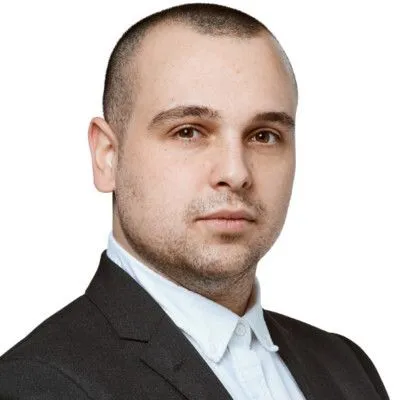
Alexander Martin
is the UK Editor for Recorded Future News. He was previously a technology reporter for Sky News and a fellow at the European Cyber Conflict Research Initiative, now Virtual Routes. He can be reached securely using Signal on: AlexanderMartin.79
如有侵权请联系:admin#unsafe.sh