嗯,用户让我用中文帮他总结一下这篇文章的内容,控制在一百个字以内,而且不需要以“文章内容总结”或“这篇文章”这样的开头,直接写描述即可。好的,首先我得仔细阅读并理解这篇文章。 文章主要讲的是现代认证生态系统中的一个脆弱假设,即一次性密码的请求都是真实的。现在这个假设正受到持续的压力。攻击者利用合法的认证端点,通过发送大量短信或语音信息来骚扰用户,导致多重身份验证疲劳等问题。文章还提到攻击工具和技术的演变,包括跨平台应用、自动化工具以及SSL绕过机制等。此外,还提到了这些攻击对个人和组织的财务和运营影响。 接下来,我需要将这些关键点浓缩到100字以内。要确保涵盖攻击方式、技术发展、影响等方面。可能需要简化一些细节,但保留核心内容。 最后,检查一下是否符合用户的要求:中文、简洁、不使用特定开头。确保语言流畅自然。 </think> 现代认证系统依赖于一次性密码请求的真实性假设正受威胁。攻击者利用API漏洞进行大规模短信和语音轰炸攻击,导致骚扰和MFA疲劳。工具和技术不断进化,包括跨平台应用、自动化和SSL绕过机制。这些攻击对个人和组织造成财务损失、运营干扰及声誉损害。 2026-2-12 09:19:7 Author: thecyberexpress.com(查看原文) 阅读量:9 收藏
The modern authentication ecosystem runs on a fragile assumption: that requests for one-time passwords are genuine. That assumption is now under sustained pressure. What began in the early 2020s as loosely shared scripts for irritating phone numbers has evolved into a coordinated ecosystem of SMS and OTP bombing tools engineered for scale, speed, and persistence.
Recent research from Cyble Research and Intelligence Labs (CRIL) examined approximately 20 of the most actively maintained repositories reveals a sharp technical evolution continuing through late 2025 and into 2026. These are no longer simple terminal-based scripts. They are cross-platform desktop applications, Telegram-integrated automation tools, and high-performance frameworks capable of orchestrating large-scale SMS and OTP bombing and voice-bombing campaigns across multiple regions.
Importantly, the findings reflect patterns observed within a defined research sample and should be interpreted as indicative trends rather than a complete census of the broader ecosystem. Even within that limited scope, the scale is striking.
From Isolated Scripts to Organized API Exploitation
SMS and OTP bombing campaigns operate by abusing legitimate authentication endpoints. Attackers repeatedly trigger password reset flows, registration verifications, or login challenges to flood a victim’s device with legitimate SMS messages or automated calls. The result is harassment, disruption, and in some cases, MFA fatigue.
Across the 20 repositories analyzed, approximately 843 vulnerable API endpoints were catalogued. These endpoints belonged to organizations spanning telecommunications, financial services, e-commerce, ride-hailing platforms, and government portals. Each shared a common weakness: inadequate rate limiting, insufficient CAPTCHA enforcement, or both.
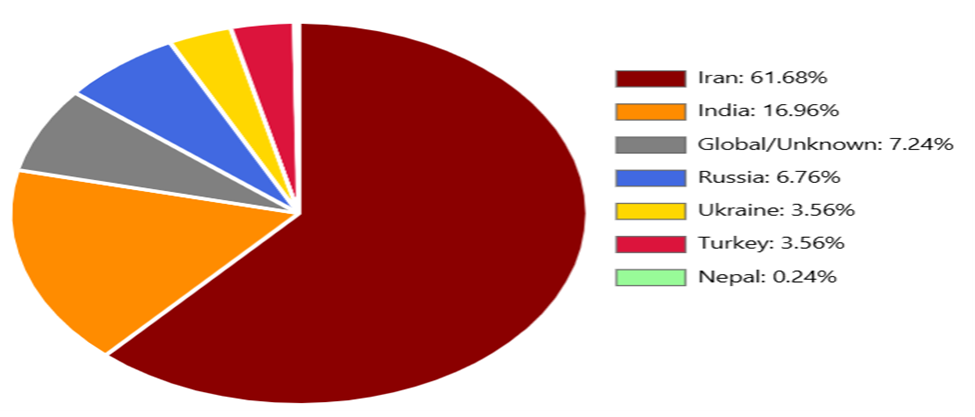
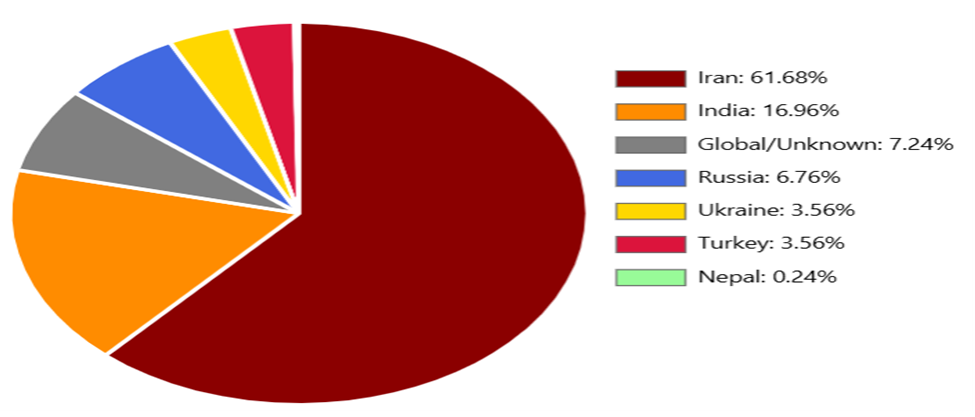
The regional targeting pattern was highly uneven. Roughly 61.68% of observed endpoints, about 520, were associated with infrastructure in Iran. India accounted for 16.96%, or approximately 143 endpoints. Additional activity focused on Turkey, Ukraine, and other parts of Eastern Europe and South Asia.

The abuse lifecycle typically begins with API discovery. Attackers manually test login and signup flows, scan common paths such as /api/send-otp or /auth/send-code, reverse-engineer mobile apps to extract hardcoded API references, or rely on community-maintained endpoint lists shared through public repositories and forums.
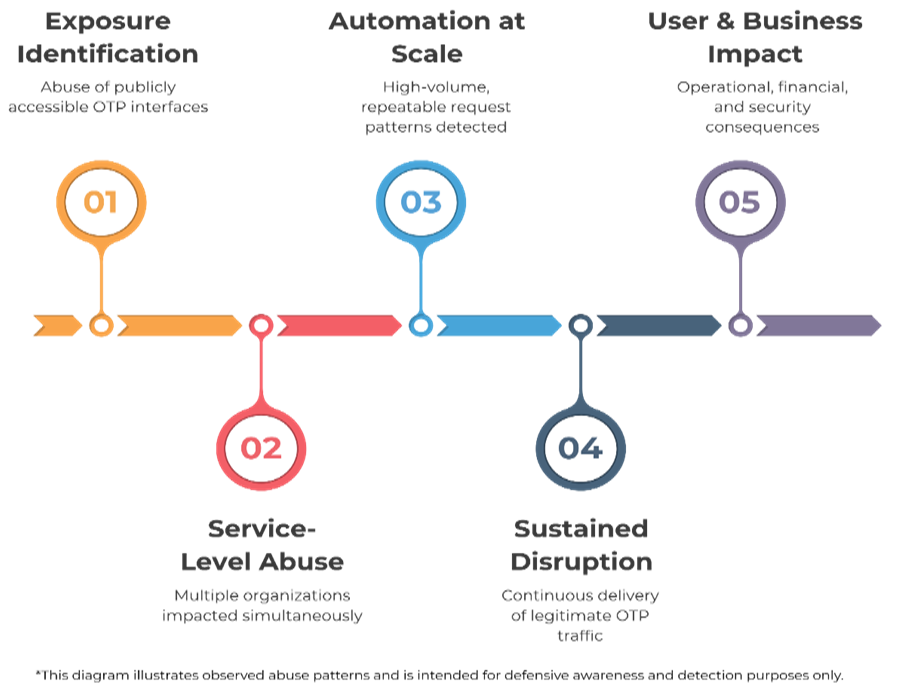
Once identified, these endpoints are integrated into multi-threaded attack tools capable of issuing simultaneous requests at scale.
The Rise of Automation and SSL Bypass Techniques
The technical stack behind SMS and OTP bombing tools has matured considerably.
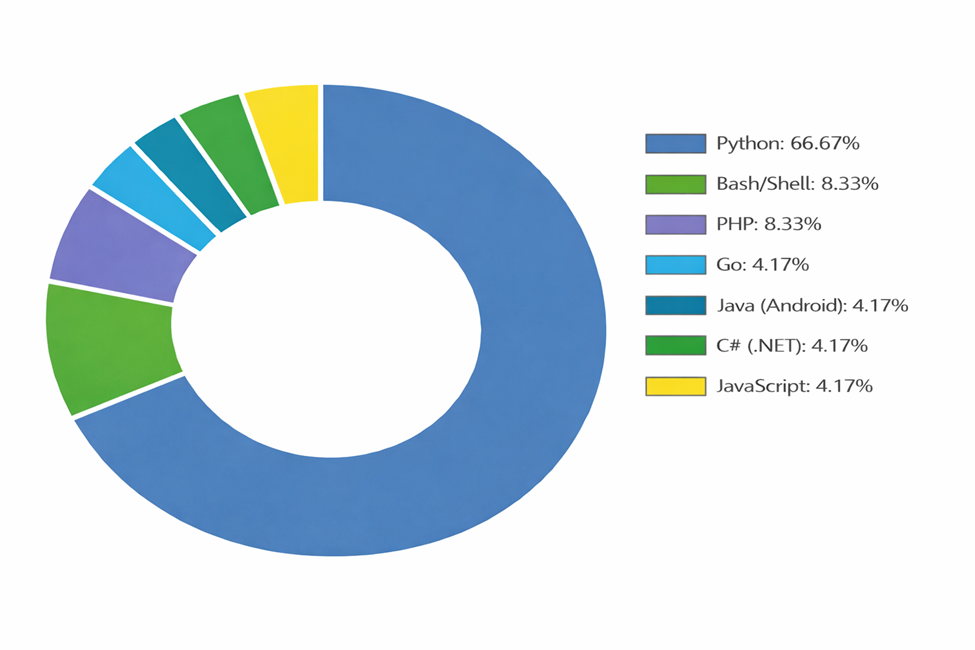
Maintainers now provide implementations across seven programming languages and frameworks, lowering the barrier to entry for attackers with minimal coding knowledge.
Modern tools incorporate:
- Multi-threading for parallel API abuse
- Proxy rotation to evade IP-based controls
- Request randomization to simulate human behavior
- Automated retries and failure handling
- Real-time reporting dashboards
More concerning is the widespread use of SSL bypass mechanisms. Approximately 75% of analyzed repositories disable SSL certificate validation to circumvent basic security controls. Instead of trusting properly validated SSL connections, these tools intentionally ignore certificate errors, allowing interception or manipulation of traffic without interruption. SSL bypass has become one of the most prevalent evasion techniques observed.
Additionally, 58.3% of repositories randomize User-Agent headers to evade signature-based detection. Around 33% exploit static or hardcoded reCAPTCHA tokens, defeating poorly implemented bot protections.
The ecosystem is no longer confined to SMS alone. Voice-bombing campaigns, automated calls triggered through telephony APIs, have been integrated into several tools, expanding the harassment vector beyond text messages.
Commercial Web Services and Data Harvesting
Parallel to open-source development, a commercial layer has emerged. Web-based SMS and OTP bombing platforms offer point-and-click interfaces accessible from any browser. Marketed deceptively as “prank tools” or “SMS testing services,” remove all technical barriers.
These services represent an escalation in accessibility. Unlike repository-based tools requiring local execution, web platforms abstract away configuration, proxy management, and API integration.
However, they operate on a dual-threat model. Phone numbers entered into these platforms are frequently harvested. Collected data may be reused for spam campaigns, sold as lead lists, or integrated into fraud operations. In effect, users expose both their targets and themselves to long-term exploitation.
Financial and Operational Impact
For individuals, SMS and OTP bombing can degrade device performance, bury legitimate communications, exhaust SMS storage limits, drain battery life, and create MFA fatigue that increases the risk of accidental approval of malicious login attempts. The addition of voice-bombing campaigns further intensifies disruption.
For organizations, the impact extends beyond inconvenience.
Financially, each OTP message costs between $0.05 and $0.20. A single attack generating 10,000 messages can cost $500 to $2,000. Unprotected API endpoints subjected to sustained abuse can push monthly SMS bills into five-figure territory.
Operationally, legitimate users may be unable to receive verification codes. Customer support teams become overwhelmed. Delivery delays affect all customers’ needs. In regulated sectors, failure to ensure secure and reliable authentication of flows may create compliance exposure.
Reputational damage compounds the issue. Public perception quickly associates spam-like behavior with poor security controls.
如有侵权请联系:admin#unsafe.sh