好的,我现在需要帮用户总结一篇文章的内容,控制在100个字以内。首先,我得仔细阅读用户提供的文章内容,理解其主要观点。 文章主要讲的是安全分析平台的成熟度框架,作者之前讨论过SIEM和AI SOC供应商的架构和运营差距。现在他开发了一个评分工作簿,帮助用户更客观地评估这些平台。工作簿分为五个成熟度等级,从静态数据管道到动态优化管道。 接下来,我需要提取关键信息:评分框架、五个成熟度等级、评估维度(架构、检测、运营)、以及工作簿的目的——帮助用户比较系统,而不是排名或特性清单。 然后,我要把这些信息浓缩成一句话,不超过100字。要确保涵盖评分框架、成熟度等级、评估维度和工作簿的目的。 最后,检查是否符合用户的要求:直接描述内容,不使用特定的开头词。 </think> 文章介绍了一个用于评估安全分析平台的成熟度框架评分工作簿,通过5个成熟度等级(从静态数据管道到动态优化管道)帮助用户更客观地评估SIEM和AI SOC平台的架构、检测和运营能力。 2026-2-11 21:3:18 Author: raffy.ch(查看原文) 阅读量:8 收藏

Over the last few weeks I published a post on the architectural and operational gaps that created the new wave of SIEM and AI SOC vendors. A bunch of people asked the same follow-up question:
“Ok, but how do I evaluate vendors consistently without falling back into feature checklists and marketing claims?”
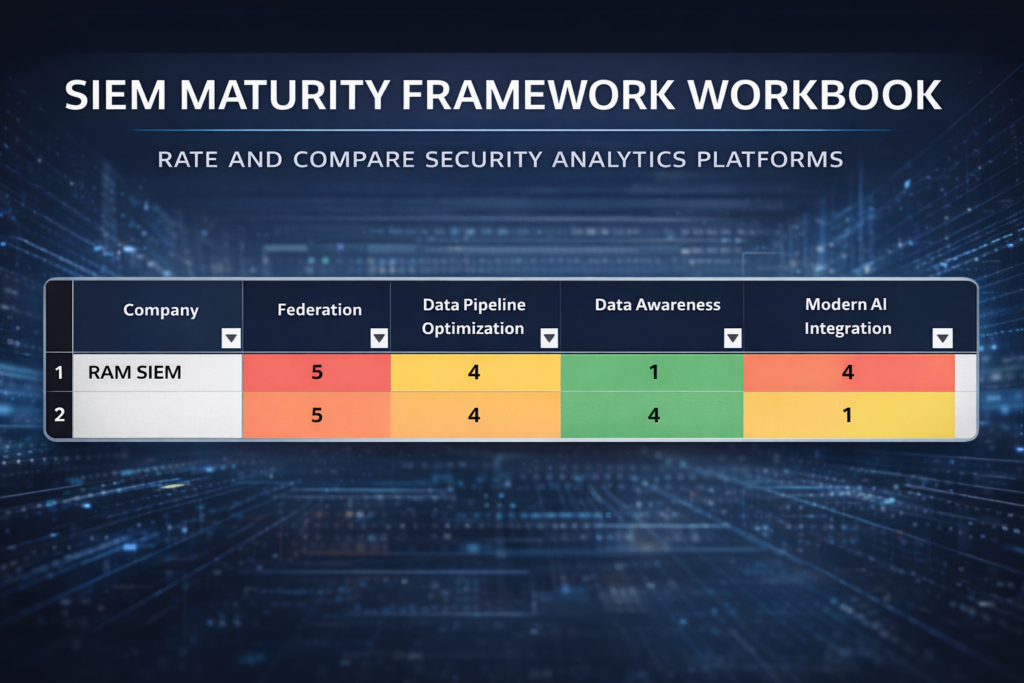
So I turned the framework into a practical scoring workbook you can use to rate a platform across the dimensions I described in the post. The workbook allows you to rate each category from 1 to 5 and I spent some time defining what a 1 versus a 5 means in each of the categories. I give you an example for the “Data Pipeline Optimization” category. Here are the 5 maturity steps:
- 1 | Static ingestion pipelines that forward all data to a central store.
- 2 | Basic filtering or routing based on source or log type.
- 3 | Conditional enrichment and routing based on use case or predefined alerts/rules.
- 4 | Dynamic pipelines that adapt sampling, enrichment, and routing based on downstream value.
- 5 | Continuously optimized pipelines driven by feedback loops from detections, cost, and analyst outcomes.
I hope the breakdown into these 5 values helps going through a more ‘objective’ assessment of these platforms and also shows what excellent looks like in each of these categories.
What this is
The Security Analytics Platforms – Maturity Framework workbook is an architecture-first tool to evaluate security platforms across architectural, detection, and operational dimensions. It is designed to help you compare systems based on their advanced capabilities that are desperately needed to deliver a SIEM experience that is adequate for 2026..
What this is not
This is not a vendor ranking, a feature checklist, or a replacement for hands-on testing. It’s also NOT an RFP template. As I indicated in my previous blog where I outlined all the different categories, the table stakes are not mentioned or evaluated.
How to use it in 10 minutes
- Add one vendor per row in the rating sheet.
- Score each topic based on current behavior, not roadmap promises.
- Review category roll-ups and the heatmap to spot structural gaps.
A key insight: large gaps between category scores often matter more than the overall score.
Download
Why I’m releasing this
Security analytics is in the middle of a reset. Incumbent SIEMs are being re-architected, new SIEM startups are emerging, and AI SOC vendors are rewriting parts of the operating model. End users and investors need a way to evaluate these platforms objectively, beyond feature checklists and marketing claims. This workbook is my attempt to make that evaluation repeatable, comparable, and anchored in the areas that I see missing or deficient in the incumbent SIEM space.
If you use it, I’d love your feedback
If you score a platform with it, send me the heatmap. I’ll incorporate feedback into future versions and I’d love to crowdsource an assessment of all the SIEM and AI SOC vendors out there. Can we do it?
No comments yet.
如有侵权请联系:admin#unsafe.sh