嗯,用户让我用中文总结一下这篇文章,控制在100字以内,而且不需要以“文章内容总结”之类的开头。直接写描述就行。首先,我需要仔细阅读文章内容,抓住主要观点。 文章主要讲的是AI在网络安全中的应用,特别是漏洞发现的速度提升。不过作者指出,仅仅发现漏洞是不够的,还需要优先级排序、风险分析和修复措施。这样AI才能真正帮助减少网络风险。 然后,文章提到了Claude Opus 4.6这个AI模型,它发现了大量高危漏洞,引起了投资者的关注。这说明AI确实在改变软件开发和安全测试。但作者提醒说,发现更多漏洞并不一定意味着更安全,关键是要有上下文和准确性的支持。 接下来的部分讨论了AI如何理解风险,需要考虑拓扑、威胁和业务影响等因素。最后,作者提出了未来的发展方向是基于AI的暴露管理,整合发现、优先级排序和修复流程。 总结起来,文章强调了AI在加速漏洞发现的同时,必须结合上下文分析和修复措施才能有效降低风险。因此,在总结时要涵盖这些关键点:AI加速发现、需要上下文分析、优先级排序和修复措施的重要性。 现在控制在100字以内的话,可以这样组织语言:AI加速漏洞发现但需结合上下文分析与修复措施以降低风险;未来应整合发现、优先级排序与修复流程实现有效风险管理。 检查一下字数是否符合要求,并确保没有使用不需要的开头语句。 </think> AI加速漏洞发现但需结合上下文分析与修复措施以降低风险;未来应整合发现、优先级排序与修复流程实现有效风险管理。 2026-2-9 23:10:0 Author: www.tenable.com(查看原文) 阅读量:22 收藏
February 9, 2026
4 Min Read
AI can find vulnerabilities with unprecedented speed, but discovery alone doesn’t reduce cyber risk. We need exposure prioritization, contextual risk analysis, and AI-driven remediation to transform findings into security outcomes.
Key takeaways
- AI is dramatically accelerating vulnerability discovery, but most organizations already struggle with alert overload. More findings without context increases noise, not security.
- Real risk depends on exposure, exploitability, and business impact — not just a CVSS score. AI must correlate vulnerabilities alongside other security weaknesses to identify the attack paths that create true exposure and orchestrate remediation.
- The future of cybersecurity lies in AI-driven exposure management that orchestrates discovery, prioritization, and remediation across the entire attack surface.
You’ve probably heard about Claude Opus 4.6, the latest artificial intelligence (AI) model from Anthropic — and the 500 high-severity vulnerabilities it discovered in well-tested open source codebases.
The revelation about the new model’s vulnerability discovery prowess made a particularly big splash with an unlikely audience: not only developers, security analysts, and vulnerability researchers, but also with Wall Street investors — particularly those who cover the software sector. The news about Opus 4.6 signaled to them that AI was officially on the brink of radically transforming software development and security testing.
Indeed, Opus 4.6 represents an acceleration of a long-standing trend. Every year, the security industry introduces new tools that uncover more vulnerabilities more quickly. Combined with prior advances in AI-driven vulnerability discovery, including Google Project Zero, the Anthropic team has taken a major step forward, and we’re excited about the vulnerability discovery capabilities of Opus 4.6.
Finding more vulnerabilities faster is a necessary first step toward reducing cyber risk and shrinking the attack surface. Following discovery, the next steps require correlating the vulnerabilities with business, topology, and threat context to prioritize the ones that really matter. Without those critical post-discovery steps, organizations may not end up more secure. But their security, remediation, and DevSecOps teams will end up more overwhelmed.
To put a finer point on it: without context and accuracy, more is not better; it just creates noise.
AI needs to understand risk
Two vulnerabilities with identical CVSS scores can represent wildly different levels of risk depending on where and how they exist in an environment. Indeed, a vulnerability’s real-world risk depends on factors that sit far outside a code repository. Security teams need to consider things like:
- Topology context - Is the vulnerable asset reachable or exposed to the internet?
- Threat context - Is it exploitable in the specific environment and state, despite deployed security controls and guardrails?
- Business impact context - Is it part of a high-risk attack path leading to an organization’s most sensitive systems and data?
Risk-based prioritization and orchestrated remediation are non-negotiables in the vulnerability management lifecycle. Models like Opus 4.6 can surface issues with incredible efficacy. Security teams will then need additional agentic systems to execute several critical functions: correlating and reasoning over relevant data and signals, including business impact, threat, and topology context, to translate them into actual risk and exposure AND help orchestrate remediation. Without those essential functions, AI is likely to generate more work for already overextended security, IT, and DevSecOps teams.
The opportunity: AI-driven exposure management
Where AI becomes truly transformative is not only in finding vulnerabilities faster, but in understanding how threat actors could exploit them in the context of other security weaknesses, such as misconfigurations or excessive permissions, and the business risk those exposures create when combined. This is the promise of AI-driven exposure management: proactive context that powers prioritization and preemptive, orchestrated remediation.
As the pace of vulnerability discovery shoots up, it’s never been more important to have an AI-powered proactive security platform that:
- Generates a comprehensive, near real-time view of risk.
- Prioritizes exposures across an organization’s entire estate, from the factory floor to IT to code to cloud.
- Creates an orchestration layer mobilizing humans and AI agents to act preemptively before attackers.
Where we go from here
There is no doubt AI has a central role in the future of cybersecurity. But investors should be wary of narratives that equate more findings with better security.
The winners in this next phase of AI transformation will be companies that not only discover more issues with AI, but that leverage AI with their vast datasets, combined knowledge, and high-fidelity context to eliminate friction and close the gap from finding to action — delivering clarity over chaos, prioritization over panic, and measurable risk reduction, at machine speed and across enterprise-scale environments.
Doing so creates a flywheel where more data from more sources, such as native and third-party scanners, sensors, threat intelligence, and vulnerability research, provides more context. And more context, along with human and agentic feedback loops, drives more accurate prioritization and remediation to reduce risk.
AI is raising the bar on what’s possible in cybersecurity. The question now is how we turn that potential into outcomes. That’s where real value will be created.
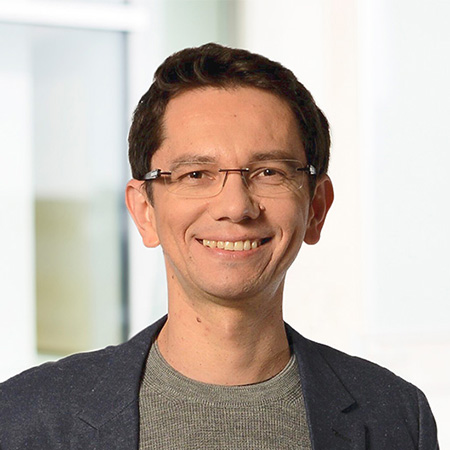
Vlad Korsunsky
Chief Technology Officer, Tenable
Vlad Korsunsky, Tenable’s Chief Technology Officer and Managing Director of Tenable Israel, is responsible for driving the company’s technical vision, platform strategy, and innovation. He leads efforts to scale the Tenable One Exposure Management Platform and advance the company’s AI strategy. With over 25 years of experience, Vlad joined Tenable after more than a decade at Microsoft, where he served as Corporate Vice President of Cloud and Enterprise Security. During his tenure, he built and led global multi-cloud security, enterprise AI security, and exposure management businesses, playing a pivotal role in shaping Microsoft's AI security strategy. Vlad holds a B.S. in Computer Science and Applied Mathematics from Bar-Ilan University and an M.S. in Computer Science from Reichman University.
- Exposure Management
- Risk-based Vulnerability Management
Cybersecurity news you can use
Enter your email and never miss timely alerts and security guidance from the experts at Tenable.
如有侵权请联系:admin#unsafe.sh