嗯,用户让我总结一篇文章的内容,控制在一百个字以内,而且不需要用“文章内容总结”这样的开头。首先,我需要快速浏览这篇文章,抓住主要观点。 文章主要讲的是威胁情报在组织中的应用和评估。很多组织有威胁情报,但很少有结构化、可衡量且被信任的威胁情报功能。作者指出,数量并不等于质量,关键在于情报如何在整个生命周期中流动。 接着,文章提到了Flashpoint的威胁情报能力评估工具,它通过分析需求、收集、分析、传播和反馈等阶段,帮助组织识别瓶颈并改进。这与传统的成熟度评估不同,更注重实际操作中的效果。 用户可能是一位安全专业人士或管理层,希望了解如何提升威胁情报的有效性。他们可能需要一个简洁明了的总结,以便快速理解文章的核心内容,并决定是否进一步阅读或采取行动。 所以,在总结时,我需要涵盖威胁情报的重要性、当前的问题、评估工具的作用以及它带来的好处。同时,保持语言简洁,不超过一百个字。 </think> 文章探讨了威胁情报在组织中的重要性及其实际应用效果。许多组织虽然拥有大量威胁情报数据,但缺乏结构化、可衡量且被信任的威胁情报功能。成功的情报功能不仅依赖于数据量和工具投入,更在于情报如何在整个生命周期中流动并影响决策。文章介绍了Flashpoint的 Threat Intelligence Capability Assessment工具,通过评估需求、收集、分析、传播和反馈等阶段,帮助组织识别瓶颈并提升情报价值。 2026-2-5 14:3:51 Author: flashpoint.io(查看原文) 阅读量:33 收藏
Many organizations today have some form of threat intelligence. Far fewer have a threat intelligence function that is structured, measurable, and trusted across the business. Experienced security professionals know that volume does not equal value—having more feeds, more alerts, or more dashboards doesn’t automatically translate into better intelligence. In reality, teams need clear visibility into the source of their intelligence data, how it aligns to their most important risks, and whether it’s actually influencing decisions.
Without this baseline, organizations struggle to answer fundamental questions:
- Are we collecting intelligence that reflects our real risk exposure?
- Are we missing upstream threats—or over-prioritizing noise?
- Is our intelligence tailored to our environment, or largely generic?
- Is it reaching the right teams at the right moment to drive action?
These blind spots create friction across security operations—and make it difficult to improve with confidence.
How is Your Intelligence Working Across Your Environment?
That’s why Flashpoint created the Threat Intelligence Capability Assessment out of a simple observation: the most successful intelligence functions aren’t defined by the size of their budget or the number of feeds they ingest. They are defined by how intelligence flows across the full threat intelligence lifecycle:
- Requirements & Tasking: How clear are your intelligence priorities, and how directly are they tied to real business risk?
- Collection & Discovery: Is your visibility broad, deep, and flexible enough to keep pace with changing threats?
- Analysis & Prioritization: How effectively are signals, context, and impact being connected to inform decisions?
- Dissemination & Action: Is intelligence reaching the teams and leaders who need it, when they need it?
- Feedback & Retasking: How consistently are priorities reviewed, refined, and adjusted based on outcomes?
By examining each stage independently, our assessment reveals where intelligence accelerates decisions and where it quietly breaks down.
Why This Assessment is Different
Most maturity assessments focus on inputs: tooling, headcount, or abstract maturity labels.
Flashpoint’s Threat Intelligence Capability Assessment takes a different approach. It evaluates how intelligence actually functions across the full intelligence lifecycle— from requirements and tasking through feedback and retasking—and what that means in practice for day-to-day operations.
Rather than stopping at a score, the assessment helps organizations:
- Understand what their stage means in real operational terms
- Identify constraints and patterns that may be limiting impact
- Focus on top strategic priorities for progress
- Take immediate, practical actions to strengthen intelligence workflows
- Apply a 90-day planning framework to turn insight into execution
Critically, The Threat Intelligence Capability Assessment is grounded in operational reality, not vendor theory, and is designed to be applied by function, recognizing that intelligence maturity is rarely uniform across an organization.
“As cyber threats grow in scale, complexity, and impact, organizations need a clear understanding of how effectively intelligence supports their ability to detect high-priority risks and respond with speed. This assessment helps teams move beyond a score to understand what’s holding them back, where to focus next, and how to turn intelligence into action.”
Josh Lefkowitz, CEO and co-founder of Flashpoint
Where Do You Stand?
This assessment isn’t about simply measuring where you are today—it’s about identifying holding you back, and where targeted improvements can deliver the greatest return.
After taking Flashpoint’s quick 5 minute assessment, security leaders can evaluate each component of their intelligence program—such as SOCs (Security Operations Center), vulnerability teams, fraud teams, and physical security—and benchmark them to surface potential gaps and needed improvements.
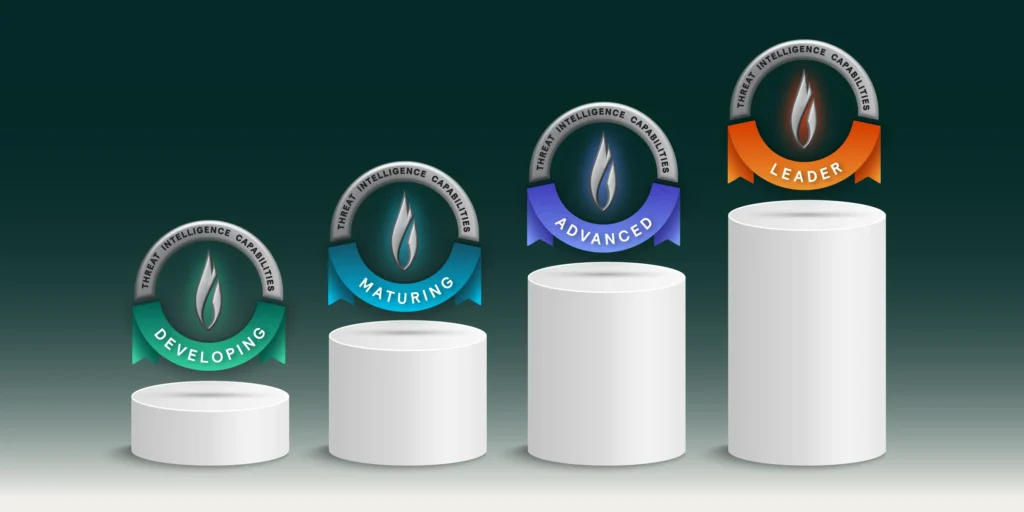
Whether your program is at the developing, maturing, advanced, or leader stage, the goal is the same: to move from intelligence as a supporting activity to intelligence as a driver of proactive operations.
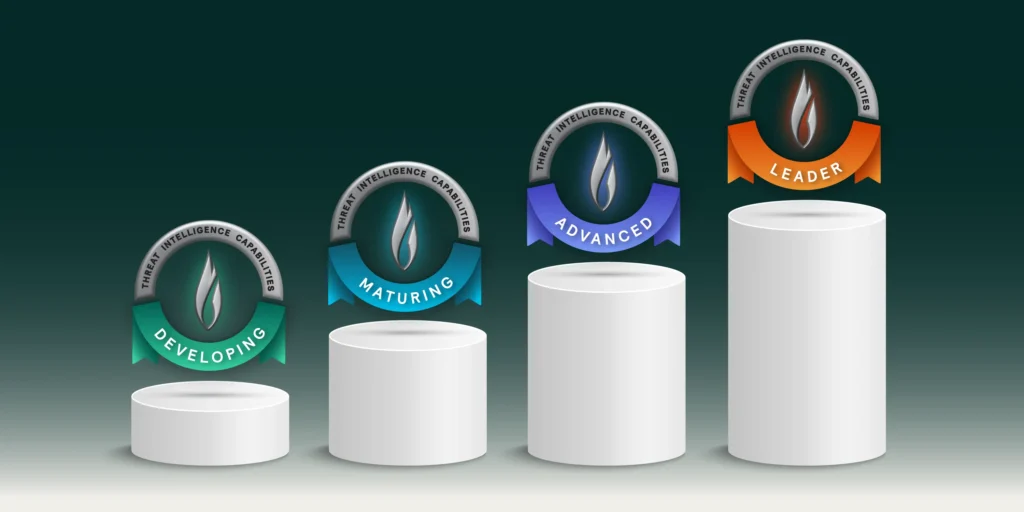
- Developing: The early stages of building a dedicated intelligence function. Work is largely reactive—driven primarily by escalations or stakeholder questions—and may be reliant on open sources, vendor feeds, internal alerts, or ad-hoc investigations.
- Maturing: Processes have moved beyond reactive workflows and are beginning to operate with a consistent structure. There are documented priority intelligence requirements and teams are intentionally building depth across sources, workflows, and reporting.
- Advanced: In this stage, intelligence functions shape how your organization understands, prioritizes, and responds to threats. Requirements are well-defined, visibility spans multiple layers of the threat ecosystem, and analysts apply structured tradecraft that produces actionable intelligence.
- Leader: Intelligence functions are a core component of organizational risk strategy. Outputs are trusted and used across the business to inform high-stakes decisions, shape long-range planning, and provide early warning across cyber, fraud, physical, brand, and geopolitical domains.
A Practical Roadmap, Not a Judgment
No matter which stage you are currently in, advancing an intelligence function requires deeper visibility into relevant ecosystems, stronger analytic rigor, and the ability to act on intelligence at the moment it matters. To move the needle, organizations need clear requirements, direct visibility into where threats originate, structured tradecraft, and intelligence that drives decisions.
Flashpoint helps teams accelerate progress with the data, expertise, and workflows that strengthen intelligence programs at every stage—without requiring a new operational model. Take the assessment now to see where your intelligence program stands. Or, learn more about how Flashpoint helps intelligence teams progress faster, reduce fragmentation, and sustain momentum toward intelligence-led operations, delivered through the Flashpoint Ignite Platform.
如有侵权请联系:admin#unsafe.sh