好的,我现在需要帮用户总结这篇文章的内容,控制在100字以内。首先,我得通读文章,理解主要内容。 文章主要讲述了一个叫做Ware的物品,具体来说是2025年12月的Ware,型号是Spectral Instruments Series 800相机。作者对这个相机的构造进行了详细描述,包括它的模块、热电冷却器、传感器以及整体工程设计。此外,作者提到这个相机是Roche 454 DNA测序仪的一部分,并且讨论了其生产情况和设计特点。 接下来,我需要提取关键信息:相机型号、构造细节、测序仪用途、生产数量有限等。然后把这些信息浓缩成一段简洁的文字,不超过100字。 可能会遇到的问题是如何在有限的字数内涵盖所有重要点而不遗漏关键信息。因此,我需要选择最重要的部分:相机型号、精密设计、测序仪用途以及生产情况。 最后,组织语言,确保流畅自然,并且符合用户的要求。 </think> 文章描述了一款2025年12月的Ware——Spectral Instruments Series 800相机的精密构造和设计细节,包括其热电冷却系统、传感器以及复杂的工程结构,并指出该设备属于Roche 454 DNA测序仪的一部分,反映了高成本、无妥协的设计理念。 2026-1-31 13:28:59 Author: www.bunniestudios.com(查看原文) 阅读量:6 收藏
The Ware for December 2025 is a Spectral Instruments Series 800 camera. I was pretty shocked at how quickly this was guessed given the very small portion of the instrument that was shown, but, then again – that’s how it goes sometimes. Congrats to johslarsen for nailing this one; email me for your prize.
I had prepared a series of “hint” images in case it turned out to be too hard to guess the ware – they’re too neat not to share, so here they are:
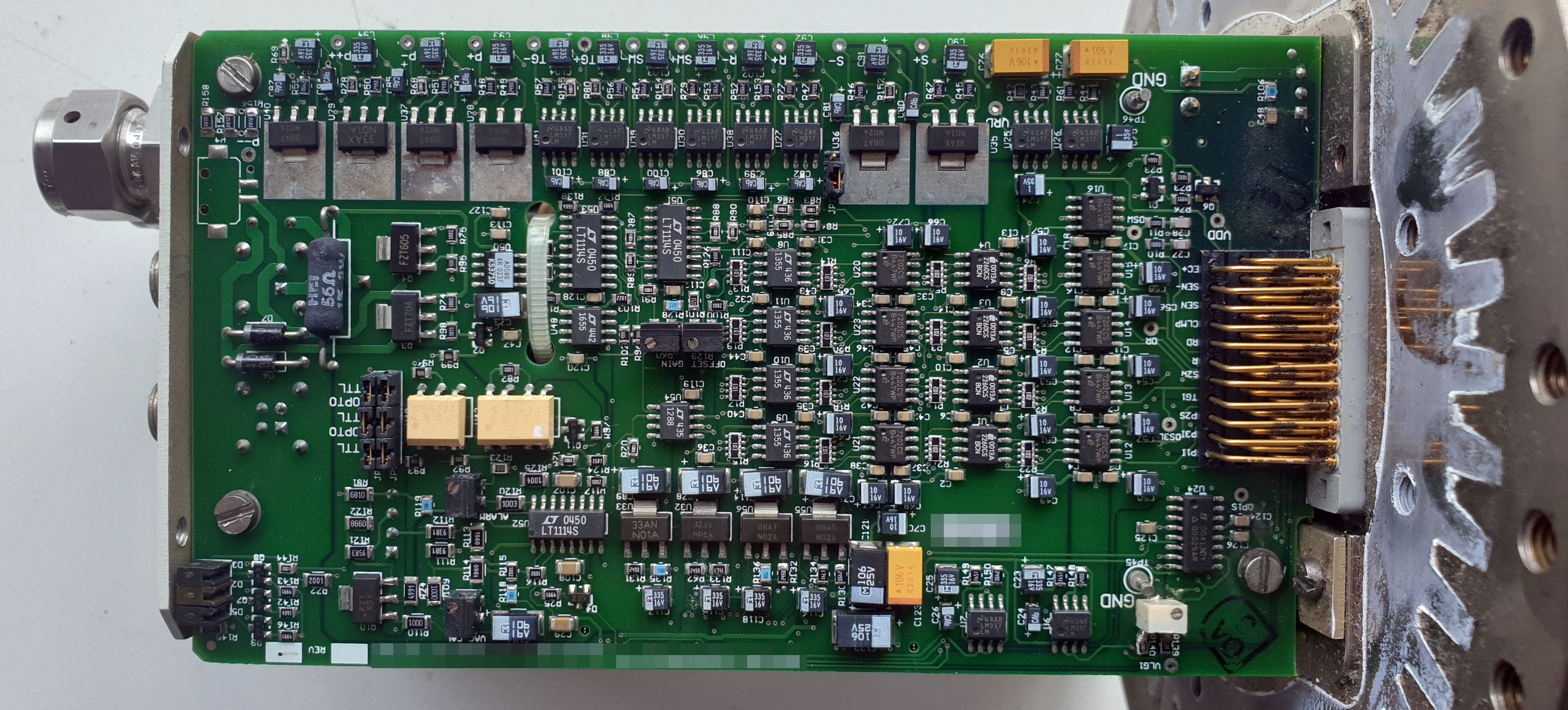
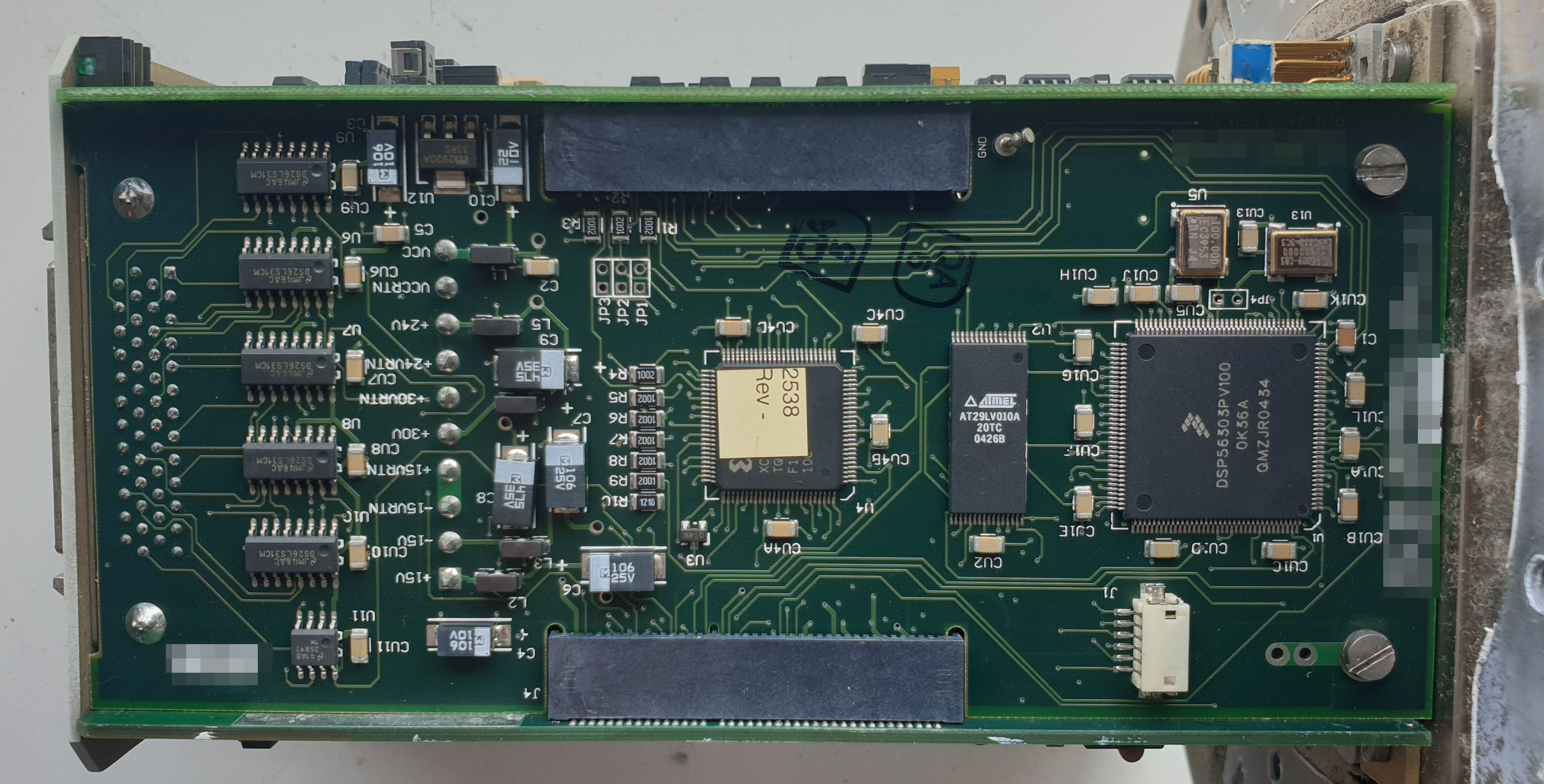
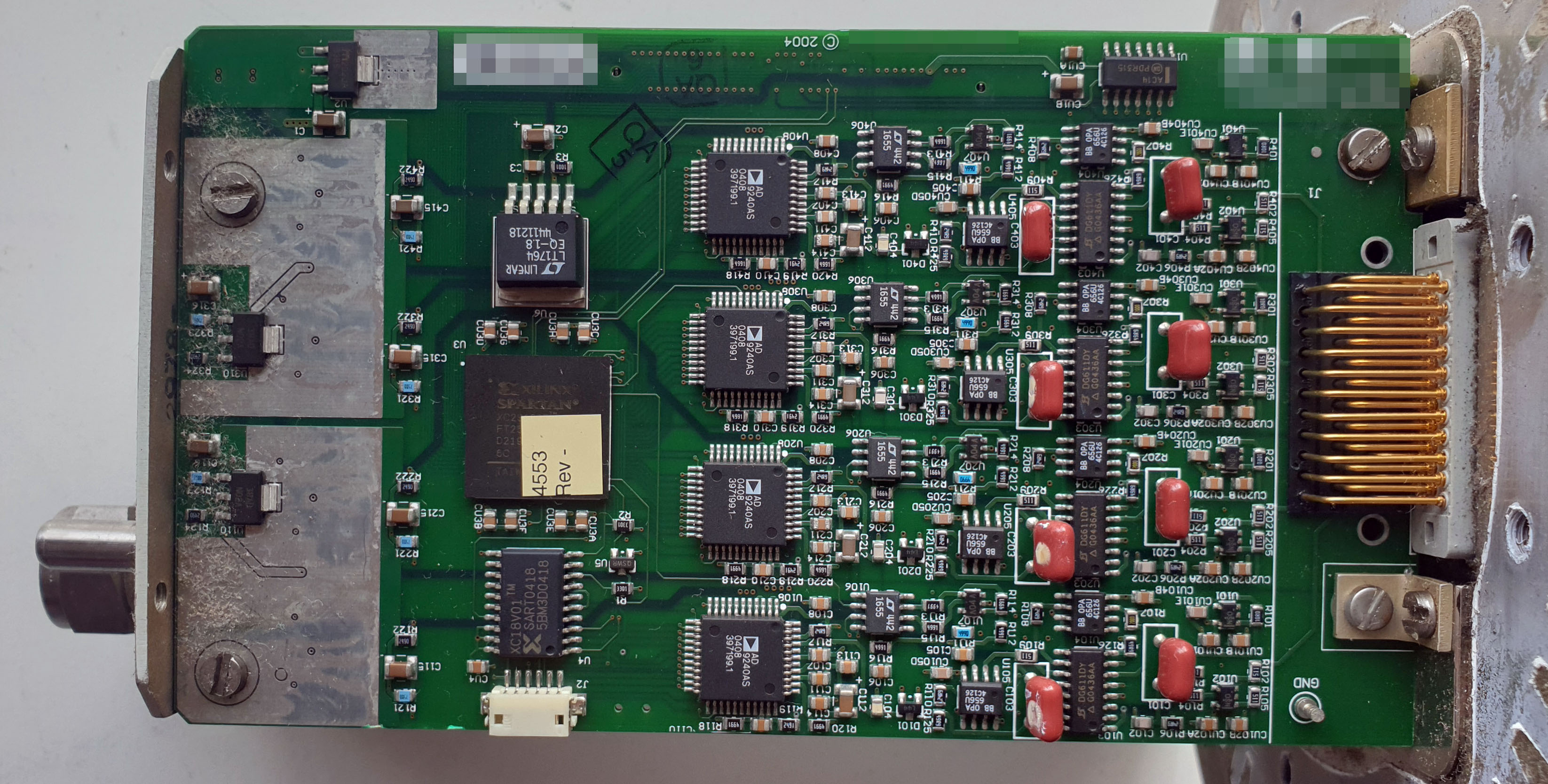
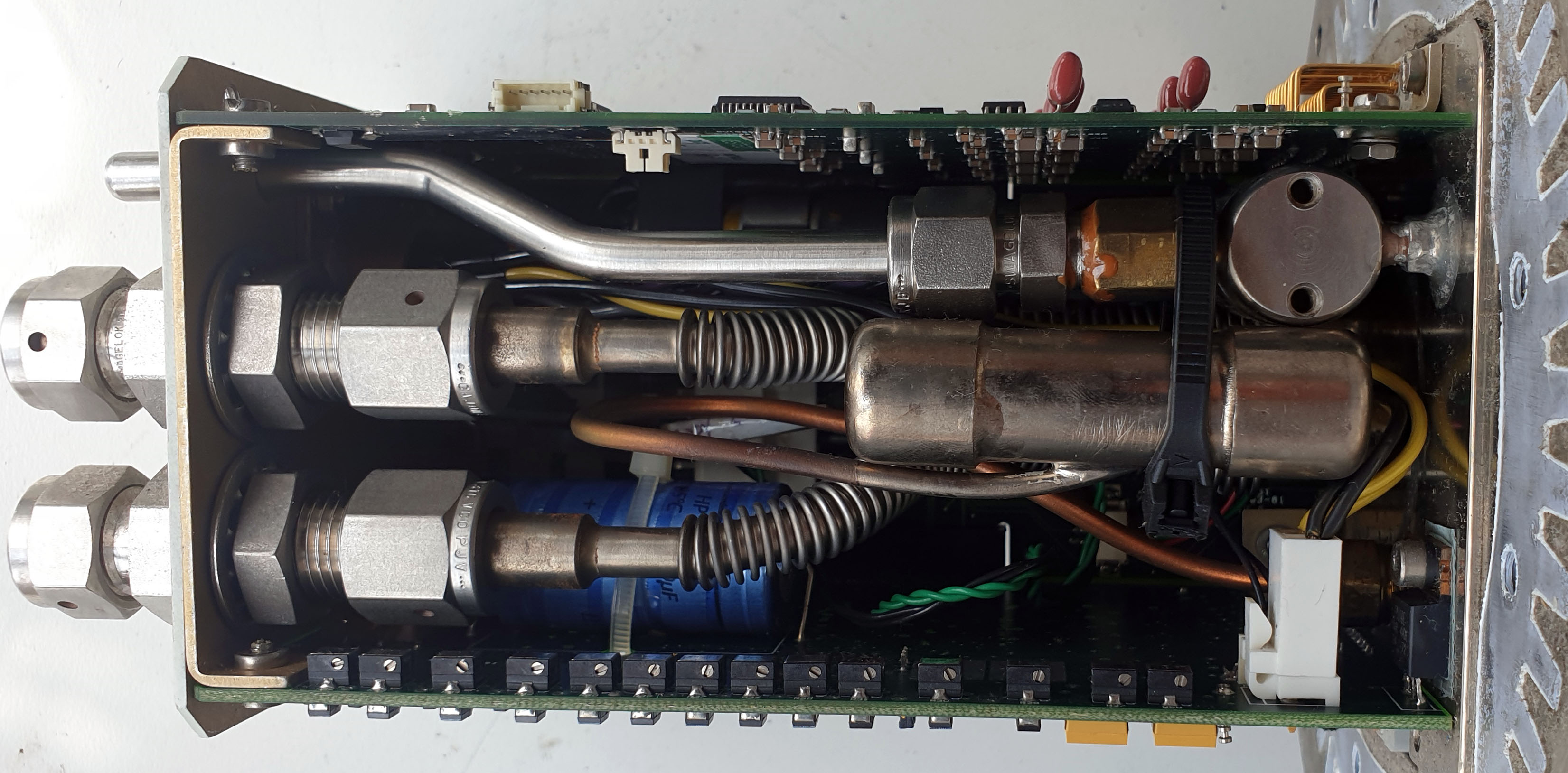
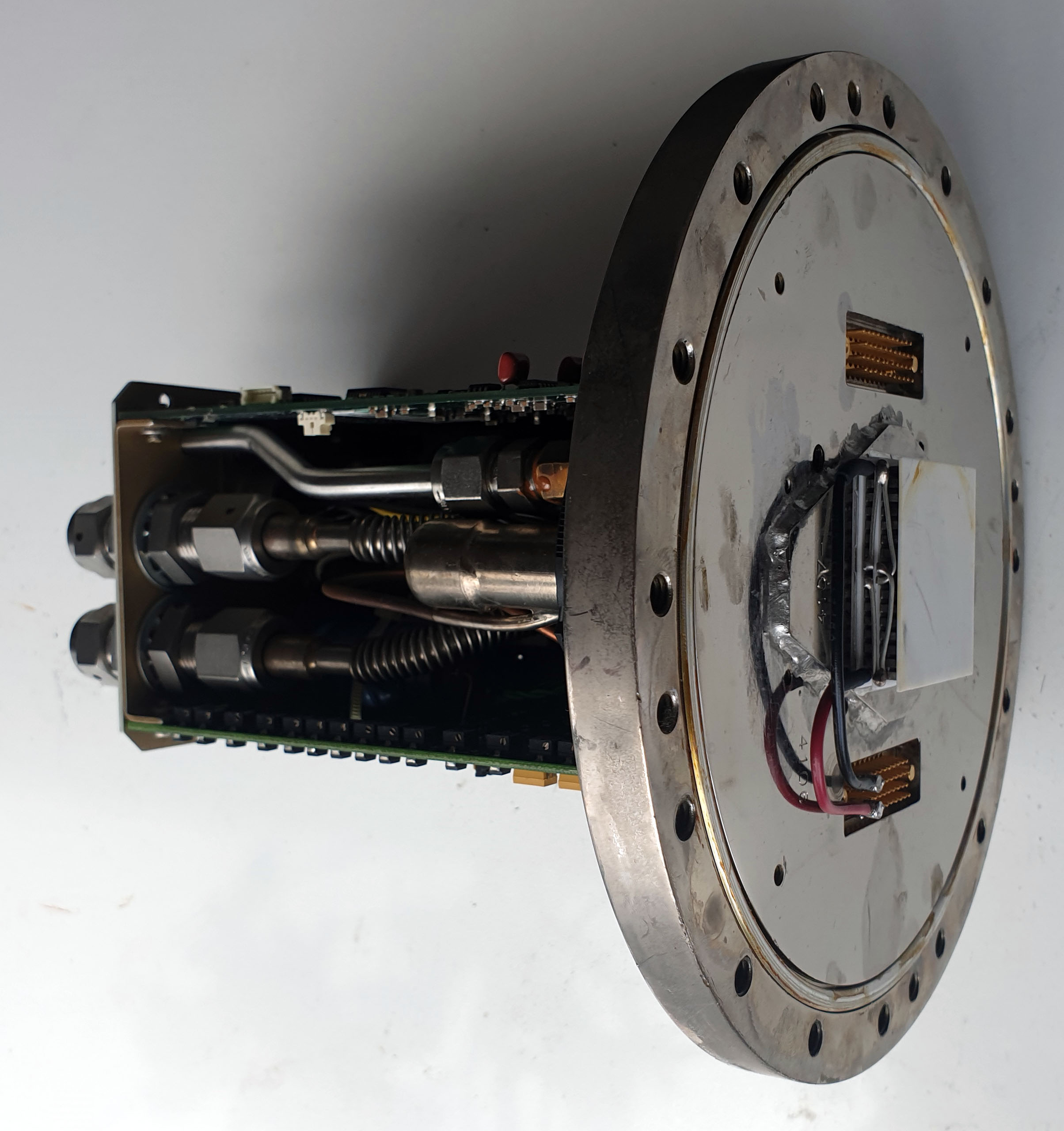
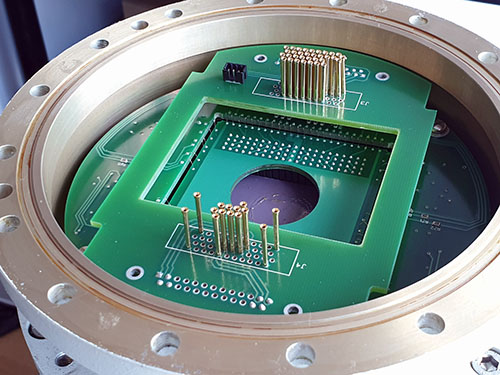
The module above is the “other half” of the assembly – you can see the tips of the pogo pins peeking through the metal shield that press into the mating pins in the original image, shown again below for reference:
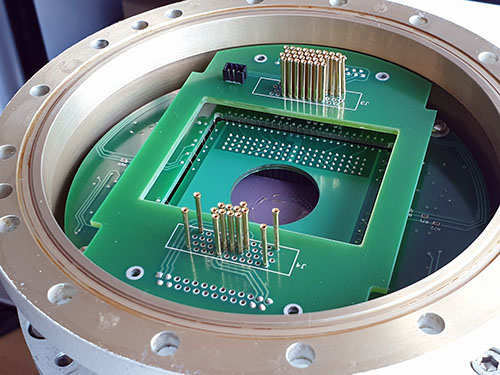
The white square in the center of the “other half” is a thermo electric cooler (TEC) stack which presses onto the lavender-colored ceramic sensor, visible through the round cut-out in the PCB above, via a spring-loaded heat pipe of some kind. The chamber containing the TEC and sensor are kept in a vacuum – the whole thing was difficult to take apart because even after a decade in storage, there was still a decent vacuum in the chamber; only after I took a mallet to it and heard the hiss of air rushing in did the whole thing pop apart.
The physical construction is a prime example of no-expense-spared engineering – a C-shape assembly made out of three PCBs, surrounding a set of plumbing that I think is for vacuum and cooling. The whole assembly seems to be engineered around the principle of getting a sensor as cold as possible without resorting to cryogenics, with little concern for power consumption, size, or cost. The actual image sensor itself is glued to a fiber optic block weighing over a kilogram that is ~10cm long. The block transmits light while serving as a thermal barrier to the sample material at ambient, or perhaps even elevated, temperatures.
This is all part of a Roche 454 DNA sequencer that I took part a while ago. There were an enormous number of fascinating bits and bobs inside the beast, but the TL;DR is it’s basically a grad student’s optical bench, complete with an optical breadboard and its array of drilled/tapped holes, that got stuck in a cosmetic case with minimal cost reduction.
Perhaps I got an early-production run unit, but also, probably only hundreds to thousands of these were ever made, which is not enough volume to work through and streamline all the production kinks on an instrument this complicated. I’m guessing that in practice, no two units were exactly alike. The camera module that was last month’s ware, however, was an “off the shelf” sub-component that was probably made in larger numbers.
This entry was posted on Saturday, January 31st, 2026 at 9:28 pm and is filed under name that ware. You can follow any responses to this entry through the RSS 2.0 feed. You can leave a response, or trackback from your own site.
如有侵权请联系:admin#unsafe.sh