好的,我现在需要帮用户总结一篇文章的内容,控制在100个字以内,并且不需要特定的开头。首先,我得仔细阅读这篇文章,理解它的主要观点和重点。 这篇文章主要讨论了B2B医疗健康SaaS平台在集成单点登录(SSO)方面的重要性。企业级医院系统在采购产品时通常要求必须支持SSO,否则不会考虑。文章解释了为什么SSO在医疗领域变得不可或缺:医院无法承担管理多个软件工具密码的风险,SSO能够快速撤销离职员工的访问权限,并自动更新跨系统权限。此外,数据泄露的成本高昂,CISO们对安全性的要求严格。 接下来,文章介绍了SSO集成的技术挑战以及解决方案。构建SAML、OIDC和SCIM集成需要大量时间和资源,这对初创公司来说尤其困难。因此,文章推荐了10款适合医疗健康SaaS公司的SSO解决方案,并详细比较了它们的特点、优缺点和定价。 最后,文章回答了一些常见问题,帮助读者更好地理解SSO在医疗健康中的应用。 总结一下,这篇文章的核心内容是关于医疗健康SaaS平台必须集成SSO的原因、技术挑战以及推荐的解决方案。因此,在总结时需要涵盖这些要点:SSO的重要性、原因、技术挑战和推荐工具。 </think> 本文探讨了B2B医疗健康SaaS平台必须集成单点登录(SSO)的原因及解决方案。由于医院需快速管理员工访问权限并避免数据泄露风险,SSO成为强制要求。文章分析了构建SSO的技术挑战,并推荐了10款适合医疗环境的解决方案。 2026-1-30 10:43:12 Author: securityboulevard.com(查看原文) 阅读量:0 收藏
If you're building a B2B healthcare SaaS platform, you've probably hit this wall: enterprise hospital systems won't buy your product without Single Sign-On integration. It's not negotiable anymore.
Here's why SSO became mandatory in healthcare: hospitals can't risk managing separate passwords for every software tool their staff uses. When a doctor leaves, IT needs to revoke all access instantly. When a nurse switches departments, permissions need to update across every system. This only works when everything connects to the hospital's central identity provider—typically Okta, Microsoft Entra ID (formerly Azure AD), or Google Workspace.
The stakes are high. Healthcare data breaches now cost organizations an average of $12 million per incident in 2026. CISOs at hospital systems have clear requirements: if your SaaS product can't integrate with their existing identity infrastructure, you're out of the procurement process before security questionnaires even get reviewed.
For healthcare SaaS companies, this creates a technical challenge. Building SAML, OIDC, and SCIM integrations from scratch takes 6-12 weeks of senior engineering time per identity provider. Many startups discover this too late—after they've invested months in sales cycles only to lose deals over "SSO capability."
This guide covers the top 10 SSO solutions designed specifically for B2B healthcare SaaS companies in regulated environments like healthcare (HIPAA, SOC 2, ISO 27001 compliance). These platforms handle the integration complexity so your engineering team can focus on your core product while still meeting enterprise security requirements.
Quick Look
-
Top Pick for Startups: SSOJet – The fastest way to become "Enterprise Ready" with developer-first SAML/OIDC.
-
The Enterprise Standard: Okta – Best for massive workforce management and high-level compliance.
-
The Developer’s Choice: Auth0 – Unmatched flexibility for custom identity-as-a-service needs.
-
The Microsoft Giant: Microsoft Entra ID – The default choice for organizations already in the Azure ecosystem.
-
Legacy Specialist: Ping Identity – Best for hybrid environments and complex pharmaceutical integrations.
Comparison Table
|
Tool Name |
Best For |
Free Plan |
Starting Price |
|---|---|---|---|
|
SSOJet |
B2B SaaS Startups |
Yes (Unlimited MAU) |
$99/mo |
|
Okta Workforce |
Large Enterprises |
30-Day Trial |
$6 per user/mo |
|
Auth0 |
Custom Customization |
Yes (7k MAU) |
$35/mo |
|
Ping Identity |
Hybrid Environments |
Free Trial |
$3 per user/mo |
|
Microsoft Entra |
Microsoft Ecosystem |
Included in M365 |
$6 per user/mo |
|
WorkOS |
Rapid Integration |
Yes (1M MAU) |
$125/connection |
|
JumpCloud |
Small Clinics |
Yes (10 Users) |
$7 per user/mo |
|
Duo Security |
Zero Trust/MFA |
Yes (10 Users) |
$3 per user/mo |
1. SSOJet
Best For: Fast-growing Healthcare SaaS startups needing to bridge the gap between their app and hospital IT infrastructure quickly.
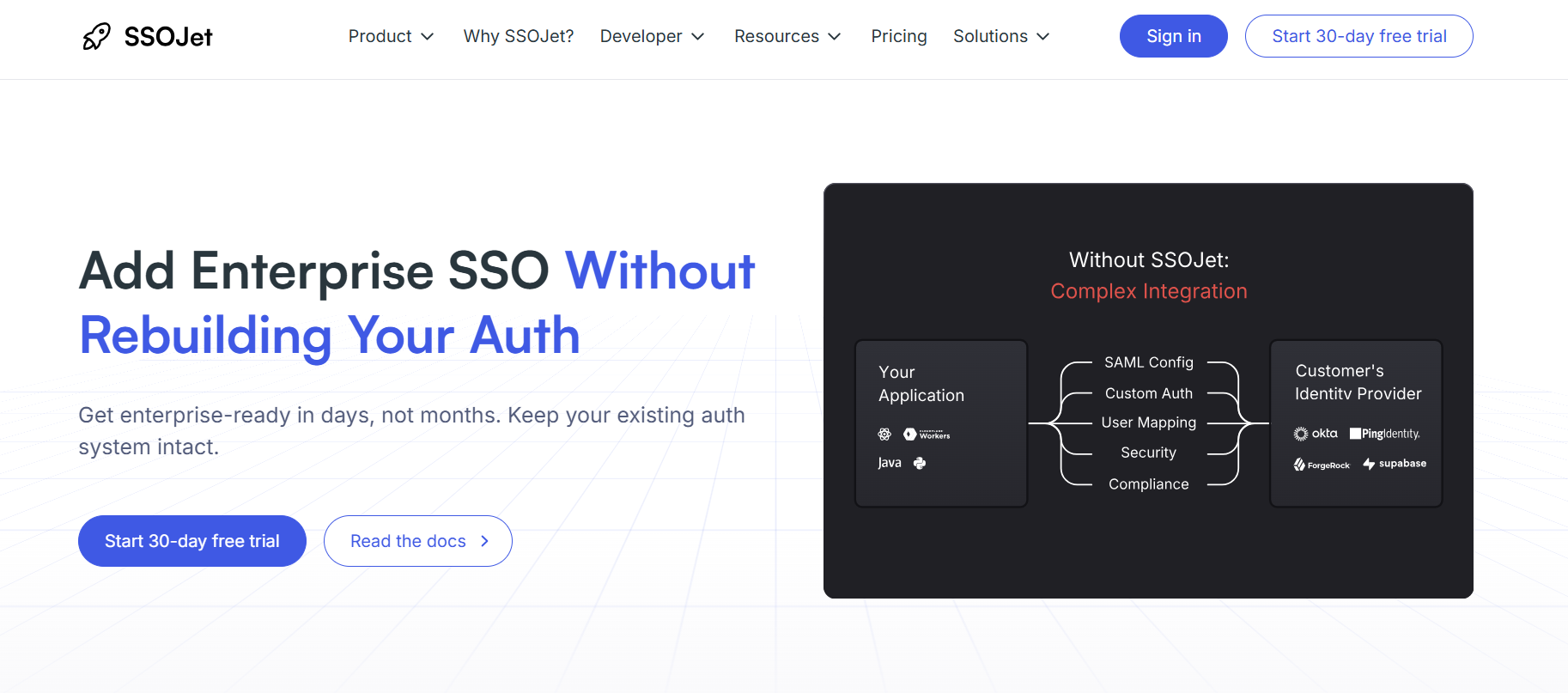
SSOJet has emerged as the premier choice for B2B healthcare developers in 2026. While legacy giants focus on the "Workforce" side (managing internal employees), SSOJet focuses entirely on the "Product" side. It is designed to help SaaS companies become "Enterprise Ready" in days rather than months. For a healthcare startup, this means you can tell a prospective hospital client, "Yes, we support your specific SAML configuration," without needing to pull your senior engineers off the product roadmap.
Pros:
-
Extremely fast implementation with a developer-first API and SDK approach.
-
Cost-effective scaling compared to enterprise giants like Okta or Ping.
-
Purpose-built for B2B SaaS "Enterprise Readiness" and multi-tenant management.
-
High focus on modern security standards including HIPAA-aligned audit logs.
Cons:
-
Newer player in the market compared to 20-year-old legacy incumbents.
-
Documentation is highly technical and focused exclusively on developers.
Pricing Summary:
-
Free Plan: Includes test/production environments, unlimited organizations, and unlimited MAU.
-
Paid Plan: Business plan starts at $99/month, including 2 SSO connections and branded IT admin portals.
2. Okta Workforce Identity Cloud
Best For: Large-scale healthcare enterprises requiring a unified identity layer across thousands of employees.
Okta remains the undisputed heavyweight. In 2026, their Workforce Identity Cloud is the gold standard for large hospital networks that need to secure a massive, rotating staff of doctors, nurses, and administrative contractors. Its massive Integration Network (OIN) features thousands of pre-built integrations.
Pros:
-
The industry gold standard for security and identity reliability.
-
Robust compliance reporting tools (HIPAA/HITRUST) that simplify audits.
-
Excellent scalability for organizations with tens of thousands of users.
Cons:
-
High pricing that can be prohibitive for small-to-mid-sized startups.
-
Complex configuration often requires a dedicated IAM engineer.
Pricing Summary:
-
Free Plan: 30-day free trial available.
-
Paid Plan: Workforce plans start from $6 per user/month.
3. Auth0 (by Okta)
Best For: B2B Healthcare apps that need highly customizable login experiences.
Auth0 remains the favorite for developers building the customer-facing side of healthcare applications. Auth0’s "Actions" feature allows you to write custom Node.js code that executes during the authentication flow, such as checking a doctor’s NPI number in real-time.
Pros:
-
Superior developer experience with world-class documentation.
-
Highly flexible and customizable via Node.js "Actions."
-
Strong support for HIPAA-compliant data isolation.
Cons:
-
Pricing scales rapidly based on Monthly Active Users (MAU).
-
Can become overly complex for simple SSO needs.
Pricing Summary:
-
Free Plan: Free tier available for up to 7,000 monthly active users (MAU).
-
Paid Plan: B2C plans start at $35/month; B2B Enterprise plans require custom quotes.
4. Ping Identity
Best For: Hybrid healthcare environments and global pharmaceutical companies.
Ping Identity specializes in bridging the gap between legacy on-premise servers and modern cloud apps. For global pharma companies that need to manage identities across multiple jurisdictions, Ping offers the necessary level of control.
Pros:
-
Unrivaled expertise in complex, legacy-heavy and hybrid environments.
-
Advanced "Identity Orchestration" allows for complex user journeys.
Cons:
-
Steep learning curve for new administrators.
-
Often requires professional services for setup.
Pricing Summary:
-
Free Plan: Free trial available for PingOne cloud services.
-
Paid Plan: Workforce plans start at $3 per user/month.
5. Microsoft Entra ID
Best For: Healthcare organizations already deeply embedded in the Microsoft 365 ecosystem.
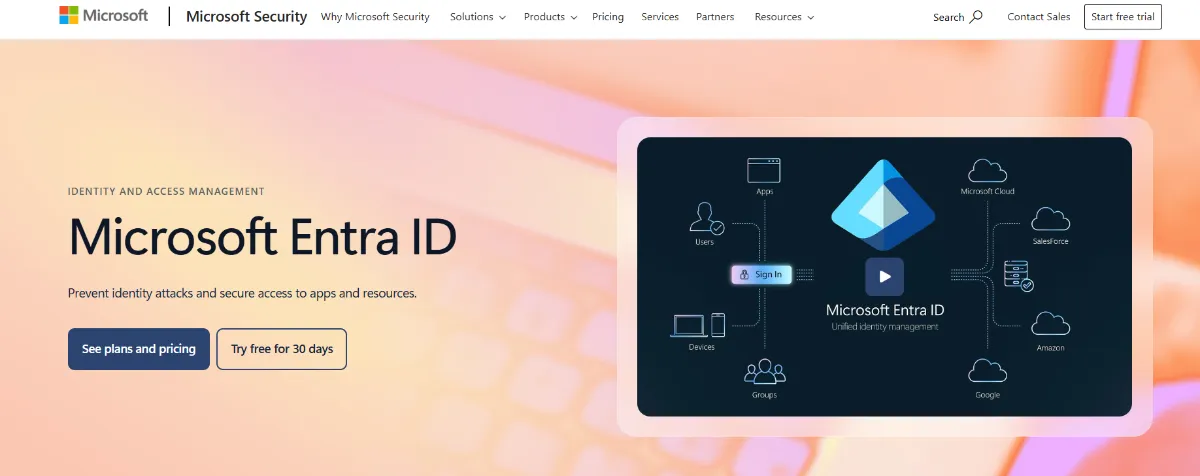
Microsoft Entra ID is the "default" for many hospitals. Its strength lies in "Conditional Access" policies, allowing IT managers to restrict access based on device health or physical location.
Pros:
-
Deep integration with Windows and Azure IT stacks.
-
Excellent threat intelligence data.
Cons:
-
User experience can be disjointed across multiple portals.
-
Less "platform agnostic" than dedicated providers.
Pricing Summary:
-
Free Plan: Basic features included with Azure/M365 subscriptions.
-
Paid Plan: Premium plans start from $6 per user/month.
6. Keycloak (by Red Hat)
Best For: Healthcare SaaS companies that want full control with an open-source, self-hosted SSO solution.
Keycloak is one of the most trusted open-source identity and access management (IAM) platforms in healthcare environments. In 2026, many hospitals and health-tech vendors prefer Keycloak because it can be fully self-hosted, giving IT teams complete control over patient data, authentication flows, and compliance boundaries.
For healthcare SaaS vendors selling to security-conscious hospitals, Keycloak is often accepted faster than proprietary cloud-only solutions—especially in regions with strict data residency requirements.
Pros:
-
Open-source and vendor-neutral (no lock-in)
-
Full support for SAML, OIDC, LDAP, and Active Directory
-
Can be deployed on-premise or in private cloud (ideal for HIPAA & regional compliance)
-
Strong community and Red Hat enterprise backing
Cons:
-
Requires in-house DevOps and IAM expertise
-
No built-in SaaS-style admin UI for customer self-service
-
Scaling and maintenance are your responsibility
Pricing Summary:
-
Free Plan: 100% open-source and free to use
-
Paid Plan: Enterprise support available via Red Hat (custom pricing)
7. JumpCloud
Best For: Small-to-medium healthcare clinics looking for an all-in-one directory.
JumpCloud offers a "Directory-as-a-Service." Beyond SSO, it includes Mobile Device Management (MDM), helping satisfy HIPAA technical safeguards for device encryption.
Pros:
-
All-in-one platform for device management and identity.
-
Simple, transparent pricing.
Cons:
-
Lacks the deep B2B federation features of SSOJet.
-
Limited advanced compliance reporting.
Pricing Summary:
-
Free Plan: Free for up to 10 users and 10 devices.
-
Paid Plan: SSO Package starts at $7 per user/month.
8. OneLogin
Best For: Mid-market healthcare companies looking for ease of use.
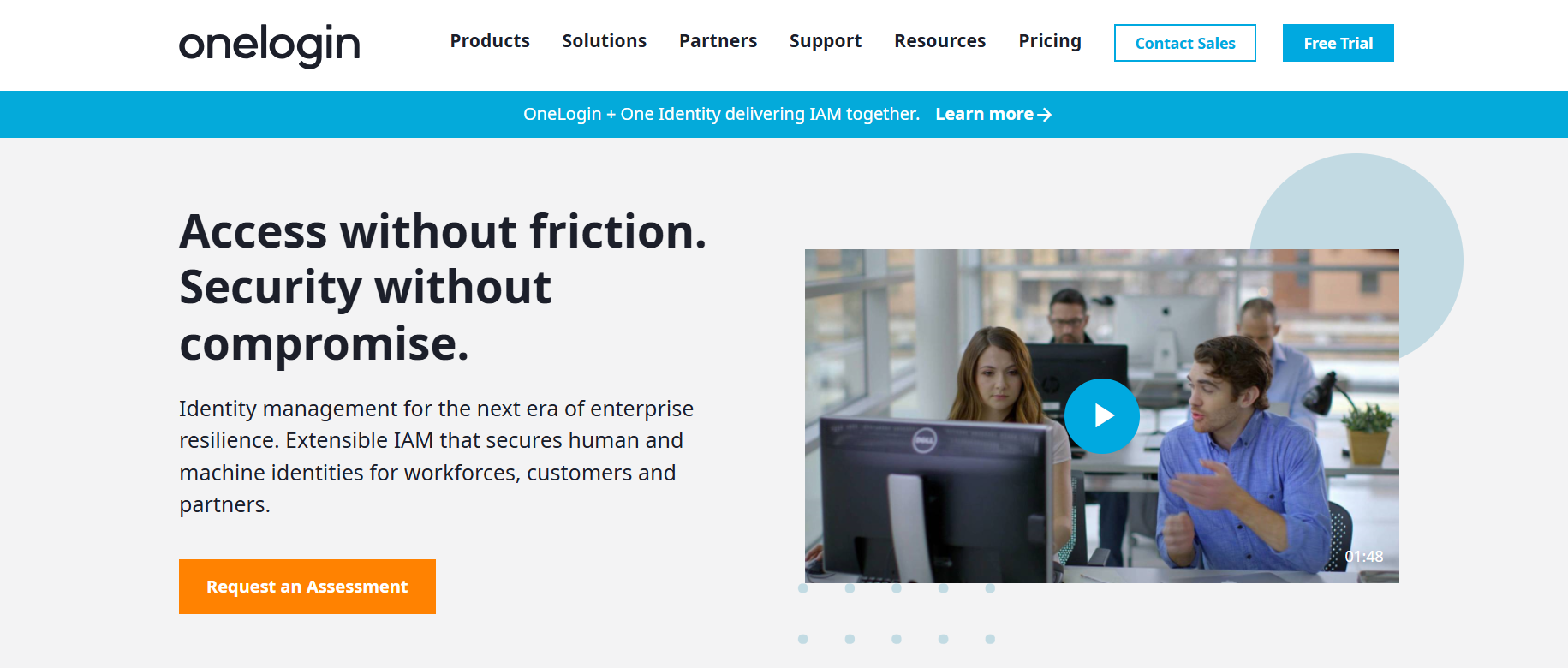
OneLogin offers a streamlined administrative experience. Its "SmartFactor Authentication" uses machine learning to assess the risk of a login attempt in real-time.
Pros:
-
Faster deployment than many other enterprise tools.
-
Reliable customer support.
Cons:
-
Innovation has slowed since its recent acquisition.
-
Fewer total integrations than Okta.
Pricing Summary:
-
Free Plan: Free trial available.
-
Paid Plan: Starts from $2 per user/month.
9. WorkOS
Best For: Developers who want to add "Enterprise SSO" as an API-driven feature.
WorkOS provides the "plumbing" for your SaaS app. Its "Admin Portal" is a pre-built UI that you can embed in your app to let customers self-configure their SAML settings.
Pros
-
Modern API design that is easy to integrate.
-
White-labeled Admin Portal for customer self-service.
Cons:
-
Can become expensive as you scale connections.
-
Limited to cloud-native SaaS use cases.
Pricing Summary:
-
Free Plan: User Management is free for up to 1 million MAU.
-
Paid Plan: SSO connections start at $125 per month per connection.
10. Duo Security
Best For: Healthcare providers prioritizing MFA and "Zero Trust" device health.
Duo Security is famous for its user-friendly MFA. It checks the "health" of a device before allowing a login, ensuring it is encrypted and up to date.
Pros:
-
Most user-friendly MFA experience on the market.
-
Strong "Zero Trust" posture verifies device health.
Cons:
-
SSO functionality is not as robust as dedicated IAM players.
-
Limited B2B federation features.
Pricing Summary:
-
Free Plan: Free for up to 10 users.
-
Paid Plan: Starts from $3 per user/month.
Frequently Asked Questions
Q: Why is SAML so important for healthcare SaaS?
A: SAML is the industry standard that allows a hospital's identity provider to talk to your SaaS app securely. It ensures the hospital maintains control over user access without you ever seeing a password.
Q: Can these SSO solutions help with HIPAA compliance?
A: Yes, they provide the technical infrastructure (audit logs, encryption) needed for HIPAA. However, you must still configure them correctly and sign a Business Associate Agreement (BAA) with the provider.
Q: What is the difference between SSO and SCIM?
A: SSO handles the login process. SCIM (System for Cross-domain Identity Management) handles provisioning—automatically creating or deleting user accounts when someone joins or leaves the hospital.
Q: Which solution is best for a startup on a budget?
A: For startups, SSOJet or WorkOS are the best bets. They offer "pay-as-you-grow" models that avoid the massive annual minimums required by legacy enterprise players.
Q: Do I need a different SSO for my employees vs. my customers?
A: Usually, yes. Workforce Identity (like Okta) is for your internal staff. Customer Identity or B2B SSO (like SSOJet) is a feature you build into your product for your clients to use.
*** This is a Security Bloggers Network syndicated blog from SSOJet - Enterprise SSO & Identity Solutions authored by SSOJet - Enterprise SSO & Identity Solutions. Read the original post at: https://ssojet.com/blog/b2b-healthcare-saas-sso
如有侵权请联系:admin#unsafe.sh