The cybersecurity industry is entering a phase where AI is no longer a feature, but an architectural dependency. AI-native security is no longer a nice-to-have. However, much of the current analyst discourse still evaluates AI security tools through the lens of SOC efficiency, alert handling, or workflow automation. This framing underestimates where the highest long-term security value is emerging. At Uptycs, our experience building and deploying Juno, an AI-native reasoning layer, suggests that the real inflection point is upstream risk reduction—made possible not by generic LLMs, but by AI operating on top of a purpose-built cybersecurity ontology that unifies cloud, endpoint, Kubernetes, container, and identity telemetry. This note explains why ontology-driven AI reasoning is becoming essential, why it is difficult to communicate using legacy categories, and why it represents a fundamentally different class of AI security capability. The industry has broadly accepted that: What is less widely recognized is why many AI-based security tools still fail to reduce risk meaningfully. The core issue is not model quality, it is lack of structured context. Most AI security tools today operate on: This data is unstructured or semi-structured, forcing AI to infer meaning probabilistically. The result is AI that is: This is why many AI tools excel at summarization or triage but struggle with causal reasoning, attack path inference, or proactive risk reduction. At Uptycs, we use “ontology” in a precise sense—not as a marketing term. A cybersecurity ontology is: Examples of ontology relationships: This ontology is continuously updated, not static. AI models reason best when: By operating Juno on top of a security ontology, Uptycs enables AI to: This is fundamentally different from feeding logs into an LLM. A key challenge in communicating Juno’s value is that SQL is not usually associated with AI innovation, yet it is central to making AI effective in cybersecurity. In Uptycs: This architecture allows Juno to: In effect, SQL acts as a cognitive amplifier for AI, allowing it to reason faster, more accurately, and with far less ambiguity. This is one of the most misunderstood—but most important—design choices in AI-native security platforms. Because Juno reasons over a unified ontology: This allows security teams to: This is what we mean by upstream risk reduction. SOC-agent and copilot tools typically: They provide real operational value, but: From an architectural standpoint, they are downstream consumers of security intelligence, not producers of it. One reason this is hard to communicate is that current analyst categories are misaligned: Ontology-driven AI reasoning does not fit neatly into these buckets. Yet, as AI-driven attacks become more autonomous and cross-domain, this architecture becomes necessary, not optional. We believe analysts should begin distinguishing between: 1. AI-assisted security tools 2. AI-native security platforms Juno is designed for the second category. AI in cybersecurity is not a race to build the smartest model. It is a race to build the most complete, structured, and queryable understanding of the environment, and then apply AI reasoning on top of it. Uptycs’ security ontology, combined with SQL-accelerated AI reasoning through Juno, represents an architectural approach explicitly designed for AI-era threats, not SOC-era workflows. We believe this distinction will increasingly define how the market and analysts separate durable security platforms from short-term AI augmentation.The core problem: AI without structure does not reduce risk
Why upstream risk reduction requires a security ontology
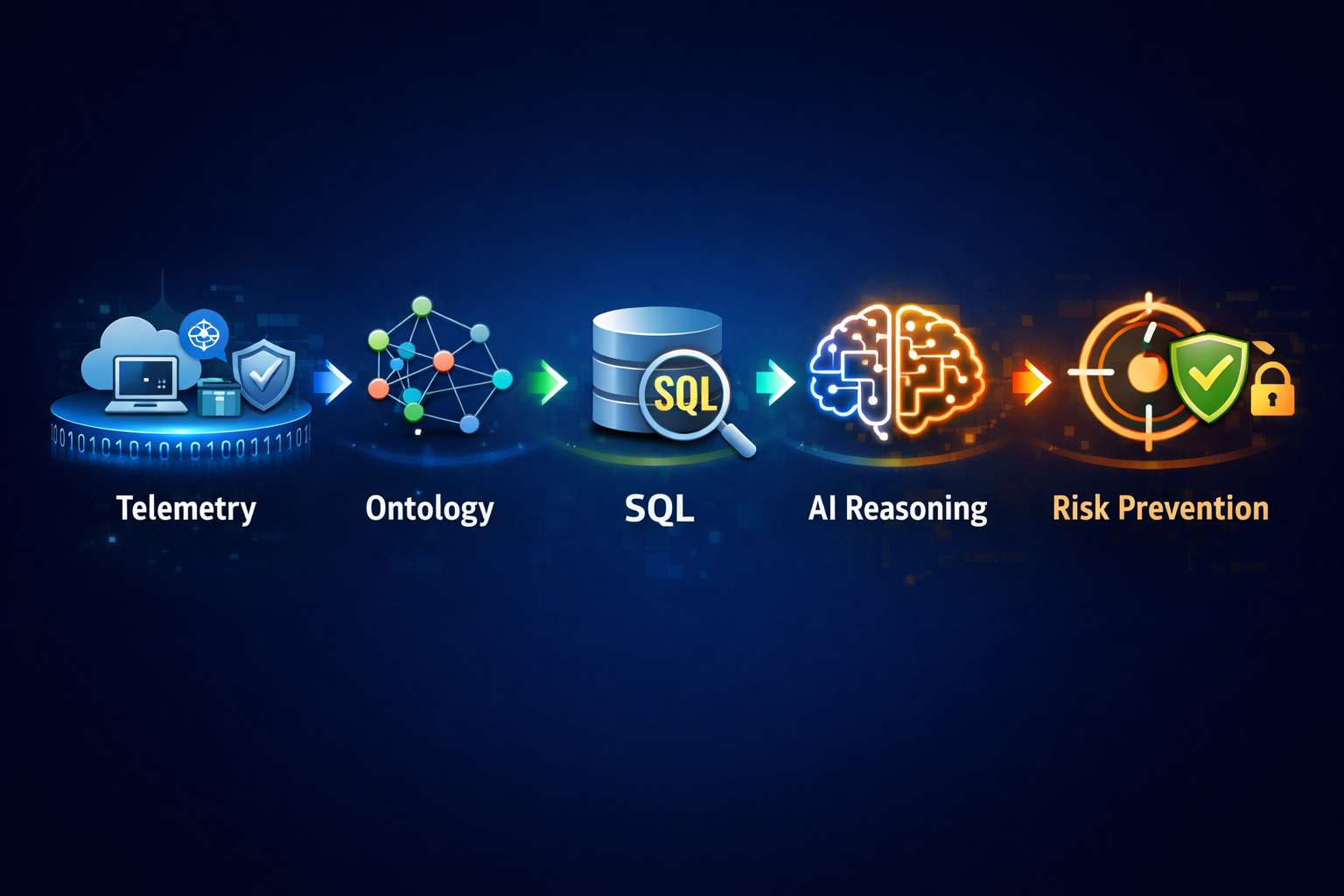
What we mean by a cybersecurity ontology
Why ontology matters for AI reasoning
The role of SQL: why this matters more than prompts
SQL as a reasoning accelerator
Why this enables upstream risk reduction (not just faster response)
Why SOC-centric AI models fall short (structurally)
Why analysts struggle to categorize ontology-driven AI (and why that must change)
A proposed analyst framing shift
Closing thought

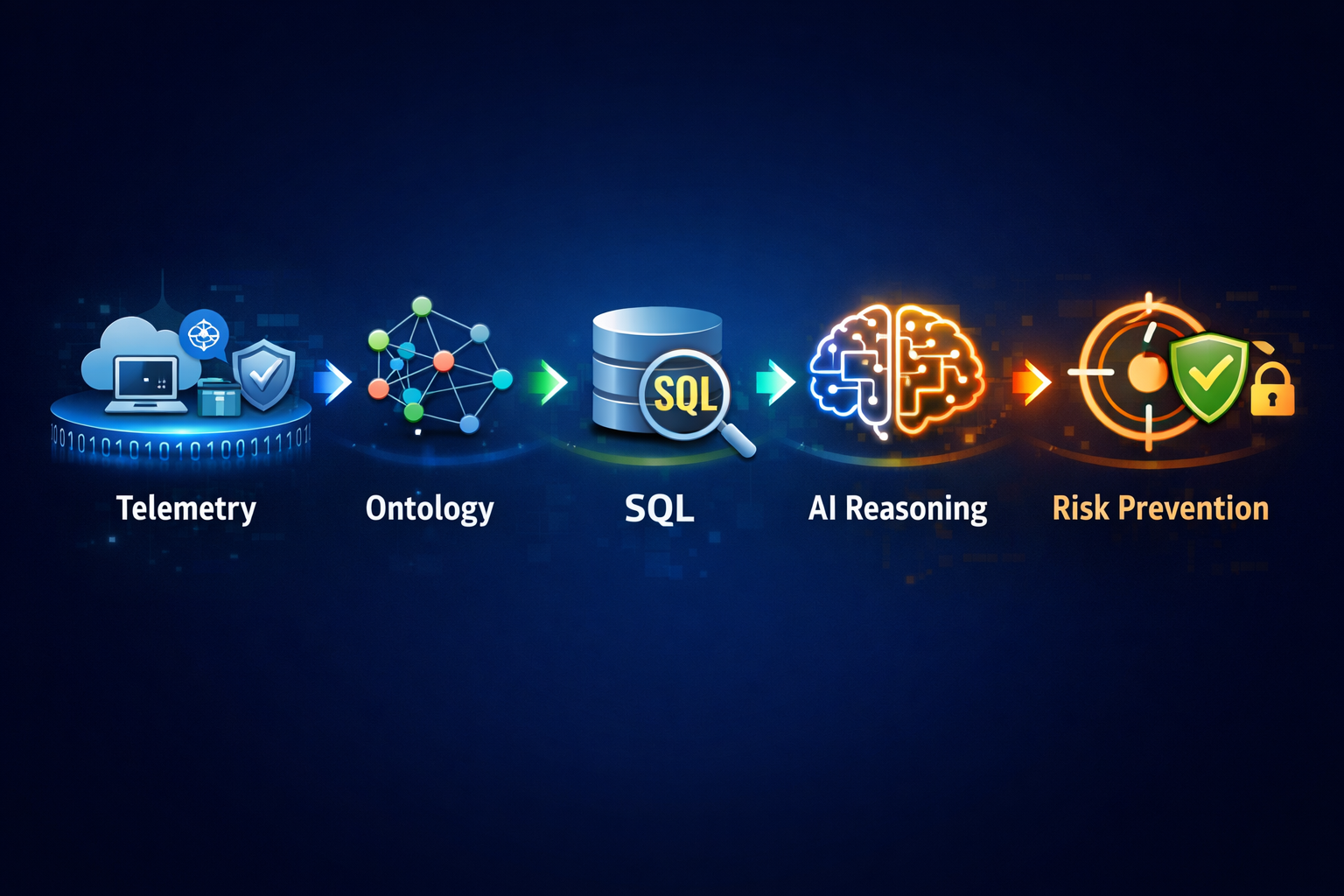
AI-Native Security Needs an Ontology-Driven Reasoning Layer | Uptycs
好的,我现在需要帮用户总结这篇文章的内容,控制在100字以内。首先,我得仔细阅读文章,理解其主要观点。 文章主要讨论了网络安全行业正在进入一个AI不再是附加功能,而是架构依赖的阶段。Uptycs公司提到他们的Juno系统,基于安全本体论(ontology),通过结构化数据和SQL加速AI推理,实现上游风险降低。传统SOC工具依赖警报处理,而Juno则能提前发现潜在风险,减少攻击面。 接下来,我需要将这些要点浓缩到100字以内。要确保涵盖AI的重要性、Uptycs的方法、安全本体论的作用以及与传统方法的区别。 可能的结构:网络安全进入AI架构时代,Uptycs通过基于安全本体论和SQL加速的AI推理实现上游风险降低,区别于传统依赖警报的SOC工具。 现在检查字数是否符合要求,并确保语言简洁明了。 </think> 网络安全行业正进入AI架构时代。Uptycs通过基于安全本体论和SQL加速的AI推理实现上游风险降低,区别于传统依赖警报的SOC工具。 2026-1-7 16:24:36 Author: www.uptycs.com(查看原文) 阅读量:16 收藏
好的,我现在需要帮用户总结这篇文章的内容,控制在100字以内。首先,我得仔细阅读文章,理解其主要观点。 文章主要讨论了网络安全行业正在进入一个AI不再是附加功能,而是架构依赖的阶段。Uptycs公司提到他们的Juno系统,基于安全本体论(ontology),通过结构化数据和SQL加速AI推理,实现上游风险降低。传统SOC工具依赖警报处理,而Juno则能提前发现潜在风险,减少攻击面。 接下来,我需要将这些要点浓缩到100字以内。要确保涵盖AI的重要性、Uptycs的方法、安全本体论的作用以及与传统方法的区别。 可能的结构:网络安全进入AI架构时代,Uptycs通过基于安全本体论和SQL加速的AI推理实现上游风险降低,区别于传统依赖警报的SOC工具。 现在检查字数是否符合要求,并确保语言简洁明了。 </think> 网络安全行业正进入AI架构时代。Uptycs通过基于安全本体论和SQL加速的AI推理实现上游风险降低,区别于传统依赖警报的SOC工具。 2026-1-7 16:24:36 Author: www.uptycs.com(查看原文) 阅读量:16 收藏
文章来源: https://www.uptycs.com/blog/why-ai-native-security-requires-an-ontology-driven-reasoning-layer
如有侵权请联系:admin#unsafe.sh
如有侵权请联系:admin#unsafe.sh