美国国家标准与技术研究所(NIST)发布了更新版事件响应指南SP 800-61r3,整合了CSF 2.0框架的核心功能,并引入社区配置文件和灵活的生命周期模型,强调角色分工和团队协作,帮助组织提升网络安全韧性并优化风险管理体系。 2026-1-2 14:0:31 Author: securityboulevard.com(查看原文) 阅读量:3 收藏
The National Institute of Standards and Technology (NIST) has released a long-awaited update to its incident response guidance: Special Publication 800-61 Revision 3 (SP 800-61r3). This new version, titled “Incident Response Recommendations and Considerations for Cybersecurity Risk Management,” aligns closely with the latest Cybersecurity Framework (CSF) 2.0, marking a significant evolution in how organizations should prepare for, respond to, and recover from cyber incidents.
The main goal behind this? To help organizations manage cybersecurity incidents as part of their overall risk management, not just react to them, but plan for them in a smart, structured way.
NIST Updated Incident Response Guide: The Back Story
In February 2024, NIST updated its Cybersecurity Framework, now called CSF 2.0. This version helps organizations understand different types of cybersecurity risks and how to build stronger protection, respond better to attacks, and recover more effectively. Then, in April 2025, NIST released a follow-up guide called “Incident Response Recommendations and Considerations for Cybersecurity Risk Management.” This new guide takes the big ideas from CSF 2.0 and breaks them down into clear, practical steps that companies can use to improve their incident response.
What’s New in SP 800-61r3?
Here are the updates that were seen in SP 800-61r3:
1. Integration with CSF 2.0
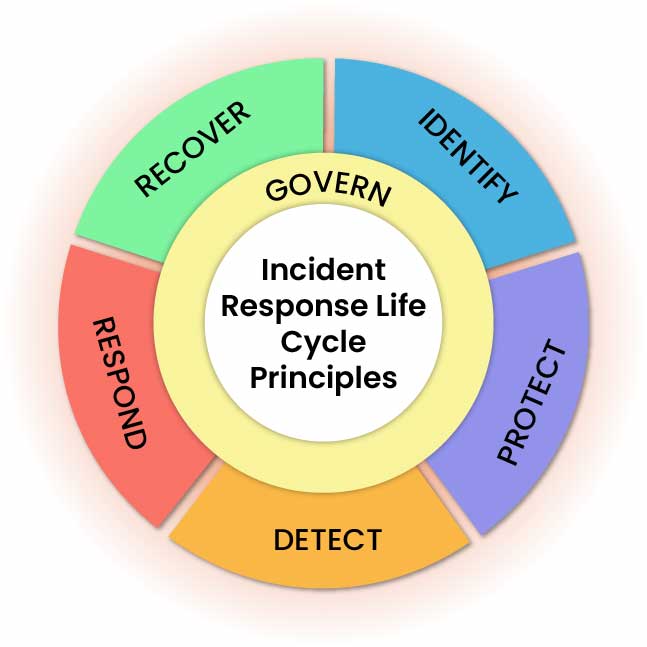
The updated guidance uses the six core functions from the Cybersecurity Framework (CSF) to shape how organizations should handle incidents:
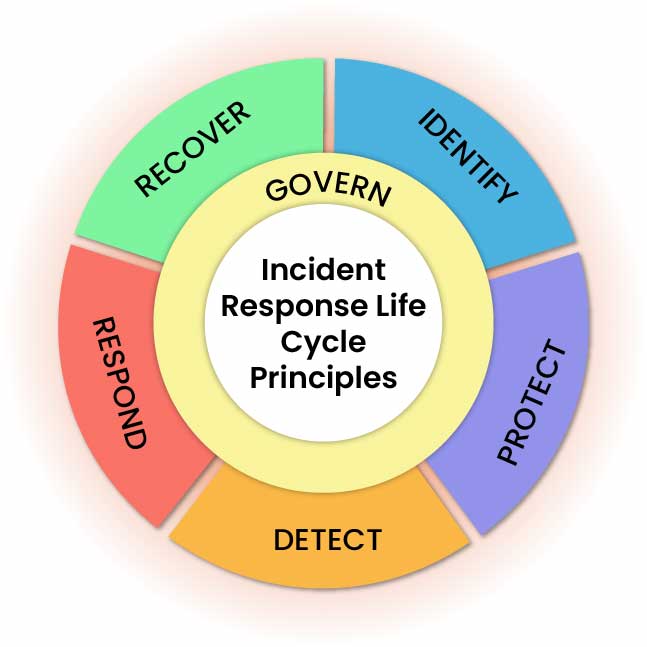
- Govern: Set rules and oversight.
- Identify: Know what you have and what could go wrong.
- Protect: Put security measures in place.
- Detect: Spot unusual activity.
- Respond: Act quickly when an incident happens.
- Recover: Get systems back to normal.
This approach helps organizations keep improving and makes incident response a key part of overall risk management, not just something done after a problem occurs.
2. Community Profile for Incident Risk Management
NIST introduces a CSF 2.0 Community Profile, outlining prioritized outcomes tailored to incident response. Each CSF activity is rated as High, Medium, or Low priority for incident handling, and tagged with:
- R: Recommendations
- C: Considerations
- N: Notes and references
This structure helps organizations customize their strategies based on size, sector, and maturity level.
3. Updated Lifecycle Model
The old model followed a fixed loop: Plan, Detect, Respond, Recover. The updated model is more flexible and ongoing. It focuses on:
- Constant threat detection and monitoring
- Clear roles for both internal teams and outside partners
- Quickly identifying and ranking incidents as they happen
- Working closely with business continuity and legal teams
Instead of being a one-time cycle, it’s now a continuous process that involves the whole organization and keeps improving over time.
4. Emphasis on Roles, Teamwork, and Playbooks
- Clearly define who does what from top executives to outside vendors.
- Use incident response playbooks and run regular practice drills to stay prepared.
- Make sure cyber response plans are included in contracts, NDAs, and cloud service agreements to avoid confusion during a real incident.

NIST SP 800-61r3 – Why This Matters
In today’s threat environment, every organization must assume that incidents are inevitable. SP 800-61r3 helps organizations:
- Strengthen cyber resilience
- Improve detection and recovery times
- Align cybersecurity with enterprise risk strategies
- Comply with evolving regulations and reporting mandates
SP 800-61r3 – Who Should Care?
Whether you’re a CISO, IT lead, legal advisor, or compliance manager, this update is essential reading for anyone shaping an organization’s cyber defense posture. This is useful for:
- Cybersecurity leaders
- Incident response teams
- IT staff
- Legal and HR
- Cloud providers and vendors
- Small businesses to government agencies
- Anyone responsible for cyber defense or risk
NIST SP 800-61r3 – Key Takeaways
Here are the key takeaways of the updated Incident Response Guide:
1. Prepare Ahead of Time
- Set up policies and playbooks.
- Define roles clearly (not just IT, but also legal, PR, HR).
- Make sure tools and teams are ready before an incident hits.
2. Detect Issues Quickly
- Use tools like SIEMs, logs, and threat intelligence.
- Monitor your networks, systems, people, and third-party services.
3. Respond Smartly
- Prioritize incidents based on impact.
- Coordinate with internal and external teams.
- Document actions and decisions.
4. Recover and Improve
- Restore affected systems and services.
- Learn from each incident.
- Update policies and procedures so it doesn’t happen again.
Kratikal’s Approach To NIST CSF 2.0 Compliance
Here is how Kratikal moves ahead with it:
Policy Drafting
At this stage, we will create important cybersecurity policies for your organization based on the NIST Framework 2.0. These may include:
- Data Retention Policy
- Data Protection Policy
- Information Security Policy
- Access Control Policy
GAP Assessment
Also known as a compliance check or pre-assessment, this step helps us understand how closely your organization follows the NIST standards. It highlights what’s already in place and what’s missing, and we’ll give you clear recommendations to fix any gaps.
Implementation
Once the policies are ready, we begin putting the NIST framework into action. We start by defining your security goals and scope, then assessing risks based on your business setup.
This helps prioritize what needs the most attention.
Auditing and Training
After everything is in place, we conduct a final audit to prepare your organization for NIST certification. We’ll check your security systems, train your team, and make sure everything meets the standard. This helps identify any last-minute areas that need improvement.
Join our weekly newsletter and stay updated
FAQs
- What is NIST SP 800-61r3 and how does it relate to CSF 2.0?
NIST SP 800-61r3 is the latest incident response guidance from NIST, aligned with the Cybersecurity Framework (CSF) 2.0. It helps organizations build a continuous, role-based, and risk-driven approach to cyber incident detection, response, and recovery, moving beyond reactive models.
- Why is NIST’s updated incident response guide important for organizations today?
The new guide helps organizations improve cyber resilience, define clear roles, use playbooks, and prepare for evolving threats. It ensures incident response is part of enterprise risk management, not just an afterthought, and supports compliance with regulatory mandates.
The post NIST Launches Updated Incident Response Guide appeared first on Kratikal Blogs – Information Hub For Cyber Security Experts.
Recent Articles By Author
如有侵权请联系:admin#unsafe.sh