
嗯,用户让我帮忙总结一篇文章的内容,控制在100字以内,而且不需要用“文章内容总结”这样的开头。首先,我需要仔细阅读这篇文章,理解它的主要内容。 文章讲的是“GlassWorm”恶意软件的第四波攻击,主要针对macOS开发者的VSCode和OpenVSX扩展。这些扩展被用来传播加密钱包应用的特洛伊木马版本。攻击者利用隐藏的Unicode字符和加密ayload,通过AppleScript和LaunchAgents实现持久化。此外,这次攻击还试图窃取Keychain密码,并替换硬件钱包应用。 接下来,我需要将这些信息浓缩到100字以内。要抓住关键点:攻击目标、使用的扩展、隐藏技术、窃取的数据类型以及新的功能。同时,确保语言简洁明了。 可能的结构是:GlassWorm第四波攻击利用恶意扩展传播特洛伊木马钱包,窃取GitHub、NPM等账户信息及加密数据,并尝试替换硬件钱包应用。 这样既涵盖了主要攻击手段和目标,又保持了简洁。 </think> GlassWorm第四波攻击针对macOS开发者,利用恶意VSCode/OpenVSX扩展传播特洛伊化加密钱包应用。通过隐藏Unicode字符和AES加密payload窃取GitHub、NPM账户信息及加密数据,并尝试替换硬件钱包应用。 2026-1-1 19:30:20 Author: www.bleepingcomputer.com(查看原文) 阅读量:4 收藏

A fourth wave of the "GlassWorm" campaign is targeting macOS developers with malicious VSCode/OpenVSX extensions that deliver trojanized versions of crypto wallet applications.
Extensions in the OpenVSX registry and the Microsoft Visual Studio Marketplace expand the capabilities of a VS Code-compatible editor by adding features and productivity enhancements in the form of development tools, language support, or themes.
The Microsoft marketplace is the official extension store for Visual Studio Code, whereas OpenVSX serves as an open, vendor-neutral alternative, primarily used by editors that do not support or choose not to rely on Microsoft's proprietary marketplace.

The GlassWorm malware first appeared on the marketplaces in October, hidden inside malicious extensions using "invisible" Unicode characters.
Once installed, the malware attempted to steal credentials for GitHub, npm, and OpenVSX accounts, as well as cryptocurrency wallet data from multiple extensions. Additionally, it supported remote access through VNC and can route traffic through the victim's machine via a SOCKS proxy.
Despite the public exposure and increased defenses, GlassWorm returned in early November on OpenVSX and then again in early December on VSCode.
GlassWorm back on OpenVSX
Koi Security researchers discovered a new GlassWorm campaign that targets macOS systems exclusively, a departure from the previous ones that focused only on Windows.
Instead of the invisible Unicode seen in the first two waves, or compiled Rust binaries used in the third one, the most recent GlassWorm attacks use an AES-256-CBC–encrypted payload embedded in compiled JavaScript in the OpenVSX extensions:
- studio-velte-distributor.pro-svelte-extension
- cudra-production.vsce-prettier-pro
- Puccin-development.full-access-catppuccin-pro-extension
The malicious logic executes after a 15-minute delay, likely in an attempt to evade analysis in sandboxed environments.
Instead of PowerShell, it now uses AppleScript, and instead of Registry modification, it uses LaunchAgents for persistence. The Solana blockchain-based command-and-control (C2) mechanism remains unchanged, though, and researchers say that there is also infrastructure overlap.
Apart from targeting over 50 browser crypto extensions, developer credentials (GitHub, NPM), and browser data, GlassWorm now also attempts to steal Keychain passwords.
Additionally, it now features a new capability where it checks for hardware cryptocurrency wallet apps like Ledger Live and Trezor Suite on the host, and replaces them with a trojanized version.
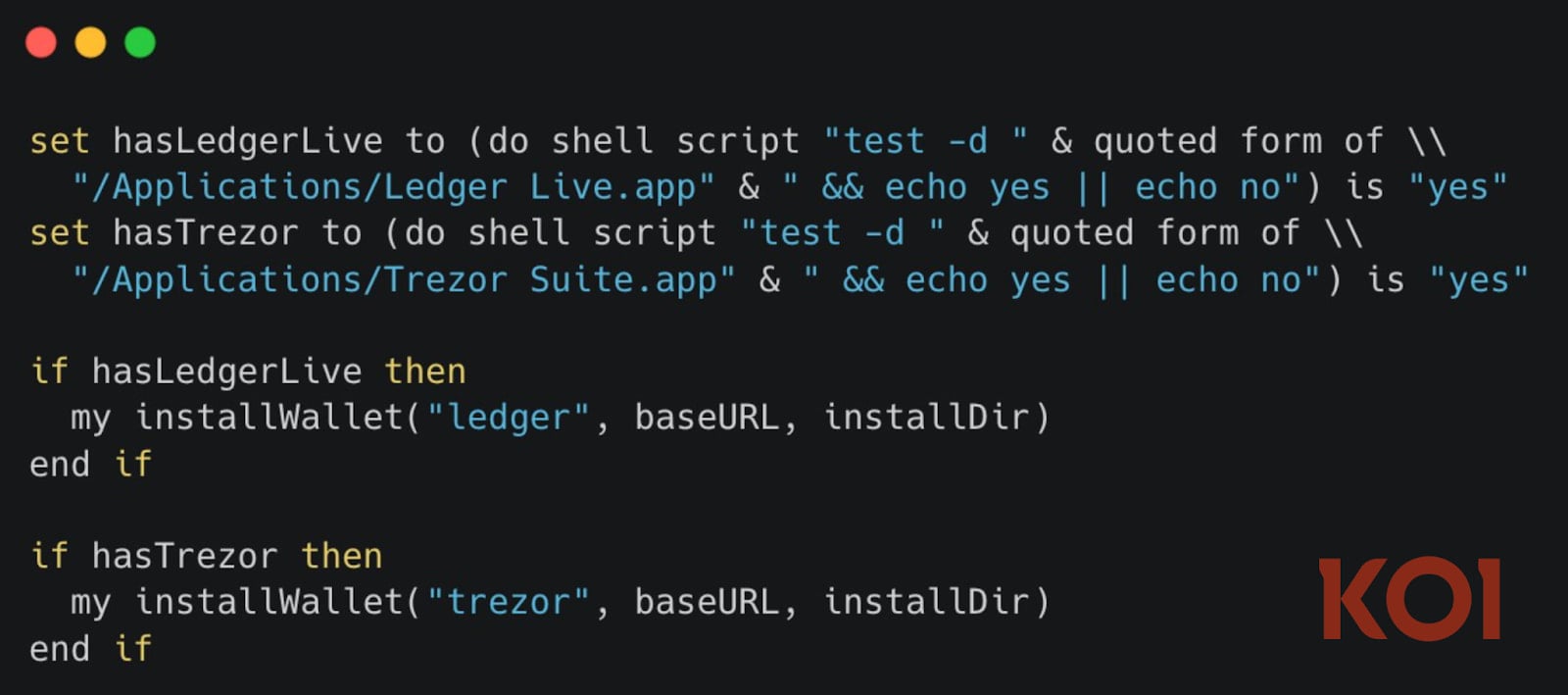
Source: Koi Security
However, Koi Security notes that this mechanism is currently failing because the trojanized wallets are returning empty files.
"This could mean the attacker is still preparing the macOS wallet trojans, or the infrastructure is in transition," explains Koi Security.
"The capability is built and ready – it's just waiting for payloads to be uploaded. All other malicious functionality (credential theft, keychain access, data exfiltration, persistence) remains fully operational."
When BleepingComputer checked if the malicious extensions were still available on OpenVSX, the platform showed a warning for two of them, informing that their publisher was unverified.

Source: BleepingComputer
The download counters show more than 33,000 installs, but such figures are frequently manipulated by threat actors to make the files appear more trustworthy.
Developers who have installed any of the three extensions are recommended to remove them immediately, reset their GitHub account passwords, revoke their NPM tokens, check their system for signs of infection, or reinstall it.

7 Security Best Practices for MCP
As MCP (Model Context Protocol) becomes the standard for connecting LLMs to tools and data, security teams are moving fast to keep these new services safe.
This free cheat sheet outlines 7 best practices you can start using today.
如有侵权请联系:admin#unsafe.sh