
2026年人工智能将彻底改变网络安全格局。攻击者利用AI进行更高效的钓鱼和社会工程学攻击;防御者则采用AI工具提升安全运营能力。CISO角色转向业务风险领导,需投资于AI治理和防御工具以应对快速变化。 2025-12-31 20:37:0 Author: securityboulevard.com(查看原文) 阅读量:6 收藏
Top 10 Cybersecurity Predictions for 2026
The year AI changes cybersecurity forever
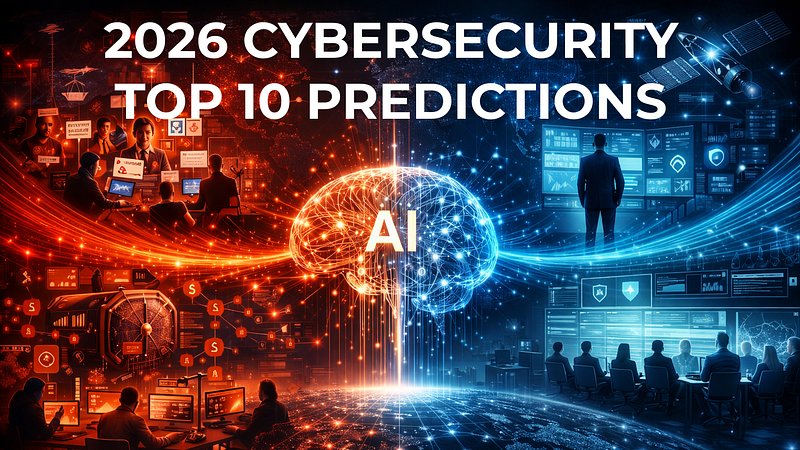
Cybersecurity predictions are an opportunity to look forward instead of back, to be proactive instead of reactive, and to consider how changes in attackers, technology, and the security industry will impact the sustainability of managing cyber risks. Gaining future insights to the threats, targets, and methods provides advantages to security prioritization, timeliness, operational effectiveness, investment efficiency, and ultimately, cybersecurity resilience.
Executive Summary
Protecting the digital ecosystem in 2026 will be defined by one overwhelming concept: Artificial Intelligence. Attackers, defenders, targets, and expectations of everyone involved will shift significantly due to the risks brought about by AI.
The rush of AI adoption and breadth of available services introduces vulnerabilities to the user which will overwhelm or bypass current security controls. Attackers will double down on proven techniques, but with AI-fueled scale, speed, and personalization will increase the chances of success. Victims will be surprised at the rapid escalation, broad impacts, and difficulty in recovery. Defenders will finally begin to catch up, though better security operations features and filters, but not without experiencing equally dizzying capabilities from the attackers, which include a much faster exploitation rate and difficulty to properly evict and recover.
AI is an amazing tool for computing, but in 2026, there will be significant pain, public failures, and a few uncomfortable Board conversations.
TOP 10 CYBERSECURITY INSIGHTS PREDICTIONS FOR 2026
- AI Supercharges Social Engineering
Attackers leverage AI to automate personalized, believable phishing at scale, driving a 30–50% increase in successful attacks. - AI Accelerates Vulnerability Exploitation
Automated discovery and exploit generation at machine speed shrinks time-to-patch windows dramatically. - AI Adoption Expands Attack Surface
Integration of AI systems and connections to services via APIs and MCPs creates new vulnerabilities and trust boundary risks - Threat Actor Lineup Shifts
Nation-states and Cybercriminals still rule, but Data Harvesters and Vulnerability Researchers rise in rankings due to AI tools. - Ransomware Reinvents Itself
Extortionists adapt new tactics to monetize access to victims’ data and systems with more personalized and vicious attacks. - Geopolitics Fuels Cyber Arms Race
Nations invest heavily in AI-driven offensive capabilities, research, and infrastructure to engage or defend from enemies. - Hybrid Cyberwarfare Integration
Nations fully embed cyber operations into military strategy, foreign policy, and economic influence, targeting critical infrastructure. - Defensive AI Tools Arrive
Mature AI-powered security tools emerge for SOCs, email filtering, and threat detection to counter AI-driven attacks. - AI Governance Takes Center Stage
Organizations focus on securing Shadow AI and establishing guardrails for ethics, privacy, accuracy, and safety compliance. - CISO Role Transforms
CISOs evolve from tech experts to cyber risk executives who align security to contribute to corporate objectives, and communicate risks and opportunities in business value terms.
2026 will be the year that AI fully disrupts cybersecurity! AI is no longer a “future risk.” It is a force multiplier for attackers, a destabilizer of trust, and will become the equalizer that is desperately needed by defenders. The organizations that win in 2026 will not be the most technologically advanced, but the most realistic about technology innovation risks, human behavior, business impacts, and the limits of current security models.
Predicting the Future:
The world of cybersecurity moves fast and is supremely difficult to accurately predict. But there is a need to break the reactive cycle of putting out the fires as they arise. Cybersecurity must evolve to a proactive model that can anticipate what will be targeted, by whom, and with what methods. Shifting to an active defense greatly improves the preparedness to avoid or minimize undesired impacts.
The chaos of cybersecurity is rooted in the constant maneuverings of our intelligent adversaries, who may possess more resources, be highly motivated, and are not restricted in their actions by ethics, laws, or adverse outcomes. They maintain the advantage in choosing their targets, the variety of methods employed, and when to strike. Attackers leverage every opportunity and can quickly seize them as they emerge.
In most years, there is a clear mix of many different drivers that combine to form a diverse mosaic. This year was different. These predictions are based on a methodology of four aspects: attackers, disruptive technology, defenders, and expectations of cybersecurity. For 2026, AI emerged as a dominant and consistent factor of risk in every category.
AI Changes Cybersecurity Forever
Artificial Intelligence is a volatile catalyst that will drive change into the cybersecurity industry in 2026. AI will empower aggressors with new tools that will facilitate an increase in the scale of attacks and improve their success rates. The widespread embrace and integration of AI services and solutions will create an expanding surface area for new vulnerabilities. AI will aid attackers in quickly developing exploits and supporting infrastructure for weaknesses in software, devices, and services, thereby accelerating the available malicious toolkits that will victimize their targets.
Defenders will also leverage AI to counter the attacker’s scale and approaches with tools of their own. Process automation, threat evaluation, and semi-autonomous decision structures will improve security operations, information technology, digital product development, policy audits, data security, and regulatory compliance. Security, privacy, and safety capabilities will be significantly improved.
The rapid adoption of AI in every sector underlies an unfortunate reality: the great power of AI tools are accompanied by equitable risks. Understanding the tension between AI functionality and security is paramount. Users of AI systems quickly realize that the value of the solution is predicated on the amount of access to sensitive systems and data. Conversely, security wants to minimize access to only what is absolutely required, which limits the exploration of value by users. Showcasing functionality and realizing value will overwhelmingly win in the short term as developers connect AI to as much as they can, without understanding the risks they are introducing to the organization. The users themselves are often dismissive of security until it fails, and move rapidly to embrace disruptive technologies, typically before they are stable and safe. This is the business leadership dilemma that cybersecurity must navigate and support.
2026 will showcase a digital arms race and the uncomfortable reality of scalability at machine speed. Both sides will advance rapidly in a struggle to see who can seize an advantage with AI. Cybersecurity will struggle to keep pace with the innovative tools of attackers, and the global digital ecosystem will emerge with serious scars and a newfound respect for being better prepared when it comes to embracing disruptive technology.
Top 10 Cybersecurity Predictions for 2026
1. Artificial Intelligence Supercharges Social Engineering
AI enables attackers to become the ultimate social engineers to exploit human vulnerabilities.

Social Engineering will skyrocket in 2026 as attackers fully embrace AI to significantly increase the number of attacks and their believability. Threat actors are now armed with automated Large Language Models (LLMs) and Agentic AI, which have leveled up social engineering by solving the trade-off between attack volume and quality.
The result is that cybercriminals will successfully leverage AI tools to greatly increase the quantity of social engineering attacks and the effectiveness of the victimization. AI will automate the distribution of vastly more compelling fraudulent communications that are interactive, customized for specific individuals, and superbly take advantage of cognitive vulnerabilities. AI-powered social engineering cyberattacks will be much more difficult to detect and avoid, creating a global spike in data loss, fraud, and the harvesting of credentials.
Attacks will be personalized, professionally written, culturally fluent, and emotionally compelling messages across email, SMS, and social media at a scale no human team could ever achieve. Attackers will combine deep personal context, real-time interaction, and AI-driven persuasion to compel victims into self-destructive actions — authorizing payments, resetting MFA, installing malware, sharing access, or legitimizing fraudulent workflows.
Imagine receiving an amazing business opportunity that describes how your specific skills and recent experience fit precisely what is needed. It quotes your posts and shows interest in your unique perspectives. It reflects how it tried to meet up with you at the last conference you were at, and how the keynote speech was incredible, but the food was terrible and the weather depressing. It reaches out via email or messaging app to share more details, holding a professional conversation, and even laughing at your sarcasm and jokes. It connects with you on LinkedIn, where its profile is well-maintained. When you ask for authentication, it refers you to their corporate webpage that looks authentic. Upon further research, the company has great ratings and is active on social media. But it is all fake and fabricated. A well-crafted facade to get victims to share data, grant access, send processing payments, or install malware.
Agentic AI systems will increase both the volume and believability of attacks, launching waves of cognitive and behavioral manipulation. Unlike old scams, these bots will embrace real-time interactivity to converse, disarm, and negotiate in real time. Just like a skilled con artist, these systems will learn from failures and quickly adapt new techniques to become more proficient over time.
Volume will rise alongside effectiveness as attackers seize first-mover advantage. Such automation will drive a staggering 30–50% increase in what gets past filters and shows up in email, SMS, and social media direct messaging. The final success rate of phishing and fraud attempts will double before security tools begin to catch up. Expect new demand for AI-powered phishing detection and behavior-based trust controls by midyear. By Q3, defensive tools will improve, but only after meaningful losses, executive embarrassment, and a few high-profile failures remind everyone that humans remain as a soft underbelly.
Relevance: Individuals and businesses will face a social engineering crisis as human susceptibility increases and exploitation bypasses even the most hardened system controls. If your security strategy still treats social engineering as a simple “training problem” that can be resolved with an hour of annual training or quickly spotting fakes, 2026 will be painful. For the C-suite, the dramatic increase in effectiveness and volume translates directly into higher rates of successful Business Email Compromise (BEC), digital extortion, data breaches, and system compromises. This is now a core business risk, not a user mistake, that demands an enterprise-wide investment in advanced security awareness and behavioral training.
2. AI Dramatically Accelerates Technical Vulnerability Exploitation
Faster discovery, faster weaponization, faster compromise.

AI will become a force-multiplier for technical vulnerability exploitation. Attackers will deploy AI systems capable of identifying technical weaknesses, validating exploitability, chaining vulnerabilities, and executing coordinated attacks that include ingress, lateral movement, and objective-driven actions, all faster than most organizations can detect or respond. The days of leisurely patch cycles and delayed prioritization are over.
Attackers will fuse LLMs with adaptive exploit orchestration, making intrusion chains fully automated and self-healing. Exploits will be generated, tested, and deployed by intelligent agents at machine speed. Once ingress is achieved, they will embed to resist eviction, move laterally to prime control points, adapt to potential security interference, hide from detection, operate autonomously without command-and-control, and even repair themselves to outlast defenders’ efforts to achieve the attacker’s objectives.
The attackers’ advantage will be evident in the shorter vulnerability time-to-exploitation windows, longer recovery times for compromised environments, and forensic investigations suffering from more ambiguity of malicious actions. This will persist until defenders can shift their response from human to machine speed.
Relevance: Vulnerability management is about velocity and impact, with attackers looking to win the race with AI support. An accelerated vulnerability exploitation orchestration capability fundamentally undermines traditional patch management cadences. Quarterly or even monthly patching cycles become woefully insufficient. This creates a dilemma for cybersecurity. Dramatically increasing the patch cycle cadence introduces inordinate disruption to the business and potentially unintended consequences, but foregoing faster patching allows a growing risk of exposure and exploitation that is much more difficult to contain. Businesses must move to a rapid or continuous, risk-based vulnerability management model for the earliest indications and leverage their own defensive AI to detect and preemptively block novel exploit paths, to give patch management a chance at closing the weaknesses without unacceptable disruption to the business.
Overall, AI is the catalyst for security operations, vulnerability and patch management, and DevSecOps pipelines to get more complex, stressful, and evolve to operate at AI speed — not human speed.
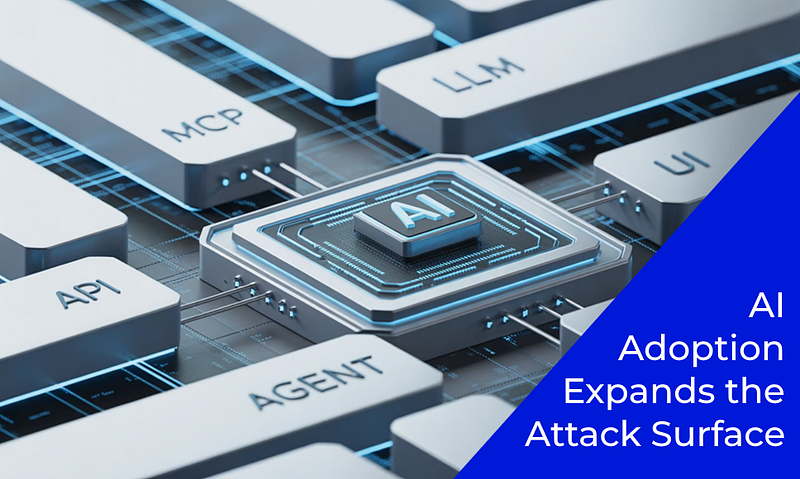
3. AI Adoption Expands the Attack Surface
Every connected AI potentially increases the risk of compromise.
The race for organizations to embrace Artificial Intelligence technologies is accelerating. Rapid adoption of innovative yet unvetted technologies is always accompanied by risks. The core value proposition of AI is predicated on access to sensitive data and critical systems, which poses inherent threats to cybersecurity oversight and controls.
Individuals, businesses, and governments are embracing new AI tools and solutions in pursuit of tremendous benefits, but are largely oblivious or dismissive of the accompanying vulnerabilities and how adoption may undermine their established security capabilities.
AI systems represent highly disruptive and valuable technology that requires security to protect their confidentiality, integrity, and availability. Poorly designed or protected AI products and services can be attacked, misused, denied, and altered.
As businesses integrate AI LLMs and agentic agents via Application Programming Interfaces (APIs) and Model Context Protocols (MCPs), they will gain interoperability and efficiency, but provide attackers with advantages by exposing trust boundaries that few security teams fully understand.
These MCP/API architectural designs, often deployed with porous access, weak governance, ineffective monitoring, and inadequate data limiters, become the next exploitable surface for malicious manipulation and data theft. Each connected AI system brings its own interfaces, access rights, data feeds, and output capabilities. Chaining them together builds a powerful autonomous, semi-cooperative network of decision engines that is problematic to understand how it can be misused or where vulnerabilities exist. Malicious actors will exploit these complexities to pivot between systems, bypass existing security controls, and access sensitive data and systems.
Agentic AI systems, particularly those with LLM interfaces, that can access, operate, and command other systems (including other AIs) will be manipulated in ways that do not trigger traditional security controls. Exposed AI interoperability will emerge as a new class of vulnerability. AI systems with privileged access, insufficient guardrails, and no security operational oversight will quietly become the most dangerous insiders organizations have ever deployed.
Relevance: AI adoption cuts both ways. Enterprises obsessed with AI productivity will soon confront the hidden costs of unanticipated cyber risks of data exposure, internal system compromise, regulatory non-compliance, and the additional protection costs. The very architectures that make AI more extensible, autonomous, and valuable will become the avenues for attack, misuse, and harm. Attackers will target LLM interfaces, MCPs, agentic systems, and AI service providers to identify and exploit gaps. Cybersecurity will be challenged by rapid adoption and shadow AI proliferation while trying to close the resulting gaps that subvert established controls.
4. The Shifting 2026 Threat Actor Lineup
Threat Agents with better tools and worse morals rise in the rankings.
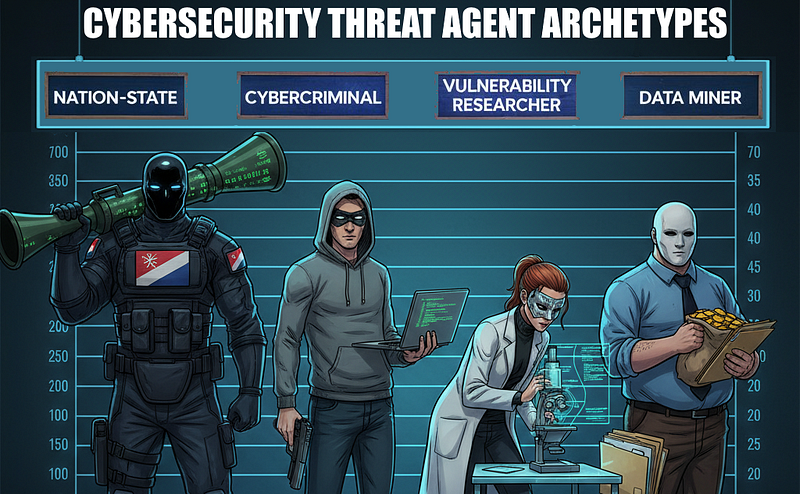
Nation-states and Cybercriminals (petty, organized, and nation-state-aligned) remain the most active, but Data Miners and Vulnerability Researchers, both ethical and unethical variants, rise in the rankings for 2026.
Nation-states continue to be the worst offenders, with their direct and indirect attacks on critical infrastructures, political disinformation campaigns, financial maneuverings to undermine sanctions, and sizable investments into offensive research. Cybercriminal activity spikes with widespread phishing, fraud, theft, and high-visibility digital extortion of companies, which directly impacts consumers.
Meanwhile, Data Miners and Vulnerability Researcher activity will accelerate and outpace many other threat archetypes due to their effective adoption of AI automation. The result is that many more technical, process, and behavioral vulnerabilities are discovered, and vast troves of sensitive information are exposed, catalogued, stored, and sold, creating risks to data owners and subjects.
The privacy community will organize to target the worst data offenders and methodically approach the problem by publishing improved practices and seeking regulatory actions against organizations benefitting financially.
The discovery rate of vulnerabilities will cause more challenging problems for developers, security operations, and incident responders. The ethically reported vulnerabilities will draw in more resources to validate problems, develop fixes, test, and deploy updates at an accelerated cadence. The portion of vulnerabilities sent to open markets by unscrupulous researchers, emerging as Zero-Days in the hands of malicious hackers, will require expedited patching, emergency efforts to interdict active exploitation, and costly crisis response to clean up those environments impacted by surprise attacks.
Relevance: More than a 30% rise in discovered vulnerabilities in 2026, which will disrupt product development activities, push patching teams to the brink, and result in more compromises and update failures. Harvested data increases in size, but more importantly, in significance, with data being organized, better classified, collated, and packaged for various clients and industries. This will make the Data Miners’ wares more valuable and marketable to legitimate and shady customers.
5. Ransomware Reinvents Itself Again
Extortion gets more multifaceted and specific.

With the declining willingness of victims to pay ransoms, digital extortionists will adapt creatively and aggressively.
As organizations improve business continuity planning, backups, cybersecurity detection and containment, and incident response capabilities, they find themselves in better positions to refuse to pay traditional ransoms, resulting in lower chances for criminals to have paydays.
Ransomware cybercriminals will not give up without a fight. They will dig deeper, employ new threat tactics, and find ways to better compel victims to comply with extortion demands.
Legacy threats will remain central, but victims can look forward to creative new exploitations of harm that will add to the diversity:
- Train public or illicit AI models with stolen data
- Target partners and customers with harvested information and access
- Long-term transaction tampering (perhaps the vilest act that corrupts data integrity)
- Weaponized reporting of victims to regulators
- Direct customer engagement notifications from the attackers
- Resale of left-behind access and backdoors
- Sell organized information to all interested parties and brokers
Extortionists will dive deep into the data to identify compelling arguments for payment. AI will help attackers extract the most sensitive data, the most damaging relationships, and the most valuable third-party leverage points. Stolen information will be aggregated into industry-specific packages designed for maximum negotiating impact or resale to data brokers, marketers, competitors, and access brokers.
Attackers will commit to leaving behind multiple stealthy backdoors that can be resold. Harvested data will be analyzed for valuable, embarrassing, improper, and questionable legal activities that can be used as part of specific demands. Access capabilities to vendors, suppliers, and customers will be sought and utilized as another avenue for pressure.
Relevance: Ransomware will adapt and continue to thrive, representing a dynamic threat to organizations and nations. Digital extortion, including ransomware, will no longer be a single event. It will be a planned campaign, optimized for maximum pressure and monetization.
6. Foreign Geopolitics Fuels the Next Wave of Offensive Cyber Research
The AI arms race begins for cyber weapons and cybersecurity.

Global political instability, particularly involving Russia, China, North Korea, and Iran, will covertly fuel a massive second wave of government-funded offensive research investments, focused heavily on AI-driven capabilities and advantages.
In response, Western powers (US, NATO, Japan, Israel, Australia, Ukraine, and others) will quietly pour significant capital into building greatly improved counter-offensive, intelligence, and defensive capabilities. The EU will commit more resources, in the 8%-10% range, for intelligence sharing, cyber defense cooperation, coordinated response practices, and improved civilian defense awareness.
Offensive cyber is a force-multiplier of current capabilities and a competitive advantage on the geopolitical stage. Having digital weapons that can inflict pain, reduce operational capabilities, sow discord or insurrection, and undermine the economies of enemies anywhere on the planet is a powerful bargaining chip and potentially a means to increase visibility and influence.
This willingness to use such technology will be clear. It will be strategic, sustained, and normalized. Offensive AI research will quietly empower a growing set of tools in support of state policy.
Relevance: Cybersecurity, both offensive and defensive, is now inseparable from national security and economic stability. Expertise in cyber may be a modern equalizer on the global political stage. Innovations in hacking eventually affect everybody. Offensive technology eventually trickles down to other threat actors, such as cybercriminals, vulnerability researchers, and access brokers, raising the overall capability of cyber threats to everyone. Enterprises, organizations, and individuals also risk being caught in the crossfire of government-orchestrated attacks. Many critical infrastructure sectors already take into consideration potential foreign digital interference, but with the exponential capabilities of AI integration, the economic and business calculus will change.
This creates an elevated risk environment where boards and business leaders must understand and manage elevated risks to their infrastructure and supply chain from direct and collateral damage from state-level attacks. This will necessitate closer collaboration among peer groups and with government threat intelligence agencies.
7. Nation-States Fully Integrate Into Hybrid Cyberwarfare
Major powers complete the integration of offensive cyberwarfare into their national military, foreign policy, and economic influence strategies.

In 2026, offensive cyber becomes an accepted and formal element of hybrid warfare as it becomes woven into global political power plays. Nation-states will be more aggressive in every facet of offensive and defensive cybersecurity. Cyber operations will be fully embedded across warfare in pursuit of foreign policy objectives and to undermine adversaries.
Impacts of Nation-state offensive operations will be noticeable:
- Critical infrastructure sectors such as energy, healthcare, transportation, shipping logistics, finance, including cryptocurrency, critical manufacturing, government, and defense sectors will remain prime targets, facing both overt and covert attacks, and suffering more consequential intrusions. Exploitation will be sought in both Information Technology (IT) and Operational Technology (OT) environments.
- Nations will use cyber tools for invasive digital intelligence gathering, economic espionage, market manipulation, disinformation, political extortion, and regime-change operations.
- Decentralized digital networks (like blockchain and distributed computing) will also become indirect battlegrounds, targeted for disruption or manipulation.
This shift will have strategic follow-on effects:
- Defense contractors, private military companies (PMCs), mercenaries, and consultancies will increasingly offer “offensive cyber” advisement and operations services to their governments and allies, under the protection of their host nation.
- International law enforcement and defense agencies will cooperate to improve takedowns, interdiction, and active defenses. But attribution for attacks will remain politically convenient rather than technically precise.
- China will strengthen its operational capabilities and pre-positioning within Western networks by establishing dormant stealthy access across multiple infrastructure sectors, preparing for potential action involving the ‘reunification’ of Taiwan. If feasible, simultaneous efforts to undermine Western encryption algorithms using quantum capabilities will be explored — not because it’s guaranteed, but because the payoff is enormous.
Relevance: The willingness to use offensive cyber weapons, coupled with predicted AI enhancements, creates an operational risk for nations, infrastructure, businesses, and people. These acts are played out at the highest level, but the impacts trickle down to everyone. A successful attack on critical infrastructure can halt energy production, food and water distribution, disrupt financial markets, or create dangerous internal political turmoil. Cyber is no longer just defensive; it will be a key asset for geopolitical influence and military operations.
8. Cybersecurity AI Tools to the Rescue
AI-powered cyber defenses finally arrive to help defenders address AI-driven attacks.
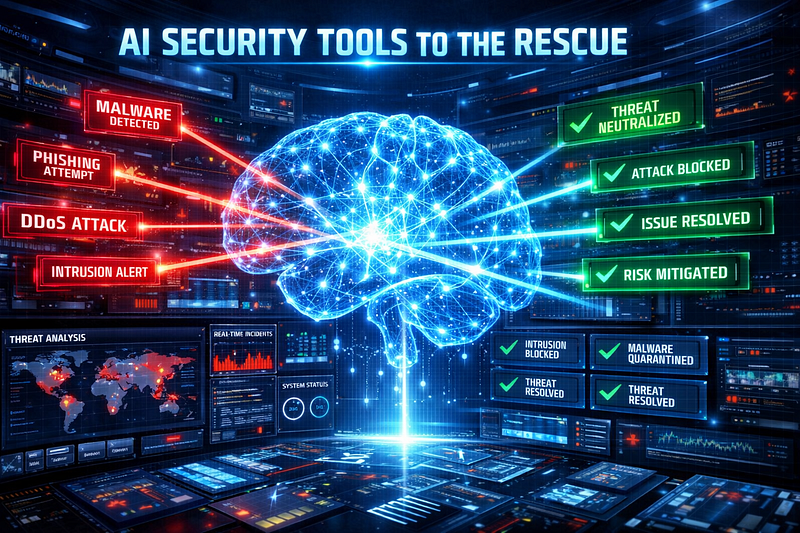
In 2026, the playing field will begin to even out as mature AI-powered cybersecurity tools and features will arrive to provide real value in countering the attackers’ use of AI. Early beneficiaries include security operations, email and web filtering, data classification and monitoring, analytics, security training, Governance/Risk/Compliance (GRC), Third Party Risk Management (TPRM), and alerting. Initial implementation wins will be focused on streamlining data collection, investigation, documentation, and analysis.
DevSecOps will also begin to benefit from better security-oriented code generation, Static and Dynamic Application Security Testing (SAST & DAST) tools. MSPs and MSSPs will rapidly integrate AI security orchestration tools into their services to reduce cost and boost effectiveness.
Security Operations Centers (SOCs) will rapidly embrace intelligent assistants that triage alerts, document incidents, determine preliminary severity levels, and provide a clear synopsis of incidents for human analysts. This will increase the overall throughput of alerts that security operations teams can process, support more consistency, and reduce errors. Eventually, the goal will be for AI to identify broadly defined attacks and orchestrate containment and eviction autonomously in a timely manner for grievous situations. Early versions may appear by late 2026 to contain limited threats, gather necessary forensics, and evict invaders at machine speed, although much work will still need to be done to support widespread adoption.
Alert and telemetry context will be the key differentiator for AI tool efficacy. AIs will learn to identify attacks and understand the intent behind activity, not just pattern-match signatures. They will also take into consideration the environment and business impacts. This will dramatically cut false-positives, false-negatives, and wasted analyst cycles.
Relevance: Defensive AI technology is the counter needed to offset much of the attacker’s advantages with their use of AI. These tools and features will be desperately needed to compensate for the increased rate and complexity of attacks and will fundamentally change the economics of the Security Operations through automation, visibility, and analysis. Without AI, cybersecurity defenders have little hope of keeping pace with the attackers.
9. AI Governance and Inventory Take the Spotlight
Shadow AI and governance guardrails are the first problems of cybersecurity oversight.
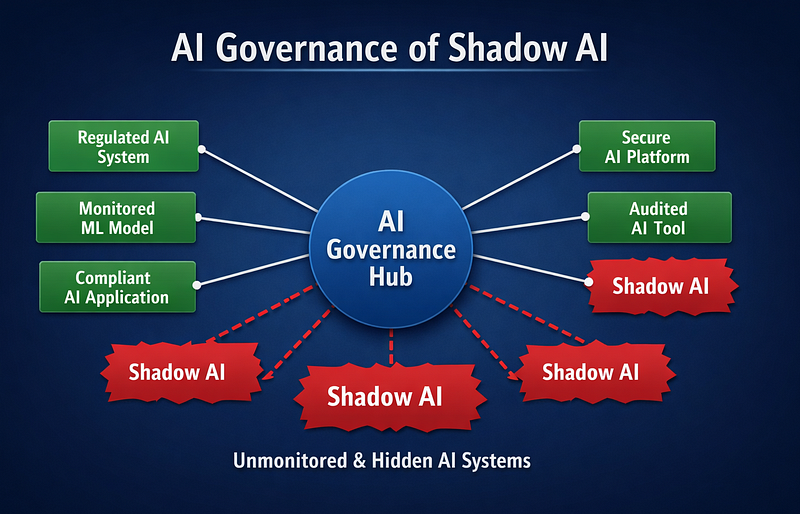
The AI boom is quickly spiraling into an untracked sprawl. The hidden or stealthy use of AI services and products is out of control and cropping up everywhere. Organizations will scramble to identify where data flows, what models are active, and which ones are making autonomous decisions. Guardrails for ethics, privacy, accuracy, and safety won’t just be corporate obligations; they’ll be compliance requirements.
It is very difficult to secure AI solutions and services when you don’t know it exists. Additionally, it is difficult to secure known assets if you aren’t aware of what AI systems are stealthily interacting with them. This is the problem of Shadow AI. Like its previous cousin, Shadow IT, not knowing the existence and use of technology ultimately manifests into significant blind spots that can introduce profound risks.
In 2026, the initial steps to address Shadow AI will be taken. First, cybersecurity, privacy, and governance communities will focus on understanding the AI services, instances, agents, and assets that have been AI-enabled, that are in or have access to the environment they oversee. Second, a set of ‘best-practice’ governance policies and structures will emerge to maintain inventory awareness, understand evolving risks, and manage acceptable configuration and use.
Security, privacy, ethics, and regulatory groups will strongly advocate for adherence to these foundational governance guardrails. By the end of 2026, there will be a number of clearly blatant examples where organizations failed to establish the basic guardrails and suffered greatly.
Relevance: The proliferation of unmanaged AI LLMs and agents makes inventory and oversight a first-order problem to address. Enumerating every AI asset and understanding its connective network of access becomes a non-negotiable for risk management. Establishing clear guardrails for accuracy, security, privacy, and safety for these models will be a key focal point to prevent catastrophe.
10. The CISO Evolves from Tech Risk Expert to Cyber-Risk Business Executive
Fewer technologists. More business risk leadership.

Demands on CISOs continue to elevate, driving a transformation from technology risk expert to a cyber risk business executive. As expectations mature from the Board, CEO, internal profit centers, and business partners, CISOs must lead a greater vision that takes cybersecurity beyond just protection, to an organization that directly enables and contributes to business goals. The upward communication and influence on the C-suite, CEO, and Board will require business savvy and attunement to shareholder needs. Articulating value beyond compliance and protection, from things that may not happen, will be essential.
The CISO transformation, which began in 2025, will enter into a new phase and be apparent in two distinct ways:
- More discussions, debates, presentations, and guidance about how CISOs must be business oriented an be able to communicate cyber risks in business value terms. Many will be heated as the longevity of many CISOs will hang in the balance.
- The industry will begin quietly purging CISOs who are technically competent but not business savvy, with replacements that are more attuned to aligning cybersecurity in supporting and directly contributing to business goals.
- How CISOs approach AI adoption will be a crucial signal. CISOs who embrace AI for business gain and work to find ways to secure it will be welcomed. CISOs who choose to impede or deny AI for business gains will seal their long-term fate.
There will be backlash from technical CISO operators who vehemently state that cybersecurity is only about compliance and protection. By the end of the year, the debates will rage loudly, while replacements actions are led by CEOs and Boards who realize they need a CISO who sees the bigger picture, communicates in business value terms, and intentionally transforms cybersecurity investments to not only comply and protect, but also work with the profit centers to drive competitive advantages, and leads initiatives to directly contribute to the bottom line.
Relevance: The evolution of the CISO role is taking shape and will accelerate the filtering of non-business-oriented CISOs who fail to transform, leading to increased replacements. This will disrupt the cybersecurity leadership circles as it gains in intensity over the next year. Success will be measured not by technical aptitude, but by the CISO’s ability to align security spending with corporate objectives, drive more innovative value, and communicate in business terms to facilitate collaboration at the highest levels.

Anti-Predictions
The industry is full of fear and uncertainty, which leads to a number of unrealistic predictions that are not very likely, yet are often amplified for the various benefits of those making the forecasts. Here are a few that need to be dispelled before they gain credibility or any further traction.
- Regulations become overly burdensome, stifling innovation and business. The time has passed when everyone throws a fit when a new digital regulation is proposed, claiming it will crater an industry or harm downstream consumers. Experts know better. The decision to drum up social fear on reasonable cybersecurity regulations is more of a calculated tactic to preserve business profits rather than a realistic concern on behalf of consumer well-being. This results in less fear-mongering and more productive debate when it comes to cyber regulations.
- Privacy is dead and downsizing. The size of privacy teams and budgets may have peaked in size due to efficiencies. But not in scope, authority, or objectives. Privacy is as strong as ever, and the governance is fully entrenched in many geographies, even though many consumers continue to lack an understanding or appreciation for this basic human right.
- Post Quantum Cryptography (PQC) is being ignored, which will lead to disaster! PQC is not being ignored and slowly picks up pace with compute infrastructure vendors, such as cloud providers, and the financial sector, which will enable NIST-approved quantum-resistant encryption algorithms. Mainstream preparedness for the exploitation of vulnerable asymmetric encryption algorithms by powerful quantum computers is still a few years away, and organizations have time to plan a viable runway to preparedness.
- Deepfakes will be a significant problem for cybersecurity. Not really, but the definition of ‘deepfakes’ will change to include a composite definition of technologies used to commit forgery, identity theft, and the creation of synthetic identities. Deepfakes will not just be video or audio. They will include aspects such as fabricated social media and professional profiles, fake work histories, counterfeit academic awards, AI-generated websites, and complex social and media interactions, including real-time chat. The term “deepfake” will be an acceptable replacement for ‘fake’ or ‘counterfeit’ in digital interactions.
- Deepfake detection technology will become a useful tool to detect deepfakes. Unfortunately, tools will never keep pace in detecting deepfakes, as it is the same technology that creates them, and every innovation requires updated detection capabilities, forcing validation tools to always lag and not maintain high accuracy over time.
- The end of the AI bubble. Lots of discussion about how the vast majority of AI implementations fail to generate value, which may be currently true, but draws a false conclusion that will cause AI adoption to flounder. There are many examples of great failures of the first implementations of disruptive technology. They said such things about the Internet, World Wide Web, electricity, cryptocurrency, smartphones/tablets, and automobiles. Early use cases of AI do not all need to be successful for it to thrive. Only a small percentage is necessary to support continued investment, rapid evolution cycles, and subsequent adoption. AI is not a bubble, and it is here to stay.
Managing Risk in 2026
2026 is shaping up to be a thrilling year in cybersecurity. Artificial intelligence will roll through like a bulldozer, transforming the digital landscape, accelerating risks, and fueling improvements to effectiveness for both defenders and attackers. Governments, businesses, and individuals will sprint to keep up, with many of the security expectations landing on CISOs.
Attackers will seize the opportunities and not wait for governance to catch up, for tools to mature, or for organizations to finish debating whether AI is “ready.” They will exploit trust, find the vulnerabilities, automate exploitation, chain attacks together, and monetize harm with industrial efficiency. Meanwhile, defenders will be forced to abandon manual processes, static policies, and security theater in favor of machine-speed decisions, risk-based prioritization, secure-by-default architectures, and managing uncomfortable tradeoffs. CISOs will play a key role in communicating the business relevance of these changes and the rise in risks as AI adoptions become mainstream. Successful cybersecurity organizations will be those that understand that security isn’t about stopping innovation; it’s about surviving it.
2026 is the beginning of the end. The cybersecurity organizations that emerge resilient in 2026 will not be the ones that try to block AI or slow its adoption. They will be the ones who embrace AI and support deployments with measured security and cooperative discipline. They will be prepared by proactively investing in AI governance before a catastrophe and leveraging AI in their protection suites to counter the growing risks of adversaries.
Transformative CISOs will lead cybersecurity into a business risk function with real authority and add value to the enterprise’s bottom line. This is not the end of cybersecurity, but it is the end of pretending cybersecurity can remain purely a technical control that only offers protection and compliance. Those who thrive will work together with the business to facilitate disruptive technology adoption and communicate business value by enabling and contributing directly to the corporation’s goals.

如有侵权请联系:admin#unsafe.sh