
好的,我现在需要帮用户总结一篇文章的内容,控制在100字以内。首先,我得仔细阅读文章,理解其主要观点和关键信息。 这篇文章主要讨论了圣诞假期期间网络犯罪的增加。原因包括零售交易量激增、供应链复杂化、企业和消费者警惕性降低,以及欺诈检测系统在高峰期的超负荷运行。文章还提到了网络犯罪分子如何利用这些机会,比如设计针对性强的活动,并利用地下社区进行推广。 接下来是消费者面临的危险,包括难以区分合法和欺诈交易。企业可能因为优先考虑客户体验而放松安全措施,导致更容易受到攻击。此外,文章详细讨论了礼品卡和预付卡欺诈的情况,包括地下市场的运作、诈骗手段如双倍退款骗局,以及这些卡片缺乏消费者保护的问题。 最后,文章建议企业和消费者采取一些措施来防范这些风险,比如加强监控、培训员工和提高警惕。 现在我要把这些要点浓缩到100字以内。需要涵盖假期期间网络犯罪增加的原因、涉及的欺诈类型(如礼品卡和预付卡)、犯罪分子如何运作以及建议的防范措施。 可能会这样组织:首先说明假期期间网络犯罪增加的情况;然后提到礼品卡和预付卡欺诈;接着指出犯罪分子利用的机会;最后简要提到防范措施。 确保语言简洁明了,不使用复杂的术语,并且直接描述内容。 </think> 圣诞假期期间网络犯罪激增,礼品卡和预付卡成为主要目标。犯罪分子利用节日交易高峰和安全漏洞实施欺诈行为,如双倍退款骗局。地下市场活跃,提供教程和工具支持大规模诈骗。企业需加强监控和安全措施,消费者应警惕异常交易以防范风险。 2025-12-19 15:0:3 Author: levelblue.com(查看原文) 阅读量:6 收藏
6 Minute Read
Children with a vision of a huge payout from Santa Claus are not the only ones who look forward to the end of each year. The unfortunate reality is that the final months of each year create a perfect environment for cybercriminals as retail transaction volumes surge dramatically, supply chains become more complex, and businesses and consumers grow less vigilant amid the seasonal chaos. These situations are compounded as fraud detection infrastructure struggles under peak loads, creating gaps that threat actors exploit. Essentially, cyber threats become lost in the shuffle. During normal business periods, a sudden spike in transactions from a new geographic location or an unusual purchase pattern might immediately flag a fraud review. However, when retailers are processing thousands of orders per hour during the final days before Christmas, these same patterns blend into the noise of legitimate shopping behavior. Threat actors understand this dynamic intimately and design their seasonal campaigns around it, often pairing operational activity with aggressive holiday-themed marketing inside underground communities. Retailers are not the only targets; cybercriminals know consumers face the same deluge of information and are unlikely to spot a couple of fraudulent purchases as they rush about buying last-minute gifts. A consumer who normally makes three to five purchases monthly might execute 20 or 30 transactions during December, ordering gifts from numerous retailers, many being used for the first time. This creates confusion when reviewing statements, making it difficult to distinguish between legitimate holiday purchases and fraudulent charges. Businesses know they must prioritize their customers’ experience and order fulfillment during peak season, and by shifting their focus to this area they may end up relaxing security protocols or rush through verification processes, inadvertently facilitating fraud. Customer service representatives face pressure to resolve issues quickly and keep orders moving, sometimes overriding fraud alerts to avoid disappointing customers during the gift-giving season. Retailers competing for market share may reduce friction in checkout processes, implementing express shipping options or simplified payment methods that bypass traditional verification steps. Unlike traditional payment cards, gift cards require minimal personally identifiable information for purchase and use. A criminal can acquire a gift card using a compromised payment method and then liquidate that gift card's value without providing extensive verification documents or linking it to a permanent identity. The ease of liquidation through underground markets, combined with difficult-to-trace transactions, has led to the development of a dedicated infrastructure supporting industrial-scale gift card fraud operations. One prominent example is the CytronGift platform operated by the long-standing threat actor “Cytron.” Cytron has maintained a presence across multiple cybercrime forums since at least 2015, building a reputation and trust within underground communities over nearly a decade of continuous operation. Essentially, they turned their criminal operation into a professional experience. The CytronGift platform functions as a full-service marketplace where threat actors can buy and sell unused codes, gift cards, and vouchers. LevelBlue SpiderLabs has observed recent underground forum activity that reveals the sustained demand for specific gift card types, with organized buyers actively soliciting specific brands and denominations. In November 2025, the threat actor “Blenders” posted advertisements across multiple platforms seeking to purchase digital gift cards, primarily Amazon products. The actor's Telegram account featured detailed purchasing requirements, specifying acceptable denominations, preferred delivery methods, and payment terms for sellers. The underground community continuously refines attack methodologies and shares detailed tutorials that spread and democratize sophisticated fraud techniques. The Crdpro forum, operational since 2019, exemplifies these knowledge-sharing communities where novice and experienced criminals congregate to discuss methods, targets, and tools. One particularly prolific contributor to this “educational ecosystem” is the threat actor “d0ctrine,” which has operated on the Crdpro forum since December 2023. The actor has positioned itself as a carding expert, publishing numerous comprehensive guides that detail every aspect of payment card fraud operations. These tutorials have garnered positive feedback from forum participants, with actors expressing appreciation, requesting clarification on specific techniques, and soliciting additional content on advanced topics. Unlike traditional credit and debit cards issued by banks with robust fraud‑detection teams and established dispute‑resolution processes, gift cards and prepaid cards share a core structural weakness: they are designed for quick, low‑friction use with minimal verification and limited consumer protections. This makes prepaid cards a natural extension of the same fraud ecosystem that thrives on gift cards. After mastering gift card acquisition and liquidation, many actors also shift to prepaid cards, which offer similar anonymity but with higher balance ceilings, broader merchant acceptance, and almost no chargeback mechanisms. One of the most popular schemes within this ecosystem is the “double dip” refund scam, which exploits weaknesses in e-commerce refund systems. In this scheme, a fraudster purchases a high-value item, using stolen or fraudulently acquired gift cards. After receiving the item, the scammer files multiple refund claims, often citing issues like “item not received”, “damaged product”, or “incorrect delivery.” By submitting fabricated evidence, such as altered photos or fake delivery disputes, they manipulate the retailer’s system into processing multiple refunds for the same purchase. The result is double profit. The scammer retains the physical product while also securing full or partial refunds to the original payment method. Various platforms and groups openly advertise these schemes, offering services such as “2KEY APPLE DOUBLE TRIPLE DIP” — a method to maximize refunds for high-value products, alongside "low-fee" tools and access to 300+ stores vulnerable to refund exploitation. These advertisements often include direct links to private groups where scammers can purchase pre-packaged refund schemes or automated tools, further lowering the barrier to entry for aspiring fraudsters. In some cases, once criminals identify prepaid cards with exploitable balances, they face monetization challenges similar to those with traditional payment cards, but often with lower per-transaction values that affect cost-benefit calculations. For prepaid cards with balances under $50, elaborate schemes involving physical goods and drop shipping become unprofitable due to operational costs and logistics complexity. Underground discussions often describe specialized liquidation channels tailored for prepaid cards, including cryptocurrency purchase services that accept prepaid cards and convert balances directly to Bitcoin or other digital currencies. These services typically charge premium rates, converting prepaid balances at 40% to 60% of face value depending on card type and current market conditions. While this represents a substantial discount, the ability to instantly convert cards to cryptocurrency without shipping delays or physical logistics makes these channels attractive for volume operations. The most significant advantage from a criminal perspective is the near impossibility of chargebacks on prepaid card transactions. Most prepaid cards are designed for single-use or limited-duration use, with issuing companies having little incentive to invest in expensive chargeback infrastructure for what they consider disposable payment instruments. Unlike credit cards, which have extensive legal protections, prepaid cards often lack these safeguards, leaving users with minimal recourse when fraud occurs. Once funds are transferred from a prepaid card in a fraudulent transaction, recovery becomes extremely difficult or impossible. Such schemes obscure the origin of fraudulent payments, leverage legitimate platforms by creating plausible business activity, and enable prolonged, repeatable revenue streams. Each party in the chain sees a legitimate interaction, making detection significantly harder. At the same time, issuing companies may have minimal fraud investigation capabilities, and the distributed nature of prepaid card issuance means no central authority takes responsibility for comprehensive fraud prevention. The limited personal information required for prepaid card use provides another operational advantage. While traditional payment cards typically require name, address, phone number, and often additional verification, many prepaid cards can be purchased and activated with minimal information. This reduces the digital footprint associated with fraud operations and complicates investigations because fewer data points link transactions to specific individuals or criminal organizations. The 2025 holiday season poses significant challenges, such as industrial-scale fraud operations, sophisticated criminal knowledge-sharing, and the convergence of evolving tactics. Gift and prepaid card fraud has matured into organized marketplaces processing hundreds of millions annually, and holiday peaks amplify these risks. Organizations can reduce exposure by implementing enhanced transaction monitoring tailored to holiday patterns, using velocity checks and anomaly detection, and requiring multi-factor authentication for high-value or unusual transactions. Retailers should vet third-party vendors and gift card distribution channels, set purchase limits, and monitor for suspicious behavior, working closely with law enforcement when needed. Customer service and fraud teams should receive updated training to recognize common fraud indicators and escalate suspicious activity effectively. Consumers should monitor statements closely, enable real-time alerts, and verify emails or links carefully, accessing retailer websites directly when possible. Proactive preparation throughout the year, rather than reactive measures during peak season, remains essential as fraud tactics continue to evolve.
Figure 1. Promotional materials from the “ElonMusk Gift” underground gift-card buying operation. The images show the actor’s Telegram profile, used to advertise instant payouts, collect contacts, and a holiday-themed graphic promoting elevated buyout rates.Consumer Dangers
Taking Your Eye Off the Security Ball
Gift and Prepaid Card Fraud
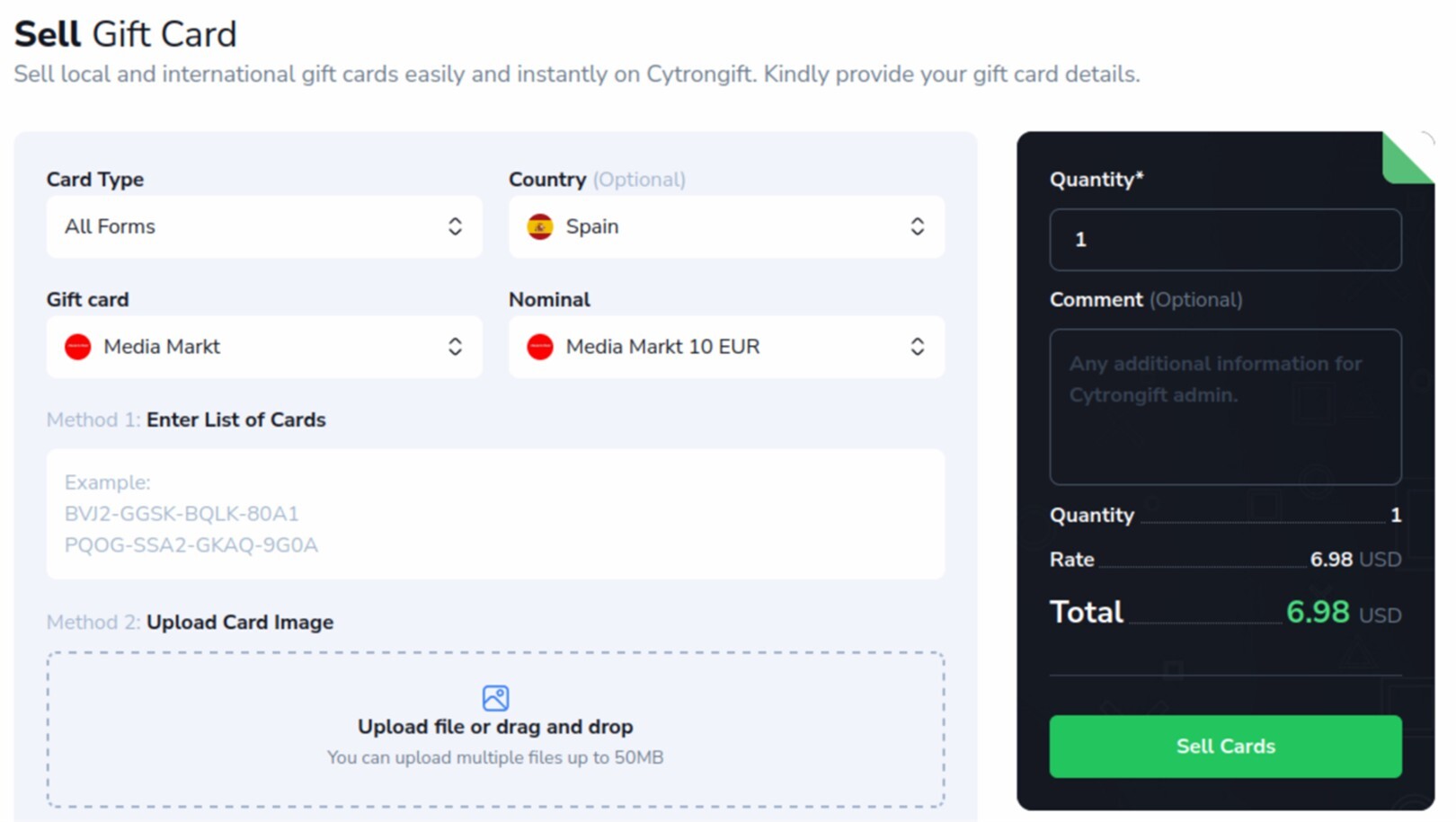
Figure 2. Screenshot of the CytronGift platform’s “Sell Gift Card” page.
Figure 3. Screenshot of the actor Blenders’ Telegram account showing an offer to purchase digital gift cards.
Figure 4. Excerpt from d0ctrine post – the actor encourages peers to exploit low-value or abandoned prepaid cards, describing them as a “diamond mine” when combined with automated bots and basic technical know-how.A Gift (Card) for Criminals

Figure 5. An example that shows a scammer receiving five separate refunds of £1,149.00 each for a single iPhone, totaling £5,745.00 — nearly the full value of the item.
Figure 6. The image depicts the homepage of Card2Crypto, an online platform that facilitates the exchange of prepaid cards, virtual credit cards, and traditional credit cards for cryptocurrencies.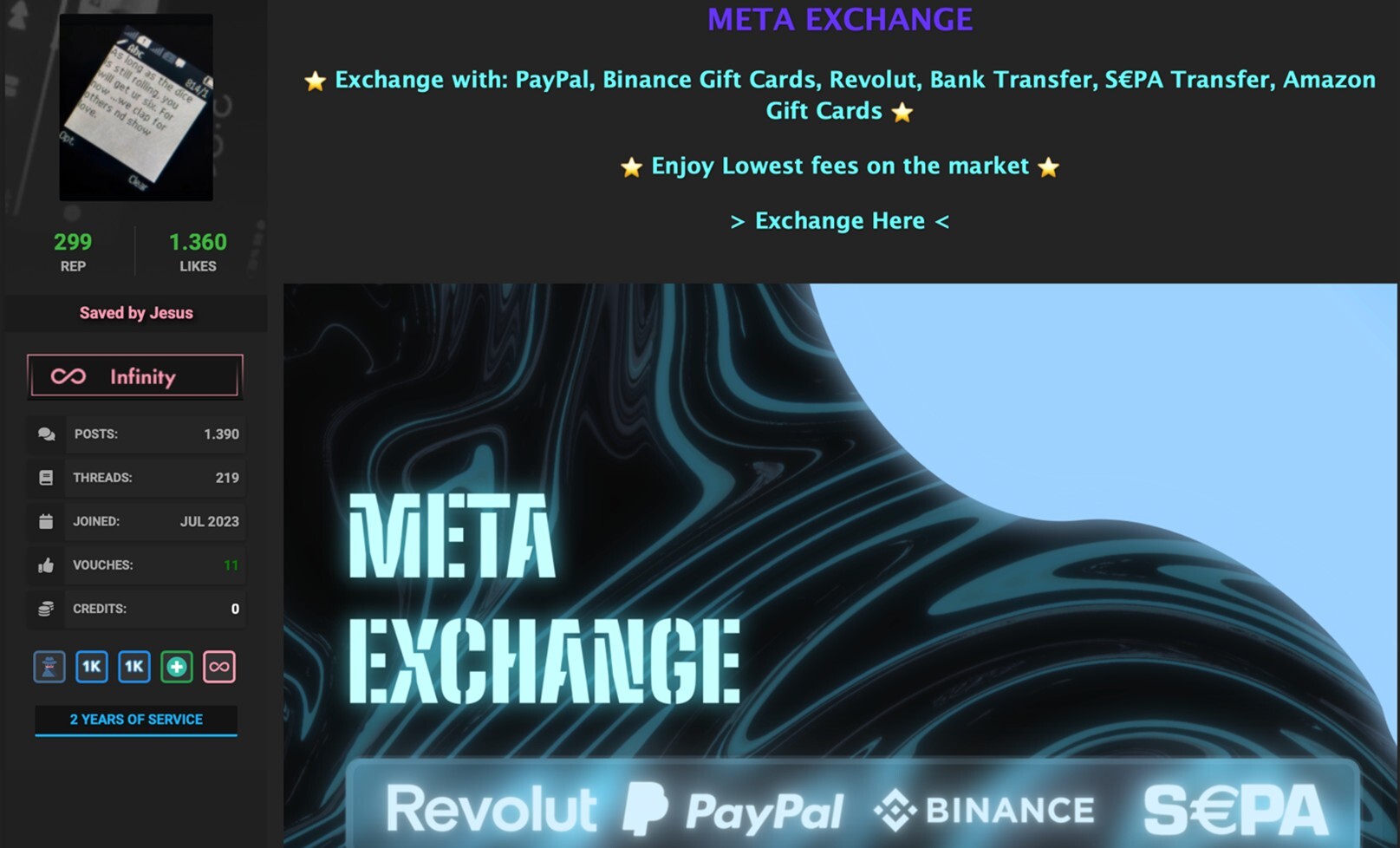
Figure 7. Underground forum advertisement for a service branding itself as “Meta Exchange.” The post promotes illicit currency-exchange capabilities, offering to convert balances across multiple platforms commonly abused in payment-card fraud.Conclusion
如有侵权请联系:admin#unsafe.sh