好的,我现在需要帮用户总结这篇文章的内容,控制在100字以内。首先,我得仔细阅读文章,理解主要事件和解决方法。 文章讲的是作者的尼康相机电池没电了,充电器无法识别,导致他不得不花249美元买新电池。后来他发现备用电池也坏了。于是他拆开充电器,用导线连接电源,给电池强行充电,成功复活了两个电池。 接下来,我要提取关键点:电池没电、充电器不识别、购买新电池昂贵、拆解充电器、用外部电源充电、成功复活电池、节省费用。 然后,我需要用简洁的语言把这些点连贯起来,控制在100字以内。避免使用“文章内容总结”这样的开头,直接描述事件。 最后检查一下是否所有关键信息都包含在内,并且语言流畅自然。 </think> 作者的尼康相机电池没电后无法充电,购买新电池昂贵。他拆开充电器并连接外部电源为旧电池强行充电,成功复活两个“死”电池。 2025-12-8 14:35:15 Author: www.zdziarski.com(查看原文) 阅读量:19 收藏
On December 8, 2025 by Jonathan Zdziarski
While busy with class this past term, I accidentally let the battery in my Nikon Z9 run down. Usually, batteries are only mostly dead, and will charge back up. This one was beyond mostly dead. Nikon’s charger failed to recognize it at all, and it will blink furiously to let you know that you should immediately go to their website and purchase a new battery for $249. I had already done this a few months prior, and pulled out a spare (still in the box) only to find it, too, was entirely DOA – refusing to charge.
Most, if not all, Li-Ion chargers look for a small charge coming from the battery before it will recognize them. This helps prevent fires and electrocution from people doing dumb things, like putting the wrong battery on the charger, or sticking their tongue on the contacts Christmas Story style. The Nikon MH-33, however, seems to be designed for one purpose: to sell more batteries. It seems to deliberately be built with poor tolerances for the range of voltages that it will recognize on, with a minimum somewhere around 7.5v. If your battery is anything resembling “pretty dead”, you’re stuck buying new overpriced batteries. Or are you? If you can get the charger to recognize the battery, it can often be revived.

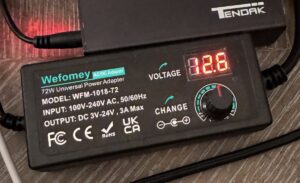
Jump-starting a battery is nothing new, but the EN-EL18d has very tiny recessed contacts, making it difficult to connect wires to it. I cracked open the back of an MH-33 and found the two pairs of contacts corresponding to positive and negative terminals on the battery. There are two for each, but a continuity tester shows that they’re connected together inside the unit. I soldered a couple of wires to the contacts, and connected the other end to a variable-voltage power supply set at 12.6v (the output rating of the charger).

I connected the battery and turned it on. This force fed the battery a charge, bypassing the internal cutoff. After an hour, the battery’s voltages started testing above 7.5v at which point I was able to pop it in the camera (with USB Power Delivery turned on) and it began to charge again! This approach worked for both of my “dead” batteries. They seem to be working just fine since this issue – because the problem wasn’t the battery components breaking down, but merely that the charge was too low for it to be recognized by the charger. Simple life hack saves hundreds of dollars.
如有侵权请联系:admin#unsafe.sh