
Editor’s note: This work is a collaboration between Mauro Eldritch from BCA LTD, a company dedicated to threat intelligence and hunting, Heiner García from NorthScan, a threat intelligence initiative uncovering North Korean IT worker infiltration, and ANY.RUN, the leading company in malware analysis and threat intelligence.
The article was written by Mauro and Heiner.
In this article, we’ll uncover an entire North Korean infiltration operation aimed at deploying remote IT workers across different companies in the American financial and crypto/Web3 sectors, with the objective of conducting corporate espionage and generating funding for the sanctioned regime. We attributed this effort to the state-sponsored APT (Advanced Persistent Threat) Lazarus, specifically the Famous Chollima division.
Key Takeaways
- North Korean operators are infiltrating companies by posing as remote IT workers and using stolen or rented identities.
- Famous Chollima relies on social engineering, not advanced malware, convincing stories, pressure, and identity fraud drive the operation.
- Recruitment is wide-scale, using GitHub spam, Telegram outreach, and fake job-seeking setups.
- Victims are pushed to hand over full identity data, including SSNs, bank accounts, and device access.
- Extended ANY.RUN sandbox environments enabled real-time monitoring, capturing every click, file action, and network request.
- Operators used a predictable toolkit, including AnyDesk, Google Remote Desktop, AI-based interview helpers, and OTP extensions.
- Shared infrastructure and repeated mistakes revealed their poor operational security and overlapping roles.
- Controlled crashes and resets kept them contained, preventing any real malicious activity while intelligence was gathered.
- The investigation provides a rare inside view of how these operatives work, communicate, and attempt to maintain access.
How the Investigation Was Set Up
We divided this effort into two stages: approaching one of their recruiters, building a trusted relationship, and receiving an offer to help them set up laptops “to work” (conducted by Heiner García from NorthScan), and then setting up a simulated laptop farm using sandboxed environments provided by ANY.RUN, to record their activity in real-time and analyze their toolchain and TTPs (conducted by Mauro Eldritch from BCA LTD).
Controlled crashes and resets kept them contained. This prevented any malicious activity.
All interviews with DPRK agents and their activities on the laptop farm were recorded from start to finish, in an unprecedented effort that publicly documents their operations from the inside for the first time.

Introduction: The Spies
Introducing Famous Chollima | Mauro Eldritch (BCA LTD)
There’s a long story of cyber heists conducted by the Lazarus Group. They are among the most creative threat actors: from hacking cryptocurrency exchanges and crypto bridges to conducting fake job interviews, they’ve done it all.
Their social engineering tactics are often daring. In one scheme, they set up fake job interviews targeting crypto developers with malicious coding challenges. In another, they pose as fake VC investors targeting startups. During these calls, the “investors” pretend they cannot hear the victims no matter what, suggesting to re-schedule the call later. Eventually, one participant shares a “Zoom fix”, and whilst panicking about losing their funding opportunity, the victims run it and infect themselves.
Over the last few years, I’ve analyzed different strains of their malware (and have even discovered and named some of them myself).
None were particularly clever or sophisticated at all, but that taught me something important which is core to this research: when you fall for Lazarus, most of the time you don’t fall for zero days or complex exploit chains; you fall for a good story. They may be mediocre programmers, but they are great actors, indeed. And this is what Famous Chollima is all about: (almost) no malware, pure acting.
This division focuses on obtaining jobs in Western companies, especially in the finance, crypto and healthcare sectors, but has recently expanded its operations to include the civil engineering and architecture sectors. Once inside the organizations, they may conduct corporate espionage, whilst also obtaining clean funds that are ultimately channeled back to the Democratic People’s Republic of Korea, a sanctioned regime. It is believed that these funds ultimately go towards the development of their ballistic missiles programme.
To obtain the jobs, two methods of operation become clear: the first where the threat actors steal identities and CVs from other engineers and attend meetings themselves, in a daredevil stunt that was highly observed during this investigation; and the second one where they lure engineers (especially junior ones) into “working for them”.
They declare having a company of 10 or so developers and only need the victim engineer to attend the interviews on their behalf, while receiving technical help to pass them. If hired, the victim receives a 35% cut of the monthly salary, while the operatives handle the actual work through “ghost developers.”
The engineer has to accept the offer, receive the company equipment (laptop) and allow one of the “ghost developers” to remotely log in to “work”. Amongst his few responsibilities are attending the daily stand-ups and taking occasional calls where he should show his face.
While the offer seems tempting for many, the engineer is actually renting out their own identity and will ultimately be the sole person responsible for any material, intellectual, reputational or monetary damage done to the victim companies.
Federal agencies have already conducted arrests for these operations and are actively looking to disband both laptop farms and IT worker clusters.
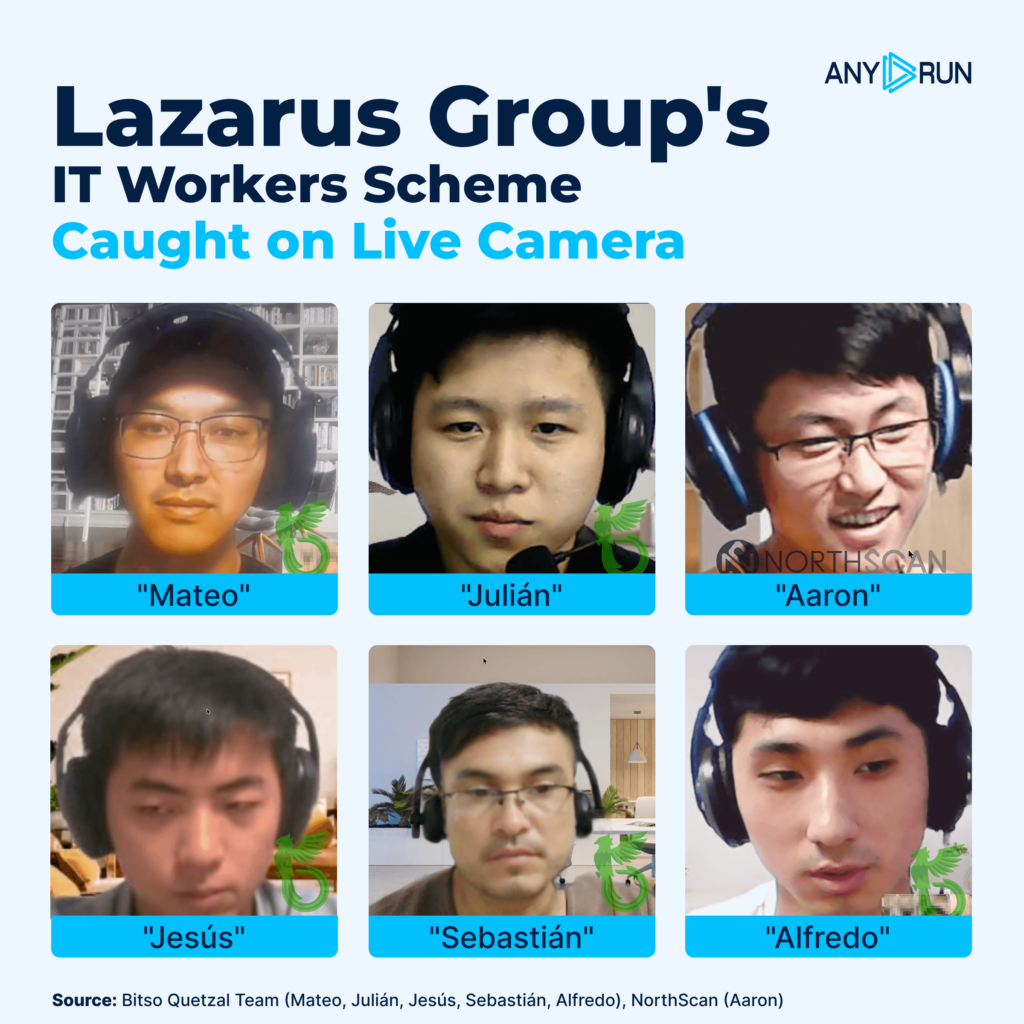
During my time leading Bitso’s Quetzal Team (LATAM’s first Web3 Threats Research Team) I managed to document our encounters with different Lazarus divisions, be it in the form of them trying to trick us into running malware or this newer division attempting to get a job with us. For this last case, I documented an extended saga which I titled “Interview with the Chollima” where we recorded them when interacting and gathering intelligence.
For now, this should be enough of an introduction to our hosts today. They are not monsters; they are normal people amongst us, just a few clicks and a job posting away from entering our lives or becoming a coworker.
So, for the next chapter, we need that to happen. One of us needs to be recruited.
Heiner took that role; the bravest among us!
Chapter I: The Rookie
Getting recruited by Famous Chollima | Heiner García (NorthScan)
The first approach with their recruiter was via GitHub. A cluster of accounts was spamming repositories with a strange message:
I have reviewed your Github and LinkedIn profile.
Really appreacited at your good skills.
I’d like to offer your an opportunity that I think could be interesting.
I run a US-based job hunting business, and I noticed you had experience working with US companies. Here’s the idea:
I tipically have about 4 interviews per day, which is getting difficult to manage, I’m looking for someone to attend these interviews on my behalf, using my name and resume. If you’re interested, this could be a great way for you to increase your income. Here’s how itwould work:
You would handle the technical interviews (topics could range from .NET, Java, C#, Python, JavaScript, Ruby, Golang, Blockchain, etc).
Don’t worry about the questions; I can assist you on how to respond to interviewers effectively. If the interview goes well and we receive an offer, I’ll manage the background check process and all other formalities.
After securing the job, you could either work on the project yourself or simply handle the daily standup meetings, as I have a team of 5 experienced developers who can cover the technical work.
As for the pay, we can split the salary, and you can expect to make around $3000 per month. Let me know if this opportunity interests you.
Or if you know someone in your network who might be interested, please refer them to me, and I’ll compensate you for the referral. And then let me explain more details
Best regards, Neyma Diaz
[Link to Calendly]
When you are free, schedule the meeting here, I look forward to hearing from you soon. Thank you.
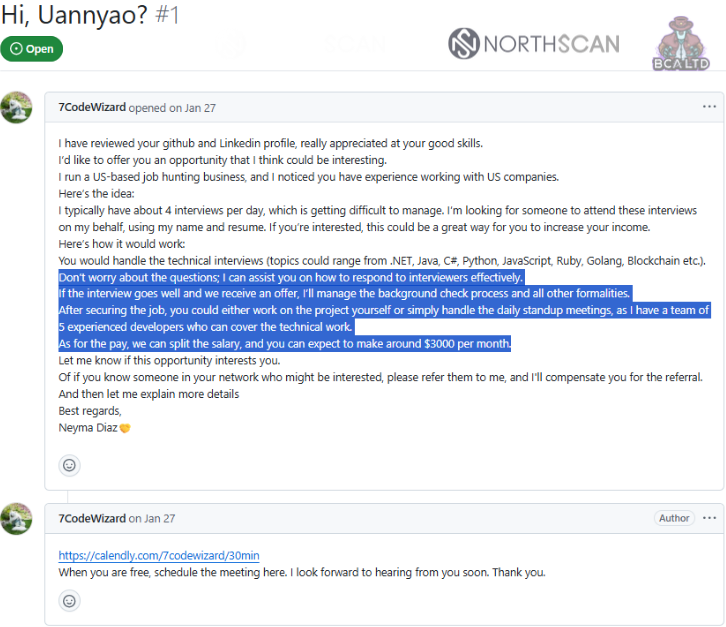
This generic message was publicly sent to dozens of developers as pull requests on their own repositories, which could be easily listed by browsing the spammer’s account or by searching GitHub globally for a couple of the strings contained in it.
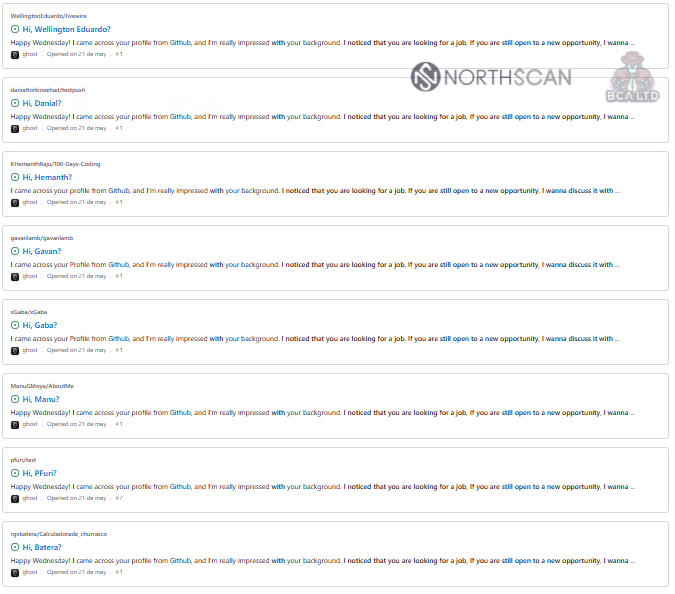
Since the spam seemed massive rather than targeted (unlike spear-phishing efforts), I inferred that traceability of the contacted profiles would be poor or non-existent. So, the next step was to impersonate one of the previously contacted individuals. The lucky draw was a developer named Andy Jones.
To replicate him, a new profile account was created, closely resembling the one used by the legitimate GitHub profile. I reviewed Andy’s public repositories and associated information to ensure consistency during interactions, reinforcing the impression that our account was a U.S.-based developer, making the persona more attractive as a potential recruitment candidate.
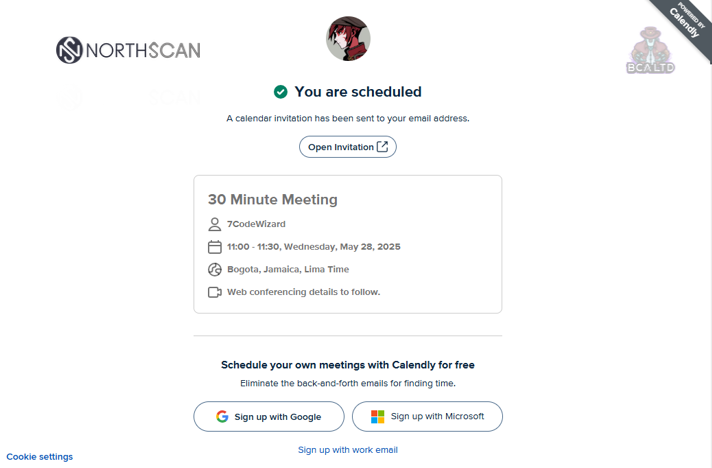
In the initial meeting, the strategy was to keep the webcam turned off to introduce a mild sense of distrust, simulating natural hesitation. This was followed by a question regarding ethnicity, explicitly asking “are you a black man?“.
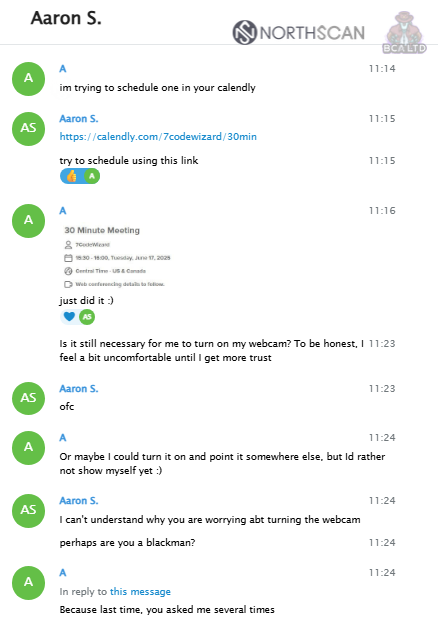
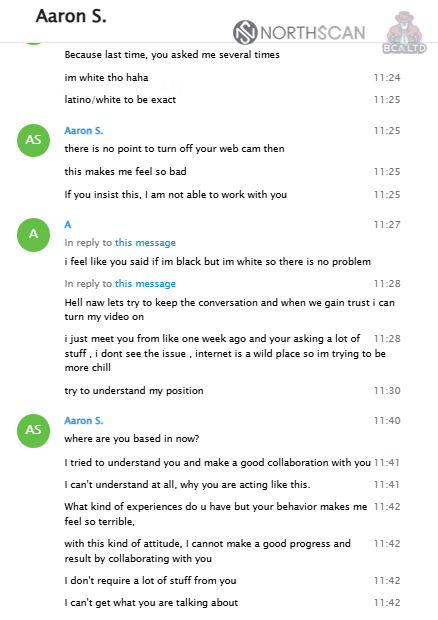
On a second call, which lasted approximately 20 minutes, the primary objective was to adopt a naive posture, appearing unaware of the broader context or implications of the interaction.

This approach encouraged the threat actor to share detailed instructions and elaborate on their intentions regarding the use of the (impersonated) identity. By asking seemingly innocent but targeted questions, I aimed to extract as much information on the operation as possible while maintaining the illusion of trust and compliance.
We briefly discuss the ICE situation, my visa status, and then he asks for access to my laptop 24/7 so that “he can work remotely from it.”
He also explains that he will need my ID, full name, visa status, and address to apply to interviews on my behalf.
The interviewer then explains that I will handle the interviews myself with his full support, adding that he will help me set up LinkedIn, prepare my CV, and schedule the calls. He offers a 20% cut if I act as the frontman, or 10% if he only uses my information and laptop while he conducts the interviews himself.
He then walks through the payment methods, mentioning bank details and Payoneer or PayPal accounts, and asks for my Social Security Number for background checks, stressing that having a clean criminal record is “very critical.” Next, he tells me not to worry about setting up the laptop, as he will download everything he needs himself.
Next, he mentions that I will need to verify all accounts with my documents on various platforms to meet KYC requirements, and he asks me to download AnyDesk, a popular remote desktop tool.
I tell him I also have another laptop he can use, and we go back and forth as he asks me to “remove my background” so he can see the machine more clearly. I refuse, saying my room is messy.
Then, we discuss how to set up my environment to start working straight away. He says he has no preference regarding the operating system.
I apologize for keeping him up late and he replies that “he works from different time zones, so it’s ok“.
We agree to install AnyDesk so he can walk me through everything step by step.
We continue chatting on Telegram. The next day he plans to look for jobs with my LinkedIn profile.
He then shares the sectors he’s interested in targeting: IT, fintech, e-commerce, and healthcare.
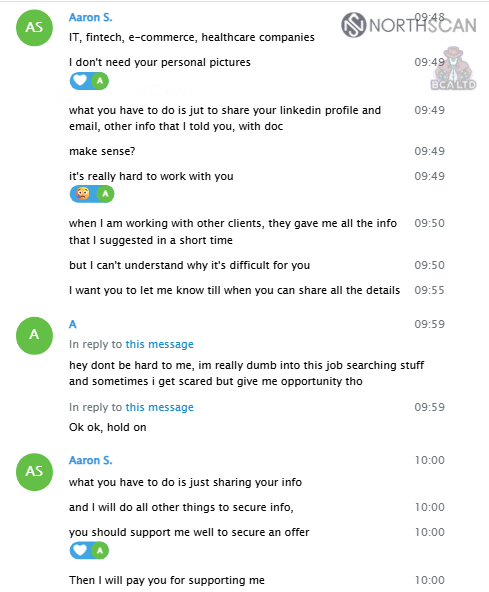
Later that day, we do a final review of our terms, agreeing that I will receive a 20% cut and share access to Gmail, LinkedIn, bank accounts, my SSN, and any background-check information. After that, he asks me to set “123qwe!#QWE” as the password for AnyDesk.
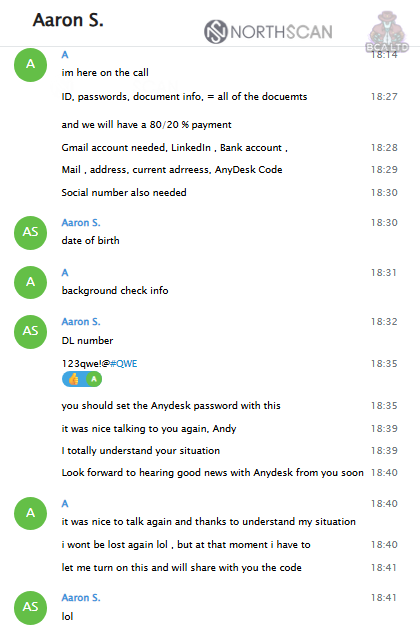
I took some time off while Mauro and ANY.RUN set up the farm, so I had to come up with an excuse. In a follow-up meeting, Aaron tells me not to disappear and to stay in touch on Telegram, saying that communication is important and that he wants to be connected to me 24/7. He again asks me to set a specific password on AnyDesk and keep the machine available around the clock. I tell him I will and jokingly ask him not to peek at my photos. We share a laugh, and he assures me he won’t do anything outside “his work.”
Then, I allow him to connect to my “laptop.”
Chapter II: The Farm
Trapping Famous Chollima | Mauro Eldritch (BCA LTD), ANY.RUN
We never had spare laptops for them. It was a bluff to earn their trust. In fact, our plan was to force them into a controlled environment, a sandbox, so we could monitor everything they did in real time.
Our obvious choice was ANY.RUN‘s malware sandbox, which we had already used to analyze previous DPRK samples (QRLog, Docks, InvisibleFerret, BeaverTail, OtterCookie, ChaoticCapybara, and PyLangGhostRAT).
But there was one limitation: the standard sandbox sessions were not designed to run for more than about half an hour; enough for malware analysis, but not enough to convince state-sponsored operators that they were using a real machine.
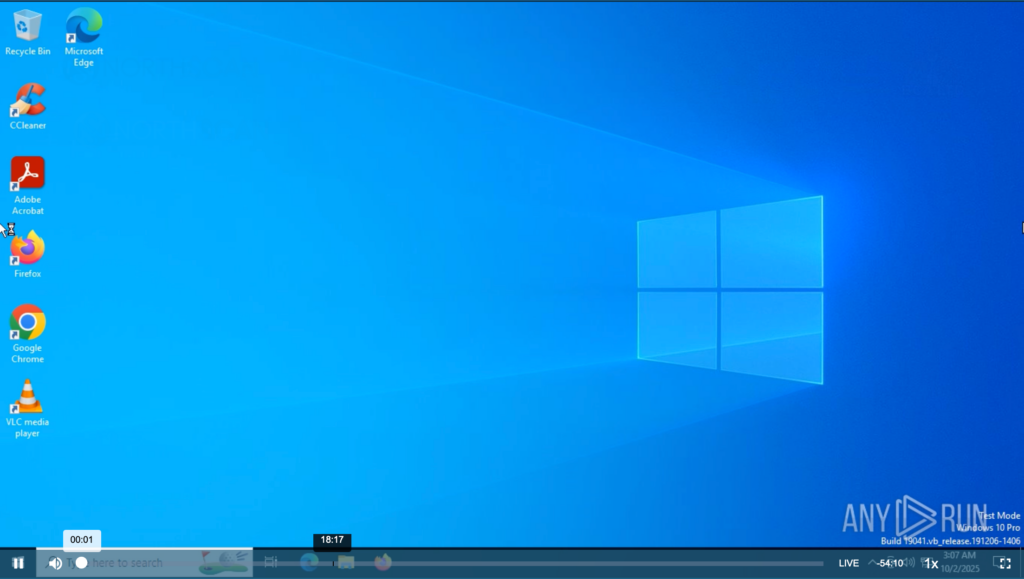
While this could have been an obstacle, we reached out to ANY.RUN, and they arranged extended-runtime instances for us.
In an unprecedented effort, and delivered in record time, they provided a special version of the sandbox that could run for hours, complete with pre-installed development tools and a realistic usage history to mimic a laptop actively used by a real developer.
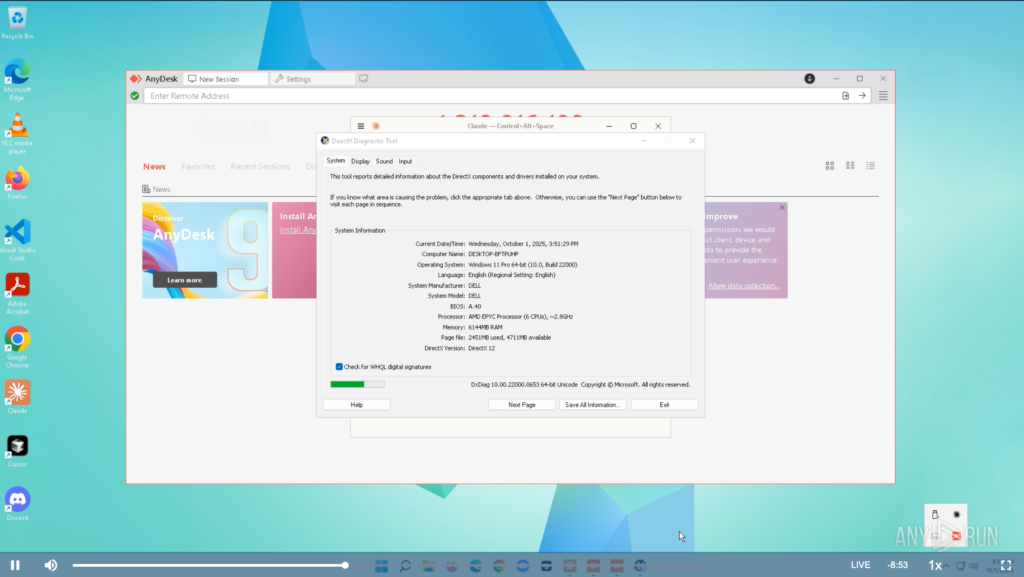
This setup was enough to trap the Chollimas inside and extract as much information as possible; from the files they opened, downloaded, or modified, to their network activity (including their IP addresses and contacted servers), to every single click they made. Everything was broadcast and recorded in real time for us to observe.
It was time to open the farm and let them in.
Chapter III: The Watchers
Spying on Famous Chollima | Mauro Eldritch (BCA LTD), ANY.RUN, Heiner García (NorthScan)
For this experiment we instantiated multiple sandboxed environments; some featuring a normal Windows 10 with basic apps and config, and another one with Windows 11 and pre-installed userland to make it look like a real developer’s personal laptop.
The environments were routed through a residential proxy to create the appearance of being located in the United States, matching the threat actors’ preference for U.S.-based developers.
In addition, we could monitor their screen, network, and file system activity in real time without them noticing, and we had full control over the machines at any moment. This allowed us to disconnect them from the internet while keeping their remote desktop session active (simply blocking their ability to browse) or even force-shutdown the machines to prevent them from carrying out any real malicious activity against third parties.
We divided these recordings into “tapes” to make it easier to appreciate their behaviour.
Tape 1: The Planning
Note: Some tapes have been edited for brevity, removing periods of inactivity.
We set up the initial laptop (Windows 11) following the instructions received from the recruiter and setting the password designated by him. A few minutes later, “Blaze” (Aaron, our recruiter) connects via AnyDesk and starts scouting the machine.
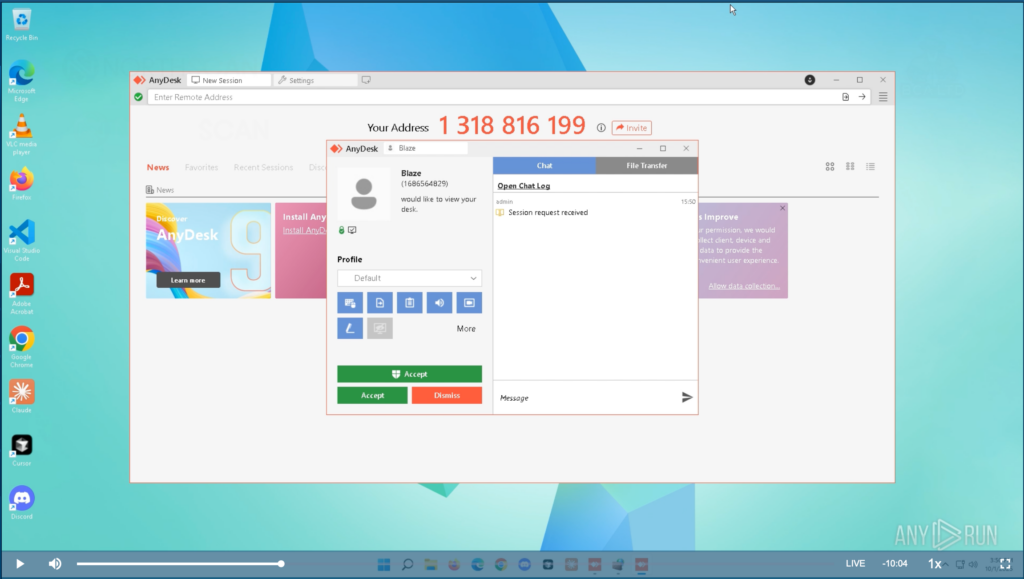
The first thing he does is run DxDiag (DirectX Diagnostic Tool) to get a full report on the machine’s hardware. Having foreseen this possibility, the machine presented standard hardware and drivers from well-known manufacturers, mimicking real pieces commonly found in most home setups and laptops.
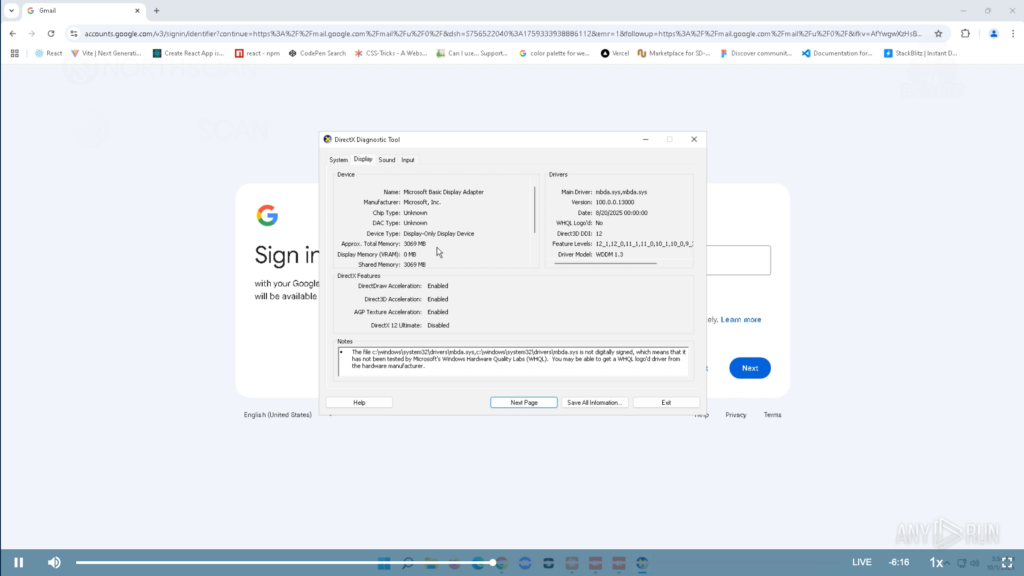
Next, he opened Google Chrome and visited the Gmail website. He went back to DxDiag and browsed through the different tabs, scouting the machine’s configuration, and then he set Chrome as the default browser.
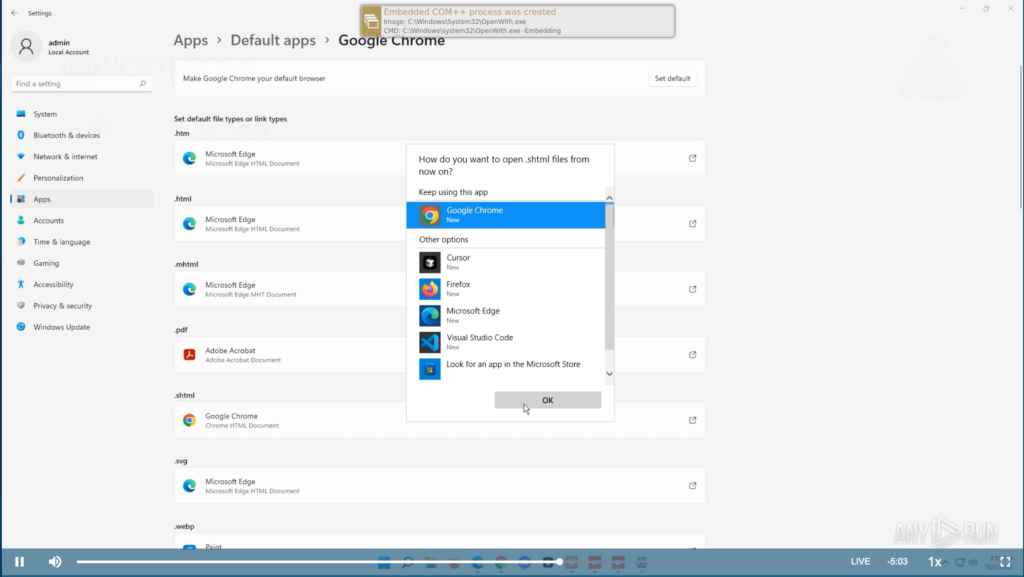
Finally, he opened Visual Studio, played around and searched online for “where is my location” (sic).
He was met with some CAPTCHAs. While he was busy sorting buses and staircases we started monitoring his network activity.
He was connected from an IP address located in the United Kingdom.
According to OTX (United States for most scanners) belonging to Astrill VPN, one of the North Korean threat actors’ favourite tools.
Then, we decided it was time to crash the machine.
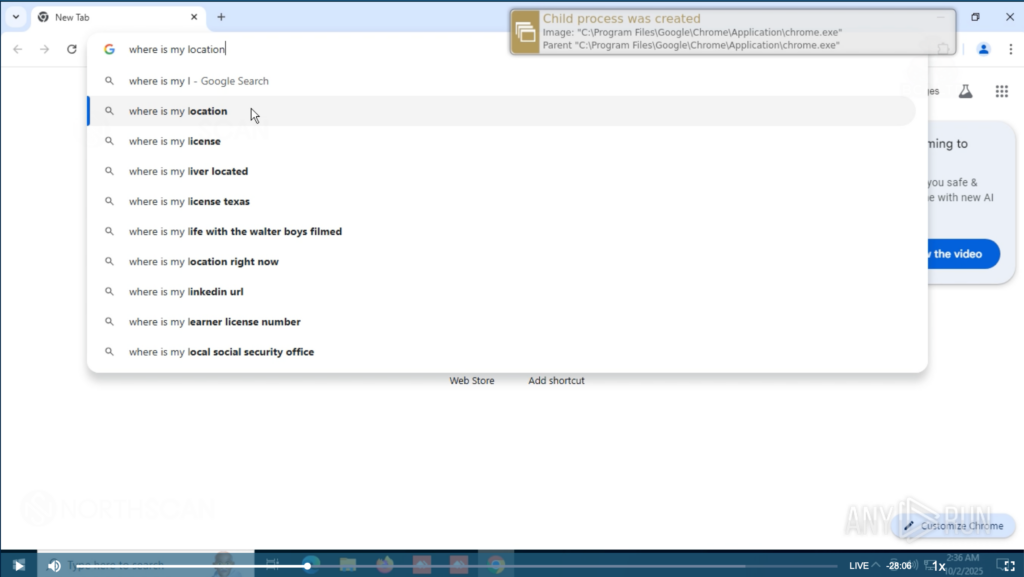
These crashes were intentional, both to prevent him from engaging in malicious activities and to delay his actions.
The system remained unavailable until we manually started AnyDesk once again, and after every “recovery” we convinced him that a System Restore was needed, thus reversing any progress he made. This tactic helped us keep him in the loop for weeks.
Tape 2: A Note for Andy
After the instance “crashed” we had an excuse to switch him to another “laptop”, this time running Windows 10, setting back all his progress. He started the same dance, changing his default browser to Chrome and looking up “where is my location“.
Google started acting up, putting him into a never-ending CAPTCHA loop which he stoically endured, solving them patiently. He then opened a command line interpreter and ran the command “whoami“, which returned the username “admin“, and “systeminfo“. The latter returned consistent information regarding system hardware and software.
He trusted the system and opened a Notepad window, where he left a note for “Andy” (Heiner’s alter ego):
Hi, Andy?
Are you there?
I am able to access to your laptop now.
But you aren’t ready with your info, so I am not starting to work now.
I want you to give me your all doc and info today so that I can start ASAP.
And now, could you possibly log in your email and linkedin here in laptop?
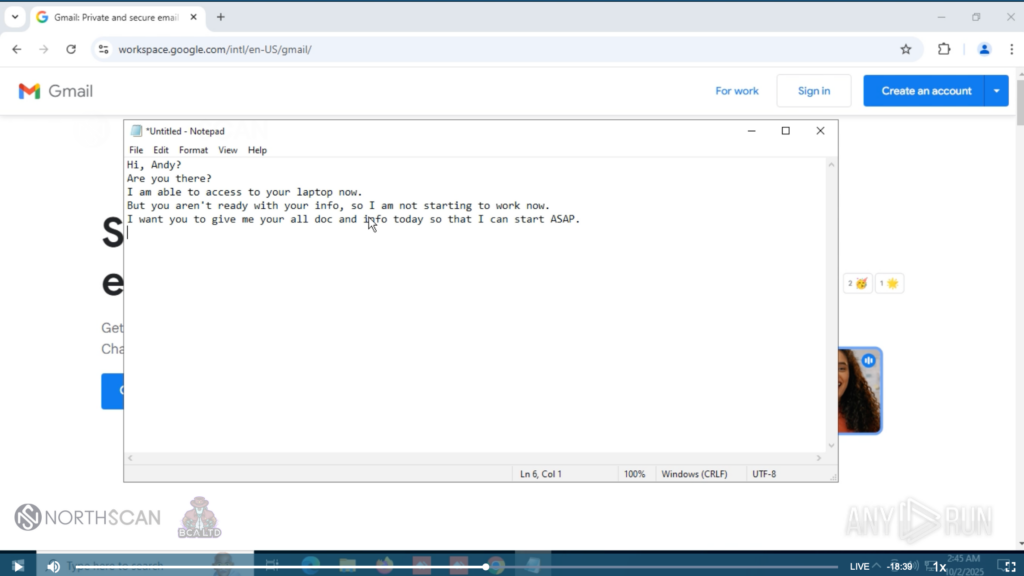
We left him waiting to test his patience. He didn’t insist, and we proceeded to crash this “laptop” as well; to make him believe we were not able to catch his message and delay him further.
Every minute spent with us was one less minute scamming someone else.
Tape 3: Incorrect Password
Another crash, another jump into an old system recovery point, which erased all his progress. We started putting pressure on him, asking what he was doing that crashed the system beyond repair, stating that a Blue Screen of Death appeared showing something related to the network, probably a misconfiguration or weird VPN usage on his side.
He couldn’t respond satisfactorily to any of these claims and tried once again to log into the accounts. We provided incomplete information, trapping him in a login and CAPTCHA loop that lasted for almost an hour, while we extracted indicators of compromise and behavioral patterns.
Tape 4: Intruder
This time there was no crash involved and as a gesture of goodwill we built an autofix BAT script that would recover the workstation automatically if something occured. We asked Blaze to be careful and gave him a sort of ultimatum to stop breaking our laptops and to start working ASAP, or the deal was done, putting more pressure on him.
This seemed to strike a nerve, as another AnyDesk account by the name “Assassin“, unknown to us at the time, logged into the laptop. It went straight to Gmail and attempted to enter Andy’s account, even clicking on the “Show password” checkbox to verify the entered credentials. After failing to do so multiple times, Blaze himself remoted into the laptop. We believe he tried to offload the task to another affiliate who was (somehow) less savvy than him.
He then proceeded to check the system settings and opened Chrome, searching for “Chrome Download“, like a senior person opening the Google app to search for “Google“.
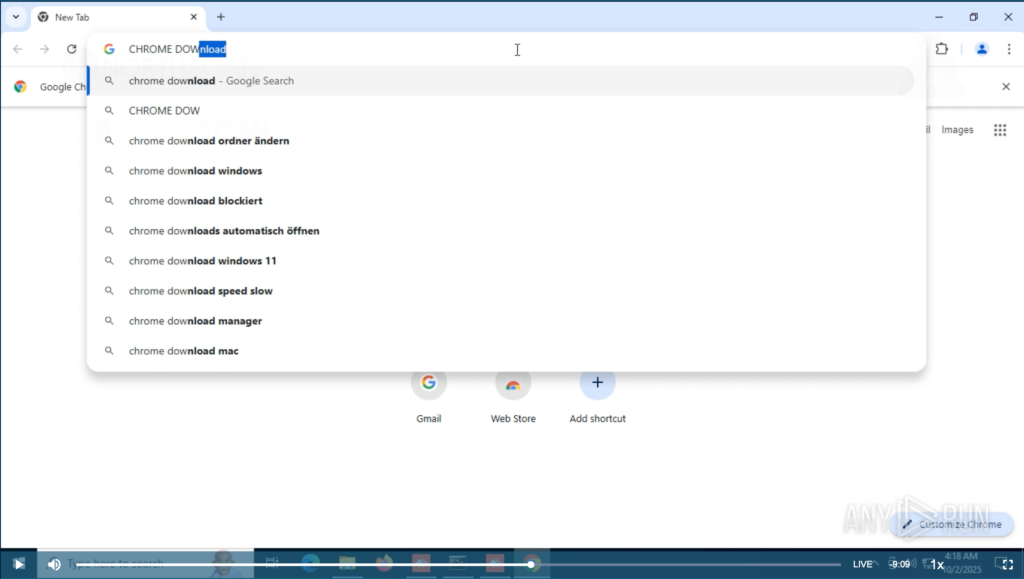
Without him noticing, we removed the residential proxy and connected the machines through a German VPN server, so his Google search fell once again into a CAPTCHA hell, being forced to solve at least six multiple-choice challenges before proceeding.
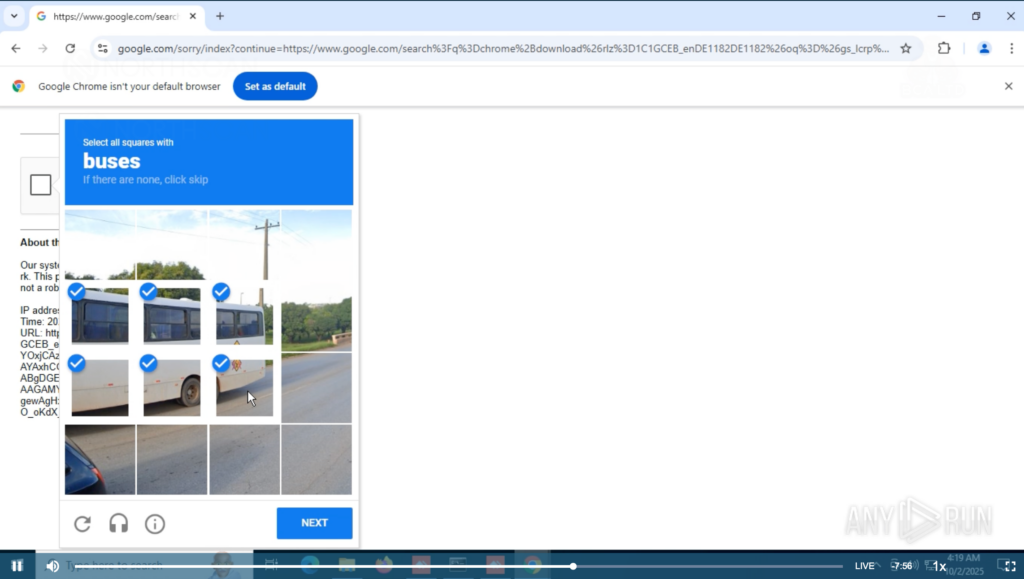
Once he was greeted by the German version of Google he asked us what happened. We told him that to avoid the BSOD caused by something faulty in the network, we were trying a VPN “at router level”. He complained, saying that “it’s not optimal” and “should be fixed“, but regardless, decided to continue.
He searched for “where is my location” and “where is my ip” after finally jumping into LinkedIn. Well… the German version of LinkedIn. He tried the account and left it there.
Tape 5: Criminal Engineering
This time it works. Blaze connected to the laptop and logged into his Google account, “Aaron S“, turning on the sync function and loading his profile, preferences and extensions into the browser.
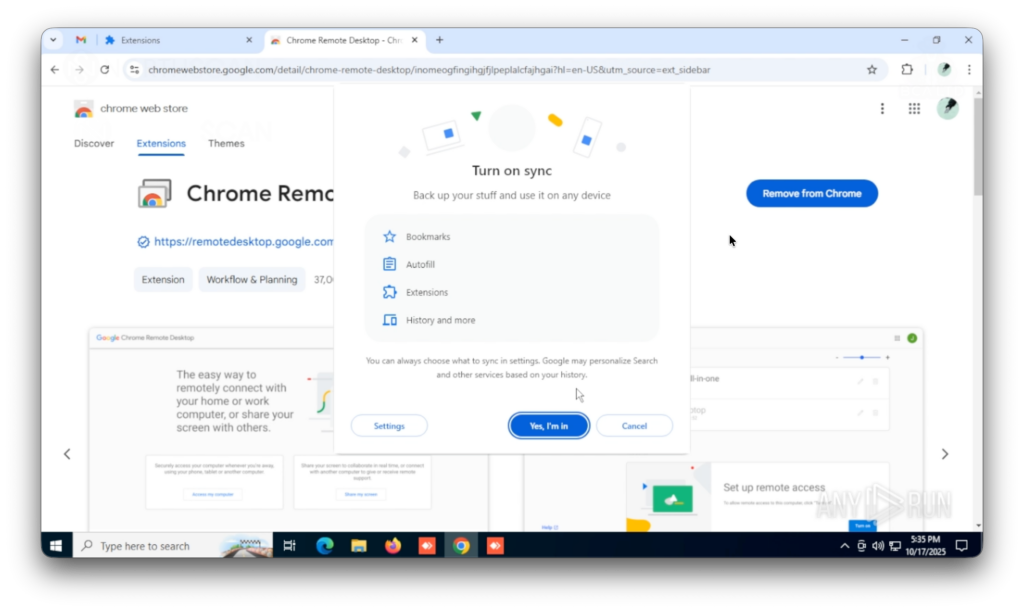
This granted us a first peek into the Famous Chollima toolset, which includes multiple AI tools like Simplify Copilot (to autofill job applications), AiApply (to automate job seeking), Final Round AI (which provides answers for your interview questions in real time) and Saved Prompts for GPT (to bookmark LLM prompts), the OTP.ee extension (or Authenticator.cc, an OTP generator) and last but not least, Google Remote Desktop.
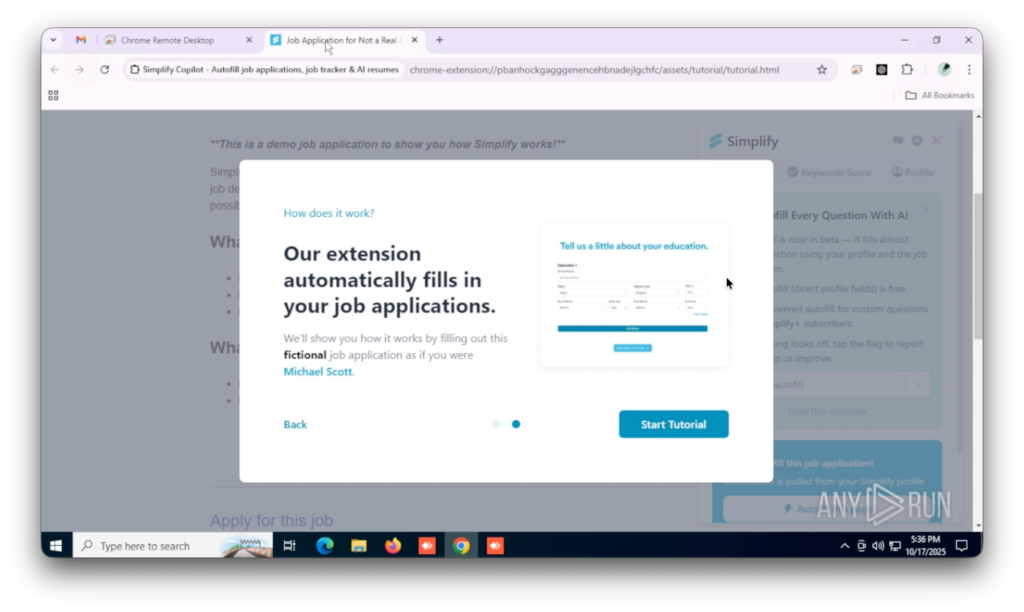
Next, he opened Google Remote Desktop. With his account already displaying two other hosts, “AARON-PC” and “Blaze“, he started setting up this laptop via command line interface and PowerShell, putting “123456” as its connection PIN. Meanwhile, he checked his email account.
Without any doubt, we understood it was the proper time for an unexpected crash. He was kicked from the laptop and we were left alone with his email account open.
Tape 6: Eavesdropper
Blaze sent a Telegram message saying that “he left his email account open” and asked to please close it. Andy (Heiner) replied that it was already late and he would do it next morning.
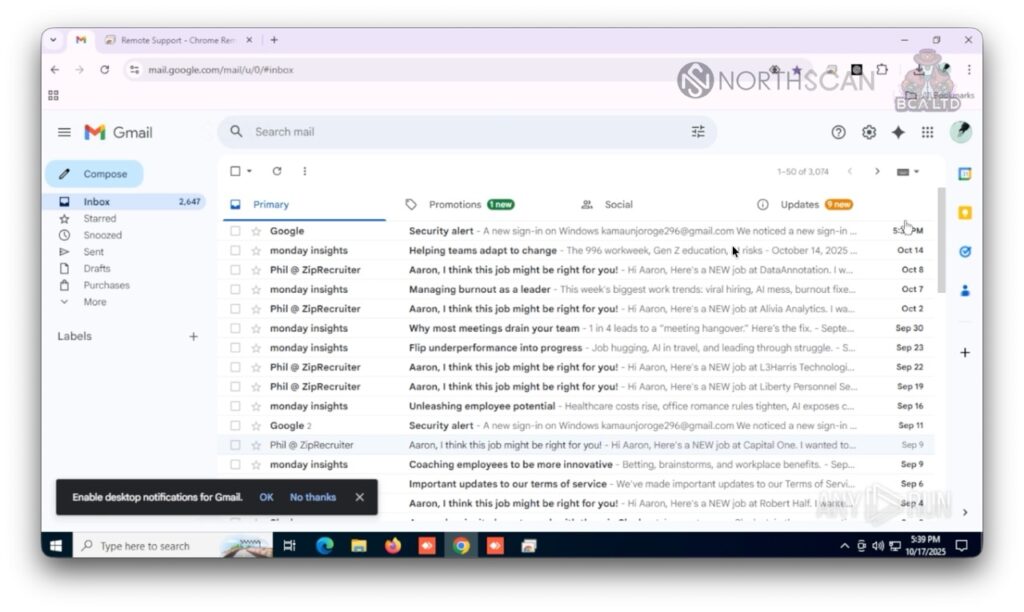
We remained offline, checking his email to avoid him remotely ending the session, finding multiple subscriptions to job-seeking platforms, peeking at his extensions and finding different Slack workspaces and chats. He spoke regularly with an individual named Zeeshan Jamshed, who in an initial conversation stated that he would be out for Eid, the Muslim festivity, and “to have everything arranged by Monday“, suggesting they were already working together, possibly at a company based in a Muslim-majority region.
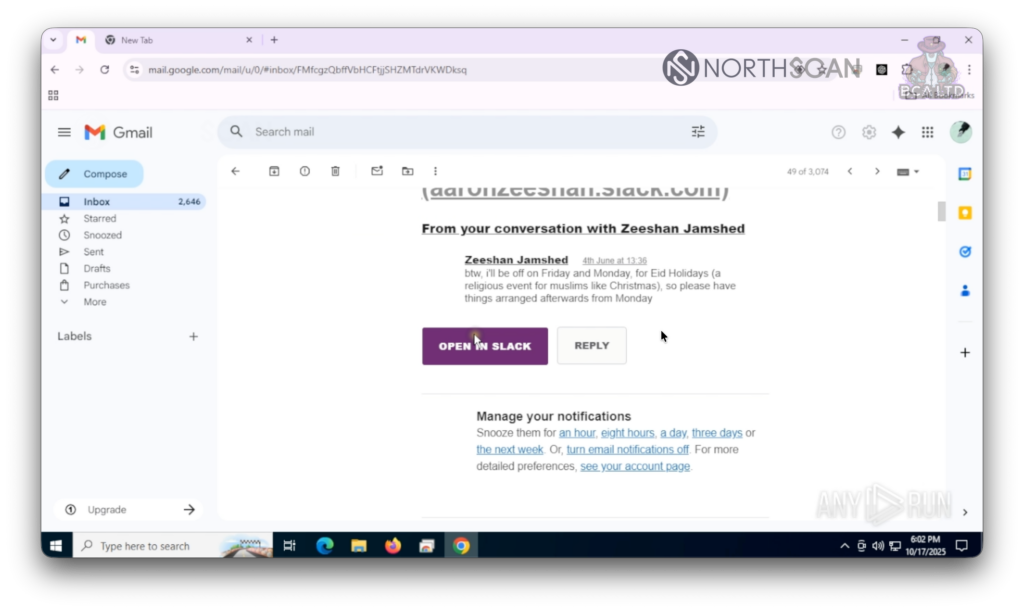
As the conversations continued, the tone turned bitter.
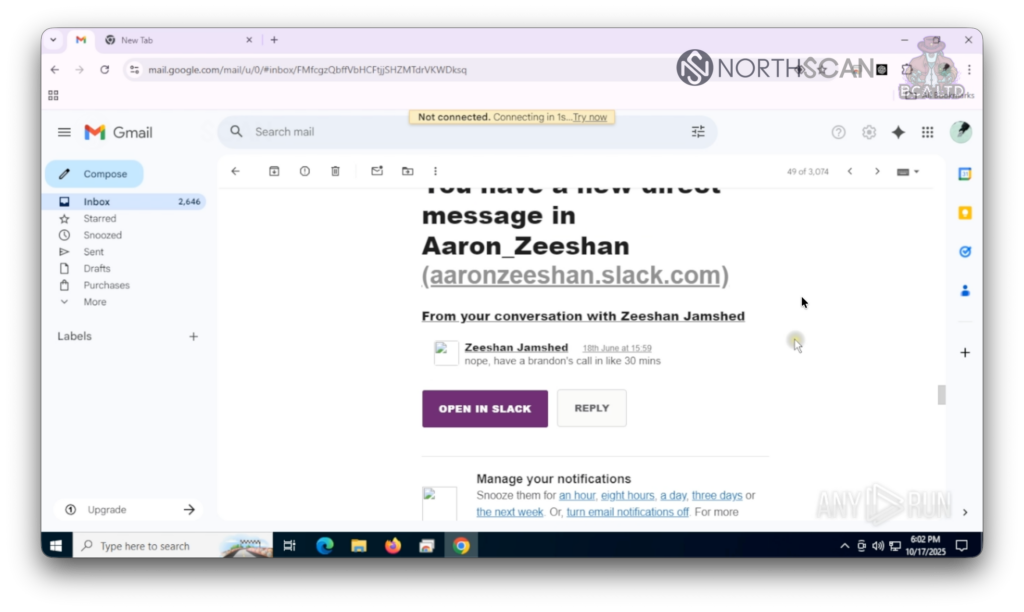
First, Zeeshan mentioned routine things like having to make a call in a few minutes or wrapping up another meeting soon, but then he seemed to crack under his current reality.
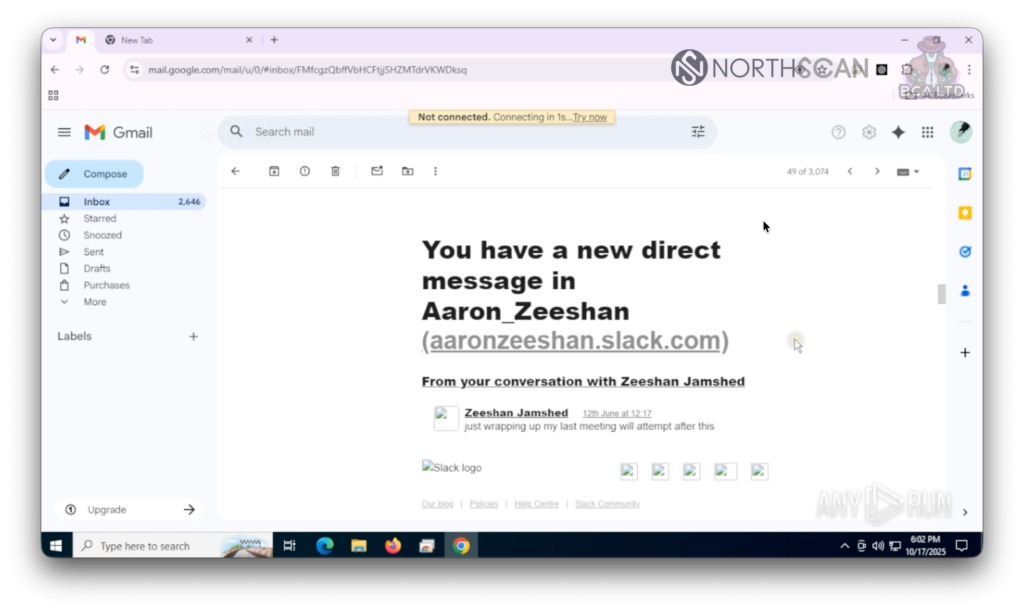
Suddenly Zeeshan stated if they wanted to find “some real jobs” they had to focus on “actual real companies and people’s interviews“, and that he “has done these [interviews] enough to know all these platforms are just a waste of time“.
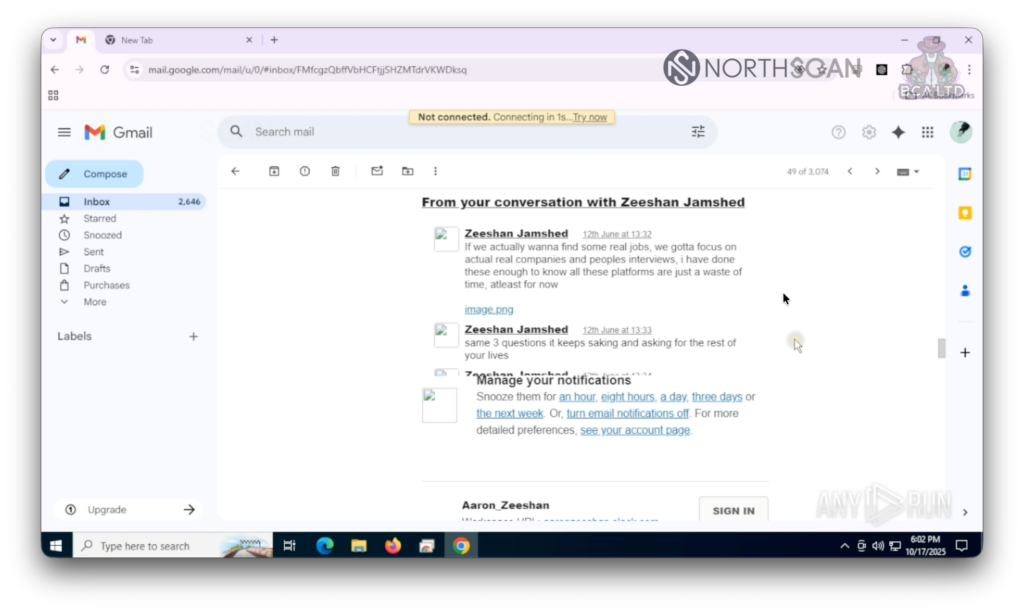
He ended his rant talking about the “same 3 questions that keeps asking and asking for the rest of your lives“. Whatever that could mean, it seemed to be something that kept him awake.
Tape 7: Fool me Twice
We told Blaze the Windows 11 laptop was repaired and ready to be used, so he was happy to hop on and log into all his accounts once again.
After setting up his account again (and turning on the sync options reinstalling his extensions), he proceeded with his well-known waltz: search for his location (this time correctly pinned in Texas, United States), setting up Google Remote Desktop, checking his email (without noticing anything odd after our inspection), and facing unrecoverable problems artificially caused by us.
We messed with the residential proxy and suddenly he was offline, without any chance of connecting to the internet. He started troubleshooting his way through the classic steps: reviewing the internet adapter configuration, messing with the authentication settings, and even turning off IPv4 completely. Never for a split second did he stop thinking why he was still remotely connected to an isolated system without facing any issues.
He tried to reach the Google logout button but he was already offline.
And when it rains, it pours. What else could happen now?
Of course, an artificial crash.
Tape 8: Realization
Blaze asked for explanations regarding the machine’s constant malfunctions and even grew brave enough to escalate his wording. We made up some excuses and granted him access one last time. This time, we disabled the proxy and allowed his slow-paced mind to catch up with the events.
Suddenly, realization hit. And sooner rather than later, the realization became desperation: he knew what was going on.
He opened the Windows Registry and started looking online for his location, now appearing in Germany. He ran DxDiag once again, just like when we started this “collaboration”, and started looking for his IP reputation online using search terms like “ip fraud check“, and visiting sites like IP Score, Scamalytics, and Where Am I.
He tried to confront us via Telegram, but it was already too late. There was no reason to keep playing, so we ignored him.
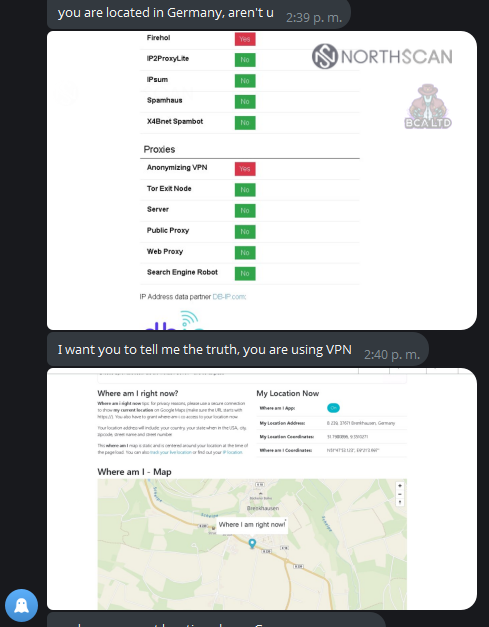
Paranoia got the best of him, and he ran the systeminfo command once again, played around with DxDiag a little bit more and then… one last artificial crash, ending both the instance and our friend’s corporate espionage plot.
Bonus Chapter: The Jealous
Turning Famous Chollima against each other | Heiner García (NorthScan)
You may probably remember from “Tape 4 – Intruder” that someone else accessed one of our laptops, one of Blaze’s collaborators under the nickname “Assassin“. Both had trouble logging into the account and ended up wasting time in a CAPTCHA hell.
By that time, we had given Blaze an ultimatum: start working now, stop breaking things. But that’s just a part of the story.
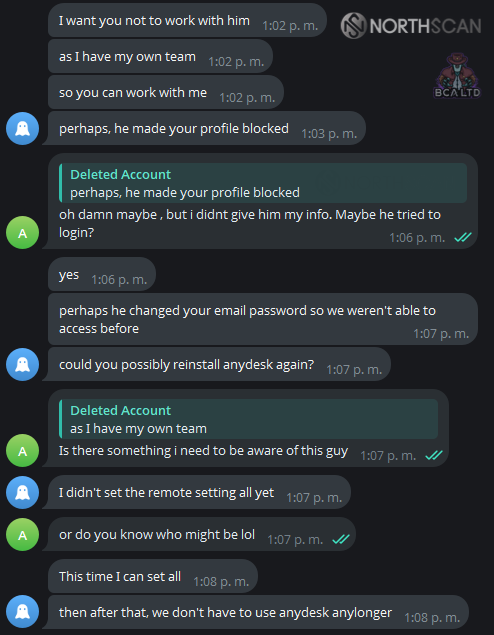
Aiming to put pressure on him, Heiner came up with the idea of pretending to be scouted by another DPRK recruiter named “Ralph“. He reached out to Blaze to tell him that aside from our given conditions, he should be cautious because we already had a better offer for a bigger salary cut with someone who actually seemed excited to work with us and wouldn’t give us as much trouble.
He didn’t take it well, asking Heiner not to work with him, suggesting that “he” (Ralph) could be the one who “blocked” their profile or changed their password (referring to the account they hadn’t managed to access earlier).
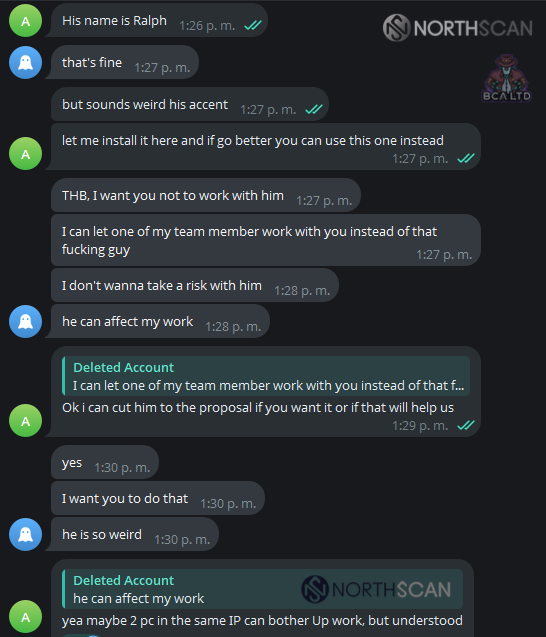
He then proceeded to insult Ralph, calling him “weird” and explaining that he could affect “his work” and that he wouldn’t like to take a risk with him. Instead, he would assign one of his team members to work on making things happen.
He promised to get it together and get everything working, stating that after that we would no longer need AnyDesk (referring to him later installing Google Remote Desktop).
When Heiner asked if he should ignore the other guy, Blaze insisted he work exclusively with him from now on.
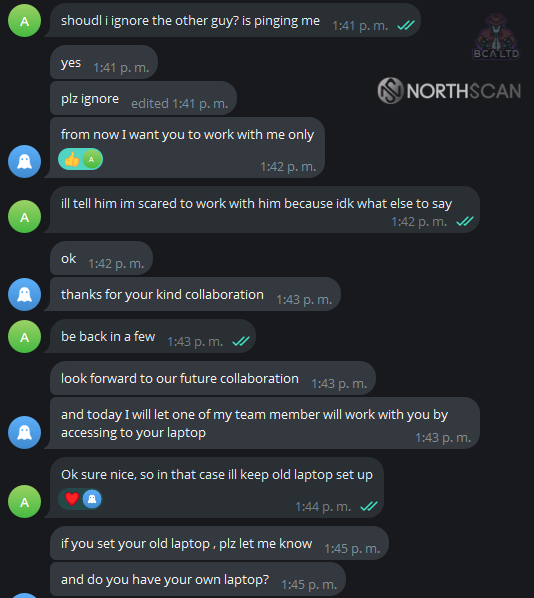
He then shared that one of his team members would try to work with his laptop later that day. This was “Assassin“.
He appears on Tape4 behind the exact same IP address as Blaze, which belongs to AstrillVPN.
This hasty decision on his part helped us confirm they were sharing infrastructure and assets, and that they likely have poor communication between units, as the idea of one recruiter stealing an engineer from another seemed totally plausible to him. Additionally, when conducting job interviews at target companies, it’s common to observe multiple North Korean operatives scheduling interviews for the same position on the same day (making it more obvious), suggesting a lack of coordination between different cells.
Until Next Time, Famous Chollima
This is not the last time we’ll see Famous Chollima, or any other North Korean actor, infiltrating companies for espionage and profit.
This investigation was aimed at collecting intelligence from North Korean actors in a novel way not practiced by any other lab to date, by directly engaging with them and immersing ourselves in their operations. From that standpoint, we understand this publication will help to better understand this threat, their structure, behaviour, tactics, techniques and procedures, and contextualize their skillset and toolset, which now heavily relies on AI.
If you are an employer, conduct rigorous KYC controls and background checks when hiring new positions. Train your talent acquisition teams to detect red flags early and don’t be afraid to share this story with your candidates, making sure they understand that the “software company” that offered them something too good to be true may not be so legitimate.

If you are seeking employment, beware of malicious coding challenges, never conduct interviews on your company’s equipment and check with companies if someone attempting to hire you out of the blue is affiliated with them.
The same goes for those looking to raise funds for their projects: beware of meetings with fake VCs, never open their attachments without prior checking their safety, and overall, if something is too good to be true, then maybe it is.

If you are a security professional, don’t be afraid to confront these threats, nor to ask for help in the community. Raise awareness in your organization and spread the word about their activities. With everyone knowing what to look for, we remain safer.
And for the rest, don’t forget to smile.

How ANY.RUN Supports Investigations Like This
This operation shows how difficult it is to track human-driven intrusions, especially when they rely on social engineering instead of malware. By moving the actors into controlled ANY.RUN environments, every step, from their tooling to their network activity, became visible in real time.
The interactive sandbox and extended-runtime setups give researchers and SOC teams the same advantage: the ability to observe behavior as it unfolds, uncover hidden actions, and document full attack chains without risking real systems.
About ANY.RUN
ANY.RUN is a leading provider of interactive malware analysis and threat intelligence, helping security teams investigate attacks with real-time behavioral visibility. More than 15,000 organizations and over 500,000 analysts rely on the service to observe live execution, analyze suspicious files and URLs, and uncover hidden activity with an average 60-second time-to-verdict.
Alongside its sandbox, ANY.RUN provides continuously updated Threat Intelligence Feeds sourced from global telemetry, and TI Lookup, which offers instant enrichment by showing related samples, shared infrastructure, and historical context. Together, these capabilities give analysts a clear view of how threats behave and evolve, supporting faster, more confident decisions across SOC, DFIR, and threat-hunting workflows.
Further Reading
- Contagious Interview on PagedOut #4 (Page 76)
IOCs
Indicators of Compromise
IPv4:194.33.45.162
URL:https[:]//t[.]me/peregrine423f
URL:aaronzeeshan[.]slack[.]com
URL:aaronsfazzy[.]slack[.]com
URL:https[:]//github[.]com/7codewizard
URL:https[:]//github[.]com/neymafullstack
URL:https[:]//github[.]com/swiftcode1121
URL:https[:]//github[.]com/ghost
URL:https[:]//calendly[.]com/7codewizard/30min
URL:https[:]//jackson-portfolio[.]vercel[.]app
URL:https[:]//www[.]linkedin[.]com/in/jackson-kidd-1680b2339/
URL:https[:]//us[.]bold[.]pro/my/jaron-gaston-241007104612
Email:kamaunjoroge296[@]gmail[.]com
Email:jacksonkidd216[@]gmail[.]com
Behavioural & Other Indicators
Nickname:Blaze
Nickname:Assassin
AnyDeskID:1686564829
AnyDeskID:1291915543
Password:123qwe!”#QWE
Password:123456
Search:”what is my location”
Search:”where is my location”
Search:”netspeedtest”
Search:”where is my ip”
Identified toolset
VPN and Remote Desktop Connection:
- AstrillVPN
- AnyDesk
- Google Remote Desktop
Browser Extensions:
- Simplify Copilot
- AIApply
- Saved Prompts (GPT)
- Final Round AI
- Authenticator[.]cc / otp[.]ee
- Google Remote Desktop
Commands observed:
- dxdiag
- systeminfo
- remoting_start_host.exe
Instant Messaging:
- Slack
- Telegram
Online platforms:
- Github
- ZipRecruiter
- Bold Pro
- Vercel
- Calendly
TTPs / ATT&CK
Reconnaissance
T1593.002 – Search Open Websites/Domains: Search Engines
Mass search for developers on GitHub
Initial Access
T1566 – Phishing
Mass phishing via GitHub pull requests targeting developers
Defense Evasion
T1090 – Proxy
Use of AstrillVPN to hide real location
Discovery
T1082 – System Information Discovery
Use of DXDIAG to obtain system information
Use of systeminfo to obtain system information
T1016 – System Network Configuration Discovery
Use of netspeedtest
Google searches for “where is my location”, “where is my ip”
T1614 – System Location Discovery
Use of netspeedtest
Google searches for “where is my location”, “where is my ip”
Command and Control
T1219 – Remote Access Software
Use of AnyDesk
Use of Google Remote Desktop
T1090 – Proxy
Use of AstrillVPN

Mauro Eldritch
Mauro Eldritch is an Argentinian-Uruguayan hacker, founder of BCA LTD and DC5411 (Argentina / Uruguay). He has spoken at various events, including DEF CON (12 times). He is passionate about Threat Intelligence and Biohacking. He currently leads Bitso’s Quetzal Team, the first in Latin America dedicated to Web3 Threat Research.

Heiner García Pérez
Strategic Intelligence and Cyber Threat Intelligence Analyst | + posts
Mauro Eldritch is an Argentinian-Uruguayan hacker, founder of BCA LTD and DC5411 (Argentina / Uruguay). He has spoken at various events, including DEF CON (12 times). He is passionate about Threat Intelligence and Biohacking. He currently leads Bitso’s Quetzal Team, the first in Latin America dedicated to Web3 Threat Research.

Heiner García Pérez
Strategic Intelligence and Cyber Threat Intelligence Analyst