
For every organization, no matter the size or industry, the integrity and security of data is more 2025-11-18 09:9:28 Author: securityboulevard.com(查看原文) 阅读量:11 收藏
For every organization, no matter the size or industry, the integrity and security of data is more crucial than ever as it faces the possibility of a cyber breach everyday. But what separates a company that bounces back quickly from one that suffers irreparable damage? The answer largely resides in how promptly and accurately the breach is reported and how it is handled thereafter.
This article delves into the importance of a fast and effective cyber incident response, explains the steps involved in reporting a breach, and provides actionable insights on how best to prepare your team and infrastructure for any potential cyber incident.

What is a breach?
Breach, in its essence, signifies a disruption, a transgression, or a violation of established boundaries, whether in the digital realm, the legal domain, or the ethical sphere. Understanding the multifaceted nature of breaches is essential to navigating the complex landscape of security, privacy, and compliance that characterizes our modern world.
The importance of reporting a breach
When a breach occurs, time is of the essence. The moment a security incident is detected, the clock starts ticking. The sooner a breach is reported, the faster containment and mitigation strategies can be deployed to prevent further damage, reduce data loss, and minimize overall business disruption. Reporting a breach effectively sets in motion an incident response process that ultimately plays a crucial role in ensuring business continuity and protecting customer trust.
Rapid reporting is essential not only to meet legal or regulatory requirements but also to mark the beginning of a methodical investigation into the nature and scope of the intrusion. Every minute counts in safeguarding sensitive data and halting the spread of the attack. Moreover, prompt reporting can assist in preserving the taxable evidence necessary for any legal actions that may subsequently follow. It is important to understand that fast and precise communication can significantly affect the outcome of an incident response.
The evolving landscape of cyber threats
Cyberattacks today are more sophisticated and persistent than ever before. From advanced persistent threats (APTs) employed by state actors to opportunistic ransomware incidents, cybercriminals are constantly refining their strategies. This ever-changing landscape means that organizations must be ready for anything, from subtle infiltration techniques that quietly harvest data over months to aggressive, large-scale attacks designed to cripple networks quickly.
In this environment, knowledge and preparedness become the primary defenses. Organizations need to invest in robust cybersecurity measures, from firewalls and antivirus programs to sophisticated intrusion detection systems. But even with state-of-the-art defenses in place, breaches can occur. That is why having an effective reporting and response plan is crucial. Understanding the threat environment equips organizations to react appropriately and decisively in the event of an attack.

Tired of manual risk assessments that leave your board exposed?
Automate IT risk quantification with TrustCloud and confidently minimize CISO and Board liability.
A breach, whether related to data, cybersecurity, or physical security, can jeopardize company operations, compromise sensitive data, and undermine trust with clients and partners. Every employee, regardless of their role, plays a vital part in maintaining security. The process of reporting a breach is designed to be clear, efficient, and supportive so that potential threats can be neutralized before they escalate.
The anatomy of a cyber breach report
Creating a cyber breach report is a critical step in responding to a security incident, and it demands more than a simple alert or email. It requires careful documentation, clear timelines, and a complete understanding of what happened and how teams reacted. A strong breach report brings structure to the chaos of an incident and ensures that every detail needed for response, recovery, and regulatory obligations is captured.
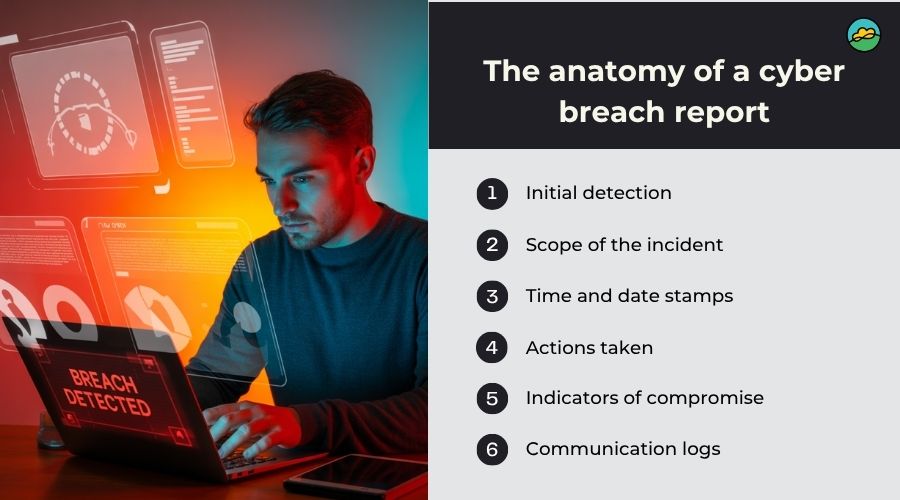
With the right level of clarity and depth, it becomes a reliable reference for analysts, auditors, and decision-makers who must understand the incident’s impact and guide the organization’s next steps.
- Initial detection
Begin by describing how the breach was first discovered and who or what triggered the alert. This may involve an automated monitoring tool, a user’s observation, or a system anomaly. Capture the exact moment the alert occurred and any immediate context surrounding it. This information helps investigators determine whether early detection steps were effective and where improvements may be needed. - Scope of the incident
Outline the systems, networks, or data sets affected by the breach. Determine whether the attack touched a single endpoint or reached deeper into the infrastructure. Understanding the scope gives teams clarity on potential damage and helps them prioritize containment efforts. A well-defined assessment ensures that no compromised system is overlooked and that remediation efforts are appropriately scaled. - Time and date stamps
Record every relevant timestamp associated with the incident, from the first anomaly detected to the final containment action. A clear timeline creates a chronological narrative that supports forensic analysis and regulatory reporting. Accurate time tracking also helps identify delays, response gaps, or unusual system behavior, allowing both internal teams and external experts to reconstruct the attack with precision. - Actions taken
Document all actions executed by the IT or security teams in response to the breach. Include urgent steps like blocking malicious traffic, disabling compromised accounts, isolating devices, or shutting down affected systems. This demonstrates how quickly the organization responded and highlights areas where incident response protocols succeeded or require reinforcement. Thorough action logging supports future audits and compliance reviews. - Indicators of compromise
List the technical clues associated with the breach, such as malicious IP addresses, unexpected ports, malware signatures, or suspicious system activities. These indicators help analysts identify the attack vector and understand the adversary’s tactics. They also assist in preventing similar incidents by enhancing threat detection rules, updating security tools, and guiding long-term defensive improvements across the organization. - Communication logs
Maintain a complete record of internal and external communications about the breach. This includes messages exchanged with leadership, legal teams, regulators, vendors, or customers. Proper communication tracking ensures consistency, prevents misinformation, and supports transparency during incident handling. These records become especially valuable when managing compliance requirements or reviewing the organization’s crisis communication effectiveness.
A detailed breach report strengthens your response strategy by turning a chaotic incident into a structured, evidence-based narrative. It equips internal teams, consultants, and authorities with the information they need to understand what happened, assess the impact, and prevent future breaches. With disciplined documentation, organizations build resilience and improve their readiness for the next cybersecurity challenge.
Steps to report a breach effectively
Reporting a breach effectively requires a structured, clear, and well-coordinated approach. Even though every organization may follow its own internal playbook, the fundamentals remain the same. A swift response, detailed documentation, transparent communication, and proactive improvement together shape a strong breach reporting process.
These steps not only help in containing the damage but also ensure that the organization responds confidently and responsibly. By following a systematic sequence, from containment to post-incident review—teams can stay organized during a crisis, reduce confusion, and safeguard both operational continuity and stakeholder trust.
1. Immediate containment and assessment
Act fast to isolate compromised systems from the network to stop the attack from spreading. Simultaneously, gather essential details such as when the breach was detected, how it was discovered, and what systems were affected. This early assessment builds the foundation for deeper investigation. Quick, informed decisions during this stage can significantly reduce the scale of the incident and protect critical assets.
2. Notify internal incident response team
Once containment is underway, alert the designated incident response team without delay. This cross-functional group may include IT staff, cybersecurity specialists, legal counsel, and communications experts. Their combined expertise helps manage the incident efficiently. Ensuring each member understands their responsibilities keeps the workflow organized and prevents delays. Early coordination ensures that technical, legal, and reputational risks are addressed simultaneously.
3. Detailed documentation
Maintain a thorough record of every action, observation, and system event related to the breach. Include technical data, response decisions, and any anomalies noticed throughout the process. Accurate documentation is invaluable for forensic reviews, internal assessments, and regulatory inquiries. It also supports continuous improvement by revealing gaps in existing protocols and helping teams refine their future incident responses.
4. External communication and regulatory notification
Determine whether regulatory bodies, affected customers, or business partners must be notified based on local laws and compliance requirements. Clear, timely communication helps preserve trust and ensures legal obligations are met. Prepare templates and messaging in advance to reduce delays during a crisis. Tailor each notification to address what happened, what data may be affected, and what steps are being taken to manage the situation.
5. Initiate forensic investigations
Engage digital forensic experts to analyze how the breach occurred. Their review often includes checking logs, identifying attack vectors, tracing malicious activity, and uncovering exploited vulnerabilities. This investigation clarifies the scope of the incident and highlights security weaknesses. The findings guide the organization in both recovery efforts and long-term improvements, helping prevent similar breaches in the future.
6. Review and improve security measures
Once the immediate crisis is resolved, step back to evaluate the overall incident response. Identify strengths in the process and pinpoint areas that need enhancement. Update security policies, refine detection tools, and improve breach reporting workflows based on lessons learned. This evaluation phase closes the loop and turns a stressful incident into an opportunity for stronger, more resilient security practices.
By following these steps and applying them consistently, organizations can transform a breach from a chaotic event into a managed, learnable experience. Effective reporting not only minimizes damage but also strengthens long-term cybersecurity posture, fosters accountability, and builds greater trust with customers, partners, and regulators.
The role of incident response teams
Anyone involved in managing a cyber breach should be aware of the critical role that incident response teams play. These teams are the frontline workers in defending against and reacting to cyber threats. Their responsibilities include not just the technical aspects of stopping a breach but also managing communications, legal ramifications, regulatory compliance, and post-incident recovery strategies.
A well-choreographed incident response team operates in a highly coordinated manner. They conduct regular training to ensure every member is prepared for their respective roles. The teams often simulate breach scenarios through drills and table-top exercises, which prepare them for real-life situations. A key aspect of this preparation is understanding the delicate balance between rapid response and thorough documentation. An effective team must be able to shut down an attack in a matter of minutes while still capturing detailed analytical data.
Communication and collaboration are paramount for these teams. An efficient incident response process necessitates clear channels for cross-departmental communication, particularly when external partners such as cybersecurity consultants or law enforcement agencies are involved. Having designated points of contact and a chain of command ensures that the most critical information is shared appropriately and that every decision is backed by informed insight.
The benefits of a well-executed breach reporting plan
Effective breach reporting is not just a reactive measure; it’s a proactive investment in an organization’s resilience. When handled correctly, bypassing the cascade of potential damages can lead to several significant benefits:
minimized downtime:
An immediate and thorough response can drastically reduce the time your organization is compromised, minimizing losses in productivity and revenue.
- Preserved reputation
Quick and transparent communication helps maintain trust with your customers and stakeholders. Proactive disclosure and swift remediation build credibility, even in the face of a security incident. - Strengthened defenses
Each incident is a learning opportunity. Detailed reports provide insights into vulnerabilities that can be addressed, turning a breach into a chance to improve your cybersecurity posture. - Compliance with regulations
Many industries are bound by laws requiring timely breach notifications. An established protocol helps in meeting these regulatory demands, avoiding hefty fines and legal complications. - Better resource management
Properly reported breaches allow organizations to allocate resources more effectively, ensuring that expert personnel and forensic tools are in place when needed most.
Overall, a well-executed breach reporting plan transforms an otherwise chaotic event into a manageable incident that can be dissected, understood, and learned from. This strategic approach not only limits immediate damage but also builds the foundation for a resilient cybersecurity framework.
Challenges in reporting a breach
Reporting a breach may seem straightforward, but the actual process can be far more challenging than expected. Today’s IT ecosystems are complex, integrated across cloud platforms, on-prem systems, and connected devices, making it difficult to determine where an incident began and how far it has spread. Human factors add another layer of uncertainty, especially when employees hesitate to report issues or feel unsure about protocols. Legal and regulatory requirements further complicate the process, particularly for global organizations dealing with multiple jurisdictions.
Overcoming these hurdles requires strong communication, skilled teams, and clear procedures that support swift, accurate, and compliant reporting.
- Complexity of modern IT environments
Organizations depend on a mix of cloud platforms, internal networks, SaaS tools, and IoT devices, creating layers of interdependent systems. When a breach occurs, tracing its origin across such a distributed landscape becomes time-consuming and technically demanding. This complexity often slows response efforts and increases the risk of incomplete or inaccurate reports. Clear system mapping and unified monitoring tools can reduce these challenges. - Difficulty in identifying scope and impact
Understanding how deeply an attacker has penetrated the environment requires coordinated analysis across devices, applications, and data repositories. Misjudging the scope leads to underestimating the damage or missing critical indicators. Limited visibility, outdated inventories, and fragmented logs often worsen the problem. Regular audits, centralized logging, and improved asset tracking help teams build a more reliable understanding of incident spread. - Human hesitation and lack of clarity
Employees may delay reporting because they’re unsure whom to notify or fear being blamed for the incident. This hesitation can dramatically slow the entire breach response timeline. Lack of clear guidance often results in incomplete details or miscommunication between teams. Creating a non-punitive reporting culture and providing simple, well-defined procedures help ensure issues are raised immediately and clearly. - Insufficient training and preparedness
Teams that do not receive regular cybersecurity training often struggle during an incident. They may not know what signs to look for, what details to document, or how to escalate concerns. This lack of readiness increases errors and slows down reporting. Frequent exercises, tabletop simulations, and role-based training ensure employees build confidence and know how to respond when real incidents occur. - Regulatory and legal complexity
Different countries and regions enforce varying breach notification timelines, definitions, and reporting obligations. Multinational organizations must navigate these rules carefully to avoid penalties. Without access to legal expertise, teams may misinterpret requirements or miss critical deadlines. Establishing clear legal workflows, maintaining updated compliance summaries, and involving experts early can make external reporting more accurate and timely. - Communication gaps during incidents
During a breach, communication across IT, security, leadership, and external stakeholders must be precise and coordinated. However, limited documentation, unclear roles, or conflicting messages can lead to delays and confusion. Poor communication often affects both technical response and public trust. Implementing structured communication plans and keeping centralized logs help teams stay aligned under pressure.
Addressing these challenges requires more than technical fixes; it calls for a mature incident response culture supported by training, clarity, and collaboration. When organizations invest in better tools, stronger communication, and a supportive reporting environment, they not only streamline breach reporting but also strengthen their overall resilience against cybersecurity threats.
Best practices for a culture of security and transparency
One of the most important factors in achieving effective breach reporting is cultivating a workplace culture that values security and transparency. When employees at every level understand the critical nature of cybersecurity, reporting incidents becomes a natural and integrated part of daily operations.
Here are some best practices to consider:
- Implement continuous training
Regular training sessions keep employees informed about the latest cyber threats and remind them of the importance of swift reporting. Simulated breaches and real-world examples keep the information relevant and top of mind. - Establish clear protocols
Make sure that everyone understands the steps that need to be taken when a breach is detected. This includes having pre-defined contact points, checklists for incident documentation, and guidelines for internal and external communications. - Foster a non-punitive environment
Encourage reporting by removing the stigma or fear associated with admitting a mistake. When employees know they will be supported rather than reprimanded, they are far more likely to report issues immediately. - Regularly update incident response plans
Cyber threats evolve every day, so your incident response plan must evolve too. Schedule regular reviews and updates to ensure that the protocols are current and effective. - Coordinate with external experts
Building relationships with cybersecurity consultants, legal experts, and industry peers can provide additional layers of support during an incident. These external partners can offer valuable insights and supplement internal capabilities.
Implementing these best practices not only helps your organization become more resilient in the face of cyber threats but also greatly simplifies the process of breach reporting when an incident does occur.
The future of cyber incident response
As technology continues to advance, so too will the strategies used by cybercriminals. In the coming years, we can expect to see even more sophisticated methods of infiltration. This rapidly evolving landscape makes it imperative that organizations not only focus on contemporary incident response protocols but also prepare for future challenges.
Innovations in artificial intelligence and machine learning are already beginning to play a crucial role in detecting anomalies, analyzing threat patterns, and even automating response procedures. In addition, blockchain technology is being explored for its potential to secure data and provide immutable logs of transactions, an innovation that could redefine forensic investigations in cyber incidents.
Organizations that invest in these emerging technologies, combined with solid reporting protocols, will likely be better prepared to handle breaches effectively. Importantly, the integration of advanced technologies should not replace human oversight. Instead, it should augment decision-making and help ease the burden on incident response teams, ensuring that both speed and accuracy are maintained in the face of a crisis.
Breach Notification Risk Assessment Template
The Breach Notification Risk Assessment Template is a document used to evaluate the potential risks and impacts associated with a data breach incident.
Real-world examples and lessons learned
To appreciate the value of a robust breach reporting mechanism, consider some real-world examples where effective incident response made a significant difference. Financial institutions and healthcare providers, for instance, often serve as prime targets for cyberattacks due to the sensitivity of the data they hold. In many cases, companies that had pre-established incident response teams and clear breach reporting protocols managed to contain the breaches quickly, preserving both customer trust and operational integrity.
One striking case involved a multinational bank that experienced a ransomware attack on several of its branches. Thanks to a meticulously planned incident response protocol and rapid communication channels, the bank was able to isolate the affected systems, notify the relevant authorities, and deploy patches almost immediately. The comprehensive documentation of the breach not only assisted in forensic analysis but also provided valuable insights that were later used to fortify the bank’s defenses.
In another example, a healthcare provider detected an unusual data access pattern. Immediate reporting and thorough investigation by the incident response team enabled the provider to quickly understand that the breach was a part of a broader, coordinated effort by cybercriminals. The healthcare provider’s swift actions not only prevented significant data loss but also limited the operational impact, ensuring that patient care was not compromised.
These examples highlight that while no organization is immune to cyber threats, those that invest in a culture of security and have clear procedures in place are far more likely to weather the storm of an attack. Regular reviews of these procedures and learning from past incidents are key to long-term preparedness.
Prove how your security program protects your business and drives growth
Showcase financial liability reduction with IT risk quantification, cut costs while automating 100s of manual security and GRC workflows, and accelerate revenue by earning regulator, auditor and customer trust.
Summing it up
Mastering how to report a breach is not a one-time task but an ongoing commitment to safeguarding your organization’s digital assets. The ability to report a breach quickly and effectively is a cornerstone of cybersecurity, underpinning every subsequent step of incident response and recovery. From initial detection and containment to detailed documentation and forensic analysis, each phase plays a critical role in ensuring that your organization can mitigate damages and learn important lessons from each incident.
Organizations must foster a culture of security by implementing continuous training, establishing clear reporting protocols, and investing in the latest cybersecurity technologies. Preparation is paramount, and the knowledge gained from each incident should refine future response strategies. As cyber threats continue to evolve, so too must our approaches to incident reporting and response.
Stay informed, remain vigilant, and regularly update your strategies. With the right preparation and commitment, your organization can not only weather the storms of cyber threats but also emerge stronger and more capable than ever before.
Frequently asked questions
What exactly counts as a “breach”?
A breach isn’t just a technical issue; it refers to any event where sensitive, confidential, or protected information is accessed, exposed, or compromised without authorization. This could mean someone hacking into your databases, unauthorized entry into a restricted system, or accidental disclosure (for instance, sending personal data to the wrong person).
Even suspected or potential breaches should be reported immediately. Early reporting is critical, as minor anomalies can quickly snowball into major security crises. Handling them right from the start helps contain damage, protects sensitive data, and enables a timely, coordinated incident response.
Why does reporting a breach quickly matter so much?
Speed is essential when reporting a breach for several reasons. First, early detection allows your incident response team to act fast, isolating systems, blocking malicious activity, or preserving evidence. The faster containment begins, the less likely the breach will spread or cause further damage. Also, many regulatory frameworks mandate prompt notification of certain types of breaches.
Delaying could lead to compliance violations, legal penalties, and reputational harm. TrustCloud emphasizes that quick reporting helps protect the organization’s assets, reduces operational risk, and signals a culture of accountability and readiness.
Who in the organization should report a breach and how?
Anyone in the organization can and should report a breach, employees, contractors, and even third-party vendors. It’s not just the job of the IT or security team. TrustCloud’s guidance encourages a shared responsibility model: if you witness something unusual (like strange system behavior, unexpected access, or anything that feels “off”), you report it.
Use your company’s established channels; this could be a secure email address, a hotline, or a dedicated incident-reporting portal. Provide clear, factual information: when you noticed it, what exactly happened, and what steps (if any) you’ve already taken. Keeping the report objective and precise helps the response team prioritize and act decisively.
如有侵权请联系:admin#unsafe.sh