November 14, 2025 3 Minute Read 2025-11-14 13:6:47 Author: www.trustwave.com(查看原文) 阅读量:25 收藏
3 Minute Read
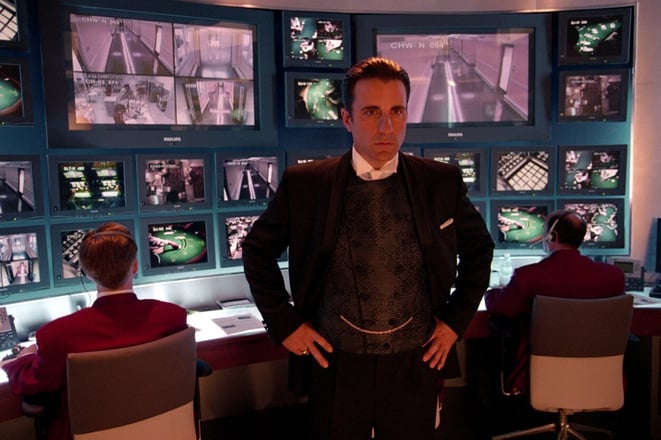
In eight short minutes on October 25, 2025, a group of thieves captured the world’s attention and imagination, perpetuating a daring heist in broad daylight and escaping with approximately €88 million worth of prized artwork from the planet’s most visited museum: The Louvre. Within the security community, the first successful robbery from the iconic Parisian landmark since 1998 was a bombshell story. But the “security community” is large and diverse, and very little of the public dialogue regarding the heist touched specifically upon cybersecurity. These stolen masterpieces were not flush cryptocurrency wallets or valuable pieces of NFT art secreted away on a thumb drive or exfiltrated to a remote server, the thieves employed some of the oldest tools in the burglary game: a ladder for climbing and a sharp edge for cutting. So far, law enforcement has arrested a total of seven people in connection with the heist, according to published reports. While details about the security weaknesses that enabled the heist are still forthcoming, the mechanical lift and electrical angle grinder are not generally the tools of the cybercriminal. As a result, the Louvre heist, at first glance, seemed largely distinct from the cybersecurity sphere, until additional details emerged regarding the museum’s cybersecurity controls. Details from past audits revealed the museum’s security posture was fraught with vulnerabilities and security hygiene concerns. Of note, these security weaknesses pertained directly to the museum’s network of physical access control systems, including surveillance cameras secured with the much-ballyhooed password “LOUVRE”. To understand how such rudimentary weaknesses could have persisted within such critical anti-theft infrastructure, we must consider the convergence of cyber and physical security. Readers who have enjoyed Dan Brown’s The Da Vinci Code will be aware that the Louvre is equipped with a wide array of physical security systems, including deployable gates and mantraps that can be triggered during a burglary attempt. What may not be so obvious is the extent to which these modern physical security controls are supported by an information technology infrastructure. As early as 2021, CISA warned of the Cybersecurity and Physical Security Convergence, calling out an “increasingly interconnected mesh of cyber-physical systems (CPS)”. Anyone who has badged into an office space has experienced this phenomenon, in which an IT-supported access control system affects a change in the physical world in the form of an unlocked door. The problem, CISA continues in the same 2021 publication, is that the convergence of physical and cybersecurity teams has not kept pace with the expansion of CPS environments. Seen as unique business functions with distinct responsibilities and skillsets, cyber and physical security groups have traditionally operated in siloes, often reporting to different members of executive leadership. As a result, organizations face increased risk that critical CPS technologies owned and operated within the physical security function are not managed with cyber resilience in mind. Returning to the Louvre specifically, we see an organization whose physical security controls are at risk of being undermined by the unstable cyber foundation on which they operate. Past cybersecurity audits demonstrate a spate of information security issues at the museum dating back to 2014, which prompted repeated warnings and improvement recommendations from the French National Cybersecurity Agency (ANSSI). Among these findings are a few most egregious, including the aforementioned password selection and a reliance upon obsolete security software purchased in 2003 and running on the longtime end-of-life Windows Server 2003 operating system. While we know about past cybersecurity issues, without the release of complete details from the ongoing Louvre investigation, it is impossible at this time to ascribe blame to the museum’s cybersecurity deficiencies. However, at the very least, we can identify several scenarios in which the security vulnerabilities identified in the ANSSI audit reports could feasibly enable or contribute to a successful heist. Slick talking and elaborate costumes aside, Clooney and Co. cannot reach the fabled casino vault in Ocean’s Eleven without first compromising the integrity of security camera feeds. Given the eye-popping value assigned to the stolen art, the incident at the Louvre serves to illustrate the value of an integrated security program, in which CPS systems receive the maintenance required to stay resilient against physical and digital attacks. This valuable lesson applies well outside the realm of grand larceny as well, as the proliferation of CPS technology could allow an attacker to manipulate medical devices or disable an electrical power grid. All organizations would do well to assess their CPS footprint and foster increased collaboration between Cyber and Physical security specialists. By viewing physical security through a cyber lens, organizations can better understand how real-world vulnerabilities can lead to digital or physical compromise and impact. At LevelBlue, we help our clients bridge the gap between the digital and physical worlds by assessing how building access, surveillance, and employee processes can open or close doors to cyber and physical threats.
What’s the Connection to Cyber?
What We Know and What We Don’t Know, Yet

Cyber compromise of camera systems limits their effectiveness and contributes to a physical security breach.
Sign up to receive the latest security news and trends straight to your inbox from Trustwave, A LevelBlue Company.Stay Informed
如有侵权请联系:admin#unsafe.sh