The U.S. healthcare system has entered its most dangerous cyber era.As digital transformation re 2025-11-13 17:37:28 Author: securityboulevard.com(查看原文) 阅读量:17 收藏
The U.S. healthcare system has entered its most dangerous cyber era.
As digital transformation reshapes patient care, cloud infrastructure, IoT/IoMT ecosystems, and interconnected provider networks, the sector has simultaneously become the #1 most cyber-attacked industry for 13 consecutive years.
Ransomware outages, data theft, and multi-week operational disruptions now hit hospitals at an unprecedented scale.
With average breach costs soaring to $10.3 million per incident and care delivery directly impacted, 2025 is exposing a brutal truth:

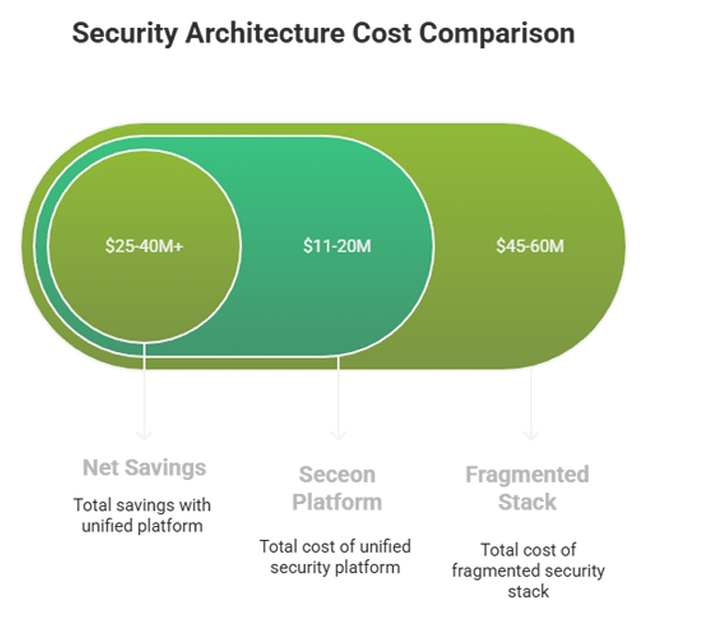
Fragmented, multi-tool security strategies can no longer protect healthcare’s highly interdependent digital ecosystem.
 Read the full whitepaper here:
https://info.seceon.com/the-2025-healthcare-cyber-crisis#SecOT
Healthcare organizations today operate across sprawling environments:
- EHR systems
- Cloud workflows
- Remote care platforms
- IoT/IoMT medical devices
- OT equipment in hospitals
- Third-party vendor integrations
Yet most providers still rely on 20–35 disconnected security tools, generating massive alert fatigue, limited correlation, and hours-long response delays.
This creates:
- Thousands of daily alerts, most of them noise
- Blind spots across networks, endpoints, cloud, OT, and medical devices
- Siloed IT & security teams
- Slower threat detection
- Higher breach impact
Attackers exploit this fragmentation effortlessly.
A single unpatched system, misconfigured VPN, or unmanaged IoMT device becomes an entry point that spreads laterally within minutes.
To achieve true resilience, healthcare must shift from disconnected tools to a unified, AI-driven security strategy capable of real-time detection, automated response, and continuous compliance assurance.

The whitepaper highlights the transformation driven by AI-powered, fully unified security platforms that eliminate tool sprawl and deliver centralized visibility across IT, cloud, OT, and medical devices.
A unified AI platform enables healthcare systems to:
 Detect threats in real time, not days Prevent ransomware and lateral movement attacks Reduce false positives and SOC overload Automate compliance for HIPAA, CMS, ONC & insurance requirements Gain full visibility across clinical and operational environments
Instead of relying on dozens of tools, healthcare organizations are embracing single-fabric security architectures capable of correlating telemetry, identifying anomalies, and initiating autonomous response in seconds.
This shift is fundamentally changing how hospitals defend patient-critical systems.

Healthcare environments depend heavily on:
- Legacy OT systems
- Unpatched medical devices
- Agent-less IoMT equipment
- Critical life-support and clinical workflows
These devices were not built with cybersecurity in mind making them the weakest and most targeted entry points.
The whitepaper emphasizes the role of AI-driven solutions that extend visibility across IoMT, OT, and clinical environments, enabling:
- Behavioral analytics
- Micro-segmentation
- Automated anomaly detection
- Early containment before patient care is affected
By unifying IT, IoMT, OT, and cloud intelligence, healthcare organizations can finally stop attacks from spreading across care delivery layers.
Healthcare compliance has become increasingly complex, with mandates across:
- HIPAA
- CMS & ONC security rules
- OCR reporting guidelines
- Cyber-insurance requirements
- Federal & state data-protection laws
The whitepaper stresses rising pressure on CISOs and compliance teams.
Security automation and AI-powered compliance frameworks now enable:
- Continuous monitoring
- Automated reporting
- Real-time compliance scoring
- Faster audit preparation
- Reduced manual workload
This not only strengthens governance but also ensures coverage of previously overlooked assets like clinical networks and connected devices.
Healthcare organizations adopting unified AI defense are reporting dramatic improvements across detection, response, cost, and downtime.
Quantified Impact & Outcomes
| Metric | Before Unified AI Defense | After Unified AI Defense | Improvement |
| Detection Time | Weeks to months | Real-time minutes | 90%–99% faster |
| Response Time | Hours to days | Seconds to minutes | ~98% fasters |
| SOC Cost | High staffing & tool overhead | Reduced by consolidation | Up to 60% savings |
| Downtime | Multi-day outages | Contained incidents | Major reduction |
Hospitals also report:
- Significant drop in false positives
- Improved insurance eligibility
- Stronger HIPAA/ONC compliance posture
- Reduced cyber-related care disruptions
The whitepaper highlights scenarios from U.S. healthcare systems where breaches exposed:
- Unmonitored remote access pathways
- IoMT devices acting as lateral movement pivots
- Unpatched servers exploited within minutes
- Lack of unified telemetry delaying response
- Multi-day ransomware outages impacting patient care
In each case, unified AI-powered protection would have detected the intrusion earlier, automated containment, and prevented high-impact downtime.
These lessons are shaping the future of healthcare cybersecurity in 2025 and beyond.

As cyber threats escalate and regulatory pressure intensifies, healthcare leaders are moving toward:
- Unified security platforms
- Predictive AI analytics
- Automated compliance
- End-to-end visibility across IT, IoMT, and OT
- Reduced operational overhead
- Faster incident containment
The result is a measurable transformation:
Stronger protection across all care systems Lower breach impact and downtime Improved compliance readiness Higher operational efficiency
This evolution isn’t just technical it is a patient-safety imperative.
Healthcare’s future resilience depends on automation, AI-powered defense, and the convergence of security operations into a single, intelligent ecosystem.

The 2025 Healthcare Cyber Crisis makes one thing clear:
Fragmented defenses cannot protect a modern healthcare system.
Unified, AI-driven security platforms enable providers to:
- Reduce breach risk
- Strengthen compliance
- Automate detection and response
- Protect patient care without slowing operations
Healthcare organizations now stand at the edge of a new era, one where cyber resilience becomes a foundation for trust, safety, and operational continuity.

The post The 2025 Healthcare Cyber Crisis: Unified AI Defense Against $10.3M Breaches appeared first on Seceon Inc.
*** This is a Security Bloggers Network syndicated blog from Seceon Inc authored by Kamna Srivastava. Read the original post at: https://seceon.com/the-2025-healthcare-cyber-crisis-unified-ai-defense-against-10-3m-breaches/
如有侵权请联系:admin#unsafe.sh