
嗯,用户让我总结一下这篇文章的内容,控制在100个字以内,而且不需要用“文章内容总结”之类的开头。我先看看文章的结构。 文章分为三个部分:The Good, The Bad, 和The Ugly。每个部分讲的是不同的网络犯罪活动和执法行动。 第一部分讲的是Europol dismantled a SIM-box fraud network,他们破获了一个大型的网络犯罪服务,涉及3200多起诈骗,损失超过450万欧元。他们逮捕了七个人,查获了很多服务器和SIM卡。 第二部分是关于Jingle Thief,一个利用云环境进行礼品卡诈骗的团伙。他们通过钓鱼和短信获取微软365的凭证,然后利用这些身份进行诈骗,发行或销售未经授权的礼品卡。 第三部分是PhantomCaptcha,针对乌克兰的人道主义组织的鱼叉式网络钓鱼攻击。他们伪造乌克兰总统办公室的邮件,引诱受害者执行恶意脚本,植入远程访问木马。 现在我需要把这些内容浓缩到100字以内。重点包括:Europol破获SIM卡诈骗网络、逮捕七人、查获大量设备;Jingle Thief利用云身份进行礼品卡诈骗;PhantomCaptcha针对乌克兰人道组织的鱼叉式攻击。 可能需要合并一些信息,比如提到三个案例分别涉及SIM卡诈骗、礼品卡诈骗和针对乌克兰的人道组织攻击,并简要说明每个案例的结果或影响。 确保用简洁的语言表达清楚每个主要点,并且总字数不超过100字。 </think> 文章描述了三起网络安全事件:欧警 dismantled 一个全球 SIM 盒诈骗网络,逮捕 7 人并查获大量设备;Jingle Thief 利用云身份进行大规模礼品卡欺诈;PhantomCaptcha 针对乌克兰人道组织发起鱼叉式网络钓鱼攻击。 2025-10-24 16:4:31 Author: www.sentinelone.com(查看原文) 阅读量:46 收藏
The Good | Europol Dismantles Global SIM-Box Fraud Network
Europol has dismantled a major cybercrime-as-a-service (CaaS) operation, codenamed SIMCARTEL, that powered over 3,200 fraud cases and caused at least €4.5 million in damages. The network operated 1,200 SIM-box devices containing some 40,000 SIM cards, enabling criminals to rent phone numbers registered to individuals in more than 80 countries. These were then used to create 49 million fraudulent online accounts for crimes including phishing, investment fraud, extortion, impersonation, and migrant smuggling.
The illegal service, run through gogetsms.com and apisim.com, worked by selling access to “fast and secure temporary” phone numbers marketed for anonymous communication and account verification. GoGetSMS also offered users a way to monetize their own SIM cards. However, reviews suggested it was a front for large-scale identity fraud, now exposed as one of Europe’s most extensive SIM-box schemes to date. Europol said the infrastructure was “technically highly sophisticated”, which allowed perpetrators worldwide to hide their identities while conducting telecom-based fraud.
After running coordinated raids across Austria, Estonia, Finland, and Latvia, police arrested seven suspects in total. They also seized five servers, the two websites, hundreds of thousands of SIM cards, €431,000 deposited in bank accounts, €266,000 in crypto, and four luxury vehicles. Both domains have been taken down and now display official law enforcement banners.
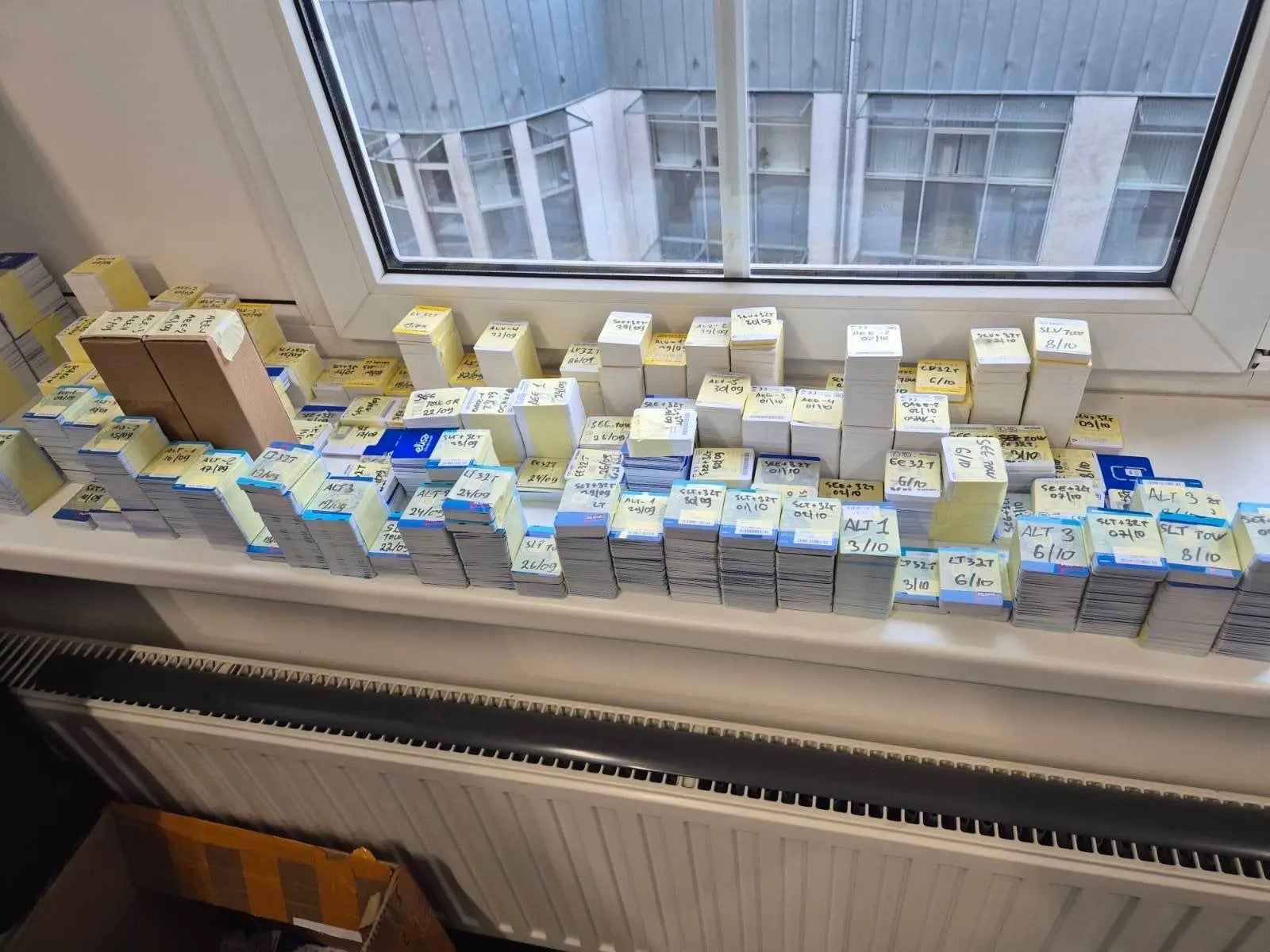
So far, authorities have linked the network to 1,700 fraud cases in Austria and 1,500 in Latvia, with combined losses adding up to nearly €5 million. Europol’s forensic analysis of the seized servers aims to identify customers of the illegal service.
The Bad | Jingle Thief Exploits Cloud Identities for Large-Scale Gift Card Fraud
A new report from security researchers details the activities of ‘Jingle Thief’, a financially motivated threat group that operates almost entirely in cloud environments to conduct large-scale gift card fraud. Active since at least 2021, the group targets retail and consumer services organizations through phishing and smishing campaigns designed to steal Microsoft 365 credentials.
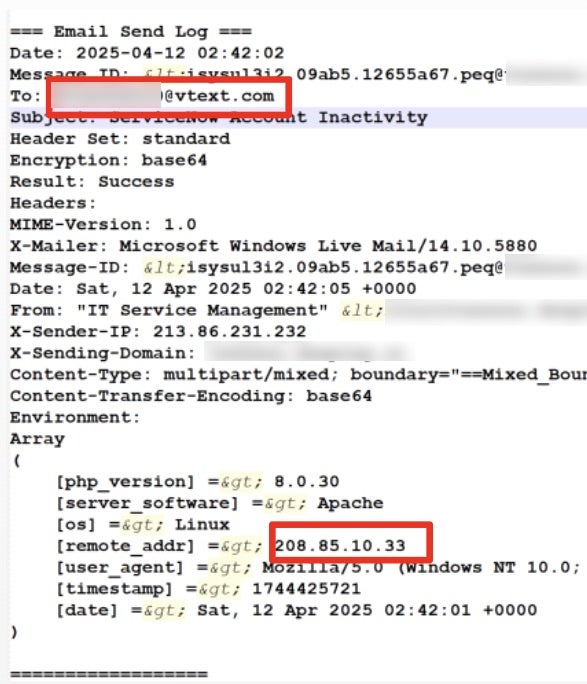
Once inside, the attackers exploit cloud-based infrastructure to impersonate legitimate users, gain unauthorized access to sensitive data, and manipulate gift card issuance systems. With their campaigns focusing on mapping cloud networks, attackers can move laterally across accounts and avoid detection through stealthy tactics such as creating inbox rules, forwarding emails, and registering rogue authenticator apps to bypass MFA in M365.
Unlike traditional malware-driven attacks, Jingle Thief relies heavily on identity misuse, choosing to leverage stolen credentials instead of deploying custom payloads to blend in with normal user activity. This approach allows them to maintain access for many months while issuing or selling unauthorized gift cards for profit on gray markets.
Researchers also observed a major wave of Jingle Thief activity between April and May 2025, during which the group compromised more than 60 user accounts within a single organization. The attackers conducted extensive reconnaissance in SharePoint and OneDrive, searching for financial workflows, IT documentation, and virtual machine configurations, all tied to gift card systems.
Exploiting cloud identities rather than endpoints furthers the trend of cloud-based cybercrime, where phished credentials and identity abuse enable financially motivated actors to scale operations while remaining under the radar. Jungle Thief’s campaign is a reminder to prioritize identity-based monitoring and cloud-native security measures that provide full visibility and real-time detection.
The Ugly | PhantomCaptcha Spearphishing Targets Ukraine’s Relief Networks
SentinelLABS, together with the Digital Security Lab of Ukraine, have uncovered ‘PhantomCaptcha’, a single-day spearphishing campaign that targeted Ukrainian regional government administrations and humanitarian organizations such as the International Red Cross, UNICEF, the Norwegian Refugee Council, and other NGOs linked to war relief efforts.
Launched on October 8, 2025, the operation began with an impersonation of the Ukrainian President’s Office, distributing weaponized PDF attachments that redirected victims to a fake Zoom site (zoomconference[.]app). There, a fake Cloudflare CAPTCHA lured users into copying and pasting malicious PowerShell commands – a ClickFix technique designed to bypass traditional endpoint controls by tricking victims into executing the malware themselves.
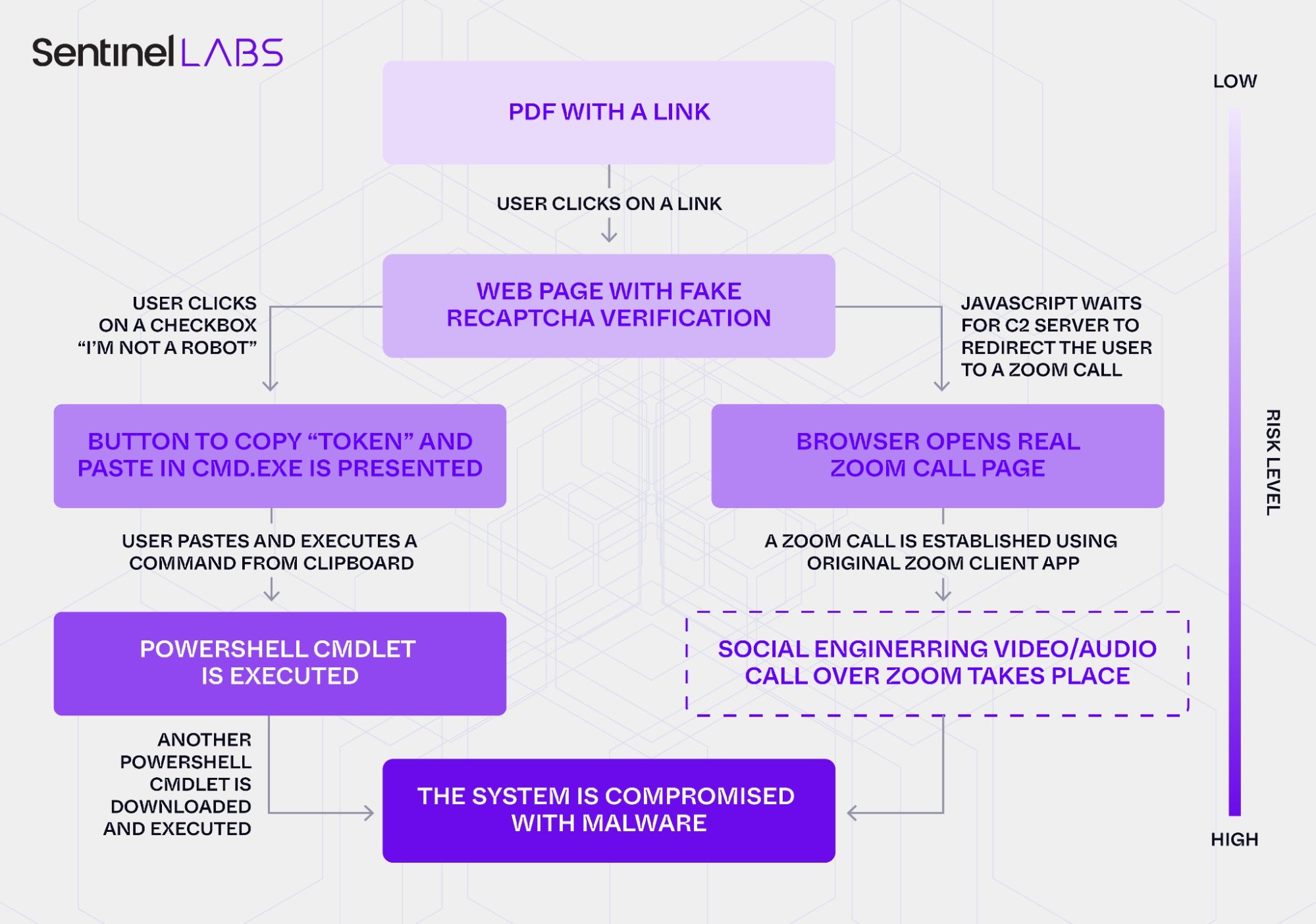
Once running, the script deployed a multi-stage PowerShell payload leading to a WebSocket remote access trojan (RAT) hosted on Russian-owned infrastructure. The RAT enables arbitrary command execution, data exfiltration, and the potential deployment of further malware through encrypted WebSocket communications. Although investigations show that the attackers spent six months preparing the campaign, it remained active for only 24 hours, pointing to an infrastructure that demonstrates sophisticated operational security and planning.
SentinelLABS linked the campaign to an additional Android-based espionage effort hosted on princess-mens[.]click, which distributes spyware-laden APKs disguised as adult entertainment or cloud storage apps designed to harvest contacts, media files, and geolocation data.
While attribution remains unconfirmed, technical overlaps, including the ClickFix lure and Russian-hosted C2s, suggest possible ties to COLDRIVER (aka UNC4057 or Star Blizzard), a threat group linked to Russia’s Federal Security Service (FSB). PhantomCaptcha is an example of a highly organized and adaptive adversary, able to blend social engineering, short-lived but highly compartmentalized infrastructure, and cross-platform espionage to target Ukraine’s humanitarian and government sectors.
如有侵权请联系:admin#unsafe.sh