社交媒体和广告通过心理操控影响用户行为,利用人类社交需求和暗模式设计让用户难以抵抗。影响力人士、算法推荐和滤镜气泡加剧了信息操控。尽管去中心化平台和批判性思维有助于缓解问题,但完全摆脱影响仍具挑战性。 2025-9-17 02:47:23 Author: soatok.blog(查看原文) 阅读量:48 收藏
It is tempting and forgivable to believe that we’re in control of our social media experiences.
After all, we write what we want in our bio, select our avatars, and even come up with our own handles. We decide who we follow, what we post, and which recommendations to consider.
It never feels like we’re not in the driver’s seat the whole time, especially if you use a trustworthy adblocker (which I highly endorse as a security feature).
But as tempting as this notion is, it’s simply not a fact. You and I are more prone to manipulation than anyone ever realizes.
At the heart of our vulnerability is this: We are social animals.

Art: CMYKat
But first, we need to talk about advertising and marketing. I promise this will get interesting.
Advertising and Marketing
Advertising and marketing go hand-in-hand. Which is the most appropriate way to describe the two industries, as they often see themselves as a sort of extra invisible hand in the marketplace, driving consumer spending behaviors.
It is difficult for us in 2025 to imagine what either of the two might look like if they hadn’t appropriated the work of psychologists in order to manipulate the masses.
However, we can venture some guesses as to what that world would compose of.
The 1929 “Torches of Freedom” campaign that feminized tobacco in the public zeitgeist came nearly half a century after an elephant walked across the Brooklyn bridge to convince the American public of its safety.
In absence of psychological science, mythology and superstition filled the void.
However, don’t think too low of cognitive science: They also study the effects of this problem.
What Does the Science Say?
This won’t be on the final exam, but it’s worth knowing.
We know that humans have an innate need to belong, and that need drives a lot of group behaviors. As far as we can tell, these needs evolved because social groups are evolutionary advantageous–leading to a so-called social brain.
But we also know that dark patterns can have an empirically observable effect on human behavior. This isn’t just about psychology; it also comes up in discussions around phishing attacks and possible mitigation strategies.
Dark Patterns in the Digital Age
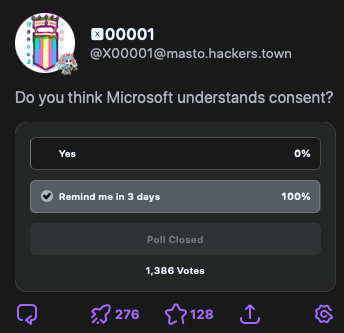
I’ve written about this before, but the tech industry doesn’t seem to understand consent. It’s a lesson that bears repeating occasionally.

Of course, it can be difficult to convince someone of a fact when their salary depends on them not understanding that fact.
Advertising and marketing love dark patterns like this, because it gives them plausible deniability (“look, we technically abided by legal demands for an opt-out to exist“) while still controlling the narrative (your options are “Yes” or “Maybe Later”).
All of those obnoxious cookie banners in the EU don’t need to exist. They’re a nuisance mechanism because advertisers want to use third-party cookies to track you on the Internet, and if you consent to these cookies, you’ve waived your rights. So they engineered the consent mechanism to be as high-friction as possible to say “no”, while the “yes, violate my privacy” choice is always a single click.
Advertising has been at odds with privacy for most of the history of the Internet, but it’s not just tech companies that commit these offenses.
See also: Target knowing a teen girl was pregnant before she or her family did. That article was published in 2012. Things only got worse in the years since.
What did you think the “Big Data” hype was all about? Or the recent push for AI-everything?
As creepy as advertising and marketing are, social media platforms are so much worse than most people imagine (and they get there by exploiting many of the same psychological quirks that marketers do).
What if you could take all the creepiness of digital advertising and use it to deceive the public?
This isn’t a hypothetical. It’s the reality we’ve been living with for years.
I recommend watching all three videos in this series by Smarter Every Day.
Manipulating YouTube seems a more obvious place to start for a YouTuber, but the more pernicious examples are in the subsequent two entries. First, Twitter:
And, of course, Facebook:
This video series is from 2019.
The rise of generative AI has exacerbated this problem beyond any reasonable measure, as Kyle Hill explained in this video about AI-generated science spam on YouTube:
Why even bother doing any of this?
The primary reason for engaging in coordinated inauthentic behavior is simple: The attacker has something to gain from doing it. If they can go viral, they get advertisement revenue.
The dynamics at play in these behaviors are called the “attention economy”. Tim Wu wrote about this topic at length in his 2016 book, The Attention Merchants.
But it’s not just the attacks being conducted on the platforms that can mislead people. Social media platforms themselves use filter bubbles to distort and contort the truth all the time.
It Gets Worse
Most recently, this reared its ugly head in the wake of a recent high-profile murder:
That’s… not great.
If we don’t have a common reference frame for discussion (i.e., objective, factual reality) then we cannot possibly find common ground or admit we were wrong. No reasonable person will ever deny what they believe to be true.
Unreasonable people who were already likely to dig their heels in and behave spitefully? Forget it.
This isn’t merely political polarization. A large swath of people are misled by social media. Many of the tools that make this deception possible are the same market segmentation tools used to maximize AI spend.
All those AI bros waxing poetic about “universal paperclip machines” need to realize we already have that: It’s called our current economic system.
But it’s not just the advertisers and marketers at fault. At least, not in the traditional sense.
Who Controls the Narrative?
What happens if you use the same tools, technologies, and tactics but replace the profit motive with something more sinister?
The Internet has fomented an entire cottage industry of poorly regulated podcasts, which (of course) right-wing politics is over-represented.


In the wake of the aforementioned murder, after several politicians claimed that “left-wing extremists” are a nuisance, while downplaying the existence of right-wing extremists, the DOJ deleted the research they published years ago that proved that the exact opposite is true.
You can find a copy here, courtesy of archive.org. But in case it gets taken down, I’ve also uploaded a copy for your viewing pleasure.
Eat Streissand effect, dunkass.
Even though it’s actually possible to enumerate the most recent political attacks (alt. archive), it’s also easy to see that the rise in violence can be directly attributed to Donald Trump’s own rhetoric.
But do the facts matter? Not on social media platforms. This is due, in part, to the effect of Influencers and parasocial relationships.
I’ve written about parasocial relationships before, but they are not as well-understood as I wish they were.
Celebrity fandoms are nothing new. Ask any rock star, Hollywood actor, or French philosopher about it sometime.
Fandom behaviors, in the extreme, are easily comparable to how humans behave in the context of religion. Consider: Swifties.
But whether you’re in a band touring across the country or a fluffy critter with a large Twitch following, you will inevitably experience a parasocial interaction: Someone will believe that you’re their best friend, yet you barely know who they even are.
Not only do parasocial relationships make the influencer uncomfortable (especially if they’re not actively seeking money or social status), they also give the influencer power over their followers.
In extreme cases, this can become a cult of personality. As a furry blogger, I feel compelled to use examples from the furry fandom to punctuate my point.
Example: The Cult of GaroShadowScale
There are several YouTube videos and old blogs that cover this example. I will include one of the newer ones here, but I cannot vouch for the YouTuber that made it, so feel free to pass on it if you’d rather not.
Cults of personality can become actual cults, as seems to be happening with GaroShadowScale.

This blog post dives into the history of this particular Furry content creator, but what I find most interesting is the only comment presently posted on it:
As someone who was/or rather still is a startup content creator who has known Garo for 3 years now, he wasn’t that extreme back then.
From Snadl the CookieDerg
[…]
In Garo’s case, the extremely narcissistic behaviors developed over time, rather than presenting themselves up front. This makes sense: It’s difficult to attract followers if you have a reputation for being full of yourself or controlling.
Other Examples
It’s not just furries that get personality cults, either: Trumpism has been studied as a personality cult that denies reality and causes mayhem.
But it’s not just Trump. As the YouTube video at the top of this section highlighted, Taylor Swift has a cult of personality too. So does Oprah Winfrey. So does Joe Rogan.
These influencers, who are not at all regulated in the same way that the mainstream media is supposed to be, have an outsized influence over most of the population.
When you combine influencers with the algorithmic manipulation of social media platforms (with their dark patterns and filter bubbles) with the anti-privacy nature of the advertising and marketing industries, you end up with the mess we have today.
I posit that the rise of some conspiracy theories is directly attributable to influencers.
So given all of this mess: What can we actually do about any of it?
Escaping Their Influence
You cannot, through sheer force of will, render yourself immune to the psychological tricks used by advertisers, marketers, or social media platforms.

Nor can any of us escape the reach of influencers, especially when one of their posts goes viral or gets noticed by your friends.
But we are not entirely powerless. Some things you can do to seize control of your own life include:
- Use a reputable adblocker. I use this WordPress plugin to detect when users don’t have an adblocker installed, and then tell them to install one. It’s not perfect, but it helps.
- Practice critical thinking and interrupting biases. This is a very deliberate practice and won’t help you establish social rapport with people that expect you to engage in social rituals.
For example, if someone expects you to echo their claims back at them, as if you believe them, and then suddenly you’re citing facts that counter their narrative, they will be put on the defense and probably call you an asshole.
It helps to understand the two systems that our mind uses (System 1 and System 2). Daniel Kahneman’s Thinking, Fast and Slow is an excellent introduction to the topic.
- Practice metacognition and the Socractic method.
Ask yourself how you really know what you know. Ask yourself “why?” when you think you have an answer.
- Decentralize.
I must caution against faux-decentralization here. Mastodon is federated, while BlueSky is centralized (even if ATProto is not), as I’ve argued before. You can measure the centralization of both ecosystems, as others already have.
Whenever I bring up the importance of decentralization, I’m almost always greeted by an eye-roll or someone describing Mastodon as “Linux for posting” (a thought-terminating cliché if I’ve ever heard one).
I get it: You feel like you shouldn’t have to care about this nerd shit.
But I implore you to listen to this next part: Even if you don’t care about nerd shit, it’s the primary root cause for the things you do care about and wish were different, as Cory Doctorow writes in The Enshittification of TikTok.
Here is how platforms die: First, they are good to their users; then they abuse their users to make things better for their business customers; finally, they abuse those business customers to claw back all the value for themselves. Then, they die.
I call this enshittification, and it is a seemingly inevitable consequence arising from the combination of the ease of changing how a platform allocates value, combined with the nature of a “two-sided market,” where a platform sits between buyers and sellers, hold each hostage to the other, raking off an ever-larger share of the value that passes between them.
Cory Doctorow, The Enshittification of TikTok | Wired (2023)
The tactics that make enshittification possible require centralization.
We saw it happen to Twitter.
We saw it happen to Facebook.
We saw it happen to Myspace.
We saw it happen to Telegram channels with their cryptocurrency ads.
It’s going to happen to TikTok.
It’s going to eventually happen to BlueSky (even if it currently doesn’t use a manipulative recommendation system).
Federated social platforms, such as Mastodon, are highly resistant to enshittification by design. I cannot promise that they’re entirely immune, but it’s extremely difficult to pull off.
Folks will just… go somewhere else. Somewhere that isn’t shitty.
Easier Said Than Done
I recognize that many of the people reading this blog post will be unhappy with my recommendation.
After all, many furries make their living accepting art commissions that requires the Network Effect to reach potential customers. (And many furries, including good friends of mine, do YouTube or Twitch full-time instead of a traditional career.)
And, I get it: You gotta do what you gotta do to make ends meet.
By all means, continue to leverage enshittified platforms to keep your bills paid.
But when it comes to the media you consume? Where you get your information about what’s happening in the world? Please, decentralize the fuck out of that.
(Also please post your art on the Fediverse too. You can go viral there, I promise. You just don’t have a cold-blooded algorithm that can be gamed.)
As for me, all of my best posting will be done on furry.engineer.
Federated Alternatives
Instead of Twitter or BlueSky, consider joining the Furry Fediverse (which is a curated list of instances running Mastodon and similar software).
Instead of YouTube, consider PeerTube.
Instead of Instagram, consider Pixelfed.
Instead of Twitch, consider Owncast.
(I had to stop myself from writing “OwO” there.)
Instead of Reddit, consider Lemmy.
Resist enshittification. Block ads.
Become unmarketable.
Closing Thoughts
I couldn’t find a more elegant place to talk about this stuff above, so I’m covering it here in the end.
As I wrote in Doesn’t Matter, I’m no one important. I do not aspire to be an influencer. If you disagree with my opinions, that’s fine. I’m wrong sometimes.
The siren song of being an influencer is strong, and has largely enraptured younger folks. I feel like society has progressed beyond the need for influencers.
A while ago, I wrote a sponsor policy to link to when someone asks me to promote their product or service, which boils down to: “No, I won’t fucking do it.”
The downside to prioritizing my own impartiality and editorial independence is that there are many products and services that I like that I can’t recommend without compromising my values.
For example: MISTR is a service I use, and strongly encourage sexually active queer people to use, because it often costs them nothing and protects against STIs. At worst, you should know your status. If MISTR ever offered me a penny to promote their stuff, I’d feel compelled to delete this paragraph from this blog post.
Finally, even if you discard my advice about decentralization, being mindful of your information diet and the ways platforms manipulate their users can help you mitigate some of your own blindspots, but it takes consistency and discipline.
Either way, I wish you all luck.
Header art: MrJimmyDaFloof and AJ.
如有侵权请联系:admin#unsafe.sh